
Haunted Places in Cedar Rapids, Iowa
4 haunted locations
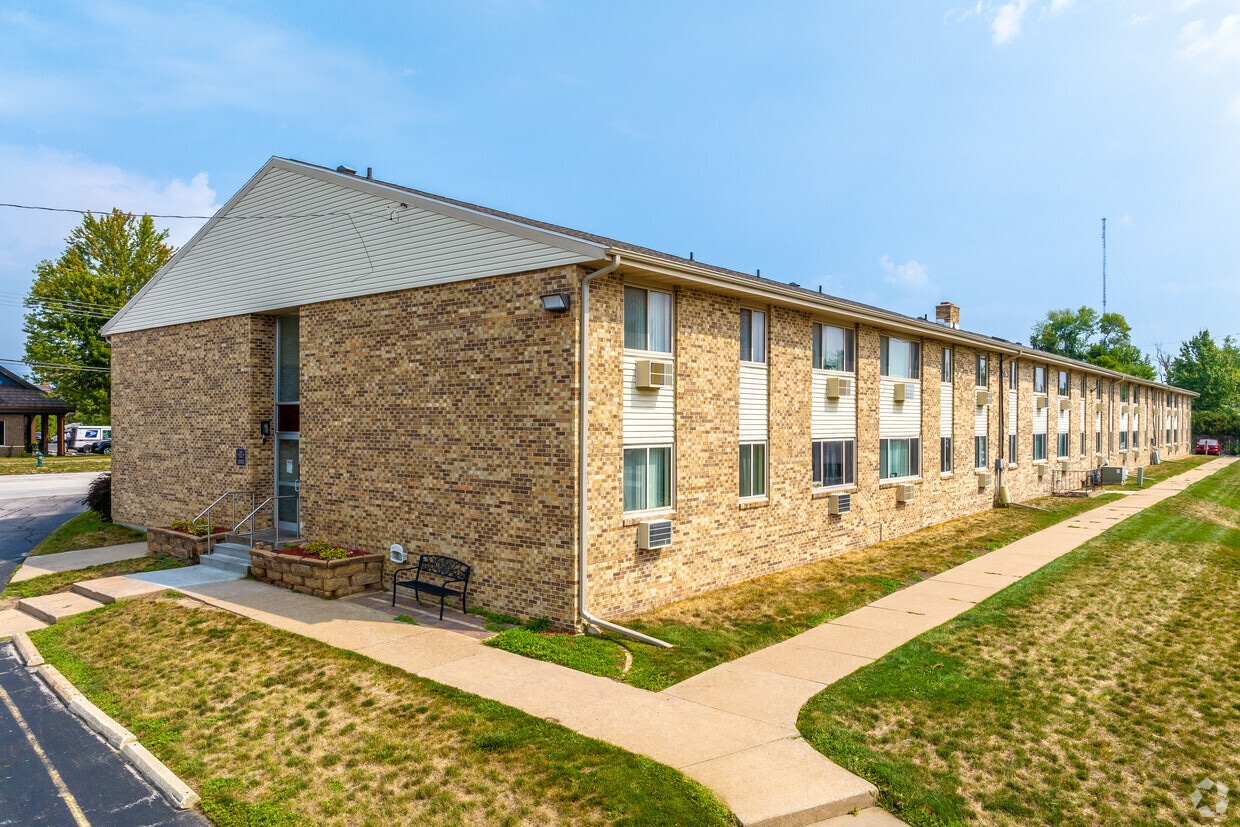
Wildwood Apartments
Situated on Old Marion Road on the northeast side of Cedar Rapids, Iowa, Wildwood Apartments occupies a stretch of flat suburban ground between the city proper and the neighboring community of Marion. The complex sits adjacent to Elmcrest Country Club, a private golf course that has operated since the 1930s, and within the boundaries of the Kenwood Park neighborhood—a former independent town incorporated in 1886 and annexed into Cedar Rapids in the late 1920s. The area around Old Marion Road developed steadily through the mid-twentieth century as Cedar Rapids expanded outward from its downtown core along the Cedar River, filling in residential tracts between the older neighborhoods closer to the business district and the farmland that once separated the two cities. Wildwood Apartments was built in 1968, part of the postwar suburban apartment boom that reshaped the edges of midsize Midwestern cities during the 1960s and 1970s. The complex is a modest two-story affair comprising 128 units spread across multiple buildings, with a pool, clubhouse, and gazebo on the grounds. It was and remains workforce housing—affordable, functional, unremarkable in architecture, and designed for a transient population of renters rather than long-term homeowners. The property has been under professional management since at least the mid-1980s, and it continues to operate as an active rental community today. Nothing in the building's construction history or documented record points to a dramatic origin story. There is no institutional past, no former use as a hospital or asylum, no connection to a notable disaster. Wildwood Apartments is, by all outward appearances, an ordinary apartment complex in an ordinary part of town. That ordinariness is part of what makes the haunting legend attached to it notable—not for its scale, but for how persistently it has circulated despite limited evidence. The story that appears on multiple paranormal listing sites and local haunted-location databases follows a consistent outline. According to the account, a convicted child molester once lived in one of the buildings at Wildwood Apartments. At some point—usually described as roughly twenty years prior to the earliest online postings, which would place the alleged event somewhere around the 1990s—one of the victims' parents confronted the man and beat him to death. His body, according to the story, was not discovered for three days. In the years since, residents and visitors have reportedly heard what they describe as the cries of children echoing through the apartment hallways late at night, particularly in the building associated with the alleged killing. The legend has no verifiable anchor in public records. At least one former resident who claims to have investigated the matter through official channels has stated flatly that no documentation supports the story—no police reports of a fatal beating matching the description, no corroborating court records, no news coverage. Others who have lived at the complex describe nothing more unusual than the typical sounds of a densely occupied apartment building with thin walls: footsteps overhead, voices carrying through corridors, the ambient noise of families in close quarters. One former tenant, a college student who lived in a ground-floor unit, reported a different kind of unsettling experience altogether—old copies of the Saturday Evening Post appearing under the apartment door at irregular intervals, with no one in the building claiming responsibility. The tenant found it strange enough to move out, though the incident was never connected to the broader haunting legend. Skeptics, and there are many even within the complex's own resident population, point to the obvious: the building's thin walls and long interior hallways create an acoustic environment where sounds travel easily and are easily misidentified. An aging apartment complex occupied largely by lower-income tenants will inevitably produce nighttime noise—arguments, crying children, doors slamming—that can take on a different character when filtered through a preexisting ghost story. The legend itself has the hallmarks of an urban myth that attaches to affordable housing complexes in many American cities: a violent crime, a vague timeframe, no named individuals, and a haunting that conveniently resists verification. No formal paranormal investigations of Wildwood Apartments appear in any published record. The location does not feature on ghost tour circuits, has not been the subject of any known documentary or television coverage, and draws no organized visitation from paranormal research teams. Its presence on haunted-location databases is driven entirely by user submissions repeating the same core legend, sometimes with minor variations in detail. Wildwood Apartments remains a fully occupied, actively managed rental property. It operates under the name Wildwood Pool Apartments, managed by One Property Management Iowa, and continues to offer one-, two-, and three-bedroom units to tenants in the Cedar Rapids area. The pool still opens in summer. The clubhouse still hosts residents. The hallways still carry sound the way hallways in buildings like this always have—faithfully, indiscriminately, and sometimes in ways that make a person pause and listen a moment longer than they intended.

Coe College
Coe College stands as an academic institution of significant historical importance within Iowa, with institutional origins tracing to the nineteenth century period of American expansion and establishment of educational institutions supporting intellectual development and professional training. The college was founded during a period when American higher education underwent dramatic expansion, with numerous private institutions established throughout the nation to provide educational opportunities to growing populations. The institution developed into a comprehensive college offering specialized academic programs in sciences, humanities, business, and professions, attracting student bodies and faculty engaged in intellectual pursuits across multiple disciplinary domains. The college's campus encompasses multiple buildings spanning different architectural periods, with original nineteenth-century structures preserved alongside twentieth-century additions reflecting evolving institutional needs. Voorhees Hall, identified as a primary location of documented paranormal phenomena, represents one of the college's earliest and most historically significant structures, with architectural features reflecting design principles characteristic of the late nineteenth or early twentieth century. The transformation of the Coe College campus during the early twentieth century coincided with significant transitions in American society, including the impact of World War I and subsequently the influenza pandemic of 1918-1919 that devastated populations throughout the United States and internationally. The influenza pandemic, spread by military movements and disrupted by wartime population concentrations, reached into educational institutions and affected student bodies, faculty, and staff populations. Coe College, like many American educational institutions during this period, experienced deaths among student populations from influenza infection. The pandemic deaths represented sudden tragic losses of young individuals at the threshold of their adult lives, with infections progressing to death within days in severe cases, overwhelming medical services. The psychological trauma of witnessing multiple deaths among student peer populations, combined with fear regarding disease transmission, created an environment of significant emotional disturbance and anxiety. The primary paranormal phenomenon documented at Coe College centers on the manifestation of Helen, identified as a college student who died of influenza during the 1918-1919 pandemic. Helen's apparition appears as a female figure consistent with contemporary dress of the historical period, manifesting most frequently in Voorhees Hall and female dormitory areas, locations where she would have lived and studied during her college enrollment. Contemporary descriptions of paranormal phenomena attributed to Helen include doors slamming within dormitory areas, footsteps ascending and descending stairs in dormitory buildings, blankets being pulled from beds by invisible hands, and the sound of piano music played in dark hours when the building should be unoccupied. Occasionally, students and staff have reported observing the full apparition of Helen, appearing as a translucent female figure in period clothing, sometimes interacting with physical objects or disappearing when approached. The manifestations demonstrate characteristics consistent with both residual haunting phenomena and active haunting phenomena. The historical context of Helen's death involves the overwhelming and devastating nature of the influenza pandemic, creating circumstances of sudden mortality and inadequate psychological and grief processing at the institutional level. Helen, presumably a young woman of late teenage or early adult age, undertook college education at a time when educational opportunities for women were expanding. Her death at the college represented the interruption of personal development and achievement, a loss of future potential and unfulfilled life trajectory. The psychological impact on surviving student peers, faculty members, and family members would have been substantial, representing not merely individual loss but collective trauma affecting institutional morale. Helen's spirit may have become bound to the college location through the trauma of her death, the strength of her attachment to the institution, or the inadequacy of grief processing and memorialization. The manifestations suggest an entity continuing to inhabit the physical spaces of the college. Contemporary paranormal investigations have documented electromagnetic anomalies and audio phenomena potentially consistent with paranormal manifestations.
Stello Performance Hall – Mount Mercy
Reported haunted other in Cedar Rapids, IA.
Cedar Rapids Museum of Art
The Cedar Rapids Museum of Art occupies a historic building in Cedar Rapids, Iowa, serving as cultural institution dedicated to preservation, exhibition, and interpretation of artistic works from various periods and traditions. The building was formerly operated as a public library until 1985, when it transitioned to use as an art museum following construction of new library facility in the community. The transformation from library to museum reflected changing community needs and recognition that historic structure could serve important cultural function. The building's architectural character reflects its design for library purposes, with interior spaces arranged to accommodate book collections, reading areas, and patron services typical of public library operations. The transition required modifications to accommodate art exhibitions and specialized requirements of displaying and conserving artistic materials. The building's long history of public use and community importance created a space saturated with human interaction, intellectual engagement, and accumulation of memories associated with generations of library patrons. The paranormal activity at Cedar Rapids Museum of Art is associated with an individual named Hazel, a woman who was regular patron of the library during its operational years. Hazel died in a fire in the 1960s, a tragic incident that ended her life and left indelible mark upon her consciousness and spiritual essence. The specific circumstances surrounding the fire remain subjects of historical inquiry, though the traumatic nature of death by fire suggests suffering and confusion in final moments. Hazel's regular use of library prior to death created strong connection between her consciousness and physical space of the building, a bond that appears to have persisted beyond her death and building's transition to museum use. The apparition believed to represent Hazel's spirit has been reported by multiple witnesses exploring museum's spaces, manifesting in patterns suggesting both residual haunting behaviors and intelligent paranormal activity. The connection between Hazel and library building, forged through years of regular visits and intellectual engagement, appears to have created spiritual anchor binding her to location. Paranormal phenomena at Cedar Rapids Museum of Art have been documented through apparition of library patron wandering through building's interior spaces. Witnesses have reported observing translucent figure of woman moving through corridors and rooms, appearing to wander through building as if unaware of passage of time or transformation of space from library to museum. The apparition has been described as appearing in clothing and hairstyle consistent with 1960s era, period when Hazel died, suggesting manifestation maintains visual characteristics consistent with appearance during life. The figure has been observed particularly in areas formerly designated for book collections and reading spaces, locations where Hazel presumably spent significant time during regular library visits. Multiple independent witnesses have reported encounters with apparition, lending credibility to accounts and suggesting genuine paranormal manifestation. The apparition appears to manifest without aggression or threatening behavior, suggesting spirit primarily occupied with wandering and existing within familiar confines. Paranormal investigation of Cedar Rapids Museum of Art has been conducted by Johnson County Paranormal Team, a professional paranormal research organization specializing in investigation and documentation of purported haunted locations. The paranormal investigation team documented evidence of hauntings within museum building, providing scientific validation for eyewitness accounts of paranormal phenomena. The investigation findings have contributed to recognition of Cedar Rapids Museum as genuinely haunted location within paranormal investigation community. The building's transformation from library to museum has not diminished paranormal activity occurring within walls, suggesting Hazel's spiritual connection to space transcends specific function or purpose of building. The presence of regular library patron's spirit returning to location where she spent so much of her life represents unique form of haunting motivated by emotional connection and habit rather than trauma or violent death. The museum now serves dual function as both repository of artistic and cultural materials and location of documented paranormal activity, creating unique intersection of contemporary art exhibition and paranormal experience. Hazel's continued presence serves as reminder of ways meaningful human experiences create lasting imprints upon physical spaces.