
Haunted Places in St Pete Beach, Florida
4 haunted locations
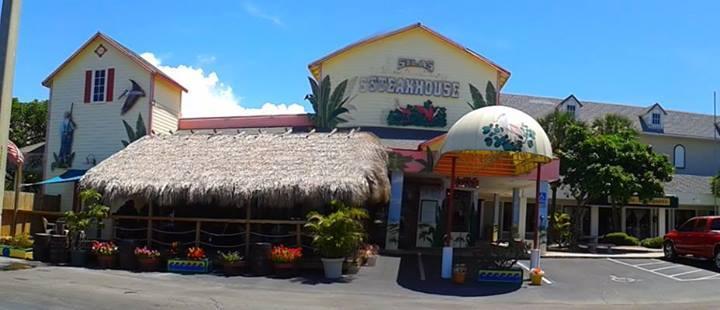
Silas Dent’s Steakhouse
Set just off Gulf Boulevard on St. Pete Beach, across from the long strip of sand and surf that made this stretch of Pinellas County a tourism corridor, the site known for decades as Silas Dent’s Steakhouse belonged to a distinctly local version of Old Florida. It was not an antebellum mansion or a grand Victorian hotel, but a busy beachside restaurant and bar at 5501 Gulf Boulevard whose identity was built around memory, regional folklore, and the image of a real man who had already passed into legend long before the first steak was served there. For many locals, that combination of commerce, nostalgia, and personality is exactly what gave the place its unusual atmosphere. The property itself had earlier lives before it became the restaurant most people remember. In the 1960s, this section of the beach was part of the fast-changing postwar tourist landscape, and the building at 5501 Gulf Boulevard stood adjacent to the London Wax Museum, one of St. Pete Beach’s best-known roadside attractions. The address also briefly housed the Suntan Art Center during that decade, when beachfront commercial spaces were still evolving into the mix of attractions, shops, restaurants, and entertainment venues that came to define the area. By the late 1970s, however, the space entered the chapter that fixed it in local memory. Silas Dent’s Steakhouse opened in 1979 under Rob Stambaugh, who named it for Silas Dent, the so-called “Happy Hermit of Cabbage Key,” a well-known figure in lower Pinellas history. Dent had lived for years on what later became part of Tierra Verde, in a palm-thatched shelter, cultivating an image that was half frontier holdout and half folk celebrity. He was remembered as a solitary but approachable island resident, associated with handmade grass skirts, boat travel, Christmas visits with children, and an older Florida that was already disappearing beneath dredging, development, and resort culture. By the time the restaurant opened, Dent had been dead for more than a quarter century, having died on Christmas Eve in 1952, but his name still carried enough local resonance to anchor an entire themed destination. Inside, the steakhouse leaned hard into that identity. It was known for Old Florida décor, historic memorabilia, waterfront views, late-night music, and a social scene that made it as much gathering place as restaurant. For much of the 1980s and beyond, it became a recognizable beach institution, the sort of place tourists discovered and locals returned to out of habit. The building’s history was never tied to a single notorious crime or headline-making tragedy, and that is part of what makes its haunted reputation different from many better-known paranormal sites. Its legend grew not from documented catastrophe, but from attachment to the man whose name it bore and the sense that his presence, or at least the story of him, had never really left. That is the origin of the haunting most commonly associated with Silas Dent’s Steakhouse. Local lore held that Silas Dent himself haunted the restaurant, less as a threatening apparition than as a familiar resident spirit. The most repeated claim centered on a rocking chair placed near the fish tanks, which staff and regulars said would move on its own. Over time, the story became so embedded in the restaurant’s identity that visitors reportedly asked about it, and longtime patrons were said to regard an unmoving chair as more disappointing than reassuring. Unlike locations known for violent manifestations, the claims here were comparatively gentle: an unseen presence, an object rocking without explanation, and the lingering impression that the restaurant’s namesake approved of the place built in his honor. As with many haunt legends attached to restaurants and bars, skepticism is easy to understand. A busy dining room creates drafts, vibration, uneven floors, and constant suggestion, especially once a ghost story becomes part of the brand. Yet that did not prevent the legend from persisting. The tale endured because it fit the setting so neatly: a beach establishment themed around a vanished local hermit, filled with memorabilia and memory, standing in a district shaped by reinvention and loss. In that context, the paranormal claim became less about fear than continuity. After nearly four decades in operation, Silas Dent’s Steakhouse was sold in 2018, and the longtime restaurant chapter came to an end. The property was reworked for other uses, including event space, and in more recent years new businesses have occupied parts of the address. Even so, the name Silas Dent remains one of the most recognizable pieces of folklore attached to St. Pete Beach. The original steakhouse is gone, but the story that made it memorable survives: a restaurant built to honor one of the region’s most colorful historical figures, and a quiet, persistent belief that the old hermit may still have lingered there, rocking gently beside the tanks while the crowd ate, drank, and watched the beach town change around him.

Don CeSar Beach Hotel
The Don CeSar Hotel, situated on the pristine beaches of St. Pete Beach, Florida, was completed in 1928 during the height of the Jazz Age and the Florida real estate boom. The architectural vision reflected Gilded Age grandeur and Mediterranean Revival aesthetics, with distinctive pink stucco walls that would become iconic symbols of the building's unique identity. The hotel was constructed as a luxury destination resort, designed to attract elite clientele from across the nation who sought the perfect combination of natural beauty, climate, and refined hospitality. The Tampa Bay area had experienced explosive growth during the 1920s, with developers recognizing the region's potential as a premier destination. The Don CeSar rose as a gleaming monument to this optimism, its striking architecture and oceanfront location making it one of Florida's most prestigious hotels virtually from its opening day. The Don CeSar Hotel established itself as the premier luxury destination in the Tampa Bay area during the middle decades of the twentieth century, playing host to celebrities, dignitaries, and wealthy travelers from around the world. The hotel's reputation for elegant service, sophisticated amenities, and romantic oceanfront setting made it a destination for honeymoons, anniversaries, and special occasions. The architecture, particularly the grand staircase and fountain areas, became symbolic of the property's romantic allure. The distinct pink coloring gave the hotel its enduring nickname, the Pink Palace, deeply embedded in local cultural identity. The fifth floor, with its views of the Gulf of Mexico and prime oceanfront positioning, became the most desirable accommodation space where distinguished guests were traditionally housed. Beneath the elegant surface lies a profound love story that transcended the boundaries of death itself. Thomas Rowe, a man of considerable means and social standing, fell deeply in love with a woman named Lucinda de Guzman during the late nineteenth or early twentieth century. Their connection was intense and passionate, but existed under circumstances fraught with complication, separation, or social opposition. The exact nature of the barrier that kept Thomas and Lucinda apart remains historically ambiguous, but accounts suggest their love transcended the social or practical constraints that sought to divide them. Whether their separation was due to class differences, family disapproval, or geographical distance, the emotional intensity of their connection appears to have created psychic impressions that would persist long after physical death claimed both lovers. Paranormal phenomena at the Don CeSar Hotel have been documented extensively, with the most consistent reports concentrated on the fifth floor. Guests have reported encountering the apparition of a man dressed in a white suit, a figure matching historical descriptions of Thomas Rowe as he appeared during life. A woman dressed in period Spanish attire, believed to represent Lucinda de Guzman, has been sighted in halls and rooms throughout the fifth floor. Witnesses describe these apparitions not as frightening manifestations but as romantic presences, two souls continuing to seek one another across the veil separating life from death. The sound of knocking on doors, particularly in the evening hours, has become a signature paranormal phenomenon. Doors swing open and close seemingly of their own accord, as if moved by invisible hands seeking connection and reunion. Guests have reported sudden chills, inexplicable warmth, and the overwhelming emotional sensation of witnessing a love story still being enacted beyond normal perception. The Don CeSar Hotel stands today as one of the most actively haunted locations in Florida. The hotel's continued operation as a luxury resort has not diminished the intensity or frequency of paranormal reports, suggesting that the emotional imprints anchoring these spirits to the location have not weakened with the passage of time. The Pink Palace remains a testament to the enduring power of human love and emotion, and to the possibility that some connections transcend the physical limitations of mortality, leaving eternal impressions within the spaces where that love was most intensely felt and most tragically constrained.
Comfort and Joy – Galene’s Paradise
Comfort and Joy, operated as Galene's Paradise, occupies a distinctive position in American architectural and cultural history as a century-old residence converted into a contemporary art gallery and creative space located in the historic seaside community of Pass-A-Grille, Florida. The home was constructed during the early decades of the twentieth century when Florida's coastal towns were experiencing rapid development and transformation from isolated fishing settlements into emerging resort communities. The structure itself represents the vernacular architectural traditions of early Florida, with design elements adapted to the subtropical climate including wide porches, elevated foundations, and large windows designed to capture cooling breezes during the oppressively hot summer months. The building subsequently served various purposes throughout its extensive history, including private residence, boarding house, and artist's studio before its transformation into Galene's Paradise, an experimental gallery space that would become known throughout the local art community for its commitment to showcasing unconventional and visionary works. The paranormal history of Comfort and Joy appears to be intimately connected to the architectural structure itself and the accumulated experiences of its long-term residents and occupants, suggesting that certain locations may develop psychic impressions through the weight of human emotion, creativity, and spiritual investment accumulated over decades of habitation. The most frequently documented apparition is that of Judge L.C. Swedtfeger, a prominent community figure from the property's earlier period of occupation who is reported to appear with surprising regularity both on the front porch and visible through the second-story windows when viewed from the street or neighboring properties. Visitors and passersby have described these sightings as remarkably vivid and consistent in detail, noting the judge's familiar clothing and bearing, and reporting an overwhelming sense of recognition and connection upon witnessing the manifestation. The apparition of a small child, described as a young girl in period clothing, is also reported to manifest within the structure, often observed in areas associated with domestic activity such as hallways and rooms traditionally used as living spaces. The experiences of those who have spent extended time at Comfort and Joy describe an atmosphere of gentle and non-threatening presence rather than hostile or aggressive supernatural activity, a quality that may reflect the essentially peaceful and artistic character of the space's contemporary purpose and those who gather there to create and appreciate visual art. The phenomena manifest most commonly during hours of transition between day and night, and appear to intensify during periods when the gallery hosts heightened levels of human activity and emotional engagement. Artists working within the space have reported that creative impulses seem enhanced and artistic blocks mysteriously dissolve following time spent in particular rooms, leading some practitioners to speculate whether the presences inhabiting the structure might possess a benevolent disposition toward the creative impulse and the pursuit of artistic expression. The consistent quality of witness reports across different decades and among observers with no prior knowledge of the location's supernatural reputation lends credibility to accounts that some form of persistent paranormal phenomena does indeed characterize the property. The contemporary function of Comfort and Joy as Galene's Paradise has created an intriguing intersection between artistic endeavor and paranormal phenomena, with the location maintaining active operations as a gallery space while simultaneously serving as an informal repository of documented supernatural experiences that attract both paranormal researchers and curious visitors to the Pass-A-Grille community. The building continues to accommodate both its artistic mission and the persistent reports of spectral activity within its walls, with those associated with the gallery having developed a pragmatic and accepting relationship with the apparent presence of former inhabitants whose attachment to the location appears to transcend the conventional boundaries between life and death. The visual documentation of the space through photography and artwork created within its walls has not revealed obvious spectral forms visible in contemporary images, yet the testimonial evidence accumulated over many years of occupation continues to accumulate in the archives of paranormal researchers investigating Florida's coastal hauntings. Comfort and Joy stands as an example of a location where cultural function and supernatural phenomena have reached an equilibrium that allows both aspects of the location's character to persist and develop without apparent conflict or escalation.
Hurricane Seafood Restaurant
The Hurricane Seafood Restaurant occupies a distinctive location on the Gulf Coast of Florida at St. Pete Beach, positioned to provide dining patrons with views of the coastal landscape and the maritime environment that defines the region's character and economy. The restaurant's current incarnation as an upscale seafood dining establishment belies a complex history of the building and the preceding structures that occupied the same geographical location, a history extending back into the early twentieth century when the development of St. Pete Beach was driven by tourism promotion and beachfront commercial ventures. The architectural characteristics of the contemporary restaurant structure reflect renovation and modernization undertaken to adapt the original building to contemporary dining standards, yet the spatial configuration and the site's geographical character retain continuities with earlier iterations of use and development. The location's paranormal reputation stems from the accumulated history of previous structures and the circumstances of human activity that occurred on the site before the contemporary restaurant's establishment. The most significant historical antecedent of the Hurricane Seafood Restaurant was the Casa Bonita Hotel, an establishment that served as a beachfront hospitality venue during the early to mid-twentieth century. The Casa Bonita Hotel operated as a destination for tourists seeking beachfront accommodation and leisure activities, representing the commercial exploitation of the region's natural amenities and climate advantages. The hotel accommodated numerous guests across decades of operation, with the building's interior spaces providing settings for various human experiences including romance, business transactions, family gatherings, and the transitions of life including illnesses and deaths that occurred among guests and staff. The specific historical circumstances of the Casa Bonita Hotel's operation and closure remain incompletely documented, yet paranormal accounts suggest that significant human experiences or traumatic events occurred within the structure during its operational period. Page's Pavilion represented another commercial structure that preceded the current restaurant on the same or adjacent site, serving functions associated with public entertainment, gathering, and leisure activities. The pavilion's history and the specific circumstances surrounding its operation and closure remain less well-documented than those of the Casa Bonita Hotel, yet paranormal traditions attribute certain manifestations to entities that may be associated with Page's Pavilion and the human experiences it accommodated. The transformation of the site from these earlier commercial structures into the contemporary Hurricane Seafood Restaurant represents a continuity of commercial use and hospitality services, even as specific functions and clientele have evolved. The paranormal phenomena reported throughout the Hurricane Seafood Restaurant are characterized by a strong presence felt by multiple witnesses rather than by visual apparition sightings or discrete paranormal events. Patrons and staff describe experiencing sensations of non-physical presences, electromagnetic awareness, and feelings of being watched or accompanied by unseen entities in various locations throughout the restaurant. The phenomena are concentrated in areas that appear to correspond with significant spaces in the earlier buildings, particularly areas that may have served as public gathering places or guest accommodations in the Casa Bonita Hotel or Page's Pavilion. The consistent reports of a strong presence despite the absence of visual manifestations suggests spirit entities that may manifest through ambient spiritual influence rather than through localized apparition phenomena. Disembodied voices have been reported throughout the restaurant, with witnesses hearing vocalizations that manifest without visible source and that sometimes appear to address the living or to express communications regarding the building's history or the circumstances of previous events. The voices are most frequently reported in evening hours and during periods of reduced activity, when the restaurant's ambient noise levels are lower and when subtle acoustic phenomena become more perceptible to human observers. Some voices have been characterized as expressing distress, while others appear more neutral in emotional content, suggesting a diversity of spirit entities or varying emotional states among manifestations. The specific spatial association of paranormal phenomena with particular areas of the restaurant suggests that the haunting may be related to specific deaths, traumatic events, or emotionally significant experiences that occurred in those locations during the Casa Bonita Hotel era or during the operation of Page's Pavilion. The continuity of phenomena across the architectural transformation from these earlier structures to the contemporary restaurant suggests that the paranormal manifestations have persisted despite renovations and changes in building function, implying either a deep spiritual imprinting of the geographical location or a persistence of spirit entities specifically associated with the site. The Hurricane Seafood Restaurant continues to operate as a functioning restaurant and dining establishment, welcoming patrons who are sometimes aware of and sometimes unaware of the building's paranormal reputation. The restaurant's management has acknowledged the paranormal history while maintaining focus on the quality of service and dining experience provided to patrons. The location has attracted some paranormal enthusiasts who visit the restaurant specifically because of its haunted associations, creating a distinctive clientele that coexists with conventional diners seeking culinary experience. For paranormal researchers, the Hurricane Seafood Restaurant offers an opportunity to investigate how historical transitions in building use and function may preserve or transform paranormal phenomena, and how spirit entities may persist through architectural and functional transformations of spaces. The location demonstrates the principle that geographical locations may retain paranormal activity across multiple generations of human use and structural modification, suggesting that the haunting phenomena may be associated more fundamentally with the physical location itself rather than with specific architectural or functional characteristics of structures occupying that location. The restaurant represents a case study in how contemporary commercial establishments may unknowingly harbor the paranormal consequences of preceding human experiences and historical events.