
Haunted Places in Fernandina Beach, Florida
14 haunted locations
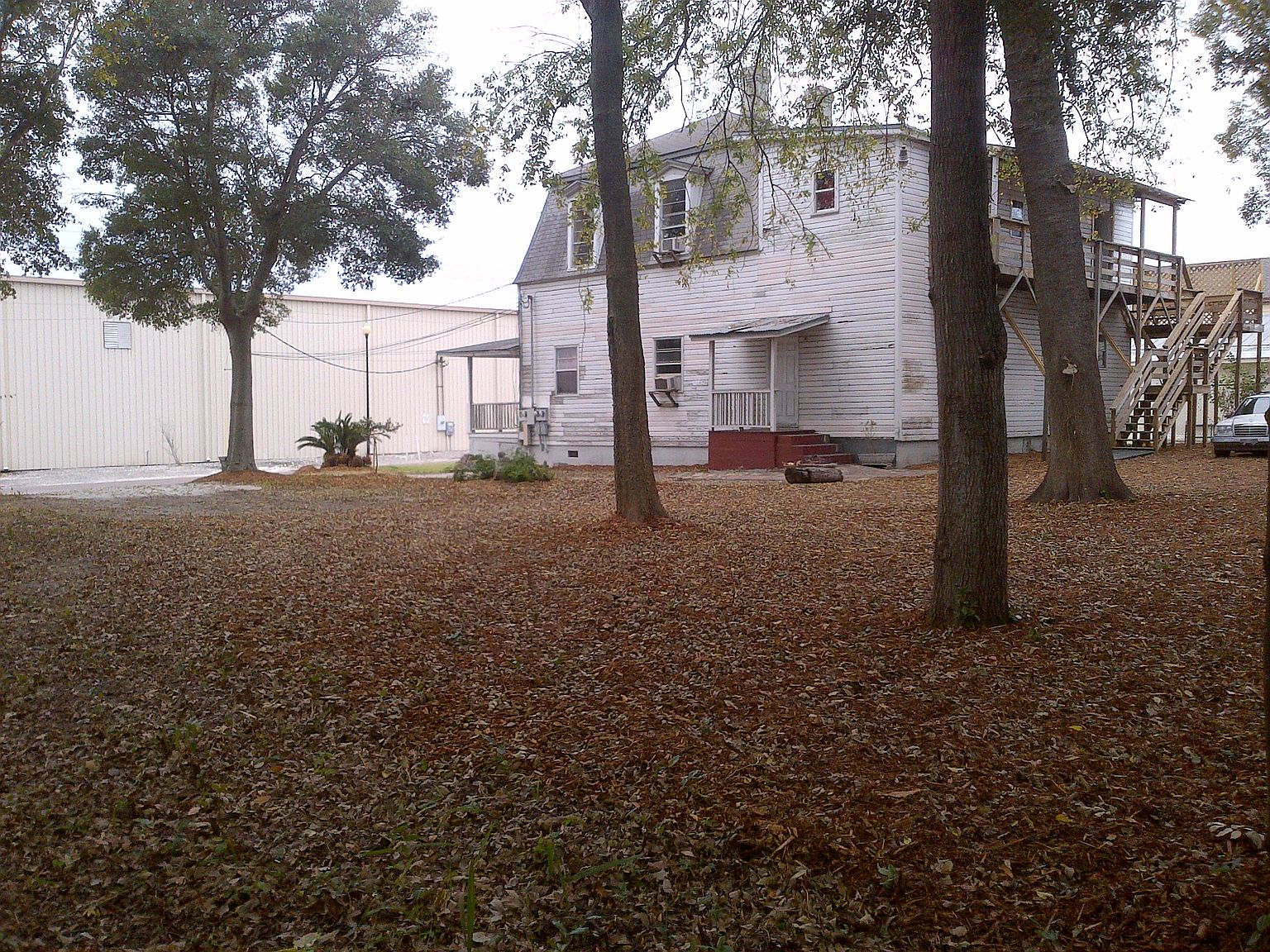
The White House Brothel
The building at 224 North Second Street in Fernandina Beach sits within one of the most historically layered towns in Florida—a place that has changed hands under eight different flags and spent much of the nineteenth century as a borderland haven for smugglers, pirates, and anyone else looking to operate outside the reach of organized law. That history is not incidental to what the building became. It is the reason the building existed at all. Amelia Island's deepwater harbor made Fernandina a strategic prize long before the town had paved streets. The Spanish platted Old Town in 1811 as the last Spanish city laid out in the Western Hemisphere, and almost immediately the settlement earned a reputation as what one contemporary account called a "festering fleshpot"—a free port where slaves, liquor, and foreign luxuries moved through with little interference. The bluffs overlooking the Amelia River were lined with bordellos. When Florida was ceded to the United States in 1821, the worst of the lawlessness was curtailed, but the character of the waterfront district did not vanish overnight. By the 1850s, Senator David Yulee's cross-state railroad had shifted the town south to its present location, and the new Fernandina that grew up around it attracted the same volatile mix of laborers, sailors, merchants, and opportunists that port towns have always drawn. Saloons, boarding houses, and brothels operated openly along the side streets near the waterfront, serving the men who built the railroad, worked the docks, and crewed the ships of the Mallory Steamship Line. The White House Brothel on North Second Street was part of that world—a private residence that operated as a house of prostitution during Fernandina's rougher years, catering to the sailors and dockworkers who moved through the port. The building is associated with the kind of transient, hard-living population that left few written records and even fewer names behind. What is known is that violence followed the trade. The property is said to be haunted by two spirits: a ghostly prostitute and a sailor who died in a fight at or near the premises. The details of neither death have been documented in the public historical record with specificity—no names, no dates, no coroner's reports have surfaced—but the claims have persisted long enough and consistently enough to appear across multiple paranormal databases and to feature on Fernandina Beach's popular ghost tours, which regularly pass the building. The reports themselves are sparse but pointed. The structure, now a private residence, carries a reputation among locals and tour guides as an active site. The spirits attributed to it are not described as residual impressions but as presences—figures associated with the building's past life, lingering in a structure that has long since been converted to domestic use. Fernandina Beach is a town saturated with haunted claims—Fort Clinch, the Palace Saloon, the Florida House Inn, Bosque Bello Cemetery, and the alleged witch's grave near the high school all feature prominently—but the White House Brothel occupies a different register. It is not a grand Victorian landmark or a civic institution. It is a small building on a side street where people lived hard, died violently, and were largely forgotten. The house is a private residence and is not open to the public.

Wiccademous Grave
Located in the historic regions of Florida's Nassau County, the grave marker of Wiccademous represents one of the most obscure yet persistently haunting remnants of colonial American history, a testament to the hysteria and cruelty that characterized early European settlements' responses to those accused of practicing witchcraft during the seventeenth century. Historical records, fragmentary and often unreliable as they are regarding events from this distant era, indicate that Wiccademous was a young girl who became the unfortunate target of witchcraft accusations during a period when such charges wielded tremendous social power and resulted in swift, devastating consequences for the accused. The grave lies beneath the roots of a massive and ancient oak tree, a botanical sentinel that has stood witness to centuries of local history and has become inextricably intertwined with the legend and presumed haunting associated with this burial site. Whether Wiccademous was executed and subsequently buried at this location, or whether she died under circumstances connected to her accusations and imprisonment, remains unclear from the fragmentary historical record, but the convergence of the grave site with documented paranormal phenomena has made the location a point of interest for paranormal researchers and local historians alike, though the site itself has become increasingly difficult to locate as encroaching development and the passage of time have obscured the pathways leading to this isolated forest location. The paranormal phenomena associated with Wiccademous's grave represent some of the most dramatic and physically alarming manifestations documented at any haunted location throughout Florida, phenomena that transcend the typical electromagnetic fluctuations or audio anomalies associated with many haunted sites and instead manifest as violent geophysical disturbances that affect the physical landscape itself. Visitors to the grave site, those few who manage to locate the ancient oak and the marker beneath its spreading branches, have reported experiencing sudden and unexplained ground tremors that seem to emanate from the immediate vicinity of the burial location, vibrations intense enough to cause visible disruption to loose soil and leaves covering the forest floor. These ground disturbances are frequently accompanied by profound booming noises of unknown origin, sounds that witnesses consistently describe as impossibly loud and resonant, frequencies that seem to reverberate through the earth itself rather than travel through the air, creating a sense of visceral dread in those who experience the phenomenon. Many visitors have reported that the paranormal experiences do not remain confined to the grave site itself but instead follow them as they depart the location, describing a sensation of being pursued or observed as they make their way back through the forest trails, a persistent and unsettling presence that allegedly continues to manifest in their own homes and personal spaces for weeks or months following their visit to the grave. This pattern of manifestation suggests that the entity or consciousness associated with Wiccademous possesses the ability not merely to haunt a fixed location but to attach itself to individuals who visit the site, extending the haunting into the temporal and spatial realms of those who encounter it. The legend of Wiccademous has persisted in oral traditions throughout Nassau County for centuries, passed down through generations of residents who maintain awareness of the grave's location and its paranormal significance despite the site's increasing obscurity and the gradual loss of detailed knowledge regarding the historical circumstances that resulted in the burial and the accusations that preceded it. Contemporary paranormal researchers have attempted to verify the historical record of Wiccademous and to establish with certainty whether she was indeed a victim of colonial witchcraft hysteria or whether her legend represents an amalgamation of multiple historical tragedies that have become conflated in local memory over the passage of centuries. The physical manifestations associated with the site, the ground tremors and booming sounds that have been reported by numerous independent witnesses across generations, lend credence to the possibility that some genuine paranormal phenomenon remains active at the grave location, whether that phenomenon represents the consciousness of the historical Wiccademous herself or some other manifestation of trauma and violence embedded in the historical landscape. The site remains inaccessible to casual tourists and casual visitors, largely lost to the encroaching development and environmental changes that have altered the forest landscape of Nassau County, though those who claim knowledge of the grave's location continue to report incidents of paranormal activity and the ongoing manifestation of the phenomena associated with this tragic remnant of Florida's colonial history.
Palace Saloon
The Palace Saloon in Fernandina Beach, Florida, represents one of the oldest continuously operating drinking establishments in American history, a distinction that places it among the nation's most venerable commercial structures. The saloon's origins trace to an era of frontier commerce and transportation infrastructure, when Fernandina Beach developed as a significant port city and commercial hub for northeastern Florida. The establishment emerged during the late nineteenth century, a period when saloons served not merely as venues for alcoholic consumption but as central gathering places for the community, spaces where business transactions occurred, political discourse took place, and the social hierarchy of the town found expression and negotiation. The building itself reflects the architectural styles and construction methods of its era, with design elements influenced by Victorian aesthetic sensibilities and the practical demands of commercial space for food and beverage service. During the early decades of the twentieth century, the Palace Saloon operated within a social and economic context that included the patronage of notable figures of American industry and commerce. Historical records and anecdotal accounts suggest connections to prominent businessmen of the era, with names such as Rockefeller and Carnegie appearing in the historical documentation of the establishment. The saloon's bar and back room became established spaces where deals were negotiated, relationships were forged, and memories accumulated within the physical structure. The continuous operation of the establishment across the twentieth century meant that it survived Prohibition through adaptation, witnessed multiple transformations in American commercial culture, and persisted as a tangible link to earlier American society. Charlie Beresford, a bartender who worked at the Palace Saloon from 1906 until his death in 1960, emerged as the central figure in the location's paranormal narrative. Beresford's decades of service to the establishment created a profound connection between his identity and the physical space, a bond that appears to have extended beyond his death. Guests and staff at the Palace Saloon consistently report phenomena associated with Beresford's presence, including the unmistakable sound of footsteps traversing the bar area, the audible clinking of glasses as though someone were preparing drinks, and cold chills that descend without meteorological cause. Doors open and close of their own volition, and disembodied voices have been heard within the establishment. Objects appear to move inexplicably, with reports of bottles shifting position and glassware being displaced. These phenomena have been extensively documented through visitor accounts and paranormal investigation reports that have compiled consistent patterns of activity suggesting a persistent entity dedicated to the continued operation of the saloon he served. The Palace Saloon continues to operate as both a functioning commercial establishment and a location of significant paranormal activity, creating an unusual intersection between ordinary commercial enterprise and extraordinary spiritual manifestation. The presence of Charlie Beresford as a guardian entity watching over his former workplace has made the establishment a destination for paranormal tourists and researchers, while also enhancing its reputation as Florida's most characteristically haunted saloon, a location where the boundary between the living world of commerce and the spiritual realm of departed souls remains remarkably transparent.
St. Peter’s Episcopal Church Cemetery
St. Peter's Episcopal Church Cemetery in Fernandina Beach, Florida stands as one of the oldest and most historically significant burial grounds in the state of Florida, a repository of generations of residents who shaped the community's development, character, and identity. The cemetery was established in eighteen fifty-eight, during a period when Fernandina Beach was developing into an important port community. The burial ground reflects the diverse population of the area, with graves representing different ethnic backgrounds, religious denominations, and social classes. The cemetery's location on Amelia Island and its proximity to the historic district of Fernandina Beach make it a natural focal point for historical tourism and paranormal investigation, serving as the starting point for the Amelia Island Ghost Tour. The paranormal phenomena documented at St. Peter's Episcopal Church Cemetery centers on unexplained light phenomena and orb manifestations captured in both eyewitness accounts and photographic documentation. Visitors have reported witnessing unexplained lights appearing among the graves and moving through the cemetery grounds without visible source or rational explanation. These lights, described as glowing orbs, luminescent apparitions, or spectral illumination, appear to concentrate near specific graves, suggesting either the lingering presence of specific deceased individuals or hotspots of paranormal energy. Ghost tour operators specifically point out areas where such manifestations have been documented, providing visitors with locations that maximize the possibility of witnessing or photographing paranormal phenomena. Photographic evidence constitutes the primary documentation method used by paranormal researchers and ghost tour participants. Photographs taken at the cemetery frequently capture orbs and unexplained luminescent phenomena that are not visible to the naked eye at the moment the photograph is taken, suggesting either spectral entities that manifest only through certain wavelengths of light or electromagnetic phenomena affecting photographic equipment. These orbs vary in size, intensity, and appearance across different photographs, leading researchers to speculate they may represent individual spirits or varying manifestations of a generalized paranormal energy field. Some paranormal investigators propose that the cemetery's age, continuous use as a burial location, and accumulated spiritual energy of generations of burials may have created environmental conditions that facilitate paranormal manifestation more readily than newer cemeteries. The Amelia Island Ghost Tour regularly incorporates St. Peter's Episcopal Church Cemetery as either its starting point or a significant stop. Tour participants frequently report seeing or photographing unexplained lights and orbs during their cemetery visits, with some tours coordinating group photography sessions designed to maximize the likelihood of capturing paranormal phenomena. The tour's success has transformed the cemetery into a destination for paranormal tourism, with people traveling to Fernandina Beach specifically to visit and document its supernatural activity. Local tourism organizations have embraced the cemetery's paranormal reputation as a community asset, marketing Amelia Island as a destination for those interested in historic haunted locations. The identity of specific spirits associated with St. Peter's Episcopal Church Cemetery remains largely undocumented, with most paranormal research focusing on the phenomena themselves rather than attempting to identify particular deceased individuals. The variety of graves and extended period of burials mean the cemetery contains hundreds of individuals, any of whom might potentially be responsible for the paranormal activity. Some reports suggest unexplained lights may be associated with particularly significant historical figures buried in the cemetery. Other researchers propose more generalized explanations involving accumulated psychic residue of countless deaths and burials, suggesting the cemetery as a whole may be the source of the phenomena. St. Peter's Episcopal Church Cemetery today remains an active burial ground while serving as a historical landmark and paranormal tourism destination. The cemetery continues to generate reports of unexplained lights and orbs, maintaining its status as one of Florida's most actively paranormal cemetery locations. Ghost tours continue to visit, with participants regularly photographing and documenting paranormal phenomena. The cemetery's significance as both a historical repository and paranormal location ensures its continued prominence in discussions of haunted places in the southeastern United States.
Florida House Inn
The Florida House Inn in Fernandina Beach, Florida, holds the distinction of being Florida's oldest continuously operating hotel, a status that places it among the most historically significant hospitality establishments in the southeastern United States and reflects its remarkable longevity across nearly one hundred seventy years. Built in 1857 during the antebellum period, the Florida House was constructed to serve the growing population of Fernandina Beach during a period when the coastal town was developing as a significant port city and commercial center for the surrounding region. The hotel emerged during a transformative era for Florida, as the state transitioned from territorial status toward statehood and as coastal towns competed for commercial and political prominence. The Florida House was strategically positioned to capture business from ships entering the port, merchants conducting trade, government officials, and wealthy visitors seeking refuge in Florida's mild winter climate. The building represented substantial investment and confidence in Fernandina's economic future, and its successful operation across decades of political upheaval, economic fluctuations, and competitive pressure testifies to its strategic location and the quality of its management. Throughout its long operational history, the Florida House has served as a window into the social, political, and cultural life of Fernandina Beach and northeast Florida more broadly. The hotel accommodated soldiers during the American Civil War, hosted Reconstruction-era politicians and carpetbaggers during the contentious post-war period, welcomed wealthy northern industrialists and investors during the Gilded Age, and continued to serve tourists and business travelers through the twentieth century. The building's endurance through economic depressions, wars, competitive challenges, and the radical transformation of American tourism testifies to the adaptability and resilience of its operators. The establishment has maintained its essential character as a guest lodging while modernizing amenities to meet evolving guest expectations, a balance that many historic properties have failed to achieve. The paranormal phenomena at the Florida House Inn are among the most extensively documented at any American hotel, with multiple distinct spiritual presences inhabiting the space. The most frequently encountered apparition appears as a sad-looking male figure whose appearances throughout the hallways suggest purposeful roaming or searching behavior. A distinctly different female spirit has developed a particular pattern of interaction with guests, specifically climbing into beds with living occupants, a phenomenon reported numerous times across different time periods and by different guests. The spirit identified as Miz Leddy, wife of former owner Major Leddy, manifests through the disappearance of antique shoes from display cases and the perception of distinctive perfume recognized as associated with her presence, scents that occur in locations where no living person could plausibly be present. Persistent paranormal activity at the Florida House includes full-body and partial apparitions visible to multiple witnesses, disembodied voices that can sometimes be recorded, physical contact phenomena where guests report feeling touch when no living person is present, and objects moving from secured locations. The variety and specificity of these phenomena suggest not random haunting but rather persistent presence of multiple distinct individuals with individual personalities, preferences, and patterns of interaction. The long service of the hotel means that countless thousands of individuals have passed through its doors, potentially leaving spiritual imprints of their passages and emotional experiences within the establishment.
Old Jail – Amelia Island Museum of History
The Old Jail on Amelia Island stands as a significant artifact of American criminal justice history, constructed in 1938 as the Nassau County Jailhouse to serve the growing city of Fernandina Beach located on Florida's Atlantic coast. The facility was built during an era when Depression-era architectural principles influenced government building design, incorporating solid brick and iron construction typical of the period. The building includes reinforced detention cells, interrogation areas, administrative offices, and a gallows structure specifically designed for capital punishment proceedings. The jail housed numerous inmates over its decades of operation, many awaiting trial for serious crimes within Nassau County's jurisdiction. The facility operated continuously through the mid-twentieth century, receiving violent offenders and individuals convicted of heinous crimes whose cases garnered significant regional attention. One figure whose presence permanently marked the location was Luc Simone Aury, a man wanted for rape, murder, and robbery, whose violent criminal history made him a notorious figure throughout the region and a subject of considerable public fear. Aury was sentenced to execution by hanging following a trial that intensified public interest in his fate. The night before his scheduled execution, a horrific event occurred when Aury's throat was slit in what some accounts describe as self-inflicted wounds made in an act of desperate defiance against his impending death. When the execution proceeded the following day despite this prior injury, the combination of the hanging and the pre-existing throat wound created an unprecedented and gruesome scene. Blood spewed across the gallows platform in quantities that shocked and horrified the assembled witnesses and townspeople, transforming what was intended as orderly justice into chaotic spectacle. The violence triggered a riot among assembled crowds, with panic and outrage spreading through the mass of onlookers. The traumatic imprint of both Aury's violent crimes and the horrific circumstances of his execution became deeply embedded in the building's history and consciousness. In subsequent decades, the former jailhouse was repurposed as the Amelia Island Museum of History, transforming the site of incarceration and death into an institution dedicated to preserving local history and heritage. Staff and visitors to the museum have reported persistent paranormal phenomena in the structure, particularly concentrated in the gallows area at the back of the building where Aury's execution took place. Multiple accounts describe the apparition of a man bearing a distinctive and gruesome wound across his neck, matching the fatal injury sustained by Aury. The ghostly figure displays his injury prominently, suggesting a spiritual manifestation centered on the trauma of violent death. Disembodied moaning sounds are frequently reported echoing through the corridors, particularly near the execution area, suggesting a spirit still experiencing psychological trauma. The moaning sounds are often described as anguished and tormented, as if the spirit relives agony and distress. Employees have documented numerous instances of unexplained voices emanating from the empty gallows area and detention cells. Full body apparitions have been reported by reliable witnesses, with visitors describing encounters with a ghostly figure displaying a bloody neck wound, often appearing in postures of distress or anguish. The apparition is consistently described as masculine and marked by its distinctive, horrific injury. The museum now offers ghost tours conducted after dark. The Old Jail represents a convergence of documented historical violence, legal punishment, and persistent paranormal phenomena.
Amelia Island Lighthouse
The Amelia Island Lighthouse, constructed in 1820 and relocated to Amelia Island in 1838, represents one of Florida's most historically significant maritime structures and stands as the state's oldest continuously operating lighthouse. The lighthouse was originally built on Cumberland Island, Georgia, where it served crucial navigation functions guiding maritime traffic through the complex waters of the Georgia and northern Florida coastal region. The decision to relocate the lighthouse to Amelia Island reflected changing maritime patterns, the strategic importance of the Amelia Island location for ship traffic, and the naval priorities of the young American nation seeking to improve coastal navigation capabilities. The lighthouse's relocation itself represented a remarkable engineering feat for the era, requiring substantial dismantling, transportation, and reconstruction of the structure—a process that suggests both the value placed on the lighthouse and the technological competence of the period's engineers. The building's more than two centuries of continuous operation and its position as the state's oldest lighthouse have combined to create a structure deeply embedded within Florida's maritime history and cultural consciousness. The physical structure of the Amelia Island Lighthouse reflects early nineteenth-century lighthouse construction, with architectural features designed to maximize visibility, structural stability, and the safety of lighthouse keepers and maritime users dependent upon its guidance. The tower itself rises substantially above Amelia Island's landscape, creating a prominent visual landmark that has guided countless maritime vessels through the island's surrounding waters. The building's long operational history has witnessed dramatic changes in maritime technology, from sailing vessels dependent entirely upon visual navigation aids to modern ships equipped with electronic navigation systems where lighthouses serve supplementary rather than primary guidance functions. This extended period of technological transition and the continuous human presence maintained within the lighthouse across nearly two centuries has apparently created conditions favorable for paranormal phenomena to develop and persist. The paranormal phenomena documented at the Amelia Island Lighthouse center substantially on disembodied voices and sounds of laughter reported in connection with nearby Bosque Bello Cemetery, a historic burial ground associated with the lighthouse location. Witnesses have reported hearing voices and laughter emanating from the cemetery area with particular frequency during sunset hours, when the boundary between day and night creates transitional conditions theorized by paranormal researchers to be conducive to spiritual manifestation. The cemetery, which dates to the colonial period and contains burials spanning centuries of Amelia Island history, appears to be a location where the accumulated emotional weight of burials and memorial practices has created conditions supporting paranormal activity. The phenomenon of voices associated with cemeteries represents a distinctive category of haunting, theorized to result from either residual imprinting of activities occurring in cemeteries or the presence of spirits emotionally connected to burial grounds. The voices and laughter reported in connection with Bosque Bello Cemetery suggest potentially multiple entities communicating or expressing themselves through disembodied vocal manifestations. The specificity of laughter—not screams or cries, but laughter—suggests entities apparently maintaining emotional characteristics or communication patterns that survived their deaths. The laughter phenomenon is theorized by paranormal researchers to potentially represent either playful spirits or residual imprinting of social activities occurring at the cemetery during living inhabitants' times. Historical cemetery practices often involved memorial gatherings, family visits, and community commemorations—activities with emotional and social significance that might create the conditions for residual manifestation of voices and sounds. The paranormal phenomena at the lighthouse location have attracted the attention of paranormal researchers, ghost tour operators, and paranormal enthusiasts seeking to document and understand manifestations at this historic maritime structure. Diane Blanton, a local history expert and paranormal enthusiast, has established ghost tours offering paranormal interpretation and historical context regarding the lighthouse and cemetery hauntings. These tours, conducted monthly on the first and third Wednesdays, represent an attempt to integrate paranormal documentation with historical interpretation, educating participants regarding both the lighthouse's maritime history and the paranormal phenomena reported in the surrounding area. The establishment of organized ghost tours suggests sufficient documentation of paranormal activity to sustain public interest and tourism-oriented experiences. The Amelia Island Lighthouse currently remains open to public viewing during designated hours on Saturdays, allowing visitors to experience the structure, observe the surrounding landscape from the tower, and become aware of the paranormal history associated with the location. The lighthouse's status as a historic landmark attracting cultural heritage tourists overlaps with its emerging reputation as a paranormally active location. The combination of historical significance—operating continuously for more than two centuries as Florida's oldest lighthouse—with documented paranormal phenomena creates a location of interest to visitors motivated by both historical preservation concerns and paranormal investigation interests. The lighthouse represents the preservation of American maritime history while simultaneously serving as evidence of how historical structures and landscapes accumulate paranormal phenomena across centuries of occupation and use. The Amelia Island Lighthouse and associated Bosque Bello Cemetery stand as evidence that paranormal activity frequently clusters around locations of historical significance and continuous human emotional investment. The cemetery's role as a burial ground where families have memorialized deceased relatives across multiple centuries has apparently created conditions where voices and laughter persist as paranormal phenomena. The lighthouse's function as a location of crucial maritime importance, where lighthouse keepers spent extended periods maintaining the structure and serving maritime navigation purposes, may have contributed to the complex emotional and historical weight accumulated within the location. The voices and laughter documented at the cemetery suggest that paranormal manifestation, rather than being limited to sites of tragedy or violent death, can occur at locations accumulating extended periods of emotional significance and human presence. The paranormal phenomena at the Amelia Island Lighthouse and cemetery remain documented and actively investigated, with ongoing interest from both academic paranormal researchers and paranormal tourism operators. The lighthouse's position as Florida's oldest lighthouse, combined with the historical depth of the adjacent cemetery, has positioned the location as significant within both maritime heritage preservation and paranormal investigation communities. The disembodied voices and laughter heard at sunset continue to intrigue visitors and researchers, contributing to the location's growing prominence within Florida paranormal culture and American paranormal documentation more broadly.
Bosque Bello Cemetery
Bosque Bello Cemetery in Fernandina Beach, Florida, stands as one of the oldest and most historically significant burial grounds in the state, established in 1798 by Spanish colonial authorities during a period when European powers still competed for control of the North American continent. The cemetery was founded during the late colonial period, a time when Spanish governance of Florida continued despite the shifting geopolitical landscape surrounding it. The name itself, "Bosque Bello," means beautiful forest in Spanish, reflecting the natural landscape setting in which the cemetery was positioned, surrounded by the live oak trees and Spanish moss characteristic of the coastal Florida environment. The grounds themselves encompass numerous grave sites representing nearly two centuries and a quarter of burials, each marked by headstones and monuments that chronicle the passage of time and the succession of individuals who have been laid to rest in this location. The cemetery contains the remains of individuals from multiple historical periods, including victims of the American Revolutionary War, casualties of the Civil War, and countless civilians who lived and died in the Fernandina Beach area across the centuries. The historical significance of Bosque Bello Cemetery extends beyond its role as a burial ground; it represents a continuous thread of community history, a repository of the remains of those whose lives contributed to the development and settlement of the Florida region. Soldiers who died defending their respective causes during both American conflicts that fractured the nation found their final resting places beneath the sandy soil of the cemetery. Civilians who succumbed to disease, accident, or the ordinary tragedies that marked life in earlier centuries are interred there, along with men, women, and children of various nationalities and backgrounds who became part of the community's fabric. The cemetery serves as a physical manifestation of historical memory, a place where time itself seems to slow and the past remains present in tangible form. The landscape itself contributes to this sense of temporal continuity, with the ancient live oak trees providing shelter and shade much as they did when the first graves were dug and the community began the long process of burying its dead. Paranormal investigators and visitors to Bosque Bello Cemetery have long reported experiencing phenomena consistent with the presence of spiritual entities concentrated at the location. Disembodied voices have been heard among the graves, voices that do not appear to originate from any identifiable source. The sounds of children's laughter emanate from areas where no children are visibly present, suggesting the spirits of young individuals who may have died in the cemetery's vicinity and now remain as playful entities seemingly unaware of or unconcerned by their departed status. Child apparitions have been observed screaming in apparent distress, visible only for moments before vanishing, leaving witnesses with the haunting question of what trauma or injury caused such manifestations. Ghostly figures have been spotted walking among the tombstones and resting beneath the shade of the ancient trees, presences that appear to remain engaged with the cemetery as if unaware that their earthly lives have concluded. These phenomena are not isolated incidents but rather represent consistent, repeated experiences reported by multiple independent witnesses across many years. The persistent spiritual activity at Bosque Bello Cemetery appears to reflect the presence of multiple entities, some of whom may be the spirits of those actually buried there, others of whom may represent traumatic deaths that occurred near the cemetery. The particular prominence of child spirits suggests that the deaths of young individuals were concentrated at or near the location, whether through childhood diseases common to earlier eras, accidents, or other circumstances that resulted in early death. The cemetery has developed a reputation among paranormal enthusiasts and researchers as one of Florida's most hauntingly beautiful locations, a place where history is tangible, where the boundary between past and present becomes indistinct, and where the normal rules separating the living from the dead appear to be suspended. Visitors report feelings of profound sadness, of connection to past suffering, and of the presence of awareness looking back at them from among the graves. Bosque Bello Cemetery stands as a testament to the continuity of death as a human experience, a place where the various epochs of American history converge in a landscape where spiritual presences apparently remain engaged with the location that marks the boundary between life and eternity.
The Amelia Island Williams House
The Amelia Island Williams House represents one of the finest examples of antebellum Southern architecture in Florida, constructed in 1856 to embody the elegance and refinement of the pre-Civil War era. Located in Fernandina Beach, the Williams House sits within the historic district and was designed as a residence for a prominent family of means, reflecting the architectural sophistication of mid-nineteenth-century Southern builders. The structure features characteristic antebellum design elements including grand staircases, spacious dining rooms suitable for entertaining, parlors for social gathering, and numerous bedrooms that accommodated an extended family and household staff. The Williams House quickly became known as a center of social activity, hosting elegant galas and elaborate dinner parties that cemented its place in the social fabric of Fernandina Beach society. Throughout the latter half of the nineteenth century and into the twentieth, the building remained an architectural landmark and historical monument to the community's prosperous past. The Civil War, Reconstruction, and subsequent economic changes transformed society around the mansion, yet the building itself remained a testament to an earlier era's values and aesthetics. The architectural details were carefully preserved as the building transitioned through different ownership and purposes, maintaining the integrity of the original 1856 design. Beginning in the late twentieth century, reports emerged from visitors, staff members, and paranormal investigators documenting extraordinary phenomena within the Williams House that suggested the presence of supernatural entities tied to the building's social history. Multiple witnesses have reported hearing laughter and animated conversation emanating from the dining room during hours when the building is unoccupied, voices of multiple people engaged in cheerful discourse sometimes accompanied by the sounds of glasses clinking or silverware on plates. Apparitions have been observed on the grand staircase by numerous independent observers, with witnesses describing figures in period clothing appropriate to the nineteenth century, sometimes appearing as full-bodied apparitions and other times as ethereal, translucent forms. The most frequently reported apparition is described as a woman in a light-colored gown, seen repeatedly descending the staircase at varying times of day and night. Some witnesses have reported experiencing warm, welcoming sensations associated with these apparitions, suggesting the spirits may be residual manifestations of happy occasions rather than traumatic events. Paranormal researchers believe that the phenomena may represent residual hauntings connected to the countless elegant social gatherings that took place within the mansion's walls during its most prosperous period. The theory of residual haunting suggests that particularly intense emotional experiences may leave energetic imprints on a location that can manifest as ghostly recreations of those moments. In this case, the laughter, conversation, and apparitions descending the staircase may be repeating moments of joy and social celebration from nineteenth-century galas and parties that the Williams House hosted. The warm and welcoming feelings reported by witnesses are consistent with this theory, suggesting spirits of previous residents or guests who experienced happiness within these walls may still be visiting the building. The Williams House has been featured in paranormal television documentaries, including a notable appearance in a WJCT documentary titled The Ghosts of North Florida, bringing wider attention to its supernatural reputation. The mansion is included on multiple paranormal ghost tours of the historic district, allowing visitors interested in both architectural history and paranormal phenomena to experience the location firsthand.
The Eppes House
The Eppes House, located in Fernandina Beach, Florida, represents one of the most architecturally significant and historically prominent residential structures on Amelia Island, with a history extending back through multiple generations of Florida's early American and territorial periods. The mansion, constructed during a time when Fernandina Beach was developing as a center of commerce and residential importance in northeast Florida, embodies architectural styles and construction techniques characteristic of the nineteenth-century American South. The building's prominent position within Fernandina Beach's historic district, combined with its substantial architectural presence and historical significance, established it as one of the community's landmark structures. The Eppes House has served multiple residential functions throughout its history, housing prominent family lineages and playing roles in the broader social and economic history of Amelia Island and the Fernandina Beach community. The building's physical structure, with its period details, generous proportions, and established presence within the community's historical landscape, creates an environment saturated with the accumulated experiences and memories of its occupants across more than a century of American history. The dark historical narrative underlying the Eppes House's haunting centers on Charlotte Eppes, a female member of the household whose death precipitated the paranormal phenomena for which the mansion has become known. Charlotte Eppes's death involved both violent tragedy and the complications of childbirth, creating a compound trauma of significant emotional intensity. The specific circumstances, as documented in historical accounts and paranormal investigation reports, indicate that Charlotte Eppes was shot under circumstances that may have involved domestic violence, family conflict, or other interpersonal tragedy. Following the shooting, she survived long enough to give birth to a child, but subsequently died from complications associated with childbirth, compounded by the trauma of her gunshot wound. This sequence of events represents profound and multifaceted tragedy, combining violent assault, the vulnerability of pregnancy and childbirth, and the loss of life during what should have been a transformative and joyful life event. The emotional devastation associated with these events appears to have created a powerful spiritual imprint within the building's walls and spaces. Charlotte Eppes's presence within the Eppes House has manifested through multiple forms of paranormal phenomena documented by residents, hotel guests, and paranormal investigators. Full-body apparitions of a female figure, identifiable as Charlotte Eppes, have been reported in various locations within the mansion. These visual manifestations are characterized by clarity and persistence, appearing to witnesses in sufficient detail that observers are able to describe distinctive clothing, facial features, and other identifying characteristics. Partial apparitions, manifesting as portions of the full-body form, have also been documented. Disembodied voices, attributed to Charlotte Eppes, have been recorded and reported by multiple witnesses, sometimes conveying emotional content such as distress, sorrow, or attempts to communicate. Unexplained sounds, including footsteps, movement sounds, and other auditory phenomena, occur throughout the mansion, often concentrated in areas historically associated with bedroom spaces or intimate residential areas. The Eppes House has acquired a reputation within the Fernandina Beach community and among paranormal researchers as the most notoriously haunted residence on Amelia Island, reflecting both the intensity of the paranormal phenomena and the severity of the historical tragedy underlying the manifestations. The building's established reputation has attracted paranormal investigation teams, amateur researchers, and individuals interested in experiencing authentic haunted locations. The mansion's architectural significance, combined with its paranormal notoriety, has created a complex role within the Fernandina Beach historical and cultural landscape. The building's transition from private residence to publicly recognized haunted location has preserved the historical narrative of Charlotte Eppes's life and death. The Eppes House stands as a location where architectural beauty, historical significance, human tragedy, and paranormal manifestation converge within a single structure, creating a layered narrative that speaks to both the material history of nineteenth-century Florida and the spiritual dimensions of unresolved trauma.
Fort Clinch State Park
Fort Clinch State Park occupies a location of profound historical significance on Amelia Island near Fernandina Beach, Florida, commanding a strategic position that made it a site of considerable military and political importance during the American Civil War and the turbulent decades preceding and following that conflict. The fort itself, constructed using substantial engineering and resource investment, stands as a monument to nineteenth-century American military architecture, its earthen embankments, casemate structures, and defensive fortifications representing the technological and strategic thinking that shaped American coastal defense during the Civil War era. Built during the 1850s, the fort became a focal point for military operations, political conflict, and the movement of troops, supplies, and equipment that characterized the American Civil War's complex logistics. The fort's location positioned it at the intersection of naval power, coastal defense requirements, and the occupation and fortification of hostile or contested territory. The Civil War period that transformed Fort Clinch from a modern military facility into a center of armed conflict and human suffering created conditions of extraordinary intensity—the fear, pain, disease, and death that characterized military life during the Civil War left emotional and psychological marks on everyone associated with the location. The fort housed soldiers from multiple armies during its period of active military use, served as a prison facility for some individuals, and functioned as a center for military operations across several years of warfare. The parade ground, where soldiers drilled and gathered, the officer's quarters where military command decisions were made, the barracks where enlisted men crowded into close quarters, and the infirmary where wounded and sick soldiers received minimal medical care—all of these spaces accumulated the emotional residue of military life, suffering, and the complex human experiences that characterized the American Civil War. The paranormal activity documented at Fort Clinch State Park centers on the presence of multiple distinct entities whose manifestations appear directly connected to the fort's military history and the combat-related trauma associated with the Civil War. Spectral soldiers appear as apparitions throughout the fort, sometimes appearing in groups and sometimes manifesting individually, consistently described as wearing military uniforms consistent with the Civil War era. These entities appear to perform repetitive actions associated with military routine—marching, drilling, standing watch—suggesting residual energy imprints of traumatic experiences repeated with such intensity that they leave permanent marks on the physical and spiritual environment. A Union officer has been documented appearing in locations consistent with command functions, suggesting an entity maintaining awareness of hierarchical military structures and relationships. Another documented presence involves a ghostly nurse, an entity appearing in the infirmary and medical-care areas of the fort, consistent with the experience of medical professionals attempting to provide care to overwhelming numbers of wounded and dying soldiers. The nurse's manifestation suggests the emotional trauma associated with witnessing human suffering on an industrial scale, the psychological impact of caring for individuals destined to die despite all medical efforts. Additionally, investigative teams have documented the presence of a child spirit and a baby spirit, suggesting that the fort somehow became connected to very young individuals whose deaths appear connected to the military operations or the broader conditions of conflict and displacement that characterized the Civil War. Investigators and visitors have documented a variety of paranormal phenomena throughout the fort, including apparition sightings described with unusual consistency and clarity, shadow figures moving through casemates and earthwork embankments, unexplained sounds ranging from footsteps and voices to what witnesses describe as the sounds of military activity—marching, drilling, commands being shouted. The bastion tunnels have emerged as locations of particularly intense paranormal activity, deep underground spaces that would have functioned as shelter and defense during military operations. The southwest tunnel has been identified as a location of heightened paranormal manifestation, and the officer's quarters have yielded apparition sightings and strange phenomena consistent with the presence of intelligent entities maintaining awareness of the fort's military functions. Fort Clinch State Park continues to operate as a public facility and historical site, with the documented paranormal phenomena becoming integrated into its interpretation as a Civil War location. The state park provides opportunities for visitors to explore the fort's architecture and military history while simultaneously acknowledging the paranormal dimensions of the location. The combination of Civil War military significance, architectural preservation, and documented supernatural manifestation has positioned Fort Clinch as one of Florida's most significant haunted locations. The fort stands as evidence that warfare, conflict, and trauma create spiritual impressions capable of persisting indefinitely, that some locations accumulate such profound human suffering that they become permanently marked by paranormal phenomena as if the emotional intensity of historical experience leaves traces that transcend conventional physical reality.
Pate Sucree – Wicked Davey’s
Wicked Davey's operates as a juke joint establishment located in West Virginia, representing the particular category of paranormal phenomena that emerges within venues dedicated to music, social gathering, and cultural expression. Juke joints historically served as spaces where working people gathered for entertainment, socializing, and the consumption of alcohol and food in informal community settings characterized by music and celebration. Wicked Davey's occupies this social and cultural context while simultaneously functioning as a documented site of paranormal phenomena that manifests throughout the establishment. The venue's back areas and service spaces, areas typically restricted from public access and characterized by minimal oversight and lighting, have emerged as particular focal points for paranormal manifestation. The reputation of Wicked Davey's as a haunted location has spread through paranormal investigation communities and among those interested in regional paranormal phenomena, despite the relative obscurity of the location compared to more nationally famous haunted sites. Paranormal investigations conducted at the establishment have documented measurable phenomena and collected audio evidence that supports the authentic existence of supernatural presences within the venue. The combination of the venue's purpose and cultural context with documented paranormal phenomena creates a distinctive haunt characterized by the overlay of social, cultural, and supernatural dimensions. The primary paranormal manifestations documented at Wicked Davey's involve the appearance and movement of shadow figures, entities that manifest visually as dark silhouettes or obscurations within the visible environment. These shadow figures display apparent intelligence and responsiveness, suggesting the presence of aware, conscious entities rather than simple visual artifacts or misinterpretations of conventional shadows. The shadow figures have been observed in both public and back areas of the establishment, suggesting dispersed supernatural presence rather than concentration in single locations. Witnesses report the sensation of being observed and evaluated by these shadow entities, implying awareness and intentional attention directed toward living inhabitants and visitors. The shadow figures demonstrate apparent interest in activities within the venue, appearing to materialize when specific activities or emotional energy increases, suggesting responsiveness to living human presence. The visual nature of these manifestations distinguishes them from purely audio phenomena, suggesting the ability of the entities to affect visual perception and create visible anomalies within the electromagnetic spectrum. Paranormal investigations at Wicked Davey's have yielded particularly significant evidence in the form of EVP recordings, audio evidence of disembodied voices and vocalizations captured during investigation procedures. Electronic voice phenomena represent some of the most directly compelling evidence of paranormal presence, capturing apparent communication from entities that lack visible physical form. The recorded voices demonstrate acoustic characteristics consistent with human speech, suggesting communication attempts by intelligent entities. Paranormal investigators have documented personal paranormal experiences during investigations, with team members reporting sensations of presence, unexplained temperature variations, and other physical phenomena consistent with documented paranormal manifestations. The accumulation of investigation evidence across multiple investigation sessions has established Wicked Davey's as a location with authentic, measurable paranormal phenomena that exceed the threshold of individual misperception or environmental misinterpretation. The consistency of reports across multiple investigators and investigation periods strengthens the credibility of accounts regarding the genuine paranormal nature of the location. The present-day status of Wicked Davey's reflects its continued operation as a juke joint establishment while simultaneously functioning as a documented paranormal investigation site. The venue continues to serve its traditional social and cultural purpose, hosting patrons who gather for entertainment and socializing, while simultaneously accommodating paranormal investigation teams seeking evidence of supernatural phenomena. The convergence of ordinary social activity and paranormal investigation creates a distinctive environment where the mundane and supernatural coexist within shared physical space. Paranormal investigation resources and documentation regarding Wicked Davey's continue to circulate within paranormal research communities, with investigators sharing findings and discussing the phenomena. The venue exemplifies the particular category of paranormal haunting that emerges in social and cultural gathering spaces, suggesting possible connection between the emotional energy, social interaction, and cultural significance of such locations and the manifestation of paranormal phenomena. Wicked Davey's stands as testimony to the reality of paranormal phenomena occurring in working-class, culturally significant spaces, demonstrating that haunting is not limited to historical landmarks, institutions, or elite establishments but manifests equally in the modest venues where ordinary people gather and create meaning.
Marina Seafood Restaurant
Marina Seafood Restaurant, situated in the historic waterfront district of Fernandina Beach, Florida, occupies a location with deep connections to the coastal community's maritime heritage and commercial history. Fernandina Beach, located on Amelia Island at the northern terminus of Florida's Atlantic coastline, developed as a significant port town during the nineteenth century, its protected harbor attracting merchants, fishermen, and maritime industries that became central to the city's economic identity. The restaurant building reflects the architectural character of Fernandina's historic district, a structure that has served various commercial purposes throughout its existence, its thick walls and sturdy construction testament to the climate extremes and economic pressures characteristic of Florida's coastal environment. The waterfront setting connected the business directly to the fishing industry that has defined the region for generations, creating a natural affinity between location and commercial purpose. Fernandina Beach, like many maritime communities, developed social hierarchies and occupational structures that sometimes created profound inequalities and psychological tensions among the population. The fishing industry, while economically vital to the community, attracted individuals from diverse backgrounds and circumstances, some of whom brought personal histories marked by violence, emotional instability, or criminal behavior. The maritime setting, with its emphasis on physical strength and high-risk activities, created an environment where tensions could escalate quickly into violence without the social or legal restraints that characterized more settled urban communities. Among the individuals drawn to work within the fishing industry was a fisherman whose connections to violence and tragedy would ultimately leave a supernatural mark upon the location where he conducted his darkest acts. The specific tragedy that anchors the haunting of Marina Seafood Restaurant involves the murder of a woman by the fisherman, an act of violence that occurred within the upstairs areas of the restaurant building. The historical records and oral traditions of Fernandina Beach maintain fragmentary details regarding the circumstances of this crime, details that have become somewhat obscured by the passage of time and the tendency of local historical consciousness to blur the most brutal elements of past tragedies. What remains consistently documented is that a woman died violently at the hands of the fisherman within the confines of the restaurant, that her death represented a confluence of domestic abuse, desperation, and masculine violence characteristic of many murders that defined the late nineteenth and early twentieth century American experience. The specific location of her death within the upstairs areas has become the primary locus of paranormal manifestation. The paranormal phenomena reported at Marina Seafood Restaurant have manifested with a disturbing consistency that has made the location the subject of both historical research and paranormal investigation. Staff members employed at the restaurant have consistently refused to work in the upstairs areas during nighttime hours, reporting a pervasive sense of malevolent presence, overwhelming feelings of dread, and the distinct impression that they are being watched by an unfriendly consciousness occupying the space alongside them. The apparition of the fisherman, described as a dark masculine form, has been reported appearing in the upstairs areas of the restaurant, his manifestation often accompanied by an inexplicable sense of violence and rage that communicates itself to observers through psychological channels that remain beyond scientific explanation. The emotional atmosphere of the upstairs spaces has become so thoroughly colored by negative paranormal phenomena that it has generated a persistent reputation for being dangerously haunted. The historical tragedy that gave rise to the haunting at Marina Seafood Restaurant has become inseparable from the physical location itself, with the crime having transformed the upstairs spaces from ordinary commercial rooms into something fundamentally transformed by the violence that occurred within their confines. The ghost stories surrounding the fisherman's murder have circulated through Fernandina Beach's community memory for generations. The apparition of the fisherman, the overwhelming sense of danger that characterizes the upstairs areas, and the absolute refusal of staff to work those spaces at night all combine to create a location where the boundary between past trauma and present reality appears dangerously thin.
Atlantic Avenue Schoolhouse
The Atlantic Avenue Schoolhouse in Fernandina Beach, Florida represents an important example of historical preservation in a region deeply marked by colonial history and indigenous presence. The structure, now operating as the Amelia Schoolhouse Inn at 914 Atlantic Avenue, has been repurposed into a modern inn operation while maintaining historical architectural integrity and the original structural elements underlying contemporary renovation and commercial adaptation. The schoolhouse was constructed during an era when Fernandina Beach, situated on Amelia Island at northern Florida's Atlantic coast, was establishing itself as a significant harbor community and commercial center with corresponding need for educational facilities serving the population. The building's construction incorporated nineteenth-century architectural standards and materials, designed to serve educational purposes and accommodate environmental conditions associated with coastal Florida's climate, including salt air, humidity, and seasonal storm exposure. The Atlantic Avenue location places the schoolhouse in Fernandina Beach's historic district, an area rich in historical significance with colonial period structures extending back to Spanish colonial era. The tragic event associated with the Atlantic Avenue Schoolhouse paranormal phenomena involved a construction worker who fell during the building's construction or renovation period, an incident apparently resulting in fatalities or severe injury and leaving the victim bound to the location through paranormal manifestation. The specific circumstances surrounding the fall, worker identity, nature of injuries sustained, and exact timeline have become obscured by historical passage, yet the incident established a traumatic event within the structure's physical and psychological history generating lasting paranormal consequences. The fall occurred in areas consistent with the building's architectural layout, potentially involving floor areas or window locations where the worker's encounter with gravity and structural surfaces resulted in fatal or severe outcome. The construction or renovation work positions the Atlantic Avenue Schoolhouse within a broader pattern of paranormal phenomena associated with construction-related fatalities, a category generating substantial documentation across paranormal research focusing on occupational death and spiritual manifestation. Paranormal reports from the Atlantic Avenue Schoolhouse have proven more limited in scope compared to certain other documented haunting locations, with reports not yet reaching comprehensive cataloguing that some properties have achieved through extensive investigation. Visitors and paranormal investigators working within the inn have documented experiences consistent with intelligent or residual haunting phenomena associated with construction history. The paranormal nature of phenomena appears substantive enough to warrant inclusion in paranormal databases and listings of haunted Fernandina Beach locations. The repurposing into commercial inn operations means contemporary guests and staff have ongoing exposure to any paranormal phenomena, creating opportunities for documentation through guest reports and paranormal investigation activities. The preservation of the Atlantic Avenue Schoolhouse as a functioning historical building ensures that the location maintains architectural and historical integrity while remaining accessible to researchers and paranormal investigators. The building's location within Fernandina Beach's historic district positions it within a landscape of significant historical depth, an environment where multiple locations carry paranormal significance. The apparent paranormal phenomena associated with construction-related fatality represents a documented example of occupational death generating lasting spiritual consequences, a pattern replicated across numerous locations throughout North America where workplace accidents resulted in fatalities appearing to persist as paranormal phenomena.