
Haunted Places in Colorado
165 haunted locations
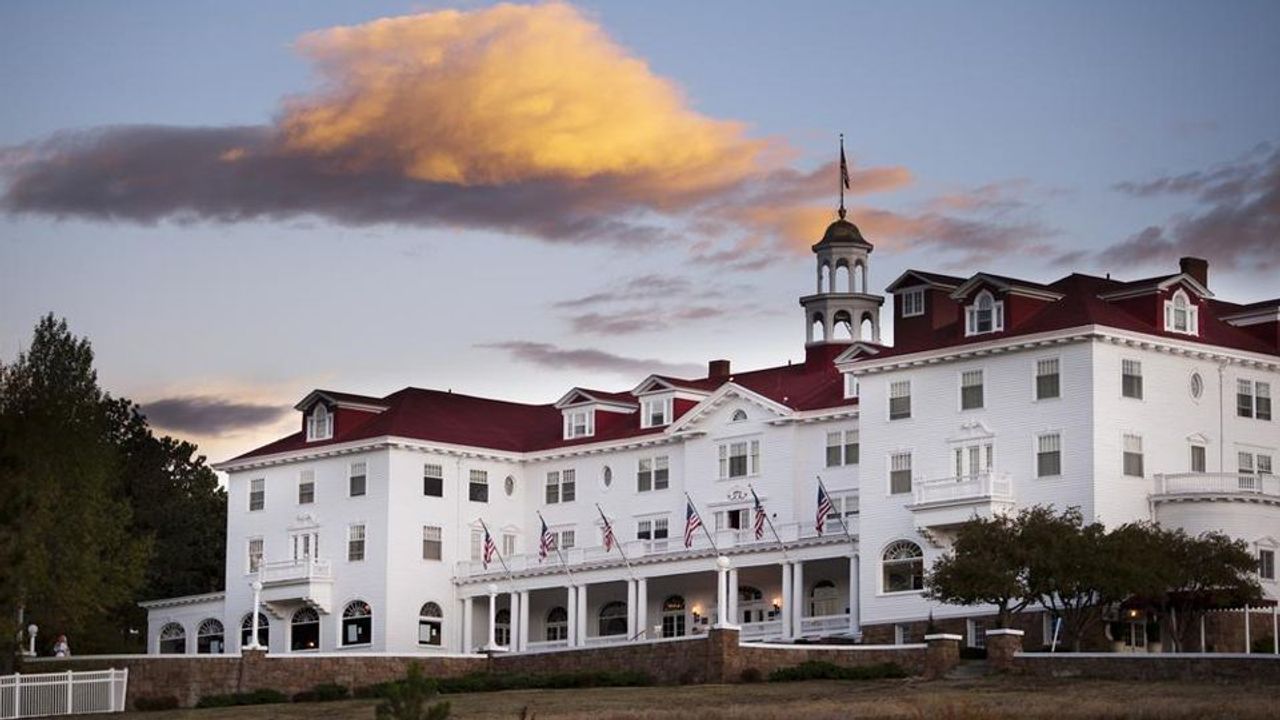
The Stanley Hotel
Perched on a hillside at the edge of Estes Park with the full sweep of the Rocky Mountains behind it, the Stanley Hotel looks less like a haunted building than a misplaced New England estate — white clapboard siding, Georgian columns, and a formal symmetry that has no business sitting at 7,500 feet in the Colorado high country. That contrast is entirely deliberate. The man who built it was an inventor from Maine who came west to save his own life, and what he left behind has refused to stay quiet for more than a century. Freelan Oscar Stanley arrived in the Estes Valley in 1903 suffering from tuberculosis, weak enough that his doctors had told him not to plan beyond six months. The mountain air reversed his decline so dramatically that by summer's end he resolved to return every year. But the tiny settlement of Estes Park offered nothing for a man of his means and temperament. Stanley had made his fortune co-inventing the Stanley Steamer automobile and manufacturing photographic dry plates, and he and his wife Flora were accustomed to the social fabric of the East Coast. So Stanley decided to bring that world to the Rockies. He purchased land from the holdings of the 4th Earl of Dunraven — an Anglo-Irish nobleman who had tried and failed to turn the valley into a private hunting preserve — and broke ground on his hotel in 1906. On July 4, 1909, the Stanley Hotel opened with 140 rooms, running water, telephones, electricity from a hydroplant Stanley himself had built on the Fall River, and a concert hall designed to echo the acoustics of Boston Symphony Hall. Flora, an accomplished pianist, christened the space with a 1904 Steinway grand that remains in the hotel today. Among the early guests were Teddy Roosevelt, Unsinkable Molly Brown, John Philip Sousa, and the Emperor of Japan. The hotel operated as a summer resort for decades, closing each winter and cycling through owners after Stanley sold it in 1926. By the 1970s it had deteriorated badly — neglected, half-empty, and close to demolition. Then, on the last night of the 1974 season, a young writer from Boulder checked in with his wife. Stephen King and Tabitha King were the only guests in the building. They ate dinner alone in the empty dining room, accompanied by recorded orchestral music, then retired to Room 217. That night King had a vivid nightmare of his three-year-old son being chased through the hotel's corridors by a living fire hose. He woke in a sweat, walked to the balcony, lit a cigarette, and by the time he finished it the framework of The Shining had taken shape in his mind. The novel, published in 1977, became his first hardcover bestseller and cemented the Stanley Hotel in the American imagination as the real-world counterpart to the fictional Overlook Hotel. But the paranormal claims at the Stanley predate King by decades and extend well beyond literary inspiration. Room 217 carries the longest recorded history. In June 1911, head housekeeper Elizabeth Wilson entered the room to light acetylene lanterns during a power outage. An undetected gas leak had filled the wing, and the match she struck triggered an explosion that destroyed the room and dropped her through the floor into the dining room below. She survived with broken bones, continued working at the hotel for years, and eventually died peacefully in the 1950s. Guests in Room 217 now report luggage being unpacked, clothing folded, lights switched on and off, and an unseen presence settling onto the bed — as though Wilson never stopped tending to her duties. Room 401 draws a different kind of attention. Attributed by legend to the spirit of Lord Dunraven — who never actually stayed at the hotel but once controlled the land beneath it — the room has produced accounts of a closet door opening on its own, women reporting being touched by an invisible presence, and personal items displaced without explanation. During a visit by the television program Ghost Hunters, an investigator reported the locked closet opening by itself while he slept. Room 407 generates reports of lights operating independently and indentations appearing on beds in otherwise empty rooms. The entire fourth floor, which originally served as servant quarters and storage, is the most consistently active area of the hotel, with guests describing the sounds of children running and laughing in the hallways when no children are present. The concert hall produces its own category of reports. Guests and staff describe hearing classical piano music emanating from the empty hall, and some claim to have seen piano keys depressing on their own. The spirit attributed to these performances is Flora Stanley, who died of a stroke in 1930 but whose love of music — and the Steinway she played — appears, according to believers, to have survived her. F.O. Stanley, who died in 1940 at ninety-one, is said to appear in the lobby and billiard room, sometimes visible in reflections. Beneath the hotel, a tunnel system once used by staff to move unseen has its own lore — including the reported smell of baked goods attributed to a deceased chef and sightings of a spectral grey cat. The skeptical framework here is worth noting. The hotel sits on heavy concentrations of quartz and granite, which some researchers have linked to elevated electromagnetic fields capable of producing disorientation. The building's age, its creaking wooden frame, and the low-frequency vibrations generated by mountain winds at high elevation all offer plausible explanations for sounds and sensations that visitors interpret as supernatural. The sheer cultural weight of The Shining guarantees that nearly every guest arrives primed for something eerie. Expectation and atmosphere do real work in a place like this. Still, the volume and consistency of reports across more than a hundred years — from staff, casual visitors, seasoned investigators, and celebrity guests alike — give the Stanley a paranormal file that few American hotels can rival. The property is listed on the National Register of Historic Places and was acquired in 2025 by The Stanley Partnership for Art, Culture, and Education. It remains fully operational, offering historical day tours, night tours focused on paranormal claims, and designated "spirited rooms" for guests who want to sleep where the activity is most frequently reported. Room 217 is just up the stairs. The concert hall is just across the grounds. And the piano, as always, is waiting.

Ramada Sterling
The Ramada Sterling hotel occupies a distinctive position in Sterling, Colorado's hospitality landscape, serving as a comfortable lodging facility for travelers while simultaneously harboring one of the region's most infamous paranormal phenomena. The hotel represents standard mid-range accommodations typical of American highway hospitality, featuring multiple guest rooms distributed across several floors, common areas for guest use, and administrative facilities supporting daily operations. Among the numerous rooms comprising the hotel's inventory, Room 104 has achieved particular notoriety due to documented paranormal phenomena confined almost exclusively to that single location. The apparent limitation of paranormal activity to a specific room suggests either a localized spiritual presence with strong attachment to that particular space, or a residual haunting imprinted upon the room's materials following a traumatic event. The concentration of activity within Room 104 has attracted paranormal researchers from across Colorado and surrounding states. Room 104 itself appears superficially indistinguishable from other hotel rooms, though visitors and staff report the space possesses a distinctive energetic quality immediately apparent upon entry. The room's furnishings and layout follow standard hotel conventions, providing no obvious architectural explanation for consistently documented paranormal phenomena. Multiple witnesses describe an unmistakable sense of presence upon entering, with many reporting the room feels emotionally charged and psychologically oppressive compared to adjacent spaces. The spatial limitation of paranormal phenomena to this single room has proven valuable for researchers, allowing controlled observation and investigation of what appears to be a concentrated manifestation point. The room's isolation from adjacent guest spaces creates a natural laboratory for studying paranormal phenomena. The central paranormal feature involves apparitions and manifestations of a female entity dressed in a bloodstained nightgown, strongly suggesting the haunting is connected to a violent death occurring within the room's confines. Multiple witnesses have reported encounters with this apparition, describing her appearance in consistent detail across numerous separate accounts spanning years of documented paranormal activity. The woman's ghostly form appears with greatest frequency during evening and night hours. Witnesses have reported that the apparition seems aware of their presence, occasionally regarding observers with apparent recognition before vanishing abruptly. The bloodstains visible on the apparition's nightgown suggest a violent demise, with some researchers speculating that the woman may have been shot or stabbed, though the complete historical circumstances remain unclear. Disembodied voices occasionally emanate from the room, with some guests reporting that they hear what sounds like a woman crying or speaking in distress. The Ramada Sterling in Colorado has become a significant location within paranormal research communities, attracting investigators seeking to document and understand the mechanisms of localized haunting phenomena. The apparent confinement of paranormal activity to Room 104 suggests a powerful spiritual attachment to that specific location, possibly arising from the violent circumstances of the woman's death. The consistency of accounts across numerous independent witnesses and researchers lends credibility to the documented phenomena. The hotel continues to operate normally, with management and staff adapting to the presence of documented paranormal activity while maintaining guest comfort and professional hospitality standards. The ongoing phenomena suggests that violent death may create permanent spiritual imprints persisting across decades.
Creede Repertory Theatre
Fall Hill Plantation stands as a substantial colonial-era mansion in Virginia, representing the architectural and social heritage of the planter class during the seventeenth and eighteenth centuries. The estate encompasses sprawling grounds and buildings that once reflected the wealth and influence of the families that inhabited the plantation during its active years. Like many historic plantation properties in the American South, Fall Hill Plantation developed through periods of expansion and modification as successive generations modified and enlarged the structures to reflect contemporary tastes and increasing prosperity. The mansion itself showcases the craftsmanship and design sensibilities of its era, featuring the elements characteristic of colonial Virginia architecture including brick construction, period-appropriate fenestration, and the formal spatial arrangements typical of the era. Over centuries, the property has witnessed the ordinary and extraordinary events of countless lives, with inhabitants and visitors leaving emotional and psychological imprints upon the landscape and structures. The paranormal phenomena at Fall Hill Plantation appear throughout the mansion, manifesting as moving shadows that shift and transform across walls and through corridors when no living person could account for such movements. These shadow manifestations appear intelligent and purposeful, sometimes following specific paths or congregating in particular locations within the house. Disembodied voices echo through the mansion's interior spaces, speaking words that visitors struggle to comprehend or identify, sometimes appearing to converse with unseen companions in languages or dialects unfamiliar to modern ears. Self-opening doors represent a particularly unnerving manifestation, with doors swinging open despite being closed and locked, suggesting a consciousness capable of manipulating the physical environment. Mysterious apparitions appear in various locations throughout the mansion, spectral figures that visitors have glimpsed before they fade or vanish when approached. These apparitions do not always respond to attempts at communication, suggesting some may be residual imprints rather than active intelligences. The central figure in Fall Hill Plantation's paranormal legend is Katina, identified in historical accounts and oral tradition as a Sioux princess who served as a nanny or caretaker within the household. Historical documentation regarding Katina remains fragmentary and incomplete, with conflicting accounts regarding her origins, arrival at the plantation, and ultimate fate. Some accounts suggest she was hired or bound into service, while others imply she was held against her will. The most intriguing and sorrowful claim suggests that Katina may be buried somewhere on the plantation grounds, her death and burial occurring in ways that contemporary records failed to adequately document. Whether the manifestations at Fall Hill Plantation specifically represent Katina or other spirits associated with the property remains a matter of ongoing investigation and debate among paranormal researchers and historians. The plantation's history is inextricably connected to the colonial and antebellum American South, a region with complex and often troubling historical narratives involving wealth built upon enslaved labor and significant human suffering. The presence of Katina, a Sioux woman serving in a Virginia household, represents a broader and less-documented history of indigenous peoples displaced from their ancestral lands and forced into service in eastern colonial households. Her potential burial on the property suggests unfinished business or unresolved tragedy that may bind her spirit to the location indefinitely. The other manifestations throughout the mansion may represent additional spirits whose histories remain undocumented or obscured by the passage of time and the loss of historical records. Today, Fall Hill Plantation continues to operate as a residential property and historic site while maintaining its reputation as a location of persistent paranormal activity. Paranormal investigation teams regularly visit the property to document the manifestations and attempt to communicate with the spirits believed to inhabit the mansion. Historical researchers continue to investigate the fragmentary records regarding Katina and other individuals connected to the plantation's history, seeking to uncover the complete stories of those whose lives contributed to the property's haunted reputation. The continuing manifestations suggest that those spirits remain present and engaged, unable or unwilling to depart from the location, creating an ongoing dialogue between the living and the dead at Fall Hill Plantation that persists across the centuries.
Elite Barber Shop
The Elite Barber Shop in Longmont, Colorado, represents a rare example of a commercial establishment that has operated continuously for over one hundred and fifty years in the same location, maintaining its original function as a barbering business despite the inevitable changes and disruptions that have reshaped American commerce and urban development. The shop was established in 1872, making it the oldest operational barber shop in the city of Longmont and positioning it as a witness to transformative decades of American history and local development. The building itself reflects architectural styles and construction methods typical of late nineteenth-century Colorado commercial establishments, with its interior features including original wood elements, vintage mirrors and furnishings, and design details that evoke the atmosphere of barbering practices from the era of the shop's founding. The Elite Barber Shop has served generations of Longmont residents, functioning as not merely a place of commerce but as a social gathering space where community members congregated for grooming services and social interaction. The shop maintains its position as an active barbering business in the contemporary era, continuing to serve customers while simultaneously carrying forward the accumulated history of all the individuals who previously occupied and worked within its physical space. The continuity of operation across more than a century and a half has created conditions where the past and present seem to coexist within the same physical location, with historical atmosphere permeating the contemporary business operations. The paranormal reputation of the Elite Barber Shop centers particularly on the spirit of Shorty Foster, a barber who worked in the shop during the late nineteenth or early twentieth century and whose attachment to the location appears to have persisted even after his death. Shorty Foster apparently identified so completely with his role as a barber and with the shop itself that his spirit seemingly remained unable or unwilling to depart the location even after his physical life concluded. Witnesses have reported encounters with the apparition of a man appearing in out-of-date clothing consistent with late nineteenth-century fashion, his dress suggesting a temporal displacement from the contemporary era. The phantom figure has been observed in various locations throughout the interior of the shop, appearing sufficiently realistic and embodied that casual observers have occasionally mistaken him for a living employee or customer before the apparition's inexplicable vanishing revealed its supernatural nature. The figure appears to move through the shop with the familiarity and purposefulness of someone who worked in the space for decades, his movements suggesting continued engagement with the barbering profession and the shop itself. Multiple witnesses have documented the experience of encountering the apparition at times when the shop should be empty and locked, with the phantom figure appearing in the interior despite the absence of any apparent means of entry. Some accounts describe Shorty Foster's apparition as appearing to work at imaginary barbering tasks, replicating the motions of his former profession even in the absence of living customers. Paranormal phenomena at the Elite Barber Shop extend beyond simple apparition sightings to encompass a broader range of unexplained manifestations that suggest an intelligent presence capable of selective manifestation and interaction with the living environment. The interior of the shop, despite being thoroughly locked and secured at night, has been reported by employees arriving for morning shifts to show evidence of disturbance—mirrors repositioned, chairs adjusted, and various tools moved from their customary locations. The eerie feeling that has been reported by numerous individuals entering the shop, a quality of wrongness or heightened presence, persists even when no apparition is visibly encountered. Some customers have reported seeing the phantom figure in the mirror while sitting in the barber's chair, the apparition appearing in reflection even when no such figure could be detected in the actual space behind them. These phenomena have generated sufficient documentation and multiple witness accounts to establish the Elite Barber Shop as a recognized paranormal location within Colorado's broader landscape of haunted places. Paranormal investigators conducting research at the shop have captured video and still photography showing unexplained shadows and luminous anomalies, with the evidence suggesting manifestations that exist at the threshold of visibility to the conventional electromagnetic spectrum. The Elite Barber Shop's continued operation as an active business while simultaneously functioning as a documented paranormal location has created an unusual dynamic in which supernatural phenomena coexist with routine commercial activity. Contemporary barbers and shop owners have adapted to the presence of Shorty Foster's spirit as simply part of the establishment's character and operational environment, neither hostile nor benign but simply present as an ongoing presence within the space. Some shop owners have embraced the paranormal reputation as a distinctive feature that differentiates the Elite Barber Shop from contemporary competitors and contributes to its historical significance. The combination of genuine historical longevity, an intact physical structure that preserves century-old architectural elements, and the persistent haunting by a spirit whose connection to the location derives from a lifetime of dedicated work has established the Elite Barber Shop as a location where commerce, history, and the supernatural intersect in ways that resist separation. Shorty Foster's refusal to abandon the shop where he spent his working life suggests a spiritual attachment that transcends conventional understanding of death and separation, with the deceased barber's continued presence serving as both testament to his commitment to his profession and illustration of the possibility that certain individuals become so integrated with particular locations that even mortality cannot sever the connection, leaving them bound to the places that defined their lives and gave their existence structure and meaning.
Hearthstone Inn
The Hearthstone Inn stands as a testament to Colorado Springs' architectural heritage and its complicated past as a tuberculosis refuge. Constructed initially in 1885 as a private residence for the prominent Bemis family, the structure exemplified the Victorian sensibilities of the era with its ornate design and substantial grounds. The building's prosperity would be short-lived, as the property was converted in 1900 into a tuberculosis boarding house, reflecting a desperate medical approach to treating one of the nineteenth century's most devastating illnesses. The sanatorium operated with the understanding that fresh air, rest, and isolation were the primary weapons against tuberculosis, conditions that the sprawling Colorado Springs property could ostensibly provide. Over the decades, the two connected Victorian mansions accumulated the stories of countless patients who arrived seeking cure and too often found only temporary respite before succumbing to their illness. The historical significance of the site deepens when examined through the lens of tragedies that occurred within its walls. Among the documented deaths was a man believed to have taken his own life, reportedly hanging himself on the third floor landing in an act of desperation that marked one of the facility's darkest chapters. Such suicides were not uncommon in tuberculosis sanatoriums, where patients facing prolonged suffering and inevitable death sometimes chose to end their ordeal prematurely. Alice Bemis Taylor, associated with the property's early ownership and development, became another name linked to the location's sorrowful history. The combination of terminal illness, isolation, and the constant proximity to death created an emotionally charged environment that would serve as fertile ground for later paranormal accounts. The paranormal phenomena reported at the Hearthstone Inn have drawn considerable attention from paranormal investigators and casual visitors alike. Witnesses describe encountering a mischievous little girl who appears to delight in playful, if unsettling, behavior including running, laughing, and throwing objects throughout both Victorian mansions. Cold spots materialize unexpectedly in various rooms, often concentrated in the living spaces rather than spreading evenly throughout the buildings. Orbs have been captured in photographs and videos, appearing as unexplained luminous spheres that defy conventional explanation. Mists form and dissipate without apparent cause, emerging from corners and hallways before vanishing as mysteriously as they arrived. Witnesses also report flickering and dimming lights that flicker independently of electrical systems, radios and televisions that activate autonomously, and the distinctly unsettling sensation of being touched or pushed by invisible hands. Objects have been observed flying off hooks and shelves with sufficient force to suggest intelligent direction rather than accidental displacement, adding to the cumulative evidence of non-human activity. The third floor landing has become particularly associated with manifestations believed connected to Alice Bemis Taylor and the man who hanged himself there, with visitors reporting heightened activity in that concentrated area. Researchers have suggested that the emotional trauma of the sanatorium era, combined with the specific tragedy of suicide, may have created powerful imprints capable of generating ongoing paranormal phenomena. The playful nature of the child apparition offers an intriguing counterpoint, suggesting that not all spirits present are burdened by darkness or despair. Over time, the Hearthstone Inn has undergone significant changes, having been converted from its haunted past into apartment units, fragmenting what was once a unified structure. Despite this modernization and division of the space, reports of paranormal activity have persisted among residents and visitors, suggesting that whatever forces or energies animate the location remain bound to the physical structure itself rather than to any particular configuration of walls or rooms. The building stands today as a reminder of both Colorado Springs' medical history and the lingering mysteries of human consciousness and mortality.
Spruce Lodge
The Spruce Lodge in South Fork, Colorado represents a mountain hospitality establishment situated in a scenic location within the Colorado Rocky Mountains, serving as an overnight lodging destination for visitors seeking mountain recreation and relaxation. The structure was constructed to provide lodging accommodations in remote mountainous regions where transportation infrastructure and available lodging options significantly limited visitor access during earlier operational periods. The building's architectural design incorporates features suited to mountain climate conditions, including durable construction materials capable of withstanding seasonal weather extremes and design elements maximizing heating efficiency. The lodge's floor plan distributes guest rooms throughout multiple levels and sections, with common areas including dining facilities, sitting rooms, and hospitality spaces serving operational and social functions. The paranormal manifestations center primarily upon a young girl's spirit whose apparition appears most distinctly at the upstairs window area, looking out toward the exterior landscape in expressions of longing or waiting. Multiple visitors and staff have independently reported observing the spectral figure of a little girl appearing at windows, manifesting in ways consistent with either someone awaiting arrival or expressing deep emotional attachment to exterior views. The girl's apparition appears translucent and ethereal, maintaining appearance consistent with a child in four to six year age range, though the indefinite nature of spectral manifestation prevents precise age determination at time of death. The girl's continued presence at the upstairs window suggests either that she arrived at the lodge expecting to reunite with someone who never came, or that the location holds significant meaning in her memory. Paranormal phenomena extend throughout the facility, with particular concentration in guest rooms numbered 1, 6, and 7, identified as the most actively haunted areas. In these rooms and throughout the main building, guests and employees report experiencing doors opening and closing by themselves despite locked conditions or lack of mechanical mechanisms explaining the movements. Footsteps echo through corridors and guest areas for periods lasting ten to fifteen minutes continuously, suggesting either a spirit engaged in repetitive walking or manifestation of residual activity replaying past events. These footsteps appear to follow consistent patterns and routes, suggesting familiar pathways associated with living occupancy or routine activity. Additional apparitions include the figure of a woman described as older in appearance with white hair and glasses, who manifests sitting on guest room beds as though occupying the space and acknowledging living visitor presence. The shadow figures appearing throughout the lodge create an atmosphere of pervasive supernatural presence extending beyond specific locations where apparitions manifest most clearly. These dark shapes move through spaces without apparent physical substance, appearing and vanishing without gradual approach or departure typical of living persons. Multiple paranormal investigators have documented these figures through thermal imaging technology, capturing evidence of temperature anomalies where shadow manifestations appear. The concentration of paranormal activity in rooms 1, 6, and 7 suggests specific historical events or tragic deaths occurred within those spaces, creating locations of heightened spiritual activity. Guest reports consistently describe cold sensations concentrated in these rooms despite functional heating systems and absence of environmental factors producing temperature variations. The Spruce Lodge continues operating as a mountain hospitality establishment while maintaining reputation as an active paranormal location. Contemporary lodging management acknowledges paranormal reports and has adapted operational procedures to accommodate both conventional hospitality services and visitors specifically seeking paranormal experiences. Staff members have developed familiarity with manifestation patterns and adapt work schedules to maintain comfort in established paranormal activity presence. Guests selecting the lodge specifically for paranormal investigation conduct formal investigations with management approval, employing detection equipment and documentation methods consistently corroborating historical witness reports. The location has achieved recognition as one of Colorado's most active haunted hospitality establishments, with the little girl at the upstairs window remaining the defining characteristic of the lodge's paranormal reputation.
Osgood Castle – Redstone Castle
Redstone Castle, formally known as Osgood Castle, stands as one of Colorado's most architecturally significant structures and one of the nation's finest examples of Gilded Age mansion design and construction. Situated in a picturesque valley carved by the Crystal River in Pitkin County, the castle represents the apex of late nineteenth-century industrial wealth and ambitious cultural aspiration within Colorado's remote mountain territories. This distinctive location was strategically chosen to showcase regional prestige and natural resources. John Cleveland Osgood, one of Colorado's most prominent coal magnates and industrialists, commissioned construction beginning in 1887, envisioning a residence that would rival great East Coast mansions while showcasing the region's spectacular mountain landscape, natural beauty, and considerable economic potential and prosperity throughout the American West and beyond. The building's complex Gothic and Tudor Revival architectural elements, combined with Romanesque and Victorian features, create an eclectic but harmonious design that demonstrates Osgood's truly sophisticated aesthetic sensibilities and his unwavering determination to establish Redstone as a major cultural and social center for Colorado's industrial elite and privileged classes. The castle remains an outstanding testament to Gilded Age architectural excellence and industrial-era prosperity. Osgood's marriage to Alma Osgood, known throughout Colorado society as Lady Bountiful for her generous philanthropic endeavors and social grace, created a powerful couple whose influence extended far beyond their castle walls. Alma's dedication to charitable work and community service became legendary in Colorado's social history, earning her recognition and respect that transcended typical nineteenth-century gender roles. The couple filled their castle with guests representing the nation's industrial, political, and cultural elite, hosting gatherings that became famous for their sophistication and entertainment value. However, beneath this glittering lifestyle existed emotional currents that would eventually find expression in spectral manifestations long after both principals departed. Alma's personal chamber became the epicenter of documented paranormal phenomena, suggesting her spirit maintained an attachment to the castle. The paranormal activity at Redstone Castle occurs with consistent frequency that has drawn scrutiny from paranormal investigators. Visitors report detecting phantom aroma of cigar smoke from various spaces, particularly in rooms where Osgood conducted business, suggesting spectral persistence of his presence. Perfume and lilac scents materialize suddenly within hallways and rooms, concentrated in areas frequented by Alma. Individuals have reported sensations of being touched by invisible presences. Visitors describe feelings of a female presence in castle rooms. Objects move inexplicably. These manifestations suggest both remain connected to their castle. Redstone Castle remains open to the public through guided tours and special events, with visitors acknowledging its paranormal reputation. The castle's management has integrated paranormal phenomena into the historical narrative. Multiple paranormal investigation teams have documented findings within the castle. The castle's architecture and paranormal activity establish it as one of Colorado's premier historic haunted locations, drawing visitors seeking both its remarkable Gilded Age craftsmanship and its well-documented supernatural phenomena.
Historic Alma House
The Historic Alma House stands as a preserved example of nineteenth-century hospitality architecture located in Silverton, Colorado, a structure built in 1898 and positioned at 220 East Tenth Street within the historic mining town. Built originally as an inn designed to accommodate mining executives and railroad officials visiting the Silverton area for business purposes, the establishment served as an upscale hospitality venue serving the economic elite associated with the region's mining industry. The architectural style and construction quality reflected standards appropriate to accommodating distinguished visitors, with the building featuring multiple guest rooms, public gathering spaces, and domestic amenities designed to provide comfort. Built during the height of the Silverton mining boom, when mineral discovery and exploitation generated substantial wealth and attracted significant commercial activity, the Alma House functioned continuously as an inn throughout the twentieth century. The property has achieved contemporary recognition as a bed and breakfast establishment maintaining historical preservation standards, earning a three-diamond rating from the American Automobile Association. The paranormal residents of the Historic Alma House have been identified through historical research and paranormal investigation as three distinct spirits, each associated with different periods in the structure's history and with different manifestation patterns. The first spirit identified is Bridget Hughes, characterized as a school marm—a term historically applied to female teachers in the nineteenth and early twentieth centuries. Bridget Hughes is believed to have had some historical connection to the building, either as a resident, employee, or regular occupant, her continued presence within the structure suggesting an attachment to the location and its history. The second paranormal resident is referred to simply as The General, described as a gentleman of apparent high social status and distinguished bearing, suggesting an association with the mining industry elite or railroad officials who would have lodged at the establishment. The third spirit is identified as another male entity. The paranormal phenomena reported within the Historic Alma House encompass various categories of supernatural manifestations. Disembodied voices have been heard throughout the building, with witnesses reporting conversations and vocalizations. One of the spirits, believed associated with Bridget Hughes, appears at or near windows as a woman's figure despite its transparent quality. This apparition appears localized to specific areas of the building. Light switches throughout have been reported turning off of their own accord, with witnesses describing manually activated switches subsequently found in the off position. This poltergeist-like activity suggests an entity capable of manipulating electrical mechanisms. Paranormal investigations conducted at the Historic Alma House have documented evidence supporting the existence of the three reported spirits and establishing the location as a site of legitimate paranormal phenomena. Investigators have recorded audio evidence of disembodied voices, captured thermographic data indicating temperature anomalies consistent with alleged spirit presence, and documented visual phenomena suggesting manifestation of apparitions. The consistency of reports across years of investigation and reliability of phenomena have contributed to the Alma House's reputation as a paranormally active location within the Silverton area. The building's century-long operation as a hospitality establishment, the passage of numerous guests and employees through its rooms, and historical significance within mining industries provide context for understanding how the building might have accumulated spiritual residents. The Historic Alma House continues functioning as a bed and breakfast establishment accommodating contemporary guests while maintaining historical preservation standards appropriate to its age and architectural significance. The acknowledgment of the building's paranormal reputation by current ownership and management creates a unique situation in which guests specifically seeking paranormal experiences may choose the location for accommodation purposes. The presence of Bridget Hughes, The General, and the unnamed male spirit within the building adds a layer of historical richness and paranormal intrigue to what would otherwise be a conventional historic lodging establishment. The spirits appear to coexist with living residents and guests, their manifestations continuing without apparent disruption to the facility's operation.
Buffalo Bill Museum
The Buffalo Bill Museum in Golden, Colorado, stands as a repository of cultural history and artifacts dedicated to William F. Cody, known as Buffalo Bill, whose participation in the settlement of the American West and exhibition of frontier life made him one of the nineteenth century's most recognizable figures. The museum complex displays artifacts from Cody's life, Wild West Show memorabilia, and material culture from the frontier era that he helped popularize through performances and ventures. The building occupies a prominent location with commanding views of the Colorado landscape, positioned within Golden's scenic setting overlooking the dramatic geological formations and scenic beauty characteristic of the region. The museum attracts thousands of visitors annually seeking authentic connection to frontier history and the cultural mythology surrounding Buffalo Bill and his era. William F. Cody's life straddled the boundary between historical fact and created mythology, engaging in genuine frontier activities including buffalo hunting and scouting while simultaneously managing his public image through Wild West Show exhibitions that toured extensively throughout North America and Europe. His participation in killing buffalo contributed to the species's near-extinction, fundamentally altering the ecological and cultural landscape of the American West. His interactions with Native American peoples and communities profoundly shaped the historical record and cultural legacy of frontier development. The museum presents Cody's life and legacy within historical context, though interpretation and emphasis of different aspects remain subjects of ongoing scholarly debate and public discussion. The paranormal activity within the Buffalo Bill Museum centers on multiple distinct entities whose presence manifests in consistent, well-documented ways throughout the facility. The primary spirit appears to be Buffalo Bill himself, whose attachment to the location reflects his strong identification with the frontier era and his substantial investment in creating a lasting public legacy. His presence manifests most distinctly in the gift shop area, where objects move from shelves and surfaces with apparent deliberate intent, suggesting deliberate paranormal action. Staff members and visitors report experiencing phantom cigar smoke appearing without any visible source or burning cigar present, a phenomenon carrying strong association with Cody's known habits and personal presentation throughout his life. A second entity appears to be the spirit of a woman who fell to death within the building, her specific identity and circumstances remaining partially obscure despite historical investigation. Her apparition is observed with sufficient consistency across multiple independent witnesses to suggest genuine paranormal manifestation rather than misinterpretation or suggestion. Phenomena associated with her presence include mysterious whispers and disembodied voices emanating from empty spaces throughout the facility. The traumatic nature of falling suggests sudden transition from life to death that may create particularly strong spiritual attachment to the location. Shifting shadows appear in photographs taken within the museum, and observers report movement in peripheral vision that vanishes when directly observed, a characteristic paranormal phenomenon. The paranormal activity extends throughout the building with particular intensity in gift shop and exhibit areas where visitor traffic is highest. Objects fall or fly from shelves with sufficient force to suggest intentional paranormal action rather than simple gravity-induced displacement. Paranormal investigators have documented unusual electromagnetic fluctuations and temperature variations throughout the building, supporting the conclusion of active spiritual presence. The museum has become a notable destination for paranormal researchers and visitors seeking to document genuine supernatural phenomena within a historical context, creating a unique intersection of cultural tourism, frontier mythology, and contemporary paranormal investigation.
Gold Camp Tunnels
Gold Camp Road, a scenic byway connecting Colorado Springs to the mountain communities surrounding the Pikes Peak region, winds through terrain rich with gold mining history and natural beauty, creating a roadway that transcends its function as a mere thoroughfare to become a passageway through the geological and cultural heritage of Colorado's mining era. The road itself was constructed by the Cripple Creek and Colorado Springs Railroad in the late nineteenth century, following gold rush activity that had transformed the region into a hive of economic frenzy and human endeavor, attracting prospectors and fortune seekers from across the nation who arrived with visions of untapped mineral wealth. The railroad tunnel system was engineered into the mountainside to maintain grade and facilitate the transportation of ore and equipment necessary to sustain the booming mining operations that depended on efficient logistics and reliable infrastructure. These tunnels represent remarkable engineering achievements for their time, carved through solid rock with nineteenth-century technology and explosive force, creating passages that would endure well beyond the era that brought them into being. Over the decades following the peak of mining activity, the tunnels remained, silent monuments to an era of resource extraction and economic ambition, their purpose gradually diminishing as mining declined and modern transportation routes superseded the railroad corridor. The most persistent and haunting legend associated with Gold Camp Road involves a school bus tragedy that allegedly occurred on or near the road during the mid-twentieth century, an event that seared itself into local folklore and became inseparable from the paranormal reputation of the location. According to the legend, a bus carrying children encountered either structural failure or an accident within or immediately following one of the tunnels, resulting in the loss of young lives in a sudden and tragic manner. The specifics of the incident vary across different tellings, with some versions suggesting mechanical failure, others emphasizing environmental factors, and still others claiming deliberate foul play, yet the core narrative remains consistent: children died within or near the tunnels in an untimely and terrible way. Despite searches through historical records and official documentation, no definitive evidence of such an incident has been conclusively verified, leading some researchers to question whether the story represents an actual historical event or evolved from misremembered occurrences or local imagination. However, the power of the legend has transcended questions of verifiability, becoming deeply embedded in Colorado Springs regional consciousness and paranormal tradition. The paranormal phenomena reported within the Gold Camp Road tunnels form a constellation of interconnected experiences that collectively create an atmosphere of supernatural presence and unsettling activity that defies rational explanation. Visitors and travelers passing through the tunnels report discovering tiny handprints appearing in the accumulated dust on tunnel walls and surfaces, handprints that are distinctly smaller than those an adult could produce, suggesting the presence of child-sized spirits moving through the darkness. The sensation of being grasped or touched by unseen hands is frequently reported, with witnesses describing sudden, unexplained groping sensations that occur without any visible source, creating feelings of profound violation and fear in those who experience these encounters. Whispers and disembodied voices echo through the tunnel passages, speaking words that are often indecipherable or speaking in tones that convey distress and anguish without clarity of message. Shadowy humanoid figures materialize briefly within the tunnel passages before vanishing into the darkness, their forms too ephemeral to be clearly identified but unmistakably suggestive of human shape and presence. The sounds of children laughing and playing have been reported echoing through the tunnels, a juxtaposition of innocence and location that creates an eerie psychological dissonance in those who hear it. Vehicles traveling through the tunnels have reported experiencing inexplicable pushing sensations, as though unseen forces are attempting to guide or propel the vehicles through the passages, with some drivers experiencing sudden acceleration or directional changes that could not be attributed to mechanical malfunction. The investigation of paranormal activity at Gold Camp Road has attracted paranormal research teams, ghost hunters, and curious enthusiasts from across Colorado and beyond, drawn by the combination of a compelling legend and consistent contemporary reports of supernatural phenomena. Documented investigations have recorded electromagnetic anomalies, temperature variations that cannot be explained by environmental conditions, and audio recordings that capture sounds seemingly inconsistent with the location's current status as an abandoned roadway serving minimal traffic. The tunnel structures themselves have been subject to geological and historical examination, with researchers attempting to understand whether the physical characteristics of the location might contribute to misidentification of natural phenomena as paranormal activity. Some theorists have suggested that the tunnels' particular acoustical properties, combined with psychological expectation and the power of suggestion invoked by the school bus legend, might amplify and distort ordinary sounds into apparently paranormal phenomena. However, such rational explanations have failed to account for certain reported experiences, particularly the physical phenomena of handprints and the touching sensations, which seem to demand explanation beyond conventional interpretation. Today, Gold Camp Road remains a popular recreational route for drivers and motorcycle enthusiasts seeking scenic mountain travel, yet it has simultaneously become recognized as one of Colorado's most persistently haunted locations, a place where the boundary between natural landscape and supernatural realm seems particularly permeable and active. The road's accessibility and continued use ensure that new reports and contemporary accounts continually emerge from drivers and passengers who experience unexplained phenomena during their passage through the tunnels. The unresolved status of the school bus legend and the absence of conclusive historical verification paradoxically seem to strengthen rather than weaken the location's paranormal reputation, as the mystery and ambiguity surrounding the legend allow it to evolve and adapt to contemporary understandings of the supernatural. Visitors to Gold Camp Road often approach the tunnels with a combination of cultural awareness regarding their paranormal reputation and an openness to experiencing something beyond the ordinary, creating a psychological and emotional context that may amplify their sensitivity to subtle manifestations. The tunnels continue to serve as a liminal space where Colorado's mining heritage, automotive culture, the power of local legend, and genuine paranormal phenomena intersect, creating one of the state's most compelling and mysterious locations.
Colorado Springs Pioneer Museum
The Colorado Springs Pioneer Museum stands as one of Colorado's most significant historical institutions, preserving artifacts and documentation related to the pioneer settlement of the Pikes Peak region and the broader history of the American West. The museum facility itself occupies a distinctive building whose architectural character and historical associations have contributed to its recognition as one of Colorado Springs' most important cultural landmarks. The institution's primary mission involves collecting, preserving, and interpreting material culture associated with Colorado's pioneer period, making available to the public diverse artifacts ranging from personal correspondence to specialized equipment that illuminates the daily experiences of early settlers. The museum has accumulated extensive collections representing multiple generations and diverse communities involved in the regional historical development. Beyond its function as a repository of historical material, the Colorado Springs Pioneer Museum has gained recognition for the paranormal phenomena documented within its walls, establishing it as one of the region's most actively haunted cultural institutions. The primary paranormal entity haunting the Colorado Springs Pioneer Museum is believed to be the spirit of Eddie Beals, a former managing custodian who was shot and killed on May twenty-ninth, nineteen fifty-nine under circumstances that remain a significant historical event in the museum's records. Beals' death occurred within or in immediate proximity to the museum building, creating a direct psychic connection between his violent demise and the location he had dedicated his professional life to serving. The circumstances of his death, apparently involving a shooting of considerable violence and emotional trauma, appear to have established the psychological and spiritual conditions necessary for his manifestation as an ongoing paranormal presence. Museum staff members and security personnel have documented experiences suggesting Beals' spirit remains deeply attached to the building and its operations, continuing to engage with the facility and its occupants despite the passage of decades since his violent death. Security guards and staff members working at the museum during evening and night hours have consistently reported the manifestation of a troubled presence that becomes particularly apparent after closing hours and throughout the night, when the building is largely unoccupied by visitors. This presence does not announce itself through violent or aggressive phenomena but rather manifests through subtle disturbances suggesting an entity capable of awareness and responsive presence within the space. Some accounts describe feelings of being observed by an unseen presence, sensations of sudden temperature fluctuations, and other phenomena indicative of paranormal manifestation. The troubled quality ascribed to this presence appears consistent with the circumstances of Beals' violent and apparently untimely death, suggesting his spirit remains emotionally turbulent and unable to achieve peace despite the passage of temporal distance. The manifestations appear limited to specific areas of the museum, particularly in proximity to the manager's former department where Beals presumably spent considerable portions of his working time. In addition to Eddie Beals' manifestation, the Colorado Springs Pioneer Museum harbors a second paranormal entity known as "The Gray Lady," believed to be the spirit of Laura Mathews, whose appearance and manifestation distinguish her as a separate entity operating independently within the museum. Visitors and staff members have reported glimpsing the Gray Lady at various locations throughout the museum, described as a spectral female figure clad in clothing consistent with historical dress from an earlier era. Her appearances have been documented by multiple independent observers, establishing her as a distinct presence within the location's paranormal phenomena. The circumstances of Laura Mathews' connection to the museum building and the reasons for her posthumous manifestation at the location remain less thoroughly documented than the accounts surrounding Eddie Beals, though her consistent appearance suggests emotional or personal attachment to the facility. Paranormal investigators and research teams have conducted systematic investigations of the Colorado Springs Pioneer Museum, deploying modern paranormal investigation equipment and methodologies to document and analyze the phenomena reported by museum staff and casual visitors. These professional investigations have successfully captured electronic voice phenomena or EVP, mysterious images appearing in photographs taken throughout the building, and electromagnetic anomalies consistent with established paranormal phenomena. The documented evidence from professional paranormal investigations lends credibility to the eyewitness accounts and establishes the Colorado Springs Pioneer Museum as one of Colorado's most definitively haunted locations. The museum staff has reportedly acclimated to the ongoing paranormal phenomena, maintaining a professional demeanor while acknowledging the reality of the experiences documented within the building. The Colorado Springs Pioneer Museum continues to operate as a public institution, with the paranormal manifestations contributing to the location's distinctive character and its recognition as one of the state's twelve most haunted places. The combination of historical significance, authentic artifacts, and well-documented paranormal phenomena makes the museum an ideal destination for those interested in both Colorado history and paranormal investigation.
Littleton Cemetery
Littleton Cemetery occupies a significant position within both the local history and paranormal folklore of the Denver metropolitan area, situated in Littleton, Colorado as a burial ground dating back to the late nineteenth and early twentieth centuries when the community was in its formative period of development and expansion. The cemetery was established to serve the practical needs of the growing community, providing consecrated ground for the burial of community members and their families according to the religious and cultural traditions that characterized that historical period. The landscape of the cemetery reflects the evolution of Littleton itself, with grave markers ranging from ornate Victorian monuments to simpler contemporary markers, creating a visible chronology of the community's changing aesthetic preferences and economic conditions across more than a century of continuous use and maintenance. The cemetery grounds encompass mature trees providing shade and privacy, walking paths frequented by visitors and maintenance personnel, and spatial organization designed to accommodate both contemplative solitude and family gatherings during occasions of remembrance and commemoration. The paranormal reputation of Littleton Cemetery stems partially from historical narratives surrounding a notorious figure in Colorado criminal history, Alfred Packer, a mountain guide convicted of cannibalism during a desperate survival situation in the remote reaches of the Colorado wilderness during the winter of 1873 to 1874. The particulars of Packer's case, including disputed accounts of whether his actions constituted deliberate murder or acts of desperation under extreme duress, have generated ongoing fascination and scholarly debate extending across multiple generations and continuing into contemporary times. Local folklore and paranormal traditions associated with Littleton Cemetery maintain that Packer's spirit remains restless and manifests within the cemetery grounds, often through the intermediary or spiritual medium of a figure identified as Angelica the Goat, an entity whose symbolic significance and meaning remain opaque to contemporary interpretation. The specific manifestations associated with Packer's alleged spiritual presence include physical phenomena and impressions recorded extensively by paranormal researchers and documented in photographic form by multiple independent investigators conducting nighttime surveillance within the cemetery. The most extensively documented paranormal phenomena at Littleton Cemetery consist of photographic evidence collected and analyzed by paranormal research teams, with investigators documenting approximately one hundred photographs during a single comprehensive investigation that revealed multiple categories of anomalous visual phenomena concentrated within specific areas of the cemetery grounds. The photographs contain numerous unexplained orbs of light ranging from small luminous points to larger spherical formations, phenomena that paranormal researchers attribute to spiritual or supernatural manifestation rather than conventional explanations involving dust particles, reflections, or photographic artifacts. Beyond the orbs, the photographic documentation reveals what researchers interpret as ghostly faces and facial features visible in the background or margins of images, complete with recognizable features and apparent expressions that suggest conscious manifestation rather than random photographic anomaly. Additional reported phenomena include apparitions of animals, specifically a Scottish terrier reported by witnesses as manifesting within the cemetery grounds, a manifestation that may suggest the spirits of animals buried within the cemetery or that possessed strong attachments to human beings interred there. Witnesses report encountering distinctive odors associated with sulfur or burning materials, olfactory phenomena that paranormal researchers associate with spiritual manifestation and that appear with sufficient frequency to suggest correlation rather than random coincidence. The contemporary status of Littleton Cemetery as an active location for paranormal investigation and documentation has established it as one of the most thoroughly studied haunted cemeteries in Colorado, with accumulated evidence from multiple research teams generating interest and attracting investigators from throughout the paranormal research community. The cemetery remains in active use for burials and interment services, with ongoing maintenance and preservation efforts undertaken by cemetery management and community volunteers dedicated to preserving the grounds as both functional burial grounds and historical records of Littleton's development across more than a century of continuous operation. The intersection of practical cemetery function with documented paranormal phenomena creates a complex environment in which families visiting graves may simultaneously encounter both the contemplative experience of remembrance and the unsettling awareness of apparent spiritual presence and manifestation that transcends conventional understanding of death and the afterlife. Littleton Cemetery thus stands as a location where documented paranormal evidence accumulates with remarkable persistence across multiple investigation periods and research methodologies, while simultaneously serving as a functioning and essential community institution dedicated to honoring the memory of the deceased.
Museum of Colorado Prisons
The Museum of Colorado Prisons occupies the historic Canon City Penitentiary facility in Canon City, Colorado, a former correctional institution that operated as an active prison for many decades before being repurposed as a museum and historical attraction designed to educate visitors regarding the history of incarceration and the operation of the American penal system. The penitentiary was constructed during the nineteenth century and served as a significant correctional facility throughout its operational history, housing individuals convicted of serious crimes and sentenced to extended periods of incarceration, sometimes including sentences of life imprisonment or death sentences requiring execution within the facility's walls. The building's architecture reflects design principles specific to correctional facilities of its era, featuring secure construction, limited points of entry and exit, cell blocks configured to facilitate surveillance and control of the imprisoned population, and administrative and utility spaces organized to support the complex logistics of operating a large custodial institution. The physical plant of the facility remains largely intact despite decades of dormancy and the transition from active correctional use to museum operation, preserving the spatial configurations, architectural features, and material conditions that characterized the facility during its period of active use as a prison. The decision to preserve the facility as a museum rather than demolish it reflects recognition of the building's historical significance and its value as an educational resource for understanding American penal history and the conditions of incarceration that characterized correctional facilities of the historical period in which the penitentiary operated. The paranormal phenomena occurring at the Museum of Colorado Prisons represent some of the most dramatic, intense, and physically alarming manifestations documented at any haunted location, phenomena that transcend the relatively passive visual or auditory manifestations characteristic of many haunted sites and instead involve active physical contact and aggressive interaction between the paranormal entities and living visitors to the location. The spirits believed to haunt the museum are characterized as extremely vocal and extremely physical in their manifestations, entities that possess both the awareness and the capacity to communicate with and directly physically affect living persons who visit the facility. The specific entities haunting the museum appear to include the spirits of multiple female prisoners who died during the facility's operational history, spirits whose presence and activity within the facility is documented through numerous accounts of paranormal manifestations and through reports from paranormal investigation teams who have conducted investigations at the location. One particularly active entity reportedly inhabits cell number nineteen in the facility's cell block, a spirit identified as a female inmate who occupied that cell during her incarceration and who appears to remain attached to the location of her imprisonment through some form of spiritual bondage or unresolved attachment to the location. The paranormal phenomena attributed to this entity and other female prisoner spirits include the painful and disturbing experience of visitors having their hair pulled by unseen forces, an aggressive form of physical contact that exceeds the boundaries of passive haunting and constitutes direct violent assault upon living persons. Additionally, visitors have reported experiences of being physically pushed or grabbed by invisible forces, phenomena that similarly represent active aggressive interaction rather than passive manifestation of spiritual presence. Paranormal investigators conducting formal investigations at the facility have documented instances of orbs appearing in photographs, luminescent manifestations of energy that are frequently interpreted as photographic evidence of spiritual presence or consciousness. Additionally, paranormal investigations have captured audio recordings of disembodied voices, screaming sounds, and coughing noises that seem to emanate from empty cells and abandoned areas of the facility, sounds suggestive of profound physical distress and psychological anguish. The odor of tobacco smoke has been reported by multiple visitors and staff members in specific areas of the facility despite the prohibition of smoking and the absence of any apparent source for such olfactory phenomena, a sensory manifestation that suggests the presence of entities whose consciousness retains memories and behavioral patterns from their former lives. The cold spots that persist in specific areas of the facility represent another category of paranormal manifestation, localized areas of intense temperature reduction that appear spontaneously and vanish without apparent explanation. The Museum of Colorado Prisons has deliberately embraced its paranormal reputation by hosting paranormal investigation events that invite ghost hunters and paranormal enthusiasts to conduct investigations within the facility, an active engagement with the haunted reputation of the location that acknowledges the documented paranormal phenomena and provides an opportunity for serious paranormal researchers to investigate and attempt to understand the nature of the entities haunting the former correctional facility.
Hotel Colorado
Hotel Colorado stands as a grand Victorian-era resort hotel constructed in the year 1893 in Glenwood Springs, Colorado, positioned strategically to take advantage of the natural hot springs that characterize the location and to capitalize on the late nineteenth-century American enthusiasm for spa and resort destinations promising therapeutic bathing experiences and mountain air recuperation. The architectural design reflects the ambitious ambitions and substantial financial investment typical of major hospitality construction during the Gilded Age, with multiple stories, ornate interior decoration, and amenities designed to attract wealthy clientele seeking luxury accommodations and therapeutic experiences. The hotel's construction during the height of Colorado's mining boom ensured access to capital and construction expertise, allowing the development of a first-class hospitality facility that could rival similar establishments in more established eastern resort areas. The building's solid limestone construction and Victorian architectural vocabulary created a structure of enduring physical presence and aesthetic authority that has maintained its status as a landmark within Colorado's landscape across subsequent decades. The hotel's prominence as a significant hospitality establishment generated its acquisition and use by prominent public figures throughout its operational history, including visits from multiple sitting United States Presidents and other notable historical personalities who sought the therapeutic benefits attributed to the hot springs. The paranormal activity documented at Hotel Colorado involves at least two distinct entities, each with documented patterns of manifestation and specific associations within the building's geography and history. The primary entity, identified as Walter and associated through various historical accounts with either E.E. Lucas or Walter Devereaux depending on the source documentation, manifests through the distinctive olfactory phenomenon of unmistakable cigar smoke appearing in locations where no smoking has occurred and no conventional source for the odor can be identified. The apparition of Walter, while not frequently visible in full-bodied form, announces his presence through this characteristic scent that persists in specific areas of the building despite the absence of any active cigar smoking or visible smoke production. The manifestation of olfactory phenomena without visual evidence of fire or smoking materials represents a documented form of paranormal activity suggesting the presence of a deceased individual maintaining behavioral patterns from his living life. A second entity identified as Nurse Bobbie represents the other primary ghost associated with the hotel, appearing most frequently in the dining room area and particularly during Sunday brunch service. Nurse Bobbie's presence is marked through the distinctive manifestation of sweet perfume that appears suddenly without any identifiable source or visible application of fragrance products. The distribution of paranormal activity throughout Hotel Colorado demonstrates specific geographical concentration patterns suggesting that different areas of the facility carry different spiritual histories and attract different spectral entities. The third and fifth floors of the hotel have been identified through multiple investigative efforts as the areas of most frequent paranormal activity, with guest rooms on these floors consistently producing reports from overnight visitors of unexplained phenomena. The manifestations on these floors extend beyond simple olfactory experiences to encompass visual observations of apparitions and kinetic phenomena involving movement of physical objects. Flickering lights that activate and extinguish without any mechanical or electrical explanation represent one of the most commonly documented phenomena throughout the facility, suggesting paranormal interference with electrical systems or the presence of spectral entities whose manifestation produces electromagnetic effects on lighting infrastructure. Cold air pockets that manifest suddenly in specific locations and then dissipate without any apparent environmental cause create localized temperature anomalies consistent with documented paranormal phenomena. Chandeliers suspended from ceilings in the hotel's public spaces have been observed to swing with sudden force despite the absence of any environmental conditions such as drafts or vibrations that would conventionally produce such movement. Doors throughout the facility manifest the characteristic paranormal behavior of spontaneous locking and unlocking, with secured portals that cannot be opened through conventional means suddenly becoming freely accessible, and unlocked doors mysteriously engaging their locking mechanisms without human intervention. The Hotel Colorado continues to operate as an active luxury hospitality establishment despite the well-documented paranormal activity that characterizes the building's operational environment. The management and staff have incorporated the paranormal dimensions of the facility into its public presentation and marketing, recognizing that the documented hauntings represent a significant source of cultural and historical interest to contemporary hospitality consumers. Guests specifically seeking paranormal experiences deliberately book reservations hoping to experience encounters with Walter, Nurse Bobbie, or the other manifestations documented at the location. The hotel's website explicitly acknowledges and describes the paranormal activity, providing detailed accounts of the reported phenomena and encouraging guests to participate in paranormal investigation activities during their stays. The coexistence of luxury hospitality services with active paranormal manifestation has created a unique hospitality model wherein guests explicitly consent to encountering spectral phenomena as part of their accommodation experience. The longevity of the manifestations across multiple decades suggests that the paranormal activity has become an integral and permanent aspect of the building's identity, one that shows no indication of diminishing despite continuous occupation and extensive documentation.
Avenue Hotel Bed and Breakfast
The Avenue Hotel, situated at 711 Manitou Avenue in the historic mountain town of Manitou Springs, Colorado, emerged from the Gilded Age construction boom as a luxurious boarding house in 1886, during the height of the region's development as a destination for wealthy travelers and health-conscious visitors drawn to the area's natural mineral springs and mountain climate. The building was meticulously designed to provide the highest standards of Victorian hospitality, featuring ten individually appointed rooms, ornate period furnishings including clawfoot bathtubs, expansive mountain views, and modern amenities that were exceptional for the era. Located near the famous Garden of the Gods and within close proximity to the Ute Pass corridor, the property positioned itself as an essential stop for visitors seeking both recreation and the reputed therapeutic benefits of Manitou's natural environment and elevation. During the Colorado gold rush era, the town flourished with prospectors, merchants, and entrepreneurs whose activities shaped the region's development and left indelible marks on its landscape and institutions. The Avenue Hotel became a central gathering place during this tumultuous period, hosting gold prospectors, their families, traveling companions, and the service workers who enabled the mining boom. Among the spirits who haunt the property are three young children whose lives were cut short during the early years of the hotel's operation, their deaths remaining somewhat obscure in the historical record but clearly traumatic enough to bind their spiritual presence to the building for over a century. Additionally, the apparition of a coachman from the gold rush era appears throughout the halls, suggesting occupational fatality or sudden death while in service to the hotel's guests. The paranormal activity manifests consistently and specifically within the hallways and second-floor bedrooms, with particularly intense phenomena reported in the Nanny's quarters, a residential space occupied by caretakers employed to supervise the young guests and manage domestic affairs. Guests report hearing the unmistakable sounds of children playing audibly in the hallways at night, complete with laughter, running footsteps, and the characteristic sounds of youthful activity, yet no children are present in the building. Staff members describe a protective presence, suggesting that one previous owner's spirit has remained attached to the property and may be watching over guests with benevolent intent. Beds shake unexpectedly during the night with no seismic cause, a phenomenon reported across multiple rooms on the second floor, indicating a systematic haunting rather than isolated incidents. The most remarkable aspect of the haunting involves the Nanny's quarters, where persistent reports of ethereal singing emanate from empty rooms, accompanied by mysterious knocking sounds originating from walls and ceilings with no identifiable physical source. The singing is described as melancholic and indistinct, perhaps a lullaby from the era when the nanny occupied the space, suggesting the spirit may be enacting daily routines from life. Guests staying in adjacent rooms report these phenomena with consistent frequency, and professional paranormal investigators have documented unusual electromagnetic activity and temperature fluctuations concentrated in this area. The poltergeist activity, while generally not harmful, creates an unmistakable atmosphere of supernatural presence that many guests find unsettling despite the overall welcoming nature of the establishment. The Avenue Hotel Bed and Breakfast continues to operate as a respected historic accommodation, blending the authentic architectural and cultural elements of Manitou Springs' Gilded Age heritage with modern hospitality standards. The property welcomes guests and paranormal enthusiasts alike, maintaining transparency about its supernatural inhabitants while providing comfortable, well-appointed accommodations with period charm and modern conveniences. The spirits of three children and a gold rush era coachman, along with what may be a protective former owner, have become integral to the inn's identity and historical significance, creating an environment where guests may encounter authentic apparitions of the past while enjoying the scenic mountain surroundings and mineral springs that drew visitors to Manitou Springs more than a century ago.
Romeo Town Hall
Romeo Town Hall stands as the civic center and administrative headquarters of the small Colorado community of Romeo, a mountain or foothill settlement representative of the countless modest municipalities comprising rural and small-town Colorado. The town hall building serves as the physical embodiment of municipal governance, housing the administrative offices, record-keeping facilities, meeting spaces, and operational infrastructure required for local government functions. Constructed according to architectural standards contemporary to its period of development, the town hall reflects the priorities and resources available to a small Colorado community requiring a dedicated municipal facility. The building's position as the seat of government endows it with symbolic significance beyond practical functions, representing civic authority, public service, and the institutional framework through which residents participate in collective decision-making and governance. The structure has served the community through multiple generations of municipal leadership, witnessing countless public meetings and administrative decisions. Throughout its operational history, Romeo Town Hall functioned as the administrative center for municipal operations, housing the offices of the mayor, town council, and municipal department heads required to manage municipal services. The building became the setting where community members gathered for town meetings, public hearings, and formal proceedings through which residents engaged with municipal governance. Planning sessions, budget discussions, zoning decisions, and various procedural requirements of municipal administration took place within the building's meeting rooms and offices. Municipal records, including property documents, permit files, and licenses, were maintained within the town hall's record-keeping facilities. The building became familiar to residents and municipal employees who conducted business there, recognized as the physical location where municipal authority was exercised. Despite its apparently routine civic function and absence of documented historical tragedy specifically connected to the building, Romeo Town Hall became known within paranormal research communities as a location associated with persistent and well-documented paranormal phenomena. The nature of the paranormal activity remains somewhat unclear in available documentation, with reports describing a mysterious presence or unidentified paranormal entity rather than specific apparitions or clearly identified spirits. The Friends of City Hall, a community organization dedicated to the preservation and historical documentation of the town hall, documented and reported the presence of paranormal activity within the building. The specific manifestations of the paranormal presence and the characteristics of the entity remain subject to ongoing investigation and paranormal research. The paranormal activity does not conform to typical haunting patterns associated with violent deaths or traumatic events that characterize many documented haunted locations. Rather, the phenomena suggest the possible presence of a spirit or spiritual presence that became attached to the location for reasons remaining unclear or inadequately documented. The mysterious presence may represent an individual with significant connection to the building's history, a person who died while conducting municipal business, or an entity drawn to the location for unknown reasons. The lack of clear historical documentation regarding the identity and circumstances of the haunting may reflect either the absence of dramatic events at the location or incomplete documentation of the town hall's full history. Contemporarily, Romeo Town Hall continues serving its function as a municipal administrative facility while functioning as a documented paranormal location within Colorado's inventory of haunted sites. The building maintains the respect afforded to public buildings serving ongoing civic functions while attracting paranormal researchers and enthusiasts interested in investigating the phenomena characterizing the location. The Friends of City Hall continues maintaining historical records and facilitating access for paranormal researchers, contributing to the ongoing investigation of the mysterious presence. Romeo Town Hall represents a category of haunted location where paranormal phenomena manifest within community institutions, suggesting that haunting activity is not confined to locations marked by violence or tragedy but may occur in locations where individuals invest emotional energy and develop meaningful connections to the physical space.
Town Hall Arts Center
Town Hall Arts Center in Lafayette, Ohio represents intriguing case of architectural reuse and paranormal persistence, a building whose transition from civic function to artistic venue has done little to diminish supernatural phenomena. The structure dates to 1920s during period of robust civic investment when municipalities constructed imposing public buildings as community symbols. Originally serving as Lafayette's primary municipal center housing administrative offices and council chambers, the building reflected era's sensibilities with careful detail and quality materials conveying permanence and authority. As twentieth century progressed and municipal needs changed, building fell into secondary role with civic functions relocated elsewhere. Repurposing as arts center attempted to preserve utility and cultural significance while renovation appears to have activated or intensified paranormal phenomena previously dormant. Paranormal manifestations demonstrate distinctive characteristic of preference for interaction with inanimate objects rather than direct contact with visitors. Entities express existence primarily through manipulation of physical objects and auditory phenomena. Furniture throughout building exhibits pronounced tendency toward spontaneous relocation with chairs, tables, and larger pieces moving without apparent human agency. Staff report arriving to discover substantially altered furniture arrangements with items moved to locations requiring deliberate effort. Redeployment appears to follow no discernible pattern yet occurs with sufficient frequency ruling out accidental displacement. Auditory phenomena include disembodied laughter echoing through empty corridors and performance spaces during late evening and early morning when fewest occupants present. Laughter exhibits quality suggesting emotional engagement and intentionality ranging from light playful tones to deeper vocalizations carrying sadness or darkness. Witnesses describe laughter originating from empty rooms too distant for conventional acoustic pathways. Phenomenon proved sufficiently consistent that regular staff recognize and distinguish it from ambient noise. Visitors and staff report hearing unexplained music from areas containing no sound-producing equipment. This mysterious music shifts location and varies in volume suggesting source deliberately manipulates auditory projection. Combination of object movement and auditory manifestations suggests presence of entities retaining engagement with physical environment with rudimentary interaction capacity. Spirits appear neither aggressive nor consistently threatening demonstrating mischievous playfulness rather than malevolent intent. However unpredictability and apparent lack of concern regarding distress create unsettling atmosphere challenging for sensitive individuals. Phenomena intensify during performances or large gatherings as if spirits drawn to human cultural activity. Researchers suggest entities may have been individuals involved in civic or cultural activities who remain drawn to arts venue representing continuation of roles from life. Town Hall Arts Center continues operating as artistic venue though paranormal reputation became inseparable element of identity. The arts center adopted accommodation and selective disclosure allowing performers to make informed decisions. Staff training includes protocols for object movements ensuring valuable equipment protection. Furniture rearrangements and auditory phenomena became humorous topic among regular staff maintaining anecdotes of playful spirits. Paranormal researchers view Arts Center as opportunity to study manifestations distinct from dramatic violent phenomena. Building functions as hybrid space where living artistic activity and paranormal presence coexist in established equilibrium.
Bross Hotel Bed and Breakfast
The Bross Hotel Bed and Breakfast occupies a historic structure in Paonia, Colorado, functioning in the contemporary era as a hospitality establishment providing overnight accommodation and breakfast services to guests seeking lodging while visiting the Paonia area and the surrounding Colorado landscape. The property represents the conversion of a historic hotel building to contemporary bed and breakfast use, maintaining historical architectural character and period details while adapting the structure to serve modern hospitality functions and guest expectations. The building's origins as a commercial hotel establishment during the nineteenth or early twentieth century establish its historical credentials and its connection to the broader development of commercial hospitality infrastructure throughout Colorado and the American West. Paonia, located in western Colorado in Delta County, occupies a position within one of the major fruit-growing regions of Colorado, with significant apple and peach production establishing the agricultural character of the surrounding landscape and the regional economy. The Bross Hotel Bed and Breakfast has acquired a reputation among paranormal enthusiasts and casual visitors as a location of documented paranormal phenomena and unusual spiritual activity, with accounts of friendly ghost manifestations and benevolent spiritual presences that distinguish the Bross Hotel from many other haunted properties featuring more malevolent or aggressive paranormal entities. The paranormal reputation of the Bross Hotel Bed and Breakfast centers fundamentally on the documented presence of a friendly ghost identified as the mother of W.T. Bross, who established the original hotel during the nineteenth or early twentieth century. W.T. Bross, the proprietor and original owner of the hotel bearing his name, appears to have been a prominent figure in Paonia's historical development and commercial establishment, with the hotel serving as a significant commercial undertaking associated with his entrepreneurial activities. The spirit of W.T. Bross's mother has become established in local lore and paranormal documentation as a benevolent presence within the hotel, manifesting behaviors and activities consistent with protective maternal concern for the wellbeing of guests and residents who occupy the building. The maternal spirit appears to have retained strong connection to the hotel property across the span of time following her mortal death, continuing to engage in activities and manifestations that reflect her historical role within the family enterprise and her apparent concerns for the comfort and wellbeing of individuals occupying the space. The characterization of this spirit as friendly and benevolent, rather than frightening or aggressive, represents a distinctive aspect of the Bross Hotel haunting that has contributed to the property's positive reputation among potential guests and paranormal investigators. The most distinctive and widely documented manifestation of the maternal spirit haunting the Bross Hotel involves the mysterious turning down of bed sheets in guest bedrooms, a behavior that witnesses have consistently reported across extended periods of occupancy and guest visits. Guests lodging at the Bross Hotel Bed and Breakfast have repeatedly encountered the experience of discovering that the bedcovers in their rooms had been turned down or folded back during hours when no living staff members or other persons could account for the bed's configuration change. This phenomenon has been reported with sufficient consistency and frequency that it has become recognized as the defining characteristic of the Bross Hotel haunting and the most frequently cited example of the maternal ghost's benevolent manifestations. The bed-turning phenomenon represents a particularly poignant expression of maternal concern and care-giving, suggesting that the spirit continues to engage in the nurturing behaviors and domestic activities associated with her role as a caregiver during her mortal lifetime. The consistent repetition of this behavior across numerous guest occupancies indicates that the entity may be compelled to engage in familiar domestic tasks associated with her historical identity and responsibilities, or that the spirit deliberately chooses to manifest her presence through these gestures of care and domestic service. The paranormal phenomena at the Bross Hotel underwent significant changes during the 1990s, when the building underwent substantial refurbishment and renovation aimed at modernizing the structure and updating its facilities to meet contemporary hospitality standards and guest expectations. During and following this period of physical alteration and renovation, reports indicate that the maternal spirit entity became somewhat uneasy and reactive, suggesting that the significant physical alterations to the familiar environment within the building may have disturbed the spirit's comfortable relationship with the space it had long inhabited. The renovation-related disturbance of the haunting phenomena presents an interesting case study in paranormal responsiveness to physical environmental changes, suggesting that spiritual entities may maintain strong attachments to specific physical configurations and spatial arrangements within buildings. The spirit's apparent distress during the renovation period raises questions about the nature of spiritual consciousness and the degree to which spirits may be dependent on or attached to specific physical manifestations and arrangements of the material structures they inhabit. Following the completion of the renovation work, the spirit appears to have adjusted to the physical changes and resumed manifestation of the benevolent bed-turning behavior and protective presence that characterize the Bross Hotel haunting. In contemporary times, the Bross Hotel Bed and Breakfast operates as an active hospitality establishment welcoming guests seeking overnight accommodation and breakfast services in the Paonia area. The property has embraced its paranormal reputation to some extent, acknowledging the documented friendly ghost phenomena and the benevolent maternal spirit whose presence distinguishes the Bross Hotel from many other haunted properties. Guests lodging at the bed and breakfast do so with awareness of the paranormal phenomena that previous guests have documented, with the friendly nature of the ghost entity and the benevolent manifestations making the haunting an attractive rather than deterring characteristic of the property. The Bross Hotel represents a positive example of paranormal phenomena that enhances rather than detracts from a hospitality property's appeal and guest experience, with the benevolent ghost providing a distinctive and memorable dimension to guests' stays. The property thus demonstrates how haunted locations and paranormal phenomena may be compatible with conventional commercial operations and how the documented presence of friendly, care-giving spiritual entities may contribute to creating welcoming and distinctive hospitality experiences that distinguish properties from competitors and enhance their appeal to paranormal enthusiasts and curious travelers seeking unique lodging experiences in Colorado.
Tarabino Inn
The Tarabino Inn stands as a cornerstone of Trinidad's historic district, constructed in 1907 by the Italian Tarabino brothers as a prestigious hospitality establishment. Situated in the picturesque landscape of southern Colorado, the inn was built during a period of significant economic growth in the region, serving as a gathering place for travelers, merchants, and locals seeking accommodation and respite. The three-story structure exemplifies early twentieth-century architectural design, with period details and craftsmanship that reflect the intentions of its founders to create an establishment of considerable standing within the community. Throughout its history, the Tarabino Inn has maintained its prominence as one of Trinidad's most significant buildings, hosting countless guests across its decades of operation. The property has undergone various renovations and updates while maintaining its historical character, preserving the essence of its original construction and purpose. The building's layout features a main stairwell prominently positioned within its public areas, multiple dining rooms appointed with period furnishings, and a library space designed for guests' leisure and intellectual pursuits. The upper floors contain residential quarters and guest suites, including the notably appointed Walnut Suite on the second floor, which has become central to the property's reputation and historical narrative. The Tarabino Inn achieved particular notoriety beginning in the latter decades of the twentieth century when guests and staff began reporting unusual phenomena that could not be readily explained through conventional means. These experiences include the recurring apparition of a woman dressed in a formal gown, most frequently observed near the base of the main staircase or ascending the stairs themselves. Witnesses describe the figure with remarkable consistency, noting her distinctive period attire and the purposeful manner of her movements before she vanishes from view. Additionally, the library area has been the site of phantom cigar smoke, accompanied by the distinctive aroma of cherry tobacco, along with unexplained footsteps and the sensation of unseen hands tapping on the shoulders of visitors. A male entity identified as Hector, reportedly a former guest or resident who enjoyed cherry tobacco, has been associated with phenomena in the library. Other reported experiences include a wiry-haired woman observed sitting in a rocking chair, disembodied voices and footsteps echoing through hallways, a spectral canine apparition glimpsed on the first floor, and accounts of battery-powered devices inexplicably draining of power. Children's voices and the sounds of youthful activity have been reported originating from the second floor. Over the past several decades, paranormal researchers and investigators have conducted systematic examinations of the Tarabino Inn, documenting numerous accounts from guests, employees, and visitors. The consistency of these reports across different time periods and independent witnesses has contributed to the building's designation as one of Trinidad's most authentically haunted locations. The phenomena appear to concentrate in specific areas including the stairwell, the library, the dining room, and the Walnut Suite, suggesting the former location or significance of particular individuals whose spirits may remain bound to the property. Multiple theories have been proposed regarding the identities and circumstances of these apparitions, ranging from deceased guests whose stays ended tragically to former staff members with deep attachments to the establishment. Today, the Tarabino Inn continues to operate as a functioning inn and hotel, welcoming guests who explicitly seek paranormal experiences alongside traditional hospitality services. The property has embraced its reputation as a haunted location, incorporating paranormal history into its marketing and offering special tours and investigations for interested visitors. The building remains a significant historical structure within Trinidad's downtown district, preserved and maintained as both a working establishment and a documented paranormal site. Its status as one of the American West's most celebrated haunted buildings has drawn attention from paranormal enthusiasts, historians, and curiosity seekers from across the nation, cementing its place in the broader landscape of American haunted locations and supernatural folklore.
Oxford Hotel
The Oxford Hotel stands as a landmark of Victorian-era architecture and luxury hospitality in Denver, Colorado, constructed in 1891 during the height of the city's development as a major metropolitan center for wealthy travelers drawn by mining wealth and commercial opportunity in the American West. The hotel represented a significant architectural and economic investment, designed to provide accommodations and services consistent with expectations of business magnates, political figures, and leisure travelers visiting Denver. The building's ornate exterior and carefully appointed interior spaces reflected architectural principles characterizing elite Gilded Age establishments, incorporating the finest-available materials and craftsmanship standards of the era. The hotel's distinguished architecture and commitment to luxury service established it as a prominent Denver fixture from opening through subsequent decades of operation. Careful preservation efforts and restoration work maintain historical integrity while adapting facilities to meet contemporary guest expectations and hospitality service standards. Paranormal phenomena at Oxford Hotel center on Florence Montague, whose 1898 death under extraordinary violence and emotional trauma created a spiritual imprint persisting across more than a century with remarkable consistency. Florence Montague was shot by a lover in Room 320, an incident that generated considerable scandal and media attention during an era when such crimes were subjects of intense public fascination and moral judgment. The violence and emotional intensity of her death apparently created spiritual resonance sufficiently powerful for her ghost to manifest within Room 320 and other hotel areas with remarkable consistency through multiple decades of eyewitness testimony from countless independent witnesses. Paranormal phenomena attributed to Florence Montague and a 1930s-era man in the Cruise Room bar manifest through disturbing and unusual experiences that guests and staff report with consistency establishing clear paranormal patterns. Within Room 320, the site of Florence's death, witnesses consistently report physical sensations including scratching, pushing, and strangulation feelings, suggesting Florence's emotional trauma imprinted onto physical space in ways perceivable by living individuals. Mirrors throughout the hotel, particularly in areas associated with Florence's death and the surrounding spaces, became paranormal manifestation sites with reports of apparitions appearing in reflective surfaces suggesting entity presence beyond normal optical physics. Moving glasses, cigars appearing to smoke themselves, and elevator malfunctions have been documented in the Cruise Room bar and surrounding areas, phenomena apparently associated with a 1930s man whose identity and circumstances remain less clearly documented than those associated with Florence. Manifestations exhibit patterns suggesting both residual emotional imprints related to violence and more conscious paranormal phenomena suggesting intelligent agency. Oxford Hotel continues functioning as a working hotel while simultaneously operating as one of Denver's most prominent paranormal destinations, attracting both conventional guests seeking elegant accommodations and paranormal enthusiasts specifically visiting to experience documented supernatural phenomena. Room 320 remains available for guest booking, with some visitors specifically requesting it in hopes of experiencing paranormal activity while others deliberately avoid it due to disturbing nature of reported experiences. The Cruise Room bar continues serving guests and operates as a popular Denver destination venue, with staff trained to manage the reality of working in a location where paranormal phenomena occur regularly. Paranormal investigation teams conducted multiple formal investigations within the hotel, producing audio recordings of unexplained voices and thermal imaging data interpreted as evidence. Management acknowledged historical tragedies and embraced the paranormal reputation as a distinctive feature differentiating the Oxford Hotel from other establishments. Florence Montague's and the unidentified man's spirits apparently continue their eternal residence, their manifestations serving as reminders of human drama and violence.