
Haunted Places in California
598 haunted locations

The Scotia Lodge
Deep in the redwood country of Humboldt County, California, where the Eel River bends through a valley of old-growth timber and perpetual fog, the town of Scotia sits like a time capsule from an era most of America has forgotten. Scotia was a company town—one of the last in the country—built and wholly owned by the Pacific Lumber Company from 1863 until the company's bankruptcy in 2008. Every house, every street, every storefront belonged to PALCO. The company provided the school, the hospital, the church, the skating rink, the theater, and the hotel. Workers lived in company housing, shopped at the company store, and were woken each morning by the company steam whistle at 7:30. At its peak, PALCO employed over 1,600 people and shipped more than twenty million board feet of redwood lumber annually. The town was originally called Forestville, renamed Scotia in 1888 after a coin toss—a nod to the Canadian Maritime provinces from which many early workers had emigrated. The Scotia Lodge sits at 100 Main Street, at the heart of this self-contained world. The first inn on the site was built in 1888, serving as the only hub of activity in the area and functioning as a stagecoach stop between San Francisco and Eureka. That structure burned in the early 1900s and was replaced in 1923 by the current building, originally called the Mowatoc Hotel—a name referencing local Native Americans, with a diamond motif on the facade drawn from Indigenous design. The name changed to the Scotia Inn in the late 1940s, and the property has most recently been reimagined as the Scotia Lodge, a boutique hotel positioned as a base camp for the Avenue of the Giants and Humboldt Redwoods State Park. The building has twenty-two rooms, a dining room, a pub, and event spaces. The paranormal reputation is built around a cast of recurring figures, the most prominent of whom the staff has named Frank. Frank is said to occupy the top floor, where reports of footsteps, scraping sounds, disembodied voices, and unexplained noises have accumulated over decades. According to one account, Frank is interactive—bounce a basketball toward the third floor and he will reportedly bounce it back. His identity is unknown. No specific death has been linked to the name. Frank is not alone. Guests and employees describe the apparition of a woman with children, linked to a story in which a little girl playing with a ball on an upper balcony fell to her death trying to retrieve it. The mother and daughter are said to haunt the room from which the child fell. A baby crying has been heard on floors where no infants are staying. A woman has been reported in the kitchen. A visiting executive staying alone—before the lodge was officially open to the public—knocked on the CEO's door in the middle of the night, telling him he had heard a crowd of people talking on his floor when the building was empty. He refused to return and slept elsewhere. Multiple guests describe waking around three in the morning to sounds of a group walking the hallway, or murmuring voices, only to confirm the hotel was nearly vacant. One guest heard a ball bouncing seven times in the hallway near midnight—a detail aligning with the story of the little girl. The building's history provides ample material. A century of lumber workers, traveling businessmen, and stagecoach passengers have passed through these rooms. The town endured catastrophic floods in 1862, 1955, and 1964—the last scattering eighteen million board feet of logs from the mill along the Eel River and out to the Pacific. Three major earthquakes struck in 1992, damaging homes and destroying the shopping center. And the slow collapse of PALCO under corporate raider Charles Hurwitz's leveraged buyout—followed by the timber wars, Julia Butterfly Hill's two-year tree-sit, mass layoffs, and bankruptcy—left Scotia with a grief that doesn't require ghosts to explain but may have produced conditions hospitable to them. Today the Scotia Lodge operates in a town still reinventing itself, its houses sold off one by one for the first time in over a century. The redwoods still tower. The Eel River still runs. The steam whistle, by popular vote, still sounds. And on the third floor, Frank—whoever he was—is apparently still home.

Stevenson House
The Stevenson House stands at 530 Houston Street in Monterey, California, a two-story Spanish Colonial adobe set back from the road behind trees and gardens in the heart of the old town. It is a quiet building on a quiet street, operated by the California Department of Parks and Recreation as part of Monterey State Historic Park, and best known as the place where a young, unknown, gravely ill Scottish writer named Robert Louis Stevenson spent the autumn of 1879 recovering from tuberculosis and courting the woman who would become his wife. The house bears his name and holds one of the world's most important collections of his personal belongings. But the ghost that has occupied the building for nearly eight decades is not Stevenson's. It belongs to the woman who ran the place before he ever arrived—and who died there trying to save her grandchildren from a disease she could not outrun. The original adobe was built around 1836 by Don Rafael Gonzalez, the customs administrator at the Port of Monterey during the Mexican era. The walls are a mixture of chalk rock laid in mud mortar and wood frame, plastered in limestone, with a bracketed shingled roof. After California passed to the United States, the building changed hands and purposes. In the late 1860s, a Swiss immigrant of French descent named Juan Girardin purchased the property with his second wife, a local Mexican woman named Manuela Perez. The Girardin family renovated the structure and opened it as the French Hotel, which became one of Monterey's primary boarding houses, serving sailors, tradesmen, artists, and travelers. The year 1879 destroyed them. A typhoid fever epidemic swept through Monterey, and Juan Girardin was among its first victims, dying on July 1. Months later, the couple's two grandchildren fell ill with the same disease. Manuela threw herself into nursing them, barely sleeping, refusing to leave their bedsides in the upstairs nursery. She contracted typhoid herself and died on December 21, 1879. The children, miraculously, survived—but Manuela never knew it. She died believing she had failed them. After so much death, no one wanted to buy the French Hotel. It was eventually purchased at a steep discount by a man named Jules Simoneau, who continued operating it as a boarding house. When his friend Robert Louis Stevenson arrived in Monterey that same autumn—penniless, tubercular, chasing Fanny Osbourne across a continent—Simoneau let him stay for free. Stevenson spent roughly three and a half months there, writing prolifically despite his illness, producing essays, stories, and gathering the impressions that would later inform his most famous work. In 1937, the building was purchased by Edith van Antwerp and Celia Tobin Clark to preserve it as a Stevenson memorial. They donated it to the state in 1941 along with a significant collection of the author's manuscripts, first editions, and personal effects. The house was restored to reflect both the Stevenson period and the Girardin family's era, with the upstairs rooms displaying the furnishings and domestic life of the French Hotel. It is in those upstairs rooms—particularly the nursery where Manuela nursed her grandchildren—that the haunting centers. For nearly eighty years, visitors and staff have reported encountering the spirit known as the Lady in Black. She appears as a woman in a black dress with a high lace collar, solid and lifelike enough that witnesses have mistaken her for a costumed docent—until she vanishes. The activity concentrates in December, the month of Manuela's death. The nursery rocking chair has been observed rocking on its own, propelled by no visible force. Visitors report the sudden, unmistakable smell of carbolic acid—the sickroom disinfectant used in the nineteenth century—filling the room without any source. One visitor described feeling a calming hand placed on her shoulder that began gently rubbing her back. Trunks have been found dragged across the floor. Books are pulled from shelves. The scent of roses appears and dissipates without explanation. During a lecture to the California Historical Society, a speaker reportedly noticed an unfamiliar woman in period dress sitting in the audience, listening with apparent interest from a rocking chair, before disappearing. Other visitors have reported seeing a blurry-faced man in a robe and a small child running through the halls. The museum does not permit paranormal investigators, preferring to maintain its identity as a literary and historical site rather than a haunted attraction. That restraint is itself notable—the lack of organized investigation means the reports that exist are almost entirely spontaneous, offered by visitors and staff who came for Stevenson and encountered something older. Today the Stevenson House operates by reservation, open for guided tours within Monterey State Historic Park. It is listed on the National Register of Historic Places and designated California Historical Landmark No. 352. The gardens are peaceful, the rooms carefully preserved, and the collection of Stevenson memorabilia is irreplaceable. But the building's most persistent presence is not the famous author who passed through for a season. It is the woman who lived and died there—who gave everything she had to keep two children alive and never learned that she succeeded. Manuela Girardin remains, by all accounts, exactly where she was needed most.
Whaley House
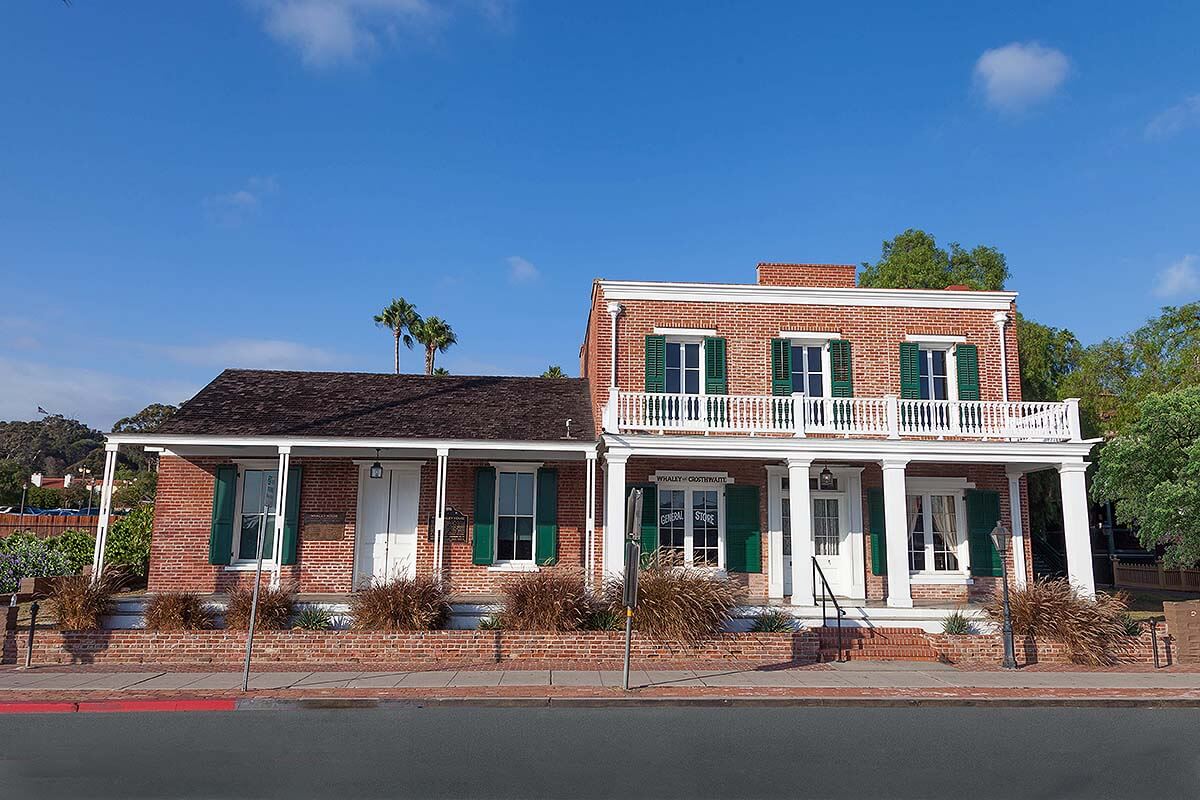
The Whaley House sits on San Diego Avenue in the Old Town neighborhood, a two-story Greek Revival brick home that looks, at first glance, like the kind of place a prosperous merchant would build to announce that he had arrived. And that is exactly what Thomas Whaley intended when he began construction in 1856. The house was the oldest brick structure in Southern California, built from clay bricks fired in Whaley's own kiln on Conde Street, with cedar woodwork and hardware shipped from New York. It cost over ten thousand dollars—a significant sum for a dusty frontier town that had only recently become part of the United States. What Whaley built on, however, was not ordinary ground. The property had served as San Diego's public gallows, and Thomas Whaley had personally witnessed the site's most notorious execution. In September 1852, a man named James Robinson—known locally as Yankee Jim—was hanged there for stealing a rowboat from San Diego Harbor. The trial had been swift and dubious: the jury included two men who owned the stolen boat, and the judge was reportedly drunk for much of the proceedings. Yankee Jim, a towering figure at six-foot-three, did not believe the sentence was real until he saw the rope. The gallows were too short for his frame. When the mule cart was pulled away, his feet grazed the ground, and he strangled slowly rather than dying from a broken neck. Thomas Whaley stood in the crowd and watched the entire thing. Three years later, he bought the land and built his family home directly over the spot. The archway between what became the music room and the parlor stands precisely where the gallows once were. The Whaley family moved in in 1857, and the house quickly became a civic centerpiece—it served at various times as a general store, San Diego's first commercial theater, and the county courthouse. But tragedy followed the family through its walls. Their eighteen-month-old son Thomas Jr. died of scarlet fever in the house. In 1871, armed men held Anna Whaley at gunpoint while seizing courthouse records during a bitter dispute between Old Town and the rising New Town. In 1885, their daughter Violet—devastated after discovering her new husband was a con artist who had married her for the family's money—shot herself in the chest with her father's revolver at the age of twenty-two. Thomas Whaley died in the house in 1890. Anna followed in 1913. Their son Francis died there in 1914, and their daughter Corinne lived in the home until her death in 1953, the last of the family to occupy the residence. Thomas Whaley himself was the first to report something wrong. He wrote in his journal of heavy footsteps moving through the upstairs rooms when no one was there—footsteps he attributed to Yankee Jim. That claim has persisted for over 160 years. Visitors today report a choking sensation when passing through the archway where the gallows stood. Staff and guests describe the sound of tiny footsteps and a child's crying attributed to baby Thomas. A young woman believed to be Violet is seen on the second floor. The scent of perfume associated with Anna drifts through rooms with no apparent source. Disembodied voices, cold spots, doors opening and closing on their own, and full-bodied apparitions have been reported by tourists and investigators alike. The house has been featured on numerous paranormal television programs, and EVP sessions have reportedly captured direct responses. The U.S. Department of Commerce has officially designated the Whaley House as haunted—one of only two homes in California to receive that recognition. Skeptics note that the house trades heavily on its reputation, and that the combination of dim lighting, period atmosphere, and primed expectation accounts for much of what visitors experience. That is a fair observation. But the reports predate the tourism industry by over a century—Thomas Whaley was documenting disturbances in the 1860s, long before anyone was selling tickets. Today the Whaley House operates as a museum maintained by Historic Tours of America. It is a California Historical Landmark and draws thousands of visitors annually for both historical and evening paranormal tours. The archway still stands. The parlor is still furnished. And the ground beneath the house has never forgotten what happened on it.
Figueroa Hotel
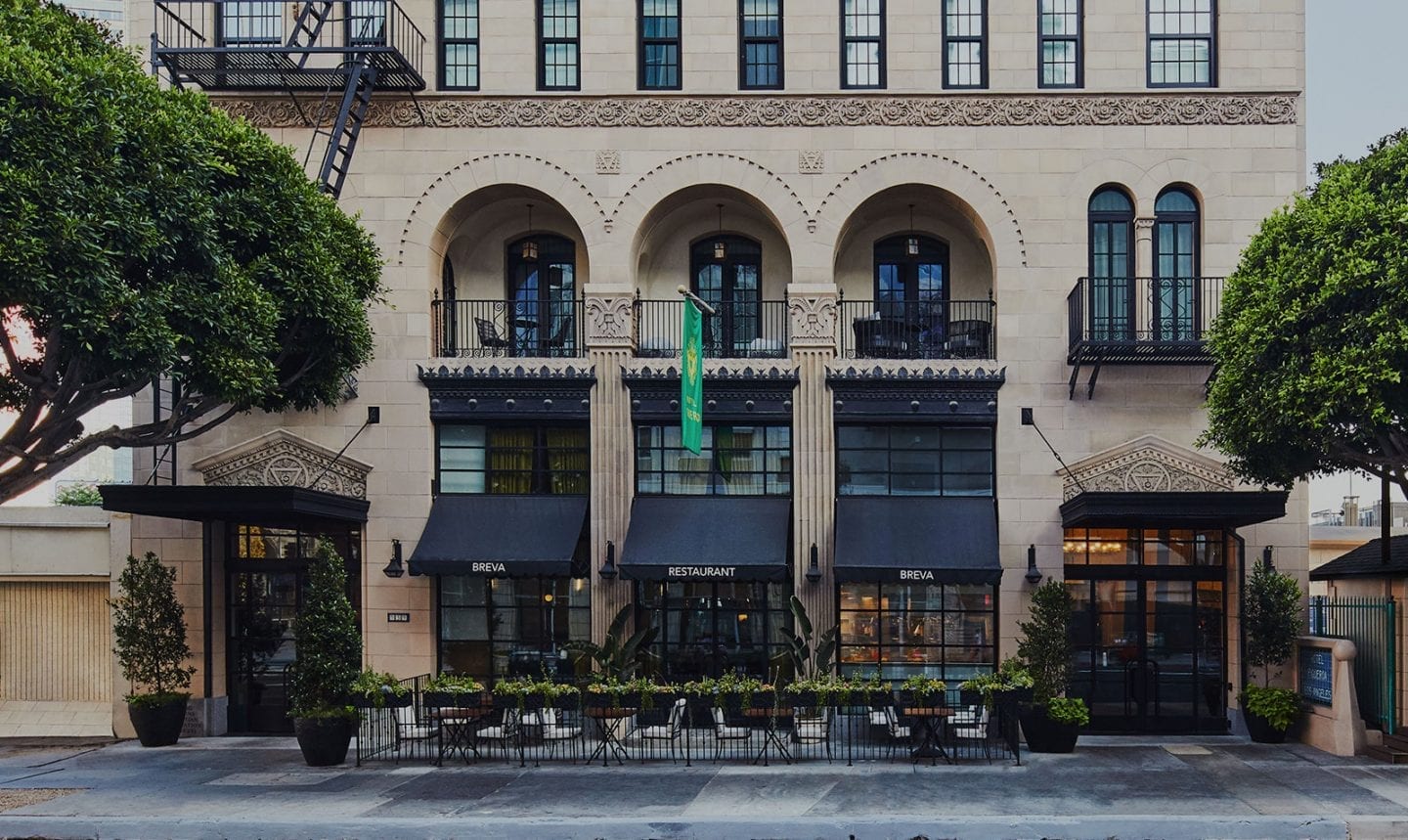
Rising thirteen stories above South Figueroa Street in the South Park district of Downtown Los Angeles, Hotel Figueroa occupies a building that was never meant to simply house travelers. It was built as a statement—the largest commercial structure in the United States financed, owned, and operated by women at the time of its completion in 1926. Its origins belong to the YWCA of Los Angeles, and its paranormal reputation belongs to nearly a century of human drama that unfolded within walls designed to shelter women at a time when most hotels in America would not admit them without a male escort. The project was spearheaded by the Los Angeles YWCA under the leadership of Mrs. Chester C. Ashley, who recognized that the growing number of women entering the white-collar workforce needed safe, respectable accommodations while traveling on business. The organization purchased the land at 939 South Figueroa Street and financed the 409-room concrete and steel structure through supporter donations and two mortgage bonds. The architecture firm Stanton, Reed and Hibbard designed the building in a Spanish Colonial Revival style, and construction began in 1925. The hotel was finished ahead of schedule and dedicated on August 14, 1926, with a night of dancing and entertainment attended by more than three hundred guests, including representatives of nearly every women's club in Los Angeles. The interior was appointed with wrought iron finishes, goldenrod satin draperies with black patent leather trim, Spanish tapestries on loan from prominent local women, and public spaces given Spanish names—the lobby was the sala de recepcion, the main corridor the el corredor. Maude Bouldin, a motorcycle-riding, plane-flying feminist, served as the hotel's first managing director, believed to be the first woman in the country to hold such a position at a major hotel. For its first two years, the hotel served women exclusively, with men granted only limited access. By 1928, the policy was relaxed to include men in order to sustain business. Through the 1930s, 1940s, and 1950s, the Figueroa functioned as a hub for political organizations, social clubs, and the creative community of downtown Los Angeles. The hotel held press conferences and rallies against sexism and racism, cultivating a reputation as a progressive gathering place. By the late 1950s and 1960s, as downtown Los Angeles experienced a westward migration of offices and residents, the Figueroa declined into a semi-permanent residential hotel with guests paying by the week. In 1976, Swedish entrepreneur Uno Thimansson purchased the property and converted it into a Moroccan-themed budget hotel, introducing the Tangier Room and Club Fes. For decades the Figueroa operated in this eclectic incarnation, known for its affordability and its distinctive coffin-shaped swimming pool but increasingly criticized for aging infrastructure and the absence of modern amenities. In 2014, a joint venture purchased the hotel for sixty-five million dollars and undertook a three-year restoration that stripped away the Moroccan layers and returned the building to its original Spanish Colonial splendor. The hotel reopened in 2018 with 268 rooms and 63 suites, an art program featuring works exclusively by women, and multiple dining and bar concepts. The darker chapters of the Figueroa's history provide the framework for its haunting claims. In 1929, radio operator William L. Tallman murdered his girlfriend Virginia Patty in the hotel and was never captured. A separate killing involved a woman named Cecilia Oswald, whose body was discovered in one of the rooms after her partner confessed, claiming he killed her because he loved her. At least one suicide has also been documented on the premises. These violent deaths, layered over decades of dense human occupancy—hundreds of rooms filled night after night with transient guests, long-term residents, and the steady churn of a building that has never stopped operating—have given the Figueroa a paranormal reputation that persists through its various renovations. Guests over the years have reported televisions and lights turning on in the middle of the night without explanation, air conditioning and heating systems cycling on and off in patterns that suggest deliberate manipulation, and elevator doors opening on empty floors unprompted. Some visitors have described an oppressive or unsettling energy in certain hallways, particularly near the old elevator shafts. The apparition of a former maid who was murdered in the hotel has been reported by multiple sources, and at least one valet parking attendant has acknowledged off the record that staff are aware of the haunting but are discouraged from discussing it with guests. Some visitors have described experiences intense enough to cause them to leave in the middle of the night. Others have noted that the energy in the building, while unmistakable, does not feel uniformly hostile—more restless than aggressive, as though the spirits occupying the Figueroa are as varied in temperament as the living guests who have passed through its doors over the past century. Today Hotel Figueroa operates as part of the Unbound Collection by Hyatt, fully restored and positioned as a boutique luxury destination steps from Crypto.com Arena, the Los Angeles Convention Center, and the LA Live entertainment complex. The Gran Sala lobby displays a black-and-white photograph of the founding women in their flapper dresses, and a large-scale painting of Maude Bouldin greets visitors near the entrance. The coffin-shaped pool remains. The art on the walls is still by women. And the building itself, approaching its centennial, continues to hold whatever it has accumulated across a hundred years of sheltering the living—and, perhaps, some who no longer are.

The Springville Inn
The Springville Inn sits along California State Route 190 in the small foothill town of Springville, Tulare County, nestled against the western slope of the Sierra Nevada just minutes from the Giant Sequoia National Monument. The town has been here since 1849, when pioneers settled the area, and the inn has been at its center since 1911, when it was built as the Wilkinson Hotel to serve travelers arriving with the railroad. The original owners went broke during construction and were forced to sell before they ever saw it finished. A 1972 addition brought the motel rooms that extend behind the original structure, but the bones of the place—the restaurant on the ground floor, the bar and dance hall on the second—remain housed in the 1911 building. For over a century, the Springville Inn has served as the social hub of a town that goes quiet by six in the evening. It is also, by most accounts from those who have worked and stayed there, thoroughly haunted. Four distinct entities have been identified by staff over the decades, each given a plainspoken name by employees who encountered them often enough to stop being surprised. The Old Man is the most frequently reported, an observant presence concentrated around the kitchen and the old dumbwaiter that connects the lower kitchen to the upper service area. Former employees describe him not as a passive residual haunting but as an active and hostile personality—hiding the lock to the walk-in cooler, shoving barstools, breaking glassware, knocking from inside the walk-in as though someone had been locked in, and on more than one occasion physically attempting to push workers down the stairs. The Young Man is said to be the ghost of a logger who was shot and carried into the inn to die. His energy is described as friendly, even charming—he frequents the bar area and has a reported affinity for female guests and staff. The Little Girl, estimated by witnesses at seven or eight years old, appears in turn-of-the-century dress at various locations throughout the building, though sightings have grown less frequent in recent years. The Woman is the rarest and most unsettling of the four. She has been seen on the upstairs balcony in white, and one former restaurant employee described an encounter in which the figure appeared standing inverted on the ceiling of the dining room, staring down with a dark substance dripping from her mouth. That employee ran screaming into the kitchen. The reports extend beyond the original building. Guests in the motel rooms have described cabinet doors swinging open on working hinges, unexplained sparkling lights on ceilings that persisted even after curtains were drawn, and personal belongings rearranged overnight—dress socks neatly folded into pant legs in ways the guest swore they never would have done. Staff members have reported whispers, physical touches on the staircase, and self-propelled kitchen utensils. One visitor captured a voice on a phone recording that appeared to say "help me" over background noise. A man from Sacramento who stayed at the inn for a work trip reportedly refused to return, driving an extra forty-five minutes to stay in Tulare on all subsequent visits rather than spend another night. Former employees note the activity is markedly stronger during mornings and afternoons than at night.
San Gabriel Mission Playhouse
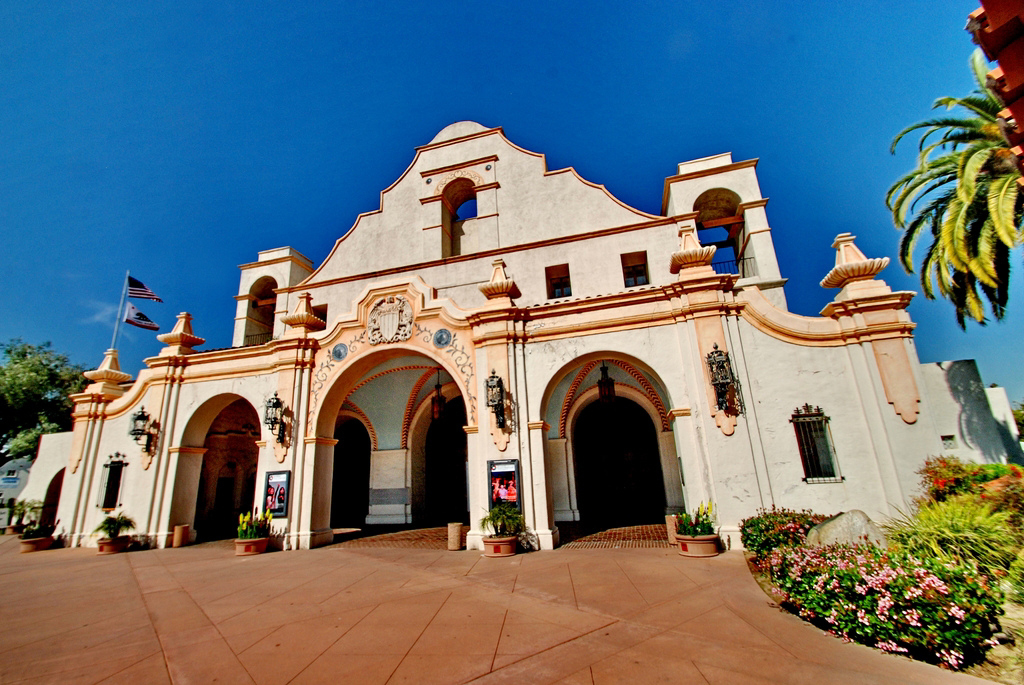
At 320 South Mission Drive in San Gabriel, California, directly across from the old Mission San Gabriel Arcángel, a building designed to look like a Spanish mission but built to house a theatrical spectacle has been attracting audiences—and, according to those who work inside it, retaining at least one permanent resident—since 1927. The San Gabriel Mission Playhouse is a 1,387-seat performing arts venue constructed in the Mission Revival style by architect Arthur Burnett Benton, its facade modeled after Mission San Antonio de Padua in Monterey County. Inside, the theater is an extravagance of cultural layering: a carved and painted ceiling with Native American motifs, replica Spanish galleon lanterns hanging from the beams, woven tapestries gifted by King Alfonso XIII of Spain, and a fully restored 1924 Wurlitzer pipe organ originally built for the Albee Theatre in Brooklyn. The building was added to the National Register of Historic Places in 2019. The Playhouse was built for one man and one production. John Steven McGroarty was born in Pennsylvania in 1862, worked as a county treasurer, lawyer, and mining executive before moving to Los Angeles in 1901, where he joined the Los Angeles Times and began a career as journalist, poet, and chronicler of California history. His most ambitious work was The Mission Play, a three-hour pageant dramatizing the founding, flourishing, and ruin of the California missions from 1769 to 1847. The play opened in 1912 at a smaller venue and became a sensation—over its twenty-year run, more than 2.5 million people saw it across 3,198 performances. McGroarty, known locally as Uncle John, was knighted by the Pope and by the King of Spain, named California's Poet Laureate in 1933, and elected to two terms in the U.S. House of Representatives. He died in 1944 at eighty-one. The Playhouse was completed in 1927 to give his production a permanent home. When the Depression ended the play's run in 1932, the building served as a movie theater, then had its dressing rooms converted to apartments during the wartime housing shortage. The City of San Gabriel purchased it in 1945, renaming it the San Gabriel Civic Auditorium until the original name was restored in 2007. The paranormal claims revolve primarily around Uncle John himself. Staff report that McGroarty has never left the theater he built. His apparition has been spotted during performances and has appeared on security monitors. A metal bar inside the theater is said to swing on its own when a show particularly pleases him—a detail reported by a former employee as a known phenomenon among staff. The top floor and backstage areas carry the strongest reputation. A former stage manager is also said to haunt the building, and the ghost of a young girl has been reported in the theater's interior. Beneath the Playhouse lies a network of tunnels McGroarty had built so he could move between backstage and the foyer without crossing through the audience. One account—unverified but embedded in local lore—holds that during the Depression the tunnels were used to store dead bodies, and when full, were sealed shut. Whether or not the story is true, the tunnels exist and remain partially accessible. A former employee described seeing the entrance to one unsealed section, and multiple staff members have reported an oppressive feeling near the staircase on stage right. The upstairs areas and backstage dressing rooms are described as deeply unsettling when occupied alone. The building sits in a district saturated with history far older than the Playhouse. Mission San Gabriel Arcángel was founded in 1771 and served as one of the most productive of the twenty-one California missions. The surrounding ground holds the remains of thousands of Indigenous people who lived, labored, and died under the mission system. Residents have reported finding arrowheads while digging in their yards. One visitor described sensing robed figures walking in procession outside the Playhouse—hooded monks who paused only when a large cross was raised before them. Today the Mission Playhouse continues to host music, theater, dance, and community events. The Wurlitzer still plays. The tapestries from Spain still hang. The carved ceiling still catches the light the way it did when Uncle John first walked beneath it. And if the accounts from those who work the building are to be believed, he is still walking beneath it—swinging the bar when a show earns his approval, and refusing, nearly a century after his death, to give up the theater he built to tell the story of California.
USS Midway
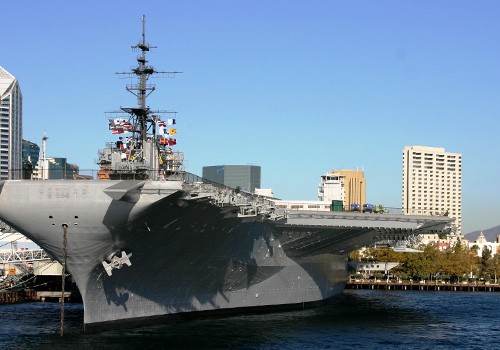
Moored at Navy Pier along San Diego's Embarcadero, the USS Midway is not a building haunted by a single tragic event or a house where someone died in the night. It is a 69,000-ton floating city that carried approximately 200,000 sailors across forty-seven years of continuous service, from the final week of World War II through the Persian Gulf War—the longest-serving aircraft carrier of the twentieth century. That kind of history does not sit quietly. The Midway was commissioned on September 10, 1945, one week after the formal Japanese surrender that ended the Second World War. Named for the decisive 1942 Battle of Midway, the carrier was the first in a new class of large ships featuring an armored flight deck and an air group of 120 planes. At the time of her launch, she was the largest ship in the world, a distinction she held for a full decade. Too massive to fit through the Panama Canal, the Midway was in a class by herself in more ways than one. Her Cold War service began almost immediately. In 1946, she became the first American carrier to operate in midwinter sub-Arctic conditions. The following year, she launched a captured German V-2 rocket from her deck—a trial that helped lay the groundwork for naval missile warfare. She later demonstrated that a carrier could deliver atomic weapons, fundamentally reshaping naval strategy. For ten years, the Midway patrolled European waters with the Atlantic Fleet before a round-the-world cruise brought her to the Pacific in 1955, where she was rebuilt with an angled flight deck to accommodate jet operations. The Midway's first combat deployment came in 1965, flying strikes against North Vietnam. Her aircraft shot down three MiGs, including the first air-to-air kill of the war, but seventeen Midway planes were lost to enemy fire during that cruise alone. In April 1975, during the fall of Saigon, the Midway served as the floating base for Operation Frequent Wind, rescuing more than 3,000 desperate refugees over a chaotic two-day evacuation. In 1991, she served as the flagship for Persian Gulf air operations during Operation Desert Storm. She was decommissioned in San Diego in 1992. After more than a decade of community effort to secure the ship as a museum, the USS Midway Museum opened on June 7, 2004, and quickly became the most visited naval warship museum in the United States, drawing over a million visitors annually. The paranormal claims aboard the Midway have accumulated steadily since the ship became a museum, though specifics have historically been kept close by staff and volunteers. The museum's curator, David Hanson—who also leads San Diego's largest paranormal investigation group—has investigated the ship's haunting activity for over a decade and maintains a log of all unusual incidents reported by staff, volunteers, and guests. Hanson prefers the term "paranormally active" to "haunted," noting that the spirits present on the Midway are overwhelmingly benign. He estimates that as many as thirty distinct entities have been recorded on the ship in recent years. Most, he believes, are not ghosts of sailors who died aboard the Midway but rather former crewmen who passed away later in life and returned to the ship out of duty and camaraderie. As Hanson has said of them, if that is their choice to be here, the museum welcomes them. Hanson's paranormal group has identified several spirits by name. A ghost called Monty inhabits the ship's library. Another named Jerome reportedly occupies the third row, third seat from the left in the Battle of Midway theater. A spirit identified as Chad, believed to have served in the Navy in 1953, was found in one of the ship's storage annexes, along with what investigators described as a swirling concentration of unidentifiable spiritual energy. Even before the ship became a museum, at least two hauntings were reported during active service—one occupying a cold storage food locker in the bow of the fourth deck, another in the Career Guidance Counselor's office near the stern. Visitors report hearing unexplained sounds echoing through corridors and compartments, sudden drops in temperature on the lower decks and in the engine room, the sensation of being watched or followed in isolated areas like the brig and old storage rooms, and the smell of what some describe as old blood in the sick bay area, accompanied by heavy, oppressive air. Museum mannequins positioned throughout the ship to represent sailors have been reported moving or appearing to speak. A phantom figure in uniform has been seen on the flight deck, vanishing when approached. Interestingly, some of the spirits encountered are not military at all—investigators have also identified female spirits and civilians who appear to pass through the ship without remaining, as though the Midway draws visitors from the other side just as it draws over a million living ones each year. Today the USS Midway Museum hosts more than 700 events annually, including military ceremonies, film screenings, and overnight educational programs where guests can sleep aboard the carrier. Twenty-nine restored aircraft sit on the flight deck and hangar deck. The self-guided audio tour, narrated by former Midway sailors, leads visitors through more than sixty locations. The ship that once carried atomic weapons and launched rescue helicopters over Saigon now carries schoolchildren, veterans, and tourists through corridors where the living and whatever remains of the dead share the same steel passageways—a floating city that never quite emptied out, even after the Navy was done with her.
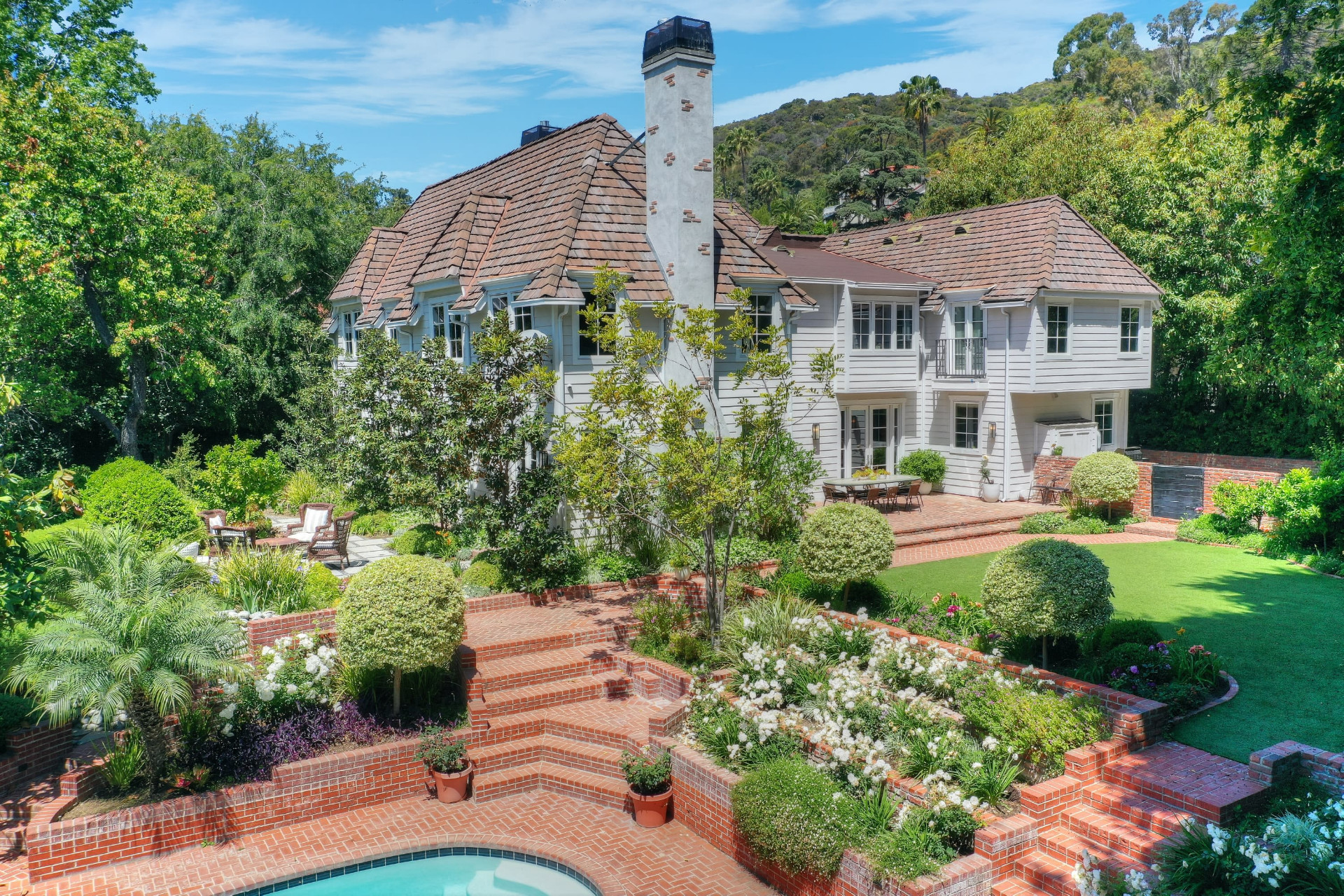
Nelson House
Nestled at the base of the Hollywood Hills near Franklin Avenue, the Colonial Revival house at 1822 Camino Palmero is one of the most quietly famous addresses in American entertainment history — a two-story clapboard home with dark green shutters that millions of television viewers came to know as intimately as their own living rooms, without ever being told its real name. The house was built in 1916 by architect Frank T. Kegley and H. Scott Gerity for Harold G. Feraud, a prominent Los Angeles businessman, on a sloping half-acre parcel in the exclusive Las Colinas Heights subdivision. Designed in the Colonial Revival style with traditional clapboard siding and a classic staircase entry, it was at the time one of the more distinguished residences in that part of western Hollywood. It sat quietly for decades before the family that would make it famous arrived. Ozzie Nelson — bandleader, attorney, Eagle Scout, and one of the most driven men in American entertainment — and his wife Harriet Hilliard moved in during the 1940s. Ozzie had built a career in big band music during the 1930s before pivoting to radio, where he created The Adventures of Ozzie and Harriet in 1944 as a domestic comedy featuring himself, his wife, and their two sons David and Ricky. When the show transitioned to ABC television in 1952, the house on Camino Palmero became a co-star. Establishing exterior shots were filmed directly in front of it, and the interior sets at Hollywood General Studios were modeled room by room after the real house, down to the Early American furniture Harriet had chosen. The kitchen viewers watched Harriet work in every week was a near-perfect recreation of the kitchen she actually cooked in at home. For 14 years and 435 episodes — still the record for total episodes produced in American live-action sitcom history — the Nelson family played themselves on national television, and this house was the stage for that illusion. Ricky Nelson wrote some of his early songs here. His name is reportedly still scratched into a door frame inside his old bedroom. The family became the definitive image of mid-century American domestic life, and the house absorbed every frame of it. Ozzie was the engine behind all of it — producer, director, co-writer, and perfectionist. He was also, by his own cheerful admission, someone who took meticulous care of his health: no smoking, no drinking, daily two-mile ocean swims. When he was diagnosed with liver cancer in 1974, he reportedly called it "odd for a guy who never drank or smoked." He died on June 3, 1975, at 69, surrounded by Harriet, David, and Ricky. The family sold the house shortly after. Ricky died in a plane crash on New Year's Eve 1985. Harriet died in 1994. David in 2011. The whole family is gone now, and the trajectory of their losses was steep. The paranormal claims at the house began almost immediately after Ozzie's death. Family members reported seeing his apparition walking through the rooms, lingering near his favorite spots — particularly the wood-paneled pub room he'd loved. New owners who purchased the house in 1975 reported mysterious footsteps in empty rooms, lights and faucets operating on their own, and doors opening despite being locked. One woman living in the house described feeling, on multiple occasions, a strong and unmistakably loving presence beside her in bed. Years later, in 1994, a painter working in the house heard unexplained footsteps while alone in the building and observed a white misty form drifting nearby, appearing to inspect his work. Ozzie's old model train set in the pub room reportedly began running on its own in the middle of the night. The accounts were consistent enough that when the house went to market, the listing agent felt obligated to disclose the rumored haunting to prospective buyers. The house remains a private residence. It later appeared as Ari Gold's home in HBO's Entourage, adding another layer of on-screen identity to a building that has rarely been just a building. Whatever is still inside, it keeps itself to walls that know the difference between a set and a home.

The Catalina Beach House Hotel
Hotel Catalina stands as a distinctive hospitality establishment on Catalina Island, California, carrying within its walls a rich maritime history and the paranormal legacy of individuals whose lives intersected with the location in ways both joyful and tragic, making it one of the most actively haunted hotels in California with internationally recognized paranormal significance. The hotel occupies a prominent position in the community's tourism infrastructure while simultaneously serving as a repository of regional paranormal activity that has attracted attention from ghost tours, paranormal enthusiasts, and casual visitors interested in experiencing its spectral residents and documented supernatural phenomena firsthand. The building's location on Catalina Island places it within a broader geographical area known for paranormal activity and unusual phenomena, with the island's isolated position and maritime history contributing to a complex supernatural landscape shaped by naval disasters and oceanic tragedy spanning centuries. The most prominent paranormal entity associated with Hotel Catalina involves Captain Joseph McAfee, a maritime figure whose attachment to the location transcended his mortal existence and bound him eternally to the structure and its grounds as a permanent spectral resident maintaining eternal vigilance. The captain's devotion to the hotel and its spaces was sufficiently intense that upon his death, his spirit chose to remain in residence rather than progress to whatever afterlife awaits departed souls, suggesting that human attachment can transcend the boundary between life and death through force of will. Witnesses report encounters with the captain's apparition most frequently on the upper deck of the hotel, where his translucent form manifests as though conducting routine inspection of his former domain, his behavior suggesting unfinished business or protective guardianship of the structure. The captain's manifestations suggest a spirit engaged in eternal guardianship of the establishment, repeating patterns of behavior established during his living tenure while remaining permanently attached to the physical spaces he cherished, his presence acknowledged by hotel staff and documented by paranormal investigators through multiple sessions. Additional paranormal activity at Hotel Catalina involves a mysterious woman believed to originate from a shipwreck that occurred during the 1920s, a maritime disaster that claimed multiple lives and bound certain spirits to the island permanently through the trauma of drowning in oceanic circumstances. The woman's apparition manifests throughout the hallways of the hotel, apparently searching for something or someone lost to the sea, her movements purposeful yet ineffectual as she repeats her eternal quest through accessible corridors and rooms without rest or cessation of effort. Paranormal manifestations at Hotel Catalina also include ghostly noises, disembodied voices, and the movement of objects suggesting interactive paranormal consciousness engaged with the living inhabitants and visitors in ways that demonstrate awareness and intention toward meaningful communication. The hotel has capitalized on its paranormal reputation through the organization of professional ghost tours offered daily at 8 p.m., drawing large audiences and gaining recognition by USA Today as one of the nation's top ten ghost tours, making it a premier destination for paranormal tourism. Hotel Catalina exemplifies the intersection of paranormal activity and commercial tourism, transforming documented hauntings into recreational experiences that validate and perpetuate awareness of its spectral residents while generating economic benefit for the community.
Create Nightclub
The Hardin County Historical Museum in Kentucky occupies a building transformed across multiple decades, its current function as local history repository built upon architectural foundations from an earlier era. The structure represents significant historical property, its construction and architectural features reflecting nineteenth or early twentieth-century commercial or institutional architecture. The building preserves and displays artifacts, documents, photographs, and objects documenting Hardin County history. The museum contains recreated period settings, including a General Store exhibit reproducing commercial life from earlier decades. Interior spaces feature hallways connecting exhibition areas with displays organized chronologically. Despite contemporary museum function, the structure retains essence of original construction and paranormal phenomena connecting it to past inhabitants. The primary paranormal presence appears associated with Christopher Fraize, a historical figure whose connection created persistent spectral manifestation. Fraize, apparently resident or frequent visitor during his lifetime, developed strong attachment to the location—his spirit remains present after death. His presence is consistently reported by staff and visitors. Specific circumstances of Fraize's life, historical significance, and death are not fully documented in available sources, but his presence is undeniable. Attachment suggests either special building connection, significant life experiences within it, or reluctance to depart from location where identity aspects were fulfilled. Paranormal manifestations focus heavily on the General Store exhibit where Fraize's spirit appears most active. A spectral male apparition, dressed in brown suit consistent with early twentieth-century fashion, manifests with sufficient frequency to be documented phenomenon. The apparition appears three-dimensional and solid, demonstrating intelligent haunting characteristics. Most remarkably, Fraize's spirit engages in playing checkers, game pieces moving in response to unseen entity participation. Witnesses report observing checkers games with no visible opposing player, pieces moving with apparent intentionality. Disembodied sounds occur throughout the museum, vocalizations without obvious source. Eerie organ music manifests in various locations, apparently emanating from no identifiable source yet audible to multiple witnesses. Checkers selection suggests game's historical significance to Fraize's identity or regular activities. The General Store exhibit reproduces retail environment where Fraize apparently spent considerable time as proprietor, employee, or customer. General Stores represented social hubs in historical communities where men gathered for goods, social interaction, and recreational activities. Fraize's dedication to continuing checkers game across living and deceased boundary suggests activity carrying profound meaning. The Hardin County Historical Museum has acknowledged haunted status, integrating paranormal phenomena into educational mission. The museum hosts events focused on paranormal activity, offering visitors engagement opportunities. Paranormal investigation teams have conducted research, documenting phenomena and generating evidence. Local awareness of Fraize's continued presence has become institutional identity within Kentucky paranormal circles. The manifestation represents unusual haunting—characterized by apparent contentment rather than distress—where visitors encounter artifacts and spirit of historical figure continuing eternal checkers game.
Six Flags Magic Mountain
Six Flags Magic Mountain, a major amusement park located in California, has entertained millions of visitors across decades of operation, becoming a destination of choice for families and thrill-seekers seeking recreation and excitement. The facility encompasses numerous roller coasters, water rides, and attractions designed to generate adrenaline and joy through carefully engineered entertainment experiences. The park's sprawling campus incorporates areas of natural landscape alongside constructed attractions, creating an environment where the artificial and natural merge. While Six Flags Magic Mountain's primary purpose centers on entertainment and commercial recreation, the park developed a reputation within paranormal communities as a location where multiple spirits apparently maintained presence. The amusement park context created unusual circumstances for paranormal manifestation, where entertainment facilities and haunting phenomena coexist in an environment typically dedicated to fun and distraction. This incongruity adds complexity to the park's paranormal phenomena, creating situations where genuine spiritual manifestation interacts with theatrical hauntings and entertainment-industry presentations. The paranormal entities documented at Six Flags Magic Mountain include the apparition of a young child identified as wearing a striped shirt, a specific detail that has allowed consistency across multiple independent witness reports. The child apparition appears to be a boy of approximately seven to twelve years old, whose tragic death appears connected to the amusement park grounds. Witnesses reported seeing this child apparition at night, running beneath the Colossus roller coaster structure in ways that defied normal child behavior. The apparition would move with urgency and apparent distress, suggesting he may be reliving the moment of his death or attempting to escape from something. The child spirit's appearance generated concern among witnesses, as the visible distress suggested trauma rather than peaceful spiritual manifestation. Additionally, paranormal researchers documented the presence of a female spirit associated with the Revolution ride, another popular roller coaster attraction. This female spirit allegedly manifested through screams, with witnesses hearing bloodcurdling screams emanating from the ride even when no operational rides were occurring and no human passengers were present. Another significant spirit identified at Six Flags Magic Mountain involves a young girl apparently associated with the Sky Tower, a tall observation structure providing panoramic views of the surrounding landscape. Witnesses reported seeing the apparition of a girl peering from the Sky Tower windows, waving in ways that suggested awareness of observers below. The girl's apparent desire to communicate despite her spectral nature created haunting images of separation and isolation. The combination of child spirits and a female adolescent spirit at an amusement park dedicated to entertainment created stark contrasts between the joyful purpose of the attraction and the tragic deaths apparently underlying the paranormal phenomena. The multiple entities suggested that the park may have been constructed upon or near locations where deaths occurred, or that multiple tragedies unfolded across the park's decades of operation. The paranormal phenomena at Six Flags Magic Mountain include manifestations of cold spots concentrated in specific ride areas, particularly the Colossus and Revolution attractions. Witnesses reported eerie presences accompanying the cold spots, sensations suggesting unseen entities maintaining proximity. The park's Fright Fest, an annual Halloween event featuring theatrical scares and entertainment, occurred in proximity to documented genuine paranormal phenomena, creating situations where authentic hauntings and commercial entertainment became blurred. Paranormal investigation teams conducted research at the park, documenting electromagnetic anomalies and apparent spirit communication. The location presented unusual challenges for paranormal researchers, as the constant activity and noise typical of amusement parks complicated efforts to isolate genuine phenomena from environmental factors. Six Flags Magic Mountain stands as an example of how paranormal activity may manifest at locations intended for joy and entertainment, suggesting that tragic deaths and spiritual disturbance recognize no boundaries between serious historical sites and contemporary commercial establishments.
1400 Bar and Grill
The 1400 Bar and Grill occupies a location rich with historical significance, serving as both a dining establishment and a repository of stories spanning generations of community gatherings and social occasions. The structure itself reflects architectural styles from an earlier era, with materials and design elements suggesting the building may have served various purposes throughout its complex history. The main dining area features the warm ambiance typical of upscale restaurants, with carefully designed lighting and decor creating an inviting atmosphere for patrons seeking fine dining experiences. The establishment has built a reputation within the dining community for quality cuisine and service, attracting regular customers and new visitors who appreciate the culinary offerings and comfortable surroundings that make it a preferred destination. Within the 1400 Bar and Grill, paranormal investigators and restaurant staff have documented consistent reports of supernatural activity centered primarily in the main dining area where patrons gather. The most frequently reported manifestation takes the form of a man dressed in period uniform, an apparition that has been observed by multiple witnesses over extended periods spanning years of observation. This spectral figure maintains a distinctive appearance consistent across different accounts, suggesting a genuine entity rather than coincidental misidentification or imaginative misinterpretation. The presence of this uniformed ghost has led researchers to theorize connections to the building's historical past, possibly related to military personnel or law enforcement officials who may have occupied or frequented the space during earlier decades. Accompanying the apparition of the uniformed man are additional paranormal phenomena establishing the venue as a location of significant supernatural activity and paranormal intensity. Cold spots have been documented throughout the main dining area, appearing without logical explanation from ventilation systems or environmental conditions. These temperature anomalies persist even during warmer seasons and remain concentrated in specific zones suggesting intentional manifestation by the spirit. Unexplained footsteps have been reported by staff members during and after business hours, with sounds suggesting deliberate movement of a person despite complete absence of any visible individual. Disembodied voices and other mysterious auditory phenomena have been documented, often occurring during quiet periods when background noise cannot possibly account for the sounds experienced. The experiences at the 1400 Bar and Grill follow patterns consistent with residual hauntings, in which spirits replay actions or movements from their past lives with mechanical regularity. The uniformed apparition frequently appears in the same locations within the dining area, suggesting the ghost maintains presence in particular zones of personal significance. Staff working evening and closing shifts report the highest frequency of encounters, suggesting phenomena may intensify when the restaurant is less crowded and environmental interference is minimal. Contemporary operations continue despite documented paranormal activity, with paranormal investigation groups conducting research at the venue to better understand the phenomena. The distinctive appearance of the uniformed apparition has positioned the 1400 Bar and Grill as a significant haunted location within dining establishments of its region, attracting both curious diners and serious paranormal researchers.
Brea Canyon Road
Brea Canyon Road winds through the terrain of Diamond Bar, California, connecting communities while traversing a landscape shaped by geological formations, natural drainage patterns, and the urban expansion that has gradually encroached upon previously undeveloped areas. The road itself is relatively modern compared to the ancient geological history of the region, constructed during the mid-twentieth century as the area underwent suburban development and residential expansion. The landscape through which the road passes includes canyons, hillsides, and natural features that create an environment somewhat isolated from the densest urban development, maintaining pockets of relative wilderness within the greater Los Angeles metropolitan area. The road initially attracted few paranormal reports, and only gradually did accounts of supernatural phenomena emerge to transform Brea Canyon Road into a recognized location of active haunting and dangerous manifestations. The paranormal reputation of Brea Canyon Road became established through a pattern of deaths and accidents that occurred along the roadway over a concentrated period spanning approximately two decades. Nearly a dozen deaths were recorded during this period, far exceeding the statistical expectation for a road of comparable length and traffic volume in the region. The accidents appeared to follow patterns that suggested supernatural causation rather than ordinary mechanical or human failure, with witnesses reporting encounters with phantom hitchhikers before or immediately following tragic incidents. The phantom hitchhikers are described as appearing at specific locations along the road, presenting themselves as needing transportation, and then vanishing from vehicles either during transit or immediately after entering them. The encounters have been temporally associated with subsequent accidents, suggesting that the apparitions may be harbingers of coming disaster or actively engaged in causing the tragic incidents themselves. The presence of phantom hitchhikers along Brea Canyon Road has been extensively documented through eyewitness reports, paranormal investigation recordings, and regional folklore that has accumulated over decades. The hitchhikers are described as appearing solid and corporeal, giving no obvious indication that they are supernatural until the moment of their vanishing, which typically occurs abruptly and without logical explanation. Some witnesses report that the hitchhikers appeared wet or showed signs of trauma, suggesting they may be victims of previous accidents on the road manifesting to draw others into similar circumstances. Others describe the apparitions as appearing dazed or confused, as though uncertain of their own location or current state. The encounters generate profound psychological effects in witnesses, with survivors describing overwhelming feelings of dread, disorientation, and sometimes complete loss of memory regarding the incident. Various theories attempt to explain the concentrated paranormal activity and unusual death rate on Brea Canyon Road. One prominent explanation suggests that the road may have been constructed directly over the site of a failed scientific experiment or military research project that resulted in multiple deaths and left residual paranormal energy in the location. This theory proposes that surviving experimental subjects or affected individuals may have been trapped in a paranormal state, manifesting as the phantom hitchhikers observed by contemporary drivers. Other explanations propose that the location is a dimensional thinning where spirits from alternative realities can cross over, or that natural geological formations create electromagnetic anomalies that trigger both accidents and paranormal manifestations. Despite the various theories, the consistent documentation of multiple deaths combined with paranormal eyewitness reports firmly establishes Brea Canyon Road as a location of active and apparently dangerous haunting phenomena. The eerie phenomena intensify during nighttime driving, with the darkness appearing to amplify both the frequency of encounters and the severity of the paranormal manifestations. Brea Canyon Road remains open to vehicular traffic, though the location has achieved notoriety among paranormal researchers and supernatural enthusiasts who visit attempting to document the phantom hitchhikers and other phenomena. The road has been featured in paranormal investigation programs and paranormal research forums where individuals share accounts of their experiences. Modern drivers are generally unaware of the road's haunted reputation unless they specifically research the location or have prior knowledge of regional paranormal phenomena. Local authorities have maintained records of accidents on the road, contributing to the body of evidence supporting the claim of unusual death rates. The concentration of phantom hitchhiker encounters and associated fatalities has transformed Brea Canyon Road into one of California's most notorious haunted locations, a place where the boundary between the living and the dead appears to have become dangerously permeable.
Box Canyon
Box Canyon, located in the expansive geographic region of Los Angeles County, California, represents a specific geological formation—a narrow valley bounded by high canyon walls that create a dramatic topographical feature within the broader landscape of Southern California. The canyon's formation through geological processes spanning millions of years created a landscape of particular beauty and distinctive character, attracting human presence and settlement across successive historical periods. Native American peoples inhabited the California region for thousands of years before European contact, developing sophisticated cultural systems adapted to the region's diverse ecosystems and environmental conditions. The canyon likely served various functions within indigenous settlement patterns, whether as a resource collection area, seasonal encampment, travel corridor, or sacred ceremonial space. The indigenous relationship to the landscape created layers of cultural meaning and spiritual significance embedded within the geographic features and accumulated through centuries of interaction and habitation. European colonial expansion and subsequent American territorial acquisition transformed the region's demographic composition and cultural character during the nineteenth and twentieth centuries. The canyon region, like much of Southern California, experienced waves of settlement, resource extraction, and eventual urbanization as Los Angeles expanded from a modest pueblo into a sprawling metropolitan area encompassing millions of inhabitants. The specific history of Box Canyon during this transformative period remains somewhat obscured by the relative lack of detailed documentation, but the location emerges in paranormal investigation databases as a site of documented supernatural activity, suggesting that significant historical events or human tragedies created sufficient energetic imprint to persist across subsequent decades. The canyon's geographical isolation and distinctive environmental character may have contributed to its emergence as a location attracting paranormal investigation and documentation. Krishna Venta, an enigmatic and controversial figure, emerged within the paranormal and spiritual history associated with Box Canyon during the mid-twentieth century. Venta established himself as the leader of a spiritual commune or cult organization, attracting followers who were drawn to his teachings and spiritual authority claims. The specific circumstances of Venta's life, his teachings, his followers, and the nature of the organization he established remain subjects of historical debate and paranormal speculation. Venta's death created traumatic circumstances sufficiently significant to attract paranormal investigation and documentation, with his spiritual presence apparently becoming attached to the Box Canyon location where his earthly activities were concentrated. The circumstances of his death suggest violence or trauma creating sufficient emotional and psychological disruption to anchor his consciousness to the physical location. Paranormal investigators conducting research within Box Canyon have documented creepy sensations and unexplained phenomena suggesting the presence of non-corporeal entities within the canyon's spaces. Witnesses describe experiencing uncanny emotional states, sensations of being watched, and atmospheric conditions that create profound psychological discomfort without identifiable conventional cause. The canyon appears to radiate an energetic quality that many visitors interpret as indicative of genuine paranormal presence, though the specific mechanisms and nature of the phenomena remain incompletely understood by paranormal researchers. Historical apparitions have been reported by various witnesses, with some accounts suggesting the manifestation of entities consistent with descriptions of indigenous peoples or early settlers who died within the canyon's geographic bounds. Disembodied sounds have been documented during paranormal investigations, with some accounts describing comprehensible speech and others documenting only inarticulate vocalizations suggesting emotional distress. The cumulative effect of these phenomena has established Box Canyon as one of the Los Angeles region's documented paranormal hotspots, attracting researchers seeking to understand how history, trauma, and spiritual energy concentrate within distinctive geographic locations and persist across temporal boundaries.
Star of India
The Star of India, originally launched as the Euterpe in 1863, holds the distinction of being the oldest active sailing ship still in service on the planet, a maritime vessel that has weathered more than a century and a half of oceanic voyages, storms, and human drama. This barque-rigged merchant ship was constructed using iron, a revolutionary material for maritime construction during the Victorian era, allowing the vessel to endure conditions that would have destroyed wooden predecessors. The Star of India sailed the world's trade routes during the height of the nineteenth-century merchant marine, transporting cargo, passengers, and crew across vast expanses of open ocean. The vessel eventually arrived at San Diego harbor, where it was preserved as a museum ship and historic monument, representing a critical chapter in maritime history. Yet beneath the prestigious designation of oldest active sailing ship lay a darker narrative, one involving tragedy, death, and the apparent inability of some souls to fully depart from the vessel that carried them through life's final moments. The primary tragic incident that scholars and paranormal researchers associate with the Star of India's haunting involves young John Campbell, a stowaway who boarded the ship during its earlier incarnation as the Euterpe. Campbell, attempting to escape circumstances in his life that remain partially obscure in historical records, concealed himself among the cargo and crew quarters hoping to gain passage to distant lands. The boy's secret identity as a stowaway was eventually discovered, and the circumstances surrounding his death remain murky in formal documentation. Accounts suggest that Campbell fell during circumstances related to his position as a stowaway, meeting a tragic end somewhere within the vast machinery and rigging of the vessel. Whether his death resulted from an accident, punishment, or deliberate harm continues to be debated by maritime historians, yet the impact of his demise appears absolute in the paranormal phenomena subsequently reported throughout the ship's various spaces. Beyond John Campbell, numerous other deceased sailors have apparently found themselves unable to depart the vessel that defined their final experiences on earth. Crew members who perished at sea, died from illness in the cramped quarters, or succumbed to accidents during maritime operations apparently left spiritual imprints throughout the Star of India's structure. The crew quarters, where men lived in close quarters separated from the rest of society by endless ocean, became a particular focal point for paranormal manifestations. A sense of profound unease and dread has been reported by numerous visitors to these spaces, distinct from the melancholic atmosphere expected in maritime museums. Guests described a thick, heavy atmosphere that seemed to carry the weight of countless lives lived in confinement, fear, and homesickness. The sensation of an unseen presence watching from shadowed corners proved sufficiently consistent that multiple paranormal investigation teams documented identical experiences across independent visits. The paranormal phenomena documented aboard the Star of India encompass diverse categories of manifestation. Visitors reported ghostly apparitions appearing unexpectedly throughout the vessel, taking solid form before vanishing when approached directly. Inexplicable noises echoed through the ship's interior spaces, including sounds consistent with rope creaking, equipment moving, and voices speaking in maritime vernacular. An unnatural chill permeated certain areas independent of external weather conditions or the time of year, suggesting concentrated spiritual energy. Multiple witnesses reported the sensation of a freezing hand grasping them, a visceral encounter suggesting physical contact from an entity no longer bound by normal thermal properties. The mast area, where crew members worked at tremendous heights under dangerous conditions, proved particularly active in paranormal phenomena. The Star of India was visited by the paranormal investigation television program Ghost Adventures, whose team documented unusual electromagnetic fluctuations and apparent spirit communication within the vessel's historic spaces. The ship stands today as both a museum piece celebrating maritime achievement and a haunted location where the boundaries between past and present, living and deceased, appear remarkably thin.
Avalon Hollywood
The American Club represents a grand hospitality establishment constructed in 1918 as a residential complex originally designed to house immigrant laborers who comprised much of the working population of the city in which it was located. The building embodies the architectural sensibilities and social philosophies of the Progressive Era, a period characterized by efforts to modernize living conditions, standardize accommodation, and manage social integration of foreign-born workers into American society. The structure was built with quality materials and thoughtful design features intended to provide safe, sanitary, and respectable housing that exceeded the minimal standards typical of working-class accommodation during the early twentieth century. The building encompasses multiple stories with numerous individual rooms and shared common areas designed to facilitate both private residential life and community interaction among inhabitants. The design reflects optimistic assumptions about the capacity of modern architecture and thoughtful planning to improve the moral and social conditions of immigrant populations during a period when such concerns dominated Progressive discourse. Over subsequent decades, the building's function evolved from immigrant worker housing to hospitality establishment, though its fundamental structure and spatial organization remained largely consistent with its original purpose. The American Club harbors at least two distinct and identifiable spirits whose tragic deaths or circumstances appear to have created spiritual attachment to specific locations within the building. A young woman in a blue hat, believed to have taken her own life through suicide within the structure, remains spiritually present within the building, her apparition appearing with sufficient clarity for witnesses to note specific details of her clothing and appearance. A man who appears to stalk the hallways of the building, often accompanied by unexplained blinking of electrical lights, represents a second prominent paranormal entity whose identity and historical circumstances remain somewhat obscured. The concentration of these two spirits within a single building suggests that both individuals experienced sufficient trauma or intense emotion at the location to create lasting spiritual attachment that persists decades or potentially more than a century after their deaths. Paranormal phenomena at The American Club manifest in diverse forms consistent with both residual and intelligent hauntings. Room 209, designated as the Washington Room, has been identified as a location of particular paranormal intensity, with documented phenomena including apparitional sightings and auditory manifestations. Room 315 and corridors throughout the east wing of the building represent additional locations of noted paranormal activity. The hallways throughout the structure serve as venues for manifestation of the man ghost, whose presence is frequently indicated by unexpected blinking of electrical lighting systems and the apparent presence of an unseen entity moving through occupied spaces. Cold spots manifest in specific locations throughout the building, creating localized zones of unexplained temperature reduction that appear and disappear without meteorological explanation. Disembodied voices materialize audibly in various locations, sometimes conveying intelligible speech or conversation. Particularly notably, hushed conversations have been documented occurring simultaneously in multiple languages, suggesting either the presence of multiple spirits capable of communication or perhaps residual emotional imprints from periods when the building housed immigrant populations speaking diverse languages. The American Club has achieved recognition as a member of the most haunted hotels in Wisconsin, distinguishing itself among establishments in its region for the intensity and frequency of documented paranormal phenomena. Video documentation of paranormal activity at the location has been produced and disseminated through paranormal investigation programs and online paranormal communities, bringing national attention to the building's haunted reputation. Paranormal enthusiasts, professional investigators, and casual tourists continue to visit The American Club seeking either spiritual encounters or historical understanding of the building's complex past. The haunted reputation has become integrated into the establishment's identity and operations, with proprietors acknowledging the supernatural phenomena while maintaining professional hospitality standards. The building exemplifies how immigrant trauma, suicide, and unresolved human tragedy can create persistent paranormal phenomena in structures that witnessed such events.
Old Ventura Pier
The Old Ventura Pier stands as one of California's most storied maritime structures, extending into the Pacific Ocean along Ventura's scenic coastline with a history extending back over a century. Originally constructed during the late nineteenth century as a vital commercial and recreational hub for the growing seaside community, the pier served as a bustling center of commerce with fishing operations, shipping activities, and leisure attractions drawing visitors from across the region. The structure underwent multiple renovations and rebuilds throughout the twentieth century as storm damage, aging infrastructure, and changing economic conditions periodically threatened its stability. During its early decades, the pier witnessed the full spectrum of coastal life, from prosperous trading enterprises to dramatic maritime rescues that captured public attention and became embedded in local folklore. The surrounding waters near the pier and the quarry area below became notorious for dangerous conditions, including treacherous currents, sudden shifts in water temperature, and unpredictable weather patterns that emerged during seasonal storms. Tragedy struck the pier repeatedly over the decades, with multiple documented drowning incidents claiming the lives of swimmers, fishermen, and visitors caught unaware by hazardous conditions. One particularly poignant case involved a man who drowned in the waters beneath the pier during stormy conditions, his body recovered only after extensive search efforts. The incident left a lasting impression on the community and became the focal point of the pier's paranormal reputation. Witnesses over subsequent years reported seeing the ghostly figure of a drowned man appearing along the pier's surface, particularly during inclement weather when storms rolled across the Pacific and waves crashed violently against the wooden structure. Local accounts describe the apparition as appearing distressed and disoriented, sometimes signaling desperately as if attempting to alert the living to dangers lurking in the surrounding waters. Paranormal investigators and casual visitors alike have documented compelling evidence of supernatural presence at the Old Ventura Pier. Ghost hunters report consistent encounters with the phantom figure of the drowned man, typically visible during darkness and especially pronounced during periods of severe weather. The apparition allegedly manifests most frequently during storms, when thunderclouds gather overhead and waves churn the water below into a tumultuous state. Witnesses describe the spirit as appearing in soaking wet clothing, gesturing urgently toward the water or the quarry area as if attempting to communicate a warning to the living. Some investigators have reported receiving electronic voice phenomena recordings on the pier, capturing whispered words and fragmentary vocalizations that audio experts have struggled to explain. The entity appears to maintain a strong connection to the specific location of the drowning and the waters where the death occurred, suggesting an attachment rooted in the trauma of the individual's final moments. In contemporary times, the Old Ventura Pier remains both a popular tourist destination and a focal point for paranormal enthusiasts and ghost hunters seeking documented supernatural encounters. The structure continues to serve as a recreational venue for fishing, walking, and sightseeing, though local residents and experienced visitors exercise caution in the areas above the quarry where the drowning occurred. Professional ghost tour operators have begun incorporating the pier into their regular itineraries, capitalizing on the well-documented paranormal activity and the compelling historical narrative of the drowned man's persistent presence. Visitors attempting to photograph or investigate the pier during evening hours have frequently reported unusual photographic anomalies, including unexplained shadows, mysterious light formations, and occasionally the suggestion of a humanoid figure that does not correspond to any person physically present on the structure. The paranormal community maintains active documentation of reported sightings, establishing the Old Ventura Pier as a confirmed location of sustained supernatural activity worthy of serious investigation and continued observation.
Ojai Valley Inn
Ojai Valley Inn, situated in the naturally scenic Ojai Valley region of Southern California, has served as an upscale resort and hospitality destination for well over a century, consistently hosting guests seeking the valley's historically renowned therapeutic climate and its exclusive accommodations that have become legendary in California resort circles. The inn's historic structures reflect the distinctive Spanish Colonial Revival architecture characteristic of early twentieth-century California resort development during a period when such architecture was considered the height of sophisticated design and cultural authenticity. The sprawling grounds encompass meticulously manicured gardens, extensive recreational facilities including pools and fitness centers, and numerous guest bungalows spread across the substantial property in layouts designed to provide privacy and tranquility. The inn's long history spanning well over a hundred years of continuous hospitality has accumulated numerous tragic incidents, untimely deaths, and deeply emotional events within its rooms and across its grounds, phenomena that appear to have anchored spirits permanently to the location and its structures. Room 5 has become particularly notorious for concentrated paranormal phenomena, with numerous guests reporting the aggressive manifestation of what paranormal researchers identify as a poltergeist entity that repeatedly bangs the closet door open and shut violently throughout the night hours, often accompanied by foul odors that guests and staff consistently describe as overwhelmingly noxious and disgusting despite inability to identify the odor's chemical or biological source. The phenomenon occurs with remarkable regularity and consistency that strongly suggests purposeful and directed harassment rather than accidental mechanical failure, with closet doors found mysteriously and inexplicably open despite being carefully and securely closed by guests, and the violent banging occurring persistently regardless of time of day or season. A ghostly man dressed formally in attire entirely consistent with early twentieth-century fashion and social conventions has been frequently reported in the inn's prominent lobby and common areas, appearing to guests as a translucent or semi-transparent figure of considerable clarity before disappearing abruptly when approached or followed. This entity exhibits clear awareness of his surroundings and the living people within his vicinity, and appears to move with purposeful direction and intent, suggesting sentience and a possible significant former association with the inn during its early operational period. Shadowy figures move persistently throughout the guest room corridors and common spaces, with witnesses describing forms that distinctly lack the clear physical definition of solid bodies and appear to pass through walls and architectural barriers as if not bound by physical limitations. Multiple guests have reported the deeply disturbing sensation of their shirt collar being pulled forcefully from behind by unseen hands and invisible forces while alone in their rooms, an interaction pattern that strongly suggests direct physical manipulation by paranormal entities attempting to establish contact. The lobby area experiences consistent and ongoing paranormal phenomena including apparitional sightings, unexplained sounds, and what staff members describe as a persistent atmosphere of unease and oppression despite the location's demonstrably luxurious and carefully designed welcoming aesthetic. The restaurant area has been the documented site of numerous guest encounters with the resort's spectral inhabitants, with diners reporting the appearance of ghostly figures dressed in period clothing moving through the dining spaces and between tables. Staff members have regularly encountered extensive unexplained phenomena including the sound of disembodied voices speaking indistinctly, footsteps in verifiably empty areas, and the distinct and unsettling sense of being watched carefully by entities present in the physical space. The inn's expansive grounds contribute additional distinct paranormal phenomena, with outdoor areas producing apparitional sightings and what visitors and staff describe as the presence of entities of considerable emotional intensity and apparent disturbance. Despite the extensive and well-documented paranormal phenomena, the inn continues successful operations as a premier Southern California resort destination, with many guests explicitly attracted to the location precisely because of its established reputation for paranormal activity and ghostly encounters.
The Lafayette Park Hotel
The Lafayette Park Hotel stands as a historic hospitality establishment with deep and abiding roots in the commercial and cultural traditions of its region, a substantial structure that has served multiple generations of travelers, businesspeople, and community members through decades of continuous operation, periodic renovation, and strategic modernization while retaining its essential character and historical significance. Built during an era of optimistic commercial expansion and refined hotel architectural design, the building exemplifies the sophisticated design principles and exacting construction standards applied to hotels of substantial reputation and commercial ambition during the early twentieth century. The hotel occupies a significant and prominent position within the street-level commercial landscape of its city, its architectural presence and established name recognition establishing it as a distinctive landmark within the local geography and broad community identity and collective memory. The multi-story structure contains numerous guest rooms arranged across multiple floors, substantial public gathering spaces, dining facilities, and diverse service areas thoughtfully designed to accommodate transient visitors while maintaining the standards of comfort and personalized service associated with establishments of recognized reputation and quality. The Lafayette Park Hotel has achieved considerable prominence within paranormal research and investigation communities not through any single dramatic and catastrophic event or widely publicized tragedy, but rather through the cumulative documentation across extended periods of consistent, diverse, and well-witnessed paranormal phenomena occurring across multiple distinct locations within the structure and extending continuously across more than a century of documented and reported paranormal activity. The third floor of the hotel has emerged distinctly as the primary locus of concentrated paranormal manifestations, with experienced investigators and visiting guests consistently reporting unusually high concentrations of unexplained phenomena in guest rooms and corridors located on this level. The spirit of a small girl has been identified through careful investigation and systematic documentation as a significant and persistent presence within the hotel, her apparition observed repeatedly moving through hallways and appearing in guest rooms, her presence typically manifested as a gentle or playfully mischievous energy responsive to human attention and positive engagement. A second spectral presence identified as Thomas, another child spirit believed to have historical connection to the location, reportedly inhabits certain areas of the hotel, engaging in friendly and playful interactions with living visitors and demonstrating clear awareness and responsive reactions to human presence and communication. Additional entities including a figure identified as Reno Hoag, a person with documented historical connection to the hotel and its operations, have been thoroughly documented through paranormal investigation and extensive visitor reporting. The paranormal phenomena encompasses a comprehensive and diverse range of manifestations characteristic of multiply-haunted locations with multiple resident spirits. Apparitions of various forms and visual clarity appear throughout the structure with some frequency, with some manifestations sufficiently distinct and solid to be momentarily mistaken for living breathing people before their fundamental spectral nature becomes apparent upon closer examination or additional observation. Photographs and artwork affixed carefully to walls inexplicably fall to the ground despite being secured with hanging hardware, an ongoing phenomenon suggesting purposeful manipulation by unseen intelligent forces. Vending machines throughout the hotel spontaneously dispense beverages and snacks despite no one being physically present to operate them, actions that appear responsive and reactive to visitor presence or directed intention. Doors slam with startling and dramatic force in unoccupied areas, the sharp sounds echoing through corridors and stairwells creating an atmosphere of palpable tension and pervasive unease. Disembodied voices speak clearly and intelligibly, sometimes engaging visitors in substantive conversation or making observations about the present moment and immediate surroundings. The Gun Room Restaurant located within the hotel complex has been identified as the site of particularly intense paranormal activity, with staff members and dining patrons consistently reporting apparitions, unusual sensations, and the overwhelming feeling of being observed and evaluated by multiple unseen presences simultaneously.
Irvine Katie Wheeler Library
The Irvine Katie Wheeler Library in Irvine, California represents a modern public library facility housing one of Southern California's most documented and culturally significant paranormal hauntings with well-established spirits maintaining continuous presence within the building. The library structure embodies contemporary architectural and functional design appropriate to twenty-first century educational and community facility standards, incorporating modern technological infrastructure, extensive book collections, and multiple reading and study zones serving diverse community needs. Named in honor of Katie Wheeler, reflecting institutional recognition of her historical importance to the region and community development efforts, the library has functioned as a vital community resource and educational institution. The paranormal reputation derives from the ongoing spiritual presence of historical figures whose lives and legacies remain intimately intertwined with the library location and the broader Irvine community's development. The most prominent spiritual entity haunting the library is Kathryn Helena Irvine, popularly known as "The Lady in Blue" due to consistent descriptions of her apparition wearing distinctive blue-colored clothing. Kathryn Helena Irvine and James Irvine II, identified as "The Tall Man" in paranormal research documentation, represent the two primary spiritual entities manifesting within the Katie Wheeler Library and associated locations throughout the Irvine community. Kathryn emerged as a significant historical figure through her marriage to James Irvine II, whose family's extensive landholdings and business enterprises transformed the Irvine region from agricultural landscape into a modern residential and commercial center. Kathryn's influence extended far beyond conventional spousal roles, encompassing cultural, philanthropic, and community development activities that contributed substantially to Irvine's establishment as a planned community. James Irvine II represents the patriarch figure controlling vast commercial interests and territorial holdings that fundamentally defined economic and social structures throughout the region. Both spirits apparently maintain strong attachment to the Katie Wheeler Library and surrounding community locations, suggesting their life achievements, emotional commitments, and unresolved concerns regarding their legacy continue manifesting as paranormal phenomena. Paranormal manifestations within the Katie Wheeler Library concentrate throughout the bookshelf aisles and dispersed throughout the building structure, suggesting both entities maintain active presence within multiple zones rather than localized to singular locations. Apparitions of both figures have been observed by library staff, patrons, and paranormal researchers, described as solid-appearing humanoid figures visible for brief durations before dissipating when approached directly. Kathryn's apparition, wearing distinctive blue clothing consistent with period-appropriate fashion from the late nineteenth and early twentieth centuries, materializes most frequently in the library's literature and history sections, suggesting possible continued intellectual interest. Sourceless singing, described as haunting vocalizations apparently originating from the spirits, has been reported emanating from various library locations, suggesting music held emotional or cultural significance. Disembodied voices have been captured on electronic recording equipment, articulating intelligible words and fragmented phrases suggesting attempted communication or manifestation of habitual speech patterns from their living years. Cold spots—sudden temperature drops without meteorological explanation—have been documented within specific library zones. Today, the Irvine Katie Wheeler Library continues serving its community function while maintaining recognition as one of Southern California's most actively haunted public institutions requiring ongoing paranormal documentation. The paranormal reputation has attracted paranormal research teams, paranormal television programming, and historical researchers interested in the library's documented hauntings and the historical context of Kathryn Helena Irvine and James Irvine II's lives and community legacies. Library management and staff have accommodated paranormal investigations conducted respectfully within the facility, recognizing the historical significance of the spirits and research value of documenting ongoing manifestations. The spirits of Kathryn and James show continuity in their paranormal activity, suggesting permanent spiritual attachment to the location and unwavering connection to their community legacy. The library represents an intersection between contemporary community function and historical spiritual presence, with living patrons accessing information within spaces occupied simultaneously by continuing spiritual consciousness of historical figures.