
Haunted Places in Los Angeles, California
56 haunted locations
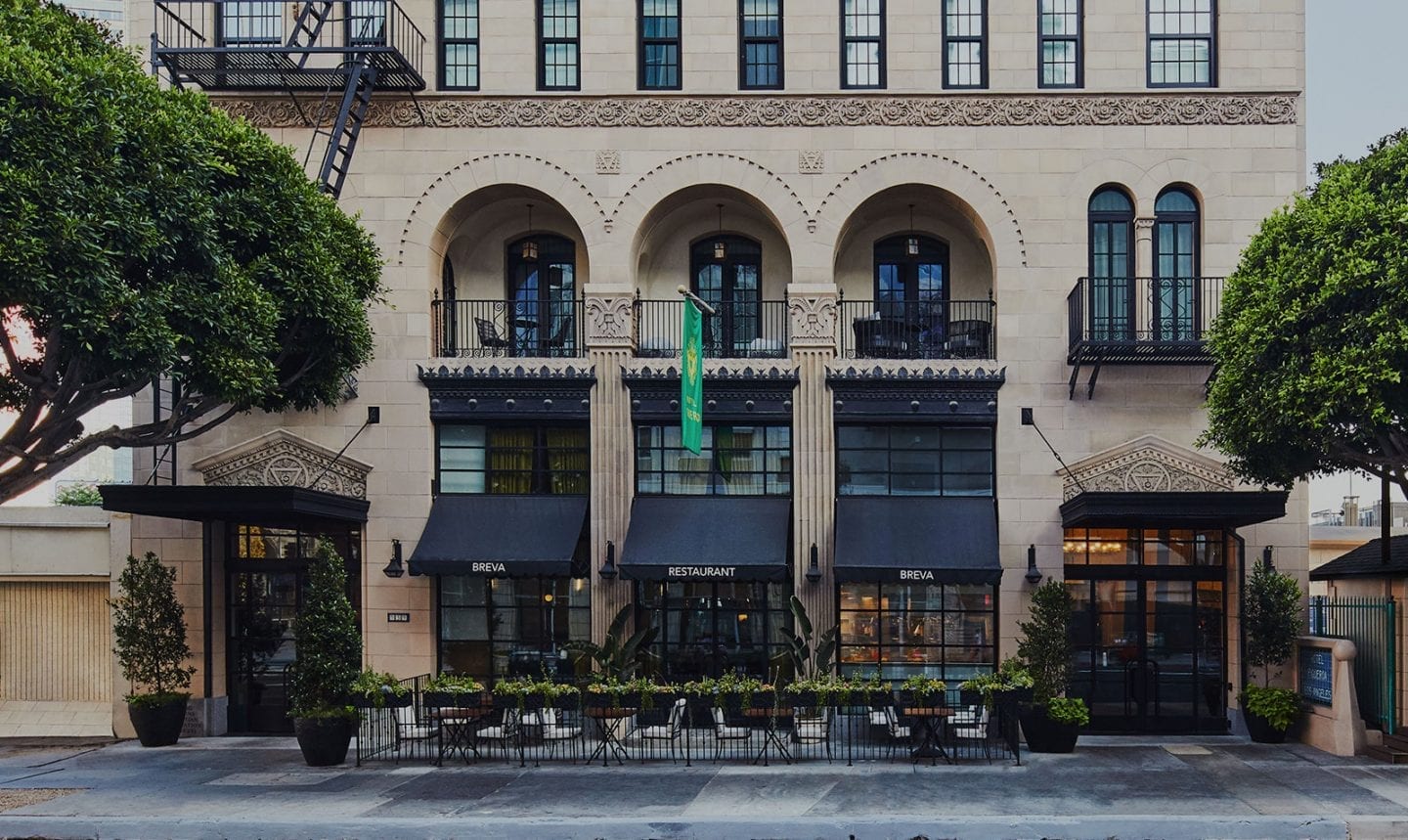
Figueroa Hotel
Rising thirteen stories above South Figueroa Street in the South Park district of Downtown Los Angeles, Hotel Figueroa occupies a building that was never meant to simply house travelers. It was built as a statement—the largest commercial structure in the United States financed, owned, and operated by women at the time of its completion in 1926. Its origins belong to the YWCA of Los Angeles, and its paranormal reputation belongs to nearly a century of human drama that unfolded within walls designed to shelter women at a time when most hotels in America would not admit them without a male escort. The project was spearheaded by the Los Angeles YWCA under the leadership of Mrs. Chester C. Ashley, who recognized that the growing number of women entering the white-collar workforce needed safe, respectable accommodations while traveling on business. The organization purchased the land at 939 South Figueroa Street and financed the 409-room concrete and steel structure through supporter donations and two mortgage bonds. The architecture firm Stanton, Reed and Hibbard designed the building in a Spanish Colonial Revival style, and construction began in 1925. The hotel was finished ahead of schedule and dedicated on August 14, 1926, with a night of dancing and entertainment attended by more than three hundred guests, including representatives of nearly every women's club in Los Angeles. The interior was appointed with wrought iron finishes, goldenrod satin draperies with black patent leather trim, Spanish tapestries on loan from prominent local women, and public spaces given Spanish names—the lobby was the sala de recepcion, the main corridor the el corredor. Maude Bouldin, a motorcycle-riding, plane-flying feminist, served as the hotel's first managing director, believed to be the first woman in the country to hold such a position at a major hotel. For its first two years, the hotel served women exclusively, with men granted only limited access. By 1928, the policy was relaxed to include men in order to sustain business. Through the 1930s, 1940s, and 1950s, the Figueroa functioned as a hub for political organizations, social clubs, and the creative community of downtown Los Angeles. The hotel held press conferences and rallies against sexism and racism, cultivating a reputation as a progressive gathering place. By the late 1950s and 1960s, as downtown Los Angeles experienced a westward migration of offices and residents, the Figueroa declined into a semi-permanent residential hotel with guests paying by the week. In 1976, Swedish entrepreneur Uno Thimansson purchased the property and converted it into a Moroccan-themed budget hotel, introducing the Tangier Room and Club Fes. For decades the Figueroa operated in this eclectic incarnation, known for its affordability and its distinctive coffin-shaped swimming pool but increasingly criticized for aging infrastructure and the absence of modern amenities. In 2014, a joint venture purchased the hotel for sixty-five million dollars and undertook a three-year restoration that stripped away the Moroccan layers and returned the building to its original Spanish Colonial splendor. The hotel reopened in 2018 with 268 rooms and 63 suites, an art program featuring works exclusively by women, and multiple dining and bar concepts. The darker chapters of the Figueroa's history provide the framework for its haunting claims. In 1929, radio operator William L. Tallman murdered his girlfriend Virginia Patty in the hotel and was never captured. A separate killing involved a woman named Cecilia Oswald, whose body was discovered in one of the rooms after her partner confessed, claiming he killed her because he loved her. At least one suicide has also been documented on the premises. These violent deaths, layered over decades of dense human occupancy—hundreds of rooms filled night after night with transient guests, long-term residents, and the steady churn of a building that has never stopped operating—have given the Figueroa a paranormal reputation that persists through its various renovations. Guests over the years have reported televisions and lights turning on in the middle of the night without explanation, air conditioning and heating systems cycling on and off in patterns that suggest deliberate manipulation, and elevator doors opening on empty floors unprompted. Some visitors have described an oppressive or unsettling energy in certain hallways, particularly near the old elevator shafts. The apparition of a former maid who was murdered in the hotel has been reported by multiple sources, and at least one valet parking attendant has acknowledged off the record that staff are aware of the haunting but are discouraged from discussing it with guests. Some visitors have described experiences intense enough to cause them to leave in the middle of the night. Others have noted that the energy in the building, while unmistakable, does not feel uniformly hostile—more restless than aggressive, as though the spirits occupying the Figueroa are as varied in temperament as the living guests who have passed through its doors over the past century. Today Hotel Figueroa operates as part of the Unbound Collection by Hyatt, fully restored and positioned as a boutique luxury destination steps from Crypto.com Arena, the Los Angeles Convention Center, and the LA Live entertainment complex. The Gran Sala lobby displays a black-and-white photograph of the founding women in their flapper dresses, and a large-scale painting of Maude Bouldin greets visitors near the entrance. The coffin-shaped pool remains. The art on the walls is still by women. And the building itself, approaching its centennial, continues to hold whatever it has accumulated across a hundred years of sheltering the living—and, perhaps, some who no longer are.

Box Canyon
Box Canyon, located in the expansive geographic region of Los Angeles County, California, represents a specific geological formation—a narrow valley bounded by high canyon walls that create a dramatic topographical feature within the broader landscape of Southern California. The canyon's formation through geological processes spanning millions of years created a landscape of particular beauty and distinctive character, attracting human presence and settlement across successive historical periods. Native American peoples inhabited the California region for thousands of years before European contact, developing sophisticated cultural systems adapted to the region's diverse ecosystems and environmental conditions. The canyon likely served various functions within indigenous settlement patterns, whether as a resource collection area, seasonal encampment, travel corridor, or sacred ceremonial space. The indigenous relationship to the landscape created layers of cultural meaning and spiritual significance embedded within the geographic features and accumulated through centuries of interaction and habitation. European colonial expansion and subsequent American territorial acquisition transformed the region's demographic composition and cultural character during the nineteenth and twentieth centuries. The canyon region, like much of Southern California, experienced waves of settlement, resource extraction, and eventual urbanization as Los Angeles expanded from a modest pueblo into a sprawling metropolitan area encompassing millions of inhabitants. The specific history of Box Canyon during this transformative period remains somewhat obscured by the relative lack of detailed documentation, but the location emerges in paranormal investigation databases as a site of documented supernatural activity, suggesting that significant historical events or human tragedies created sufficient energetic imprint to persist across subsequent decades. The canyon's geographical isolation and distinctive environmental character may have contributed to its emergence as a location attracting paranormal investigation and documentation. Krishna Venta, an enigmatic and controversial figure, emerged within the paranormal and spiritual history associated with Box Canyon during the mid-twentieth century. Venta established himself as the leader of a spiritual commune or cult organization, attracting followers who were drawn to his teachings and spiritual authority claims. The specific circumstances of Venta's life, his teachings, his followers, and the nature of the organization he established remain subjects of historical debate and paranormal speculation. Venta's death created traumatic circumstances sufficiently significant to attract paranormal investigation and documentation, with his spiritual presence apparently becoming attached to the Box Canyon location where his earthly activities were concentrated. The circumstances of his death suggest violence or trauma creating sufficient emotional and psychological disruption to anchor his consciousness to the physical location. Paranormal investigators conducting research within Box Canyon have documented creepy sensations and unexplained phenomena suggesting the presence of non-corporeal entities within the canyon's spaces. Witnesses describe experiencing uncanny emotional states, sensations of being watched, and atmospheric conditions that create profound psychological discomfort without identifiable conventional cause. The canyon appears to radiate an energetic quality that many visitors interpret as indicative of genuine paranormal presence, though the specific mechanisms and nature of the phenomena remain incompletely understood by paranormal researchers. Historical apparitions have been reported by various witnesses, with some accounts suggesting the manifestation of entities consistent with descriptions of indigenous peoples or early settlers who died within the canyon's geographic bounds. Disembodied sounds have been documented during paranormal investigations, with some accounts describing comprehensible speech and others documenting only inarticulate vocalizations suggesting emotional distress. The cumulative effect of these phenomena has established Box Canyon as one of the Los Angeles region's documented paranormal hotspots, attracting researchers seeking to understand how history, trauma, and spiritual energy concentrate within distinctive geographic locations and persist across temporal boundaries.
Avalon Hollywood
The American Club represents a grand hospitality establishment constructed in 1918 as a residential complex originally designed to house immigrant laborers who comprised much of the working population of the city in which it was located. The building embodies the architectural sensibilities and social philosophies of the Progressive Era, a period characterized by efforts to modernize living conditions, standardize accommodation, and manage social integration of foreign-born workers into American society. The structure was built with quality materials and thoughtful design features intended to provide safe, sanitary, and respectable housing that exceeded the minimal standards typical of working-class accommodation during the early twentieth century. The building encompasses multiple stories with numerous individual rooms and shared common areas designed to facilitate both private residential life and community interaction among inhabitants. The design reflects optimistic assumptions about the capacity of modern architecture and thoughtful planning to improve the moral and social conditions of immigrant populations during a period when such concerns dominated Progressive discourse. Over subsequent decades, the building's function evolved from immigrant worker housing to hospitality establishment, though its fundamental structure and spatial organization remained largely consistent with its original purpose. The American Club harbors at least two distinct and identifiable spirits whose tragic deaths or circumstances appear to have created spiritual attachment to specific locations within the building. A young woman in a blue hat, believed to have taken her own life through suicide within the structure, remains spiritually present within the building, her apparition appearing with sufficient clarity for witnesses to note specific details of her clothing and appearance. A man who appears to stalk the hallways of the building, often accompanied by unexplained blinking of electrical lights, represents a second prominent paranormal entity whose identity and historical circumstances remain somewhat obscured. The concentration of these two spirits within a single building suggests that both individuals experienced sufficient trauma or intense emotion at the location to create lasting spiritual attachment that persists decades or potentially more than a century after their deaths. Paranormal phenomena at The American Club manifest in diverse forms consistent with both residual and intelligent hauntings. Room 209, designated as the Washington Room, has been identified as a location of particular paranormal intensity, with documented phenomena including apparitional sightings and auditory manifestations. Room 315 and corridors throughout the east wing of the building represent additional locations of noted paranormal activity. The hallways throughout the structure serve as venues for manifestation of the man ghost, whose presence is frequently indicated by unexpected blinking of electrical lighting systems and the apparent presence of an unseen entity moving through occupied spaces. Cold spots manifest in specific locations throughout the building, creating localized zones of unexplained temperature reduction that appear and disappear without meteorological explanation. Disembodied voices materialize audibly in various locations, sometimes conveying intelligible speech or conversation. Particularly notably, hushed conversations have been documented occurring simultaneously in multiple languages, suggesting either the presence of multiple spirits capable of communication or perhaps residual emotional imprints from periods when the building housed immigrant populations speaking diverse languages. The American Club has achieved recognition as a member of the most haunted hotels in Wisconsin, distinguishing itself among establishments in its region for the intensity and frequency of documented paranormal phenomena. Video documentation of paranormal activity at the location has been produced and disseminated through paranormal investigation programs and online paranormal communities, bringing national attention to the building's haunted reputation. Paranormal enthusiasts, professional investigators, and casual tourists continue to visit The American Club seeking either spiritual encounters or historical understanding of the building's complex past. The haunted reputation has become integrated into the establishment's identity and operations, with proprietors acknowledging the supernatural phenomena while maintaining professional hospitality standards. The building exemplifies how immigrant trauma, suicide, and unresolved human tragedy can create persistent paranormal phenomena in structures that witnessed such events.
Avila Adobe
The Creede Repertory Theatre stands in Creede, Colorado, a small mountain town established during the silver mining boom of the late nineteenth century. The theatre building itself dates to the Old West era, serving initially as a commercial or entertainment venue during Creede's heyday as a mining community that attracted prospectors, merchants, and the various characters associated with frontier mining towns. The structure embodies the architectural character of late nineteenth century Colorado, constructed with the materials and craftsmanship available in the remote mountain setting. Creede itself became a legendary location in American mining history, known for the phrase "It's day all day in the daytime and there is no night in Creede," reflecting the frenetic commercial activity and round-the-clock mining operations that characterized the town during its peak prosperity. The Creede Repertory Theatre has evolved from its original purpose to become a cultural institution, hosting theatrical productions and serving as a center for live performance arts in a region where such cultural amenities are relatively rare. The paranormal phenomena at the Creede Repertory Theatre manifest primarily on the main stage, in the attic, and throughout the dressing rooms, suggesting that multiple locations within the building serve as focal points for distinct manifestations. The most visually striking phenomenon involves an apparition of a bloody female figure that appears on stage or in nearby areas, a grotesque and disturbing manifestation that suggests the individual met a violent or traumatic end. This apparition is described as having injuries consistent with violence or tragic circumstances, with visible blood staining her appearance and creating an impression of recent trauma despite the historical distance separating contemporary observers from the original event. Other disembodied apparitions have been documented moving through various areas of the theatre, appearing as translucent figures engaged in activities or simply passing through spaces without acknowledgment of living observers. The attic of the theatre building has become a particularly active zone, with heavy boots walking audibly across wooden flooring when no visible person accounts for the footsteps. These sounds suggest a male presence, possibly miners or workers associated with the building's origins during the mining era. The footsteps appear to follow regular patterns, as if the spectre is engaged in familiar routines or familiar with the layout of the attic space. Paranormal possession experiences have been reported by individuals visiting or working in the theatre, with some people describing sensations of foreign presences or consciousnesses attempting to communicate or interact with them. These experiences appear more pronounced among individuals sensitive to paranormal phenomena or those with prior experiences with supernatural manifestations. The phenomena suggest a complex haunting involving multiple distinct entities with varying levels of consciousness and communicative intent. Historians and paranormal researchers theorize that the spirits haunting the Creede Repertory Theatre may include miners who died during Creede's mining operations, individuals who perished in accidents, violence, or other traumatic circumstances associated with the mining industry. The bloody female figure likely represents a specific individual whose death involved violence or tragedy, though historical documentation specifically identifying her remains incomplete. The building's original function may have brought it into association with the rough, sometimes violent culture of frontier mining camps, where deaths from accidents, violence, and disease were relatively common occurrences. Multiple deaths and traumas accumulating within the same location over decades of operation may have created the complex paranormal ecology currently observed within the theatre. Today, the Creede Repertory Theatre continues to function as a theatrical venue and cultural institution while hosting persistent paranormal phenomena that have become integral to the location's identity. Theatre staff and performers have generally adapted to the regular manifestations, incorporating the paranormal reputation into the theatre's character while maintaining professional theatrical operations. Paranormal investigation teams and ghost enthusiasts regularly visit the theatre to document the phenomena and attempt communication with the spirits believed to inhabit the space. The intersection of live theatrical performance and paranormal activity creates a unique atmosphere within the Creede Repertory Theatre, where artistic creation and spectral presence coexist in an ongoing performance that transcends the boundary between the material and spiritual worlds.
Plum Tree Inn
The Plum Tree Inn stands as a modest establishment in downtown Los Angeles that has acquired a reputation extending far beyond its original purpose as a simple lodging house. Located in the heart of an urban center, the structure itself represents the commercial architecture of its era, designed to accommodate traveling businesspeople and temporary residents seeking affordable accommodation. The inn's physical appearance belies its troubled history, presenting an ordinary facade to passersby who remain unaware of the dark events that have transpired within its walls over decades. Like many older buildings in densely populated urban areas, the Plum Tree Inn has undergone various renovations and ownership changes, each chapter of its operational history adding another layer to its complex narrative. The most significant and widely documented tragedy associated with the Plum Tree Inn occurred on Halloween night in 1974, when one former owner of the establishment was murdered within its confines. This violent crime marked a turning point in the inn's reputation, transforming it from an anonymous commercial space into a location associated with sudden, tragic loss. The circumstances surrounding the murder, the investigation that followed, and the victim's connection to the property created a narrative that has persisted in local memory and historical records. The specificity of the date—Halloween itself—has contributed to the location's mystique, creating a temporal marker around which paranormal claims have subsequently crystallized. The event itself represents a tangible historical occurrence, distinct from the speculative experiences that would later be attributed to the space. In the decades following the 1974 murder, the Plum Tree Inn accumulated a collection of unverifiable user-submitted stories regarding paranormal manifestations and persistent presences. Visitors and former employees have reported various phenomena concentrated primarily in the downstairs rooms where much of the daily activity occurs. These accounts, while numerous, remain largely anecdotal and lack scientific documentation or corroboration from established paranormal investigation organizations. The nature of these reported experiences aligns with patterns typically associated with locations bearing tragic histories—guests describing unexplained sensations, unusual occurrences, and pervasive feelings of unease. The narratives emphasize a connection between the historical violence and contemporary paranormal claims, with witnesses often drawing explicit lines between the 1974 event and present-day manifestations. Today, the Plum Tree Inn continues to operate as a working motel, serving its primary function as a lodging establishment while simultaneously maintaining a secondary identity as a site of paranormal interest. Current management and staff navigate the dual nature of their workplace, acknowledging the historical tragedy that shaped the location's reputation while maintaining professional operations. The inn remains accessible to the public, and visitors can experience the space directly, though reports of paranormal activity remain largely confined to informal user submissions rather than systematic investigation. The building stands as a reminder of Los Angeles's complex urban history, where spaces of commerce and community intersect with incidents of violence that fundamentally alter their significance and meaning. The Plum Tree Inn exemplifies how tragedy, when woven into the narrative fabric of a location, can transform ordinary commercial spaces into sites of enduring cultural curiosity and speculation.
Hollywood Tower
The Tower of Terror in Orlando, Florida stands as a significant paranormal location rooted in both historical reality and cultural mythology, a structure that blurs the boundaries between documented supernatural phenomena and imaginative fictional narratives designed to entertain and intrigue contemporary visitors. The real historical foundation for the Tower of Terror involves the Hollywood Tower Hotel in Los Angeles, a structure that experienced documented paranormal phenomena and a genuine historical tragedy involving the death of multiple individuals during an elevator incident in the 1930s. The building, originally constructed as a luxury hotel during the prosperous 1920s era, represented the height of American architectural ambition and commercial hospitality innovation, with elegant design, modern amenities, and architectural features showcasing advanced engineering and aesthetic sophistication. The Hollywood Tower Hotel served as a residence for entertainment industry figures, celebrities, and visitors seeking the glamorous ambiance and modern conveniences that distinguished the finest hotels of the era. The structure's elevator system, representing cutting-edge technological advancement for its time, became the focal point of the tragedy that would define the building's historical legacy and paranormal reputation, when multiple individuals died in a catastrophic elevator incident that shocked the community and left deep impressions upon the building's physical spaces. The historical tragedy at the Hollywood Tower Hotel involved the deaths of multiple individuals during an elevator incident, with specific victims identified as Carolyn Crosson, Sally Shine, Emeline Partridge, Dewey Todd, and an unidentified fifth individual. The circumstances of their deaths created a traumatic imprint upon the building, establishing conditions apparently conducive to paranormal manifestation and the persistence of conscious entities within the structure. Paranormal investigators and witnesses report that the spirits of these individuals appear to have remained attached to the locations of their deaths, particularly concentrated around the elevator systems that claimed their lives. The emotional trauma of sudden, violent death caused by mechanical failure, combined with the apparent resistance of the victims to accepting the reality of their deaths, appears to have created conditions allowing the spirits to maintain conscious presence and continued interaction with the living world. The victims, who died during the glamorous era of 1930s Hollywood, appear to maintain connections to their deaths through continued manifestation of phenomena documenting the jazz age aesthetic and entertainment industry culture of their living period. The tragic nature of the deaths, the violence inherent in the mechanism of death, and the shock experienced by the community appear to have generated paranormal conditions of unusual intensity and persistence. Paranormal phenomena documented at the location where the Tower of Terror was inspired include multiple categories of supernatural experiences consistent with haunting by conscious, emotionally distressed entities. Apparitions of the individual victims have been reported appearing in their living forms, dressed in period clothing characteristic of the 1930s era, particularly concentrated in areas surrounding the elevator systems where the deaths occurred. Phantom music from the jazz age, a musical style contemporary to the victims' lives, has been reported manifesting without any apparent source, suggesting the persistence of memories and emotional impressions from the victims' era. Voices have been captured within the building's boiler room and mechanical systems, with investigators recording what appear to be disembodied voices speaking in distressed tones, possibly describing the circumstances of the deaths or expressing continuing emotional anguish. Screaming sounds have been reported emanating from the elevator shafts, particularly during nighttime hours, suggesting the spirits' continued reliving of the traumatic moments of their deaths. Reports of elevator strikes by what appears to be paranormal lightning suggest the persistence of the mechanical and environmental conditions associated with the original deaths, manifesting as supernatural phenomena. The concentration of paranormal activity around the elevator systems and mechanical spaces indicates that the physical location of the trauma serves as an anchor point for spiritual manifestation and continued presence. The historical paranormal phenomena at the Hollywood Tower Hotel inspired the creation of the Tower of Terror attraction at Disney's Hollywood Studios theme park in Orlando, Florida, transforming the documented supernatural phenomena into an entertainment experience that blurs reality and imagination. While the Disney attraction is explicitly fictional, designed for entertainment purposes, the underlying foundation in historical tragedy and documented paranormal activity at the original location creates a complex cultural phenomenon where real hauntings inspire fictional narratives that themselves become vehicles for exploring themes of tragedy, death, and persistence of consciousness beyond physical existence. Paranormal researchers continue to investigate the original Hollywood location where the documented deaths occurred, documenting ongoing paranormal phenomena consistent with historical reports and establishing the building as a significant paranormal site. The combination of documented historical tragedy, verified paranormal phenomena spanning decades, physical evidence captured during investigations, consistent witness accounts, and the structure's cultural significance has confirmed the location as a confirmed paranormal site worthy of serious investigation and documentation.
Knickerbocker Hotel – Hollywood Knickerbocker Apartments
The Knickerbocker Hotel stands as an iconic testament to Hollywood's golden age, rising prominently along Hollywood Boulevard in Los Angeles, California. Constructed in 1923 during the silent film era, the hotel quickly established itself as a premier destination for the entertainment industry's elite, featuring lavish accommodations and grand public spaces that exuded sophistication. The building's distinctive Art Deco design incorporated classical European elements, creating an environment of breathtaking opulence that complemented the extravagant social scene of the roaring twenties. Among the hotel's most famous residents was Marilyn Monroe, whose presence left an indelible mark on the establishment's cultural significance and whose connection to the property would extend far beyond her lifetime. During the mid-twentieth century, the Knickerbocker Hotel became synonymous with Hollywood's glamour and tragedy. The powder room, hallways, lobby, and grand chandelier areas witnessed countless high-profile gatherings and behind-the-scenes negotiations that shaped the course of Hollywood cinema. Director D.W. Griffith frequently conducted business within the hotel's elegant spaces, while bellhops and service staff maintained impeccable standards of hospitality. The hotel's elevator, a marvel of mechanical engineering for its time, transported guests between floors in exclusive comfort, yet it would also become a focal point for strange occurrences that would later define the location's paranormal reputation. The hotel's transition from prominence to decline marked a significant chapter in its history, characterized by shifts in tourist preferences and economic pressures affecting the hospitality industry. Multiple renovations failed to restore the property to its former prominence, and as decades passed, the building took on a different character defined increasingly by residual echoes of past grandeur. Reports of paranormal activity intensified during this period, with witnesses describing apparitions bearing striking resemblance to Marilyn Monroe herself, clad in elegant attire from decades earlier, moving through spaces she once frequented. Paranormal investigations have consistently reported extraordinary phenomena throughout the Knickerbocker Hotel's occupied spaces. Apparitions of a bellhop known as Roger have been encountered in hallways and lobby areas, his ghostly figure appearing in period-appropriate uniform engaged in behaviors consistent with his former duties. The powder room area has been particularly active, with witnesses reporting unexplained presences, cold spots, and the unmistakable feeling of being observed by an unseen entity. Guests and staff have described encountering the shimmering form of Marilyn Monroe herself, her elegant appearance instantly recognizable and accompanied by inexplicable melancholy. D.W. Griffith's presence has been felt throughout administrative and public spaces, manifesting through subtle environmental changes and unexplained footsteps. The hotel's elevator mechanism has become a paranormal focal point, with reports of movement without being called and unusual sounds. Today, the Knickerbocker Hotel remains a standing structure within the Los Angeles landscape, subject to ongoing preservation efforts and periodic renovations aimed at maintaining its historical integrity. The hotel continues to attract paranormal enthusiasts, historical researchers, and tourists interested in exploring Hollywood's darker aspects. The reported phenomena have secured the Knickerbocker Hotel's place in the landscape of recognized haunted locations throughout California.
La Golondrina Cafe
La Golondrina Cafe occupies a historic building on Olvera Street in Los Angeles, standing as one of the oldest continuously operating Mexican restaurants in the region and representing the cultural and commercial vitality that has characterized the location for more than a century. The establishment emerged during a period of significant Hispanic population development in Los Angeles, establishing itself as a gathering place for family celebrations and social interactions that sustained community cohesion across generations. The building's architecture and spatial organization reflect both the practical requirements of restaurant operations and the cultural aesthetic values of early twentieth-century Los Angeles Hispanic community leaders whose vision shaped Olvera Street's development as a distinctive commercial and cultural district. The historical trajectory of La Golondrina Cafe encompasses multiple ownership transitions and physical renovations that maintained its fundamental character while adapting to evolving expectations regarding hygiene and modern culinary standards. The cafe's longevity across more than a century reflects both the consistency of demand for authentic Mexican cuisine and the management effectiveness of successive proprietors whose commitment to quality and cultural authenticity sustained the establishment through numerous economic cycles and demographic changes. The location's persistence as a Hispanic cultural anchor established it as an iconic element of Los Angeles cultural landscape, recognized by both longtime residents and contemporary tourists seeking cultural authenticity. The paranormal phenomena at La Golondrina Cafe appear particularly concentrated in the stairwell structure and various interior spaces of the restaurant, manifesting primarily through visual and auditory disturbances. Witnesses and paranormal investigators have documented the appearance of shadowy figures occupying the stairwell and other interior spaces, entities whose indistinct visual presentation suggests either deliberate obscuration or the inherent nature of the spiritual manifestations. The primary identified entity appears connected to a figure known as La Consuela, described as "The Mistress," whose historical identification remains subject to ongoing research, though her manifestations have achieved sufficient consistency to establish her as the dominant paranormal presence within the establishment. The paranormal activity at La Golondrina Cafe extends beyond visual apparitions to include unexplained noises and object movement phenomena that witnesses have documented with remarkable consistency. Disembodied voices and unidentified sounds emanate from areas of the cafe where no physical source can be identified, while objects have been reported moving autonomously or disappearing and reappearing in unexpected locations. These experiences have been documented by casual witnesses and restaurant patrons as well as organized paranormal investigation teams employing electronic recording and measurement equipment designed to detect paranormal phenomena at the site. La Golondrina Cafe has achieved recognition within paranormal investigation communities as a significant location for paranormal research and documentation, appearing on ghost tour itineraries and paranormal location databases while continuing to operate successfully as a restaurant. The establishment's reputation for haunting has become integrated into its cultural identity and commercial marketing, with ghost hunting organizations conducting formal investigations and producing detailed documentation of paranormal phenomena while the restaurant maintains uninterrupted food service operations. The combination of historical significance, cultural importance, paranormal activity, and ongoing commercial operation makes La Golondrina Cafe a unique Los Angeles location where Hispanic cultural heritage, culinary tradition, and spiritual manifestations converge to create an experience combining historical education, cultural engagement, and paranormal investigation opportunities.
Pico House
Pico House stands as one of the most significant and historically important structures in Los Angeles, California, representing a remarkable example of nineteenth-century architecture and serving as a tangible connection to the city's multicultural past and the period when Los Angeles transitioned from a Mexican settlement to an American city. The structure was built by and for Don Pio Pico, the last Mexican governor of California, making it an architectural manifestation of his prominence, wealth, and influence during a transformative period in California history. The building showcases distinctive architectural elements reflecting both Mexican design traditions and emerging American construction practices, creating a hybrid aesthetic that embodies the cultural intersection of the period. The ornate interior decorations, detailed woodwork, and spacious rooms of the Pico House reflect the elite status of its original owner and the aspirations of Mexican California society during the mid-nineteenth century. The structure occupies a prominent location within Los Angeles's historic El Pueblo district, serving as an anchor to the city's oldest settled areas and earliest European presence in the region. The Pico House has endured more than one hundred and fifty years of existence, surviving earthquakes, fires, economic fluctuations, and urban development that transformed the landscape surrounding it from a primarily Mexican settlement to a major American metropolitan center. The historical narrative of the Pico House is inextricably intertwined with traumatic events that occurred within and near the structure, most significantly the violent upheaval of the 1871 Chinese Massacre that resulted in the deaths of multiple Chinese residents of Los Angeles within the vicinity of the Pico House and the El Pueblo district. The massacre, motivated by racist violence and social tensions of the era, resulted in the tragic deaths of numerous individuals and created an enduring scar upon the community's historical consciousness. The Pico House, by virtue of its prominent location and association with the events of that year, became bound to the memory of this atrocity and the suffering of those who perished in the violence. Beyond the direct tragedy of the massacre itself, the building witnessed the broader transformations of Los Angeles from a Mexican settlement into an American city, changes that often came at the expense of the Mexican and Chinese populations who had established themselves in the region. The loss of cultural prominence, displacement, and marginalization of these communities created layers of historical trauma that accumulated within the geography of El Pueblo and specifically within the Pico House, which served as a symbolic structure bridging the old era and the emerging new one. The paranormal phenomena associated with the Pico House express themselves through multiple manifestations concentrated in specific areas of the building and the surrounding space. Within the upper floors of the structure, mysterious footsteps have been documented occurring when no visible persons are present, suggesting the movement of non-physical entities through the corridors and rooms of the upper levels. The inner courtyard, a distinctive architectural feature of the building, has become a focal point for shadow figure sightings, with dark humanoid forms observed moving through the courtyard space without identifiable light source or conventional explanation. Throughout the corridors of the structure, investigators and visitors have documented the occurrence of disembodied voices and whispers, suggesting ongoing communication attempts or the residual manifestation of past conversations and human interaction. Cold spots have been documented in various locations within the building, representing localized temperature anomalies that suggest the presence of non-physical entities or energetic disturbances. Most notably, multiple witnesses have reported apparition sightings of Don Pio Pico himself, with the former governor appearing within the spaces he once occupied and animated, suggesting some form of lingering attachment to the property or unresolved connection to the location. The spirits of the victims of the 1871 Chinese Massacre are also believed to be present within and near the Pico House, their tragic deaths creating spiritual anchors that bind them to the location where the violence occurred and the lives were lost. Today, the Pico House functions as a historical museum and tourist destination, allowing the public to experience the architecture, furnishings, and spatial arrangements of this significant historical structure while remaining exposed to the paranormal phenomena that persist within its boundaries. The building serves simultaneously as an educational resource regarding nineteenth-century California history and as a paranormal location of considerable documented activity. Visitors often report personal experiences of the paranormal phenomena, from hearing disembodied voices to feeling the presence of non-physical entities within specific rooms and corridors. The Pico House stands as a location where historical tragedy, cultural heritage, architectural significance, and active paranormal manifestation intersect, creating a unique destination for those interested in understanding both the visible and invisible dimensions of Los Angeles's complex past.
Mount Saint Mary’s College
Mount Saint Mary's College occupies a prominent position in Emmitsburg, Maryland, serving as a Catholic educational institution dedicated to providing undergraduate and graduate education within a faith-based framework and residential college environment. The campus encompasses multiple academic buildings, residential halls, administrative offices, chapel spaces, and recreational facilities distributed across substantial acreage that creates a comprehensive physical plant suitable for residential collegiate life. The architecture of the campus reflects multiple eras of construction and design, with older buildings representative of nineteenth-century institutional construction juxtaposed with more contemporary academic and residential facilities built in subsequent decades. The institution maintains a continuous educational mission extending across multiple centuries of operation, positioning itself as one of the oldest continuously operating Catholic educational institutions in the United States. The campus serves as a residential environment for undergraduate and graduate students, faculty, and administrative staff who collectively constitute the living community of the college. The spiritual character of the institution is reflected in its religious mission, physical chapel spaces, and the integration of Catholic faith traditions into the educational experience and institutional culture. Embedded within the history of Mount Saint Mary's College are connections to figures of profound spiritual and historical significance, most notably Father Simon Gabriel Brute, whose life and ministry became intimately connected to the institution and whose presence is understood to extend beyond the conclusion of his physical existence. Father Brute, identified as a figure of considerable spiritual authority and ecclesiastical importance, occupied a position of prominence within the institution and the broader Catholic Church during his lifetime. The presence of Father Brute's spirit at the college suggests an attachment to the location rooted in his years of service and dedication to the institution's educational and spiritual mission. Additionally, the college's grounds and history encompass connections to Civil War era events and military presence, with Civil War soldiers understood to be represented among the paranormal entities inhabiting the campus. Mother Seton, another figure of significant spiritual and institutional importance, is also understood to maintain a presence at the college, suggesting that multiple historical figures central to the institution's development continue to manifest spiritual presence within the campus environment. These three primary historical figures create a complex paranormal landscape reflecting the institution's spiritual heritage and historical depth. The paranormal manifestations at Mount Saint Mary's College are distributed across multiple campus locations, each associated with specific historical figures or tragic events embedded in the institution's past. Father Simon Gabriel Brute's apparition is documented with particular frequency in Room 252 of Brute Hall, a specific chamber that apparently held significance during his life and has become a focal point for his spectral manifestations. Within this room, investigators and residents have documented lights inexplicably flickering and turning on and off without human agency, creating electrical phenomena that suggest non-physical energy manipulation of mechanical systems. The area surrounding an old well on campus grounds has become associated with paranormal phenomena, though the specific manifestations and historical events that may have triggered the activity remain partially obscured in available documentation. Civil War soldiers are understood to manifest their presence throughout the campus grounds, with one soldier in particular known for tapping the shoulders of living investigators and visitors, creating direct physical contact phenomena that suggest conscious awareness and interaction. The corridors throughout the campus have become locations where disembodied voices and apparitions are encountered, creating a distributed paranormal presence rather than activity concentrated in a single focal location. Brady Hall in particular has become known for oppressive presence phenomena and the sound of slamming doors occurring without human agency, suggesting an entity or entities of significant psychic presence or distress. The apparition of Mother Seton has been documented walking through campus spaces in apparent companionship with a figure dressed as a doctor or physician, suggesting spiritual reenactment of interactions that occurred during her life or manifestation of relationships that transcend the boundary of physical death. Today, Mount Saint Mary's College continues to operate as a functioning Catholic educational institution while simultaneously serving as a location of active and documented paranormal manifestation. Students, faculty, and staff inhabit the campus alongside the spiritual presences of Father Brute, Civil War soldiers, Mother Seton, and other entities whose presence contributes to the paranormal reputation of the location. The college has come to acknowledge and integrate its paranormal heritage into the broader narrative of its historical identity, with ghost tour information and accounts of the paranormal activity available to interested visitors and prospective students. Room 252 in Brute Hall has become a location of particular interest to those seeking to encounter paranormal phenomena, while the campus grounds more broadly invite investigation and personal experience of the spiritual dimensions embedded within the institution. Mount Saint Mary's College represents a unique educational environment where the transmission of knowledge, spiritual development, and active paranormal manifestation occur simultaneously within a landscape layered with historical presence and supernatural significance.
Griffith Park
Griffith Park sprawls across more than four thousand acres of open space, chaparral-covered hills, hiking trails, and developed recreation areas in the northeastern portion of Los Angeles, establishing itself as one of the largest urban parks in North America and a significant destination for both casual recreation and paranormal investigation. The park itself encompasses diverse landscapes including dense woodland areas, open grasslands, canyon formations, and historical structures representing various eras of development and use spanning from the late nineteenth century through the contemporary period. The historical narrative of Griffith Park encompasses indigenous occupation, Spanish colonial period land grants, American frontier era settlement, commercial development, public acquisition, and transformation into a major metropolitan recreation area, a complex historical trajectory that accumulated significant events, tragedies, and human experiences within a single geographic location. The diverse environments and multiple trail systems provide extensive areas for visitors to explore, creating extensive surfaces for paranormal manifestation and investigation, with certain locations achieving particular notoriety for concentrated paranormal phenomena. The extensive acreage and multiple documented haunting locations establish Griffith Park as one of Los Angeles's most paranormally active locations, with sufficient documented phenomena to warrant multiple ghost tour operations and paranormal investigation expeditions. The paranormal manifestations documented throughout Griffith Park involve multiple distinct entities, each associated with specific circumstances of death or tragedy occurring within the park boundaries across its history. Among the most documented and extensively investigated phenomena involves the manifestation of the Lady in White, an apparition appearing throughout the park's trails and open areas, materializing with particular frequency in locations associated with historical tragic events. The manifestation identified as the Lady in White has achieved sufficient documentation through multiple independent witness accounts to establish the entity as among the most reliably reproducible paranormal phenomena within the park environment. Peg Entwistle, a historical figure associated with early twentieth-century theatrical history and Hollywood entertainment industry development, manifests as an apparition appearing in 1930s-era clothing consistent with the period of her documented historical life. The manifestation of Peg Entwistle has been interpreted by researchers as potentially connected to the circumstances of her death, with the distinctive temporal markers of her apparition's appearance suggesting either spiritual manifestation influenced by memories of life or consciousness maintenance of specific temporal period associations. The entity known colloquially as Dona Petronilla is associated with a curse placed upon the land in 1863, a supernatural entity whose manifestations appear connected to a specific invocation or curse laid upon the landscape decades before the park's formal establishment and public designation. Picnic Table 29 has achieved particular notoriety as a concentrated location of paranormal phenomena within Griffith Park, the specific site where a tree branch fell and killed a young couple, identified as Rand Garrett and Nancy Jeanson, during 1976. The deaths occurred during a moment of romantic intimacy at the picnic area, with the couple seated at the table when an unexpectedly large tree branch separated from an overhead tree and fell with sufficient force to cause fatal injuries. The tragic nature of the deaths, occurring during a moment of interpersonal connection and emotional bonding, combined with the apparent randomness and unexpected nature of the tree branch failure, created conditions for significant emotional and spiritual trauma to bind the consciousness of the deceased individuals to the specific location. Manifestations at Picnic Table 29 have increased in frequency and intensity since the initial tragedy, with paranormal reports clustering with particular concentration at that specific geographic location. The apparitions appearing throughout Griffith Park and concentrated at various specific locations have achieved sufficient documentation to establish the park as a location of major paranormal significance within the Los Angeles metropolitan area and throughout California paranormal research communities. The Old Zoo area, representing a historical recreation facility that ceased operations decades ago leaving behind physical structures and ruins scattered throughout a defined area of the park, has yielded reports of spectral phenomena consistent with manifestations of individuals associated with that historical facility and the surrounding environment. Visitors to the trail systems and open areas throughout Griffith Park continue to encounter paranormal phenomena with sufficient regularity that the park has achieved recognition as one of North America's most extensively haunted locations and a destination specifically sought by paranormal researchers and ghost tour operators. The concentration of multiple distinct entities, the variety of manifestation types spanning apparitions to auditory phenomena, and the consistent documentation of phenomena across multiple independent witness accounts and research organizations establish Griffith Park as an exceptionally complex paranormal environment where the accumulated trauma, tragedy, and historical events across centuries have created conditions for multiple consciousness patterns to remain bound to specific locations within the park boundaries. The park continues to function as a major recreation area serving the Los Angeles metropolitan community while simultaneously maintaining its established role as a significant paranormal investigation destination and a location of documented spectral phenomena.
Stay on Main Hotel
The Stay on Main Hotel in Los Angeles, formerly known as the Cecil Hotel, represents one of the darkest chapters in American hospitality history and stands as the epicenter of an extraordinarily high concentration of violent deaths, mysterious disappearances, and paranormal phenomena. Constructed in 1924 during the height of Los Angeles's architectural boom, the hotel embodied the glamorous aspirations of the roaring twenties, with its ten stories of art deco design and sophisticated amenities positioned to attract upscale clientele to the downtown corridor. The building's early decades witnessed its intended purpose as a stylish destination hotel, yet the mid-twentieth century gradually saw the surrounding neighborhood decline, and the Cecil found itself increasingly populated by long-term residents of questionable means and transient guests seeking affordable lodging. This transition, combined with the hotel's labyrinthine architectural configuration and numerous hidden spaces, created an environment conducive to tragedy and criminal activity that would accumulate in shocking succession. The catalog of violent deaths, suicides, and mysterious circumstances within the Cecil Hotel's walls represents a concentration of tragedy almost unparalleled in American hospitality records. Beginning in the 1950s and accelerating through subsequent decades, the hotel witnessed multiple suicides from its upper windows, murders that occurred in its rooms and corridors, and mysterious deaths that remain unexplained and unsolved despite investigation. The most infamous resident was serial killer Richard Ramirez, known as the Night Stalker, who lived in the hotel while conducting his reign of terror across Southern California, selecting some victims from nearby areas before returning to his room. The hotel became known among paranormal researchers and true crime enthusiasts as a location where tragic deaths seemed to accumulate with inexplicable frequency, suggesting something fundamentally malevolent about the structure itself. Elisa Lam's case brought renewed international attention to the hotel, with her mysterious disappearance and subsequent discovery in the rooftop water tank becoming the subject of a Netflix documentary and extensive internet speculation. Paranormal manifestations within what is now called Stay on Main Hotel are documented with remarkable consistency and intensity, particularly concentrated in the elevator areas where many of the hotel's most violent deaths occurred. The spirit of Elisa Lam is reported to haunt the elevators where she was last seen alive, with witnesses describing elevator malfunctions, unexplained movements between floors, and the sensation of an unseen presence in the confined spaces. Beyond the elevators, the hotel's hallways and various rooms are characterized by an overwhelming dark energy that visitors consistently describe as oppressive and psychologically distressing. Multiple paranormal investigators who have conducted formal investigations within the hotel report sudden equipment failures, unexplained temperature fluctuations, shadow figures moving through corridors, and an almost tangible atmosphere of dread that pervades the structure. Some investigators describe the building as possessing an inherent vortex of negative energy, as though the accumulated trauma and violence has somehow wounded the very fabric of the physical space itself. In recent years, the hotel underwent rebranding as Stay on Main Hotel in an attempt to distance itself from its dark history, yet paranormal activity continues unabated throughout the building. The tragic legacy of the location appears immutable, with the deaths and violence that occurred within its walls seemingly indelible marks upon its spiritual essence. Hotel management has attempted to position the property as a budget-friendly accommodation option, yet the building's notoriety ensures that it continues to attract paranormal researchers, true crime enthusiasts, and individuals with morbid fascination regarding its deadly history. The Stay on Main Hotel stands as a sobering reminder that some locations accumulate tragedy with such intensity that their physical structures appear to become repositories for the suffering and violence that transpired within them, creating an environment where the past refuses to be forgotten.
Thelma Todd’s Sidewalk Cafe
Thelma Todd's Sidewalk Cafe occupies a Spanish style building constructed in 1931 in Pacific Palisades, California, perched on a bluff overlooking the Pacific Ocean and offering panoramic views of the coastline and the distant horizon. The building was designed and constructed as a restaurant and entertainment establishment specifically created to serve the Hollywood social elite and the growing population of entertainment industry professionals discovering Pacific Palisades as a scenic and exclusive retreat. The architecture reflects the Spanish Colonial Revival style that was popular in Southern California during the 1920s and 1930s, with characteristic elements including arched passageways, ornamental tilework, and interior courtyards designed to maximize views and facilitate the leisure atmosphere expected by the clientele. The cafe was positioned as a prestigious destination, combining fine dining with natural scenic beauty and proximity to the ocean. The building and its original owner became intimately associated with the glamour and sophistication of Hollywood's golden age, when the motion picture industry was establishing itself as America's dominant cultural force. Thelma Todd was a Hollywood actress of considerable prominence during the 1920s and early 1930s, having achieved success in both silent films and early sound motion pictures. Born in Massachusetts, Todd migrated to Los Angeles as did thousands of aspiring performers, eventually achieving success through talent, determination, and favorable circumstances in the rapidly expanding entertainment industry. She appeared in numerous films, built a substantial career, and achieved financial success that allowed her to become a business owner and entrepreneur rather than remaining merely an employee of the studio system. Todd's construction and operation of the Sidewalk Cafe represented a significant business venture, extending her income stream beyond acting alone and providing her with independent economic security. She became known for her charm, wit, and sophisticated social manner, developing a reputation as an engaging personality both on and off screen. Todd's life and career represented a remarkable success story for a woman in an era when female agency and economic independence were limited. On December 16, 1935, Thelma Todd died under circumstances that have remained mysterious and contested for nearly nine decades. The official determination was that her death resulted from accidental carbon monoxide poisoning, allegedly occurring when she remained in a closed automobile garage overnight. However, multiple alternative theories have emerged suggesting that Todd's death may have resulted from foul play, possibly involving murder disguised as accidental death. Theories regarding her death have included suggestions of romantic or professional entanglement leading to homicide, connections to organized crime figures, and complications stemming from her business or personal relationships. The ambiguity surrounding her death has fueled decades of speculation, investigation, and paranormal interest. The sudden loss of a prominent, successful, and relatively young woman in mysterious circumstances created significant public interest and contributed to the development of the location's paranormal reputation. The paranormal phenomena associated with Thelma Todd's Sidewalk Cafe center on the continued manifestation of Thelma's spirit within the building and grounds. Multiple ghost sightings have been reported by visitors, staff, and paranormal investigators documenting the presence of an apparition consistent with descriptions of Thelma Todd during her lifetime. Most remarkably, paranormal investigators and mediums have reported that Thelma's spirit insists that she was murdered rather than dying accidentally, continuing to assert her innocence and conviction that she was the victim of a crime. The persistence of this claim across multiple independent investigations suggests either a genuine manifestation of Thelma's continued consciousness or a deeply embedded psychological impression created by the traumatic nature of her death. The cafe remains a functioning business establishment, with its paranormal heritage adding significantly to its historical interest and tourist appeal. Thelma Todd's Sidewalk Cafe has become one of Los Angeles's most famous haunted locations, attracting paranormal enthusiasts, ghost hunters, and individuals interested in Hollywood history. The spirit of Thelma Todd appears bound to the location where she achieved her greatest success and where her life ended under mysterious circumstances, unable or unwilling to depart from the building that represents the apex of her accomplishments.
Haunted Table 29 at Griffith Park
Griffith Park in Los Angeles represents one of Southern California's most significant urban parks, established in the late nineteenth century as a gift to the city and subsequently developed into a major recreational destination. Spanning over four thousand acres of diverse terrain including chaparral-covered hillsides, oak woodlands, and recreation areas, the park encompasses numerous picnic facilities designed to accommodate family gatherings and outdoor celebrations. The Mineral Wells Picnic Area, situated within the broader park grounds, has long served as a popular destination for groups seeking pleasant outdoor dining and recreational activities in a scenic natural setting. Among the numerous picnic tables within this area, Table 29 acquired particular notoriety due to a tragic incident that occurred during the 1970s, transforming an ordinary picnic facility into one of Southern California's most famous paranormal sites. The tragic incident central to Table 29's haunting occurred in 1976 when a young couple, Rand Garrett and Nancy Jeanson, visited Griffith Park to enjoy an intimate evening together. The couple was spending time at or near picnic table 29 in the Mineral Wells Picnic Area when a catastrophic accident occurred. A large tree located in proximity to the picnic area was struck by lightning during a sudden and violent electrical storm, with devastating consequences. Rand Garrett was reportedly struck by the falling tree or electrical discharge, suffering fatal injuries that resulted in his immediate death. Nancy Jeanson was also critically injured in the incident, sustaining traumatic wounds that proved mortal, with her death occurring either immediately or very soon after the accident. The sudden and violent nature of their deaths, occurring during what should have been a romantic and peaceful evening, established the foundation for the paranormal legends that would subsequently develop around the location. Following the tragic deaths of Rand and Nancy, reports of paranormal phenomena began accumulating among park visitors and paranormal investigators. Visitors to the picnic area have consistently reported experiencing sudden drops in ambient temperature around the specific table, with witnesses describing profound cold spots that cannot be explained by weather conditions or natural air circulation within the park. Disembodied moaning and crying sounds have been heard in the vicinity of the table, described as the anguished expressions of emotional distress and tragedy seemingly emanating from no identifiable physical source. The phenomenon of violent tree shaking has been frequently reported despite calm weather conditions, with witnesses describing branches of nearby trees suddenly convulsing and thrashing as if subject to powerful invisible forces. Visitors and paranormal investigators have also reported receiving messages from the spirits, with some witnesses claiming to have heard verbal communications or discovered written messages seemingly conveying the thoughts of the tragic spirits who remain attached to the location. The haunting of Table 29 became increasingly well-known through paranormal research publications, online documentation, and word-of-mouth among Southern California's paranormal enthusiast community. Numerous investigative teams have visited the location to document and explain the phenomena, with equipment readings and photographic documentation adding credibility to witness accounts. The legend has been referenced in popular culture and paranormal television programs. The specificity of the legend, including the identifiable identities of the tragic victims and the documented nature of the fatal incident, distinguishes Table 29 from more nebulous paranormal legends, giving the haunting a foundation in historical tragedy rather than mere folklore. Today, Table 29 continues to serve as a functioning picnic facility within Griffith Park, with visitors drawn both by its recreational convenience and its reputation as one of the region's most reliably haunted locations. Paranormal investigators and curious tourists continue to visit the site, with the location maintaining its status as a focal point for paranormal tourism in the greater Los Angeles area. The tragedy of Rand Garrett and Nancy Jeanson's deaths has been eternalized by the paranormal phenomena that persist at their final earthly location, transforming an ordinary picnic table into a memorialization of tragic loss and a testament to the enduring connection between violent death and spiritual manifestation.
Millennium Biltmore Hotel
The Millennium Biltmore Hotel, located in Los Angeles, California, represents a premier example of luxury hotel architecture and hospitality established during the 1920s, a period of significant prosperity, urban development, and expansion of American hospitality infrastructure. The hotel was constructed in 1923, immediately following World War I and during the rapid expansion of Los Angeles as a major metropolitan center and entertainment industry capital. The Biltmore Hotel reflected the ambitions of its developers and investors to create a world-class hospitality establishment capable of competing with the finest hotels in Eastern cities while accommodating the needs and preferences of the expanding Los Angeles business and entertainment communities. The architectural design incorporated grand public spaces, extensive ballrooms and event facilities, luxury dining establishments, and hundreds of guest rooms distributed across multiple floors of the substantial building structure. The hotel's design emphasized luxury appointments, ornamental embellishments, and sophisticated interior design elements reflecting early twentieth-century standards of high-end hospitality. The Biltmore quickly established itself as the premier hotel destination for visiting dignitaries, entertainment industry figures, and affluent travelers seeking the finest accommodations available in Los Angeles. Throughout its decades of operation, the Biltmore Hotel hosted countless important events, celebrity gatherings, political functions, and major social occasions that shaped the history and culture of Los Angeles. The hotel witnessed the passage of celebrity guests, political figures, and ordinary travelers through its grand lobbies and elegant corridors. The hotel's ballrooms and event spaces became venues for some of Los Angeles's most significant social and cultural events, establishing the Biltmore as a focal point of Los Angeles high society and entertainment industry social life. The permanence of the building and the intensity of human activity concentrated within its spaces over multiple decades created an environment saturated with human emotion, experience, and tragedy. The hotel continued to operate as a major hospitality destination throughout the twentieth century, adapting to changing economic conditions and entertainment industry transformations while maintaining its position as a significant Los Angeles landmark. The paranormal phenomena at the Biltmore Hotel concentrate most intensely on the second, ninth, tenth, and eleventh floors, suggesting that specific tragic events or deaths may have occurred on these floor levels. The second floor is reportedly haunted by a ghostly nurse, suggesting a medical emergency or death occurring at the hotel requiring medical intervention or resulting in fatality. The ninth floor is inhabited by the spirit of a laughing little girl approximately ten years old, whose playful and cheerful manifestations suggest a child who died at the hotel under unknown circumstances and remains spiritually present within the building. The tenth and eleventh floors are believed to be haunted by the spirit of Elizabeth Short, also known as the Black Dahlia, one of the most notorious unsolved murder victims in American criminal history. Elizabeth Short was discovered murdered and mutilated in Los Angeles in 1947 in a case that shocked the nation and generated extensive press coverage and criminal investigation. Additional paranormal entities reported at the Biltmore Hotel include manifestations described as phantom soldiers dressed in military uniforms, possibly representing spectral remnants of military personnel who visited the hotel during World War II and the immediate postwar period. The manifestations at the Biltmore Hotel include disembodied voices heard in various rooms and corridors, phantom sounds of revelry and party activity occurring without visible sources or present guests, unexplainable noises emanating from empty spaces, orbs of light visible in photographs and to the naked eye, sudden temperature drops and cold spots in specific locations, and the distinctive sensation of invisible presences moving through the hotel spaces. The cumulative effect of these diverse paranormal phenomena has established the Biltmore Hotel as one of Los Angeles's most actively haunted locations and a premier destination for paranormal researchers and ghost hunters. The hotel remains in operation as a functioning hospitality establishment despite its reputation as a paranormal hotspot, continuing to serve guests and host events while maintaining its historical and cultural significance as a Los Angeles landmark.
Harlow House
The Harlow House, located at 9820 Eastern Drive in Benedict Canyon, Beverly Hills, California, occupies a significant place in the intersection of Hollywood celebrity culture and paranormal phenomena. The house became the center of a notorious tragedy when Paul Bern, a prominent film producer working during Hollywood's golden age, took his own life within the residence in 1932. Bern was a successful and respected film executive whose career had progressed to positions of authority within the major studios, overseeing productions and wielding considerable influence over the film industry's creative output. However, his personal life concealed depths of despair and psychological anguish that culminated in his decision to end his existence. The precise circumstances surrounding Bern's suicide, including potential contributing factors of marital discord, professional pressures, or undisclosed personal struggles, remain matters of historical debate and speculation. The proximity of the Harlow House to Jean Harlow, the legendary platinum blonde actress and symbol of 1930s Hollywood glamour, added layers of celebrity intrigue and scandal to the tragedy. Harlow was one of the most famous and sought-after actresses of her era, known for her beauty, comedic timing, and magnetic screen presence. The specific nature of her relationship to Bern remains historically unclear, with various accounts suggesting romantic involvement, professional collaboration, or more complicated interpersonal dynamics. The public scandal surrounding Bern's death and his connections to Hollywood's elite created a media sensation that dominated newspaper headlines and public discourse, transforming the Harlow House into a location of dark celebrity interest and morbid fascination. Following Bern's death, subsequent ownership of the Harlow House has been characterized by a consistent pattern of misfortune, unexplained accidents, and tragedy that owners and residents attribute to a supernatural curse emanating from Bern's violent departure from life. The house developed a reputation as a location where fortune turns dark and unexpected disasters befall those who take residence. Multiple owners have reported experiencing drowning deaths in the property's swimming pool, accidents that they view as manifestations of paranormal malevolence rather than simple accidents. The deaths in the pool represent a particularly tragic and recurring motif, suggesting either a specific spiritual focus on aquatic settings or a pattern of dark events that seem to concentrate in that location. Actress Sharon Tate, who resided at the Harlow House during her Hollywood career in the 1960s, reported personal encounters with paranormal phenomena that convinced her of Bern's ghostly presence. Tate described observing the apparition of a small, creepy-looking man within the house, whom she believed to be the ghost of Paul Bern continuing to haunt the location that marked his earthly demise. The manifestation she encountered appeared as a shadow figure or full-bodied apparition of a diminutive male entity, matching descriptions that would align with Bern's physical appearance. Tate's credibility as a witness is significant, as she was a celebrated and respected actress whose testimony carries weight within the paranormal investigation community. The Harlow House represents a case study in how tragic death, particularly suicide involving violence and emotional trauma, may create spiritual imprints that persist indefinitely within physical locations. The combination of documented paranormal phenomena, consistent reports from multiple credible witnesses over decades, and the pattern of misfortune and tragedy affecting subsequent residents and owners creates a compelling narrative of authentic haunting. The house stands as a monument to the human cost of Hollywood success, the psychological pressures that may drive individuals to destructive acts, and the possibility that powerful emotional experiences may transcend death and continue to affect physical reality.
Lincoln Heights Jail – Bilingual Foundation of the Arts
Lincoln Heights Jail stands as a grim repository of violent police history and systematic brutality in twentieth-century Los Angeles, its origins rooted in the city's development of a modern criminal justice infrastructure in the post-World War II era. The facility was constructed to serve as a holding facility for arrested individuals awaiting processing and booking into the broader jail system, housing inmates temporarily before their transfer to longer-term incarceration facilities. The jail occupied a significant position within Los Angeles's East Side neighborhood, serving the law enforcement needs of a rapidly growing metropolitan area. The building remained in active use as a detention facility for several decades, during which it accumulated a reputation for inadequate conditions and harsh treatment of inmates. The facility eventually became obsolete as newer and more expansive jail facilities were constructed elsewhere in the city, and the building was closed and abandoned, leaving behind a vacant structure that would eventually be adapted for cultural purposes. The catastrophic event that transformed Lincoln Heights Jail from a routine institutional building into a symbol of police brutality occurred in December 1951, during the incident that came to be known as Bloody Christmas. On Christmas Eve of 1951, Los Angeles Police Department officers Julius Trojanowski and Nelson Brownson responded to a call reporting what they believed would be juveniles drinking illegally. Upon arrival, they discovered seven adult men engaged in underage drinking, a situation that initiated a violent altercation between the men and the police officers. The conflict escalated dramatically when approximately fifty additional LAPD officers arrived at the scene, far exceeding any reasonable number necessary to subdue seven individuals. Over a period of approximately ninety-five minutes, the arrested men were subjected to sustained and coordinated brutality, resulting in catastrophic injuries including broken bones, ruptured organs, and severe facial trauma. Five of the seven men were Hispanic, while two were young Caucasian individuals, reflecting the discriminatory policing that characterized Los Angeles law enforcement during this era. The Bloody Christmas incident became a watershed moment in the history of American police accountability and the exercise of state power against incarcerated individuals. The brutality inflicted upon the seven prisoners resulted in the first-ever grand jury indictments of serving Los Angeles police officers, marking the first successful prosecution of officers for excessive force in LAPD history. The incident exposed the inadequacy of existing mechanisms for police accountability and the systemic failures that had enabled massive police violence to occur without consequence. The trauma inflicted upon the seven prisoners, the sustained nature of the violence, and the institutional response that finally held officers accountable created a profound spiritual and emotional residue within the jail facility itself. Lincoln Heights Jail has become one of the most thoroughly documented paranormally active locations in Los Angeles, with hundreds of hours of electronic voice phenomenon recordings and extensive video documentation of ghostly manifestations. Paranormal investigators working within the facility have consistently captured evidence of disembodied voices, including phantom whispers, distant screams, and the articulate cries of tormented individuals calling for help. Shadow figures have been photographed and documented by multiple investigative groups, appearing particularly frequently in the basement areas of the building where the most intensive violence occurred. Visitors report sudden and profound drops in ambient temperature, followed by the appearance of translucent or shadowy figures that vanish suddenly without apparent movement. The paranormal phenomena are not distributed randomly throughout the building but concentrate intensely in areas associated with the beating and detention of the victims. The spirits of Lincoln Heights Jail appear to remain bound to the location by the trauma and violence they experienced, unable or unwilling to accept the finality of death and move beyond the consciousness of their suffering. The seven inmates beaten so brutally during Bloody Christmas appear to persist as spiritual entities within the facility, their presence detected through the electronic voice phenomenon recordings that capture their anguished vocalizations and desperate appeals for help that remain unanswered after more than seven decades. The paranormal activity at Lincoln Heights Jail serves as a persistent testimony to the injustice visited upon these seven men, a spectral reminder that human suffering of sufficient intensity can leave marks that transcend the physical realm. Lincoln Heights Jail has been adapted for use by the Bilingual Foundation of the Arts, transforming the site from an active detention facility into a venue for cultural expression and educational programming. Yet the paranormal activity persists, with both staff and visitors to the cultural facility continuing to report encounters with the spiritual entities that remain bound to the location. Lincoln Heights Jail stands as one of the most definitively haunted locations in Los Angeles, a place where the boundary between the living and the dead has become permeable due to historical trauma and institutional violence of extraordinary magnitude.
The Comedy Store
The Comedy Store on Hollywood Boulevard stands as a testament to Los Angeles's transformation from a den of organized crime to a premier entertainment institution, yet its past remains indelibly woven into the building's very foundation. The structure began its existence in the 1920s as Ciro's, one of Hollywood's most notorious nightclubs during the Prohibition era and its aftermath. Under the stewardship of notorious gangster Mickey Cohen, Ciro's became an epicenter of illicit activity, with gambling operations, bootlegging, and money laundering conducted in shadowed corners and hidden back rooms. The venue attracted both Hollywood's elite entertainment figures and the Los Angeles criminal underworld, creating an atmosphere thick with danger, excess, and moral ambiguity. Throughout the 1940s and 1950s, Ciro's maintained its reputation as a glamorous yet sinister establishment where the line between legitimate entertainment and criminal enterprise remained deliberately obscured. Beyond the organized crime history, the building harbored much darker secrets within its depths. The basement became the setting for unsanctioned and dangerous medical procedures conducted by individuals operating outside the law. A woman seeking treatment fell victim to a back-alley medical procedure that claimed her life, her death shrouded in secrecy as the nature of underground clinics demanded. When Ciro's eventually closed and the space was repurposed as The Comedy Store in the 1970s, the building underwent metamorphosis from a venue of vice to legitimate entertainment, yet the traumatic imprints of its past remained embedded in its structure. Steve Lubetkin, a comedian who desperately sought stardom within these walls, left an imprint that transcends the physical realm. His ghost lingers in the establishment, seemingly trapped in an eternal quest for the recognition and success that eluded him during his lifetime. Witnesses consistently encounter his apparition near the stage where he performed with unfulfilled hopes. Comedian Sam Kinison's intense and provocative performances created a powerful connection to the venue that apparently extended beyond his living years, contributing to residual haunting that persists across decades. Paranormal activity at The Comedy Store has been extensively documented by performers, staff members, and professional paranormal investigators. The basement, site of the woman's death, has become a focal point for phenomena, with visitors and staff reporting disembodied voices that cry and moan. Cold spots materialize unpredictably throughout the venue, and objects move of their own accord. The Belly Room performance space has been associated with Sam Kinison's spirit, with performers reporting unusual sensations and disturbances. In January 2021, the Ghost Adventures television crew conducted a lockdown investigation utilizing modern paranormal equipment. A 1982 UCLA parapsychology investigation led by researcher Barry Taff further validated the location's reputation. The physical structure bears clear marks of its dual histories. The stage retains an energy that seems to transcend the ordinary, with contemporary performers continuing to report unusual sensations during late-night shows. Men in dark suits from the 1940s era have been sighted in period clothing, their presence suggesting residual haunting connected to the building's criminal past. A bouncer named Gus is reported by staff to maintain an otherworldly presence near the entrance and throughout corridors. The transformation from Ciro's to The Comedy Store has layered new experiences atop the old, creating a complex palimpsest of human emotion, tragedy, ambition, and loss. Today The Comedy Store remains an active entertainment venue while simultaneously serving as one of Hollywood's most consistently reported haunted locations, where the dreams and aspirations of performers both living and deceased seem to occupy the same physical space.
John Sowden House
The John Sowden House in Los Angeles stands as a striking architectural anomaly designed by the visionary Lloyd Wright and completed in 1926, a structure whose stylistic boldness and striking aesthetic would prove inseparable from its historical notoriety and its intense paranormal reputation. Wright's design for the residence broke sharply with conventional domestic architecture of the era, employing dramatic geometric forms and fortress-like elements that gave the dwelling an otherworldly appearance as if the structure had emerged from the imagination of a science fiction author rather than from conventional architectural practice. The house's architectural styling suggests modernist influences, with emphasis on sculptural form and dramatic spatial relationships that create an environment feeling more fantastical than domestic. The house's distinctive design, with its shadowed recesses and sculptural stonework, creates an environment that seems to exist partially outside ordinary spatial conventions, a quality that may contribute to the intensity of paranormal phenomena reported within its walls. The shadowed passageways and dramatic light-and-shadow interplay created by the architectural forms generate an environment of psychological intensity and visual disorientation. The dwelling achieved its greatest historical notoriety when it became the residence of Dr. George Hodel from 1945 to 1950, a period during which Hodel allegedly engaged in criminal activities of profound depravity and became a figure of intense suspicion in one of the most sensational unsolved murder cases in American criminal history. Hodel's presence within the house appears to have transformed it from merely distinctive architecture into a location laden with associations of violence, suffering, and crime. During Hodel's occupancy, the case of the Black Dahlia—the brutal murder of an unidentified woman whose bisected corpse was discovered in a vacant lot in Los Angeles—entered its investigative phase, with Hodel emerging as a prime suspect in the eyes of law enforcement and forensic researchers examining the crime decades later. While Hodel himself has never been conclusively connected to the murder through conventional legal proceedings, the proximity of his residence to the crime and his alleged involvement in numerous other violent criminal acts have rendered the house a location saturated with associations of violence, suffering, and potentially unresolved justice. The paranormal phenomena reported at the residence manifest with particular intensity within the basement, a subterranean space that occupies a psychologically liminal position within the structure and that has become the focal point of paranormal investigation due to its connection with Hodel's residence and its potential relationship to the broader criminal and supernatural narratives enveloping the property. The basement's darkness and isolation create an environment of particular psychological intensity and unease. Witnesses have documented hearing footsteps of invisible presences moving through the residence, the sound of chains dragging across surfaces, and the observation of humanoid shadows moving through spaces where no living persons are present. Most dramatically, a female apparition has been witnessed by residents and investigators, a spectral figure that some researchers have speculated may be connected to the Black Dahlia case or to other victims of violent crime associated with the property's history. The house has attracted the attention of paranormal investigation teams who have documented the location in television programs dedicated to supernatural phenomena, adding layers of public awareness and scientific scrutiny to the already intense paranormal reputation the residence maintains within Los Angeles's paranormal geography. The John Sowden House exemplifies the manner in which architectural distinctiveness, historical tragedy, and documented supernatural phenomena can converge to create a location that occupies a unique position within American paranormal discourse and public consciousness.
American Idol Mansion
The American Idol Mansion, a sprawling fifteen-thousand-square-foot Spanish-style residence nestled in the Beverly Hills neighborhood of Los Angeles, became an unlikely focal point of paranormal intrigue when it served as temporary housing for contestants during the production of Season 10 of the reality television competition American Idol. The palatial estate, with its characteristic Mediterranean architecture, high ceilings, and opulent interior design featuring premium furnishings and artwork, had previously enjoyed a reputation as a desirable entertainment property within Hollywood's upper echelon. The mansion had been used for previous filming and television production, bringing with it the cultural cachet of a residence that had hosted entertainment industry figures and celebrities. Yet beneath its carefully maintained facade and designer furnishings, residents and visitors would soon discover evidence of a presence far more mysterious and unsettling than the manicured grounds and professional staging suggested. The mansion's true history, extending back decades and encompassing previous uses and occupancies of questionable reputation, harbored a secret that would eventually manifest in unexplained phenomena that would drive even ambitious young performers seeking career advancement from its rooms. During Season 10 of American Idol in 2011, multiple contestants reported experiencing bizarre and inexplicable disturbances within the mansion's walls that would prove impossible to dismiss or rationalize. Lights flickered sporadically throughout hallways and bedrooms without any electrical explanation or mechanical cause, and residents described seeing a luminous, translucent form described as resembling a white shadow or shimmering apparition drifting silently across empty rooms during daylight hours. The entity, identified by residents as "Phyllis," became known as a troublemaking though not overtly malevolent presence—a spirit characterized as friendly but deeply invested in disrupting the daily routines and peace of mind of those living in the home. The mansion's structure seemed to become a conduit for supernatural activity, with commonplace objects behaving in ways that defied conventional explanation and suggesting intelligent manipulation rather than random physical phenomena. Contestant Allison Iraheta became particularly vocal about the mansion's haunted nature, describing encounters with phenomena that went beyond the realm of reasonable skepticism and that fundamentally challenged her worldview regarding the possible. Other residents reported witnessing a bed sheet float horizontally down an otherwise empty hallway with deliberate, controlled movement, despite there being no visible means of propulsion or air current capable of explaining the movement. The disturbances escalated dramatically to the point that residents felt compelled to abandon the property, demanding relocation by show producers and expressing their unwillingness to continue residing in the haunted environment. Additional phenomena included inexplicable spider infestations of remarkable proportions that seemed impervious to standard pest control measures, alongside reports of physical contact from unseen hands and objects being displaced overnight despite doors being locked. The production team documented multiple contestant complaints and concerns, creating an official record of the phenomena. The American Idol production team ultimately capitulated to the contestants' concerns, relocating the competition participants to alternative housing and effectively acknowledging the genuineness of the phenomena occurring within the mansion's halls. The decision to relocate represented an implicit admission that the haunting was authentic rather than imaginary or psychosomatic. Following the American Idol era, the property was purchased by toy magnate Steven B. Dunn, who undertook extensive renovations and structural improvements and renamed the estate Villa Colibri, attempting to shift its cultural identity away from its paranormal notoriety. Despite the ownership change and physical renovations, Phyllis's presence remained part of the mansion's essential character and continued to be referenced in subsequent years.