
Time Distortion at Haunted Places
12 haunted locations
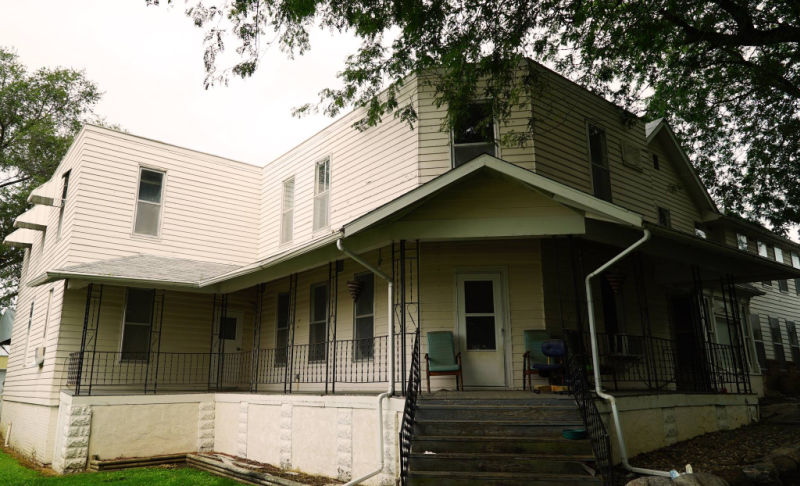
Malvern Manor
Tucked into the quiet town of Malvern, Iowa—population barely over 1,000—stands a red-brick building that looks more institutional than residential. Malvern Manor isn’t a centuries-old mansion or a crumbling castle. It’s a former care facility turned private residence turned paranormal destination. And despite its modest exterior, it has earned a reputation as one of Iowa’s most intensely investigated locations. The structure was built in 1867 and originally served as the Mills County Poor Farm. In the 19th and early 20th centuries, poor farms were county-run facilities that housed individuals who could not financially support themselves—the elderly, disabled, mentally ill, widowed, orphaned, or otherwise destitute. Life in these institutions was often harsh. Residents worked the land if they were able. Those who couldn’t were simply housed and managed with limited resources. Over time, Malvern Manor evolved. It later functioned as a private care facility for individuals with mental health conditions and developmental disabilities. Records indicate that patients were housed on site well into the mid-20th century. Like many institutions of that era, treatment standards reflected the time—structured, clinical, and sometimes controversial by modern understanding. While there are no confirmed records of extreme abuses often dramatized in asylum lore, the reality remains that the building housed vulnerable populations for decades. Eventually, the facility closed and the building passed into private ownership. In the early 2000s, new owners began restoring the property and living in it as a home. It was during this period that reports of unusual activity began surfacing publicly. The claims at Malvern Manor are wide-ranging. Visitors and investigators report shadow figures moving down hallways, disembodied voices, doors opening and closing on their own, and footsteps when no one else is present. Some claim to hear conversations in empty rooms. Others describe sudden cold spots or the sensation of being touched. One of the most frequently mentioned phenomena is children’s laughter or small voices, often attributed to the building’s time housing families and younger residents. Electronic voice phenomena (EVP) sessions conducted inside the Manor have allegedly captured responses to direct questions. Some investigators claim intelligent interaction—knocks in response to prompts, objects shifting, and REM pods activating without visible cause. A particular room often referred to as the “Shadow Room” has gained notoriety for reports of a darker presence, with some guests describing feelings of oppression or sudden anxiety while inside. Unlike many historic haunts built on a single violent event, Malvern Manor’s reputation stems from accumulation. There is no infamous mass murder tied to the building. Instead, its atmosphere seems connected to decades of human struggle—poverty, illness, abandonment, and isolation. For some paranormal researchers, that prolonged emotional weight creates what they believe to be residual energy rather than a single traumatic imprint. Skeptics argue that the building’s age, layout, and acoustics contribute heavily to reported experiences. Old plumbing knocks. Wooden floors shift. Temperature changes move through brick and plaster differently than modern drywall. Add darkness, expectation, and group dynamics, and experiences can escalate quickly. Yet even experienced investigators often admit the Manor feels unusually active compared to similarly aged structures. Today, Malvern Manor operates as a paranormal investigation venue, offering public events and private overnight stays. It has been featured in regional investigations, independent documentaries, and numerous YouTube explorations. Unlike heavily commercialized haunted attractions, the Manor maintains a more stripped-down, investigation-focused identity—bare halls, original rooms, minimal theatrics. For a small Iowa town, Malvern carries a surprisingly heavy story inside its brick walls. It represents a different kind of haunting—less about a single night of horror and more about the quiet accumulation of forgotten lives. Whether you believe spirits linger or not, the building forces visitors to confront a chapter of American history that isn’t often romanticized: the era of poor farms and institutional care. Malvern Manor stands as both historical landmark and paranormal lightning rod. It’s a place where history is documented, but interpretation varies. Some walk away convinced something unseen shares the halls. Others leave with logical explanations. Either way, few leave without feeling something.
Stage Coach Inn
Half a mile west of Ida Grove, Iowa, tucked into the timber of Moorehead Pioneer Park, a one-and-a-half-story frame building sits on land that was occupied long before any European settlers arrived in Ida County. The Moorehead Stagecoach Inn is the first structure ever built in Ida Grove, the oldest surviving building in the county, and a place where the layers of human use run so deep—and in some cases so grim—that the paranormal activity reported within its walls has drawn investigators for years and inspired a book-length account of what happens inside after dark. The Western Stage Line began operating stagecoaches from Lizzard Point at Fort Dodge to Sergeant Bluff near Sioux City in 1855, and the route needed way stations roughly every thirty miles where horses could be changed and riders could rest. The following year, John H. Moorehead began constructing an inn along the route on a site that, according to local accounts, sat directly over a Native American burial ground. A Sioux burial tree still stands approximately forty feet from the front door of the building. Moorehead completed the inn in 1863, creating a twelve-room, L-shaped frame structure that would serve the community in nearly every capacity a frontier settlement could require. In the years that followed, the inn functioned simultaneously as a stagecoach depot, the first Ida County courthouse—a role it held until 1871—the county post office, the community's first church, its first schoolroom, and its first hospital, where surgical procedures including amputations were performed on a table that reportedly remains inside the building to this day. The sheer density of function compressed into one small wooden structure meant that the inn absorbed births, deaths, legal proceedings, worship, education, and frontier medicine all under a single roof during the most volatile decades of Iowa's settlement period. John and Martha Moorehead raised their family in the building while operating it, and the inn passed through the decades as Ida Grove grew around it. The original stagecoach barn still stands nearby. By the twentieth century, the inn had outlived its practical usefulness but retained its historical significance. It was listed on the National Register of Historic Places in 1974. A historical architect was brought in during the 1970s to assess the building, and a restoration effort preserved the structure with its original character intact. Today the inn is part of Moorehead Pioneer Park, under the direction of the Ida County Conservation Board, and is open to the public on Sundays during summer months, with tours available by appointment year-round. The interior features period antiques and memorabilia from the stagecoach era, along with artifacts from the building's many institutional roles. The paranormal reputation of the Stagecoach Inn has been documented most extensively by Allen Cornelison, a veteran paranormal investigator who moved to Ida Grove around 2011 and, after discovering the building during a walk through the park, conducted an intensive six-year investigation of the site with permission from the Ida County Historical Society. Cornelison published his findings in Ghosts and Legends of the Stage Coach Inn, describing the inn as one of the most active locations he had encountered in two decades of investigative work. The phenomena reported at the inn span a wide range. Disembodied voices and whistling are heard regularly inside the building, along with phantom footsteps that sound through the rooms when no one is present. On one documented occasion, a spinning wheel displayed in the schoolroom area was captured on video turning rapidly on its own before abruptly stopping. The staircase has been identified by investigators as a particular focal point of activity, described as a kind of energy portal, with the top landing producing the most concentrated phenomena. Cornelison himself reported being physically tugged on the back of his coat during an early investigation, an experience he captured on video though the source of the pull was not visible. Audio recordings made during his sessions captured what investigators believe is a child's voice responding to direct questions. Outside the inn, the proximity of the Sioux burial tree adds another dimension to the site's reputation. Shadowy figures have been reported near the tree and around the burial ground, particularly after dark. Paranormal teams that have investigated the exterior have noted unusual occurrences near the tree, including sudden barrages of falling acorns that intensify when people approach and cease when they withdraw. The convergence of Indigenous sacred ground, frontier-era suffering, and the sheer volume of human activity that passed through the building during its working life creates a setting that investigators and visitors describe as unmistakably charged. Today the Moorehead Stagecoach Inn stands quietly in its park setting, surrounded by hiking trails, a stocked lake, and the other preserved structures of the Ida County Historical Society. The burial tree still rises near the front door. The amputation table, if the accounts are accurate, still sits inside. The building is the kind of place that looks unremarkable from the outside—a modest wooden house in a county park—but carries within its twelve rooms the compressed weight of an entire community's origins, from the sacred ground it was built upon to the stagecoach travelers who slept under its roof to whatever remains of the voices that investigators continue to record in the silence between visits.

Spirit Lake
Spirit Lake lies in Menagha, Minnesota, a glacially formed water body that has existed as a geographical and cultural landmark for countless generations. The lake's formation dates to the last ice age, when retreating glaciers carved basins across the Minnesota landscape that subsequently filled with water, creating the network of lakes characterizing the region's geography. The area surrounding Spirit Lake has been home to Native American peoples for thousands of years, with archaeological evidence and oral histories indicating sustained human presence and spiritual relationships with the natural landscape. The lake held particular significance within indigenous cosmologies and practical economies, serving as a source of sustenance while potentially functioning as a sacred or ceremonial site. European settlement during the nineteenth century introduced new populations and cultural frameworks, transforming the landscape while disrupting and displacing indigenous communities and their traditional ways of life. The legend attached to Spirit Lake centers on the tragic drowning of an Indian Maiden, a narrative persisting within local folklore and paranormal lore for generations. While precise historical circumstances remain unclear and potentially conflated with broader regional narratives, the legend represents significant cultural memory associated with the lake. Such narratives of tragedy and spiritual attachment to natural locations are common throughout Native American and Euro-American folklore, often encoding historical trauma and the complex relationship between human communities and the natural world. The story has become embedded in local consciousness, with the lake transformed through narrative into a liminal space where the boundaries between the living world and the spirit world are understood to be particularly thin. The Indian Maiden's drowning, whether understood as literal historical event or symbolic narrative, created a framework through which the lake's paranormal reputation is understood. Paranormal reports associated with Spirit Lake focus on manifestations connected to the Indian Maiden entity, whose spiritual presence persists within and around the water body. Apparitions of a female figure have been reported by visitors, often described as appearing near the water's surface or emerging from the water itself, particularly during evening and nighttime hours when visibility is reduced. Disembodied voices and unexplained sounds emanating from the water have been documented, sometimes interpreted as mournful calls or expressions of grief. Time distortions have been reported by individuals near the lake, with visitors describing subjective temporal displacement where perceived duration does not correspond to measured time. These phenomena have established Spirit Lake as a recognized paranormal location within Minnesota's supernatural geography, attracting paranormal researchers and curious visitors interested in the intersection of geological, historical, and spiritual dimensions of the location. The current status of Spirit Lake reflects its position as a public natural area accessible to recreational users and paranormal investigators interested in Minnesota's geological and cultural heritage. The lake continues to serve practical functions for fishing and boating while maintaining its paranormal reputation within regional folklore and research communities. Local historical societies and indigenous cultural organizations have documented legends associated with the lake, creating nuanced understanding of how indigenous history, European settlement, and paranormal folklore have become intertwined. The lake represents how paranormal narratives often encode historical trauma and cultural displacement within stories of spectral presence and supernatural activity, making Spirit Lake significant both as a natural landmark and as a location where historical consciousness and paranormal experience intersect.
Maiden’s Cliff
Maiden's Cliff, situated above the shores of Lake Megunticook near Camden, Maine, represents a location where natural beauty converges with historical tragedy in ways that have left permanent marks upon both the physical landscape and the realm of paranormal manifestation. The cliff formation, rising dramatically from the lake's surface, has long served as a destination for visitors and recreational enthusiasts, drawn by the scenic vistas and the sense of connection to the natural world that such elevated positions afford. The cliff's location within a region of considerable natural beauty—the coastline and inland landscape of midcoastern Maine—has made it a location of aesthetic significance for artists, writers, and contemplatives throughout the modern era. Yet the cliff also carries historical weight of a considerably darker character. The tragedies that have occurred at this location, and most particularly the singular historical event that appears to have generated the persistent paranormal phenomena documented across generations of witnesses, have transformed Maiden's Cliff from a mere scenic overlook into a location where the past exerts a demonstrable presence upon the contemporary world, where the consciousness of an individual whose life ended tragically seems to have become bound to the physical location associated with her death. The foundational historical narrative at Maiden's Cliff centers upon Elenora French, a young woman whose death at the location during the nineteenth century became one of the most enduring accounts of tragic loss in the region's historical record. The specifics of Elenora's life remain partially obscured by the passage of time and the limitations of historical documentation, yet the essential facts of her death have persisted with sufficient clarity that researchers have been able to cross-reference historical records and develop a biographical understanding of her existence prior to her tragic demise. The cliff itself has become a memorial to her death, with visitors acknowledging the tragedy that occurred there through a stone cairn or similar marker that has been erected to commemorate her passing. The most widely documented account describes Elenora's death as a fall from the cliff, with the specific circumstances remaining somewhat ambiguous—whether her death resulted from accident, suicide, or some other form of tragedy—the essential fact remains uncontested: a young woman lost her life at this location, her body subsequently recovered, and her death creating a permanent alteration in the metaphysical character of the place. The paranormal manifestations at Maiden's Cliff appear to derive directly from Elenora French's presence at the location, with her spiritual essence or consciousness apparently having become fixed at the site of her death. Her apparitional manifestations constitute the primary documented form of paranormal activity, with witnesses reporting visual encounters with a young woman dressed in period-appropriate clothing, her figure appearing with sufficient clarity that descriptions from different witnesses align in significant details. Elenora's apparition is frequently described as appearing near the cliff's edge or overlooking the lake, her positioning suggesting a connection to the specific location of her fatal fall. The manifestations possess qualities suggestive of intelligent haunting rather than residual imprint; witnesses report that Elenora appears responsive to their presence, that her apparition sometimes gestures toward the lake or the cliff edge, and that her presence frequently generates strong emotional reactions in those who encounter her. Some witnesses describe experiences of profound melancholy or inexplicable sadness when in proximity to her manifestation, suggesting that Elenora's emotional state—the despair, resignation, or confusion associated with her death—remains sufficiently powerful to transmit affectively to the consciousness of the living. Beyond straightforward apparitional sightings, the paranormal phenomena at Maiden's Cliff encompasses experiences of dreams and visions that appear to represent direct communication from Elenora to contemporary visitors to the location. Individuals have reported falling asleep near the cliff and experiencing vivid, unusually coherent dreams in which Elenora appears, communicates through gesture or verbal expression, and conveys information or emotional content that they subsequently discover relates to historical details of her life or death. These dream-visitations possess qualities suggestive of something beyond mere neurological processing or subconscious imagination—the specificity of historical detail, the emotional intensity, and the consistency across multiple independent experiencers suggest a form of paranormal communication occurring through the altered consciousness state of sleep. Time distortion phenomena constitute another notable aspect of reported experiences at Maiden's Cliff, with some visitors describing moments in which temporal progression appears to have become disrupted, where they lose track of time passage or experience what they describe as moments of temporal displacement—brief intervals in which they appear to occupy the same physical location during a different historical era, sometimes reporting encounters with Elenora during what they describe as the historical period of her life rather than during contemporary time. The stone memorial erected at Maiden's Cliff serves simultaneously as a historical marker acknowledging Elenora French's death and as a focal point for contemporary paranormal activity. Visitors to the location frequently leave tokens—flowers, photographs, written messages—that suggest a widespread recognition of Elenora's presence and a desire to acknowledge or somehow communicate with her spirit. This practice of leaving offerings, occurring across generations of visitors who may be unaware of similar practices conducted by previous visitors, suggests a universal human impulse to acknowledge tragic loss and to create ceremonial connection with those whose consciousness remains bound to physical locations. The paranormal research community has recognized Maiden's Cliff as a significant location for investigation, with teams conducting equipment-based investigations designed to document paranormal activity and potentially establish communication with Elenora. Contemporary visitors to the location frequently report experiences consistent with the documented paranormal phenomena, suggesting that whatever metaphysical alteration occurred as a result of Elenora French's death continues to exert measurable effects upon the living world. Maiden's Cliff represents a location where profound historical tragedy has created lasting paranormal consequences, where the consciousness of a young woman who lost her life tragically appears to have become permanently connected to the physical environment where her death occurred, and where that connection continues to manifest through apparitional sightings, dreams, and experiences of temporal distortion that challenge conventional understanding of the relationship between consciousness, death, and place.
Stow Lake Ghost
Stow Lake, nestled within the verdant expanse of San Francisco's Golden Gate Park, represents a location where natural beauty converges with paranormal notoriety to create one of California's most enduring and thoroughly documented haunting legends. This artificial lake, created during the park's systematic development in the late nineteenth century, has accumulated more than a century of reports detailing encounters with a spectral woman known as the White Lady—a consciousness apparently bound to the lake's waters and surroundings through circumstances that remain ambiguous despite extensive historical investigation and paranormal research. The legend itself stands as one of San Francisco's most famous ghost stories, its origins traceable to documented accounts published in contemporary newspapers and its persistence maintained through successive generations of visitors, researchers, and casual observers who continue to report encounters consistent with accounts from more than a century prior. The documented origins of the White Lady legend can be traced to accounts published in the San Francisco Chronicle during 1908, when a man named Arthur Pigeon reported an encounter with an apparition during his visit to Stow Lake. Pigeon's account, published in a major newspaper rather than relegated to obscure paranormal journals or anonymous testimonies, lent contemporary credibility to what might otherwise have been dismissed as folklore. The detail and apparent sincerity of Pigeon's account created a public record of the encounter, establishing the 1908 newspaper publication as a documented baseline for the haunting's historical record. This provides a particularly valuable temporal anchor for researchers seeking to understand the historical development of the legend and its evolution through subsequent decades of reporting. The identity of the White Lady herself remains a matter of speculation and ongoing investigation, though various historical hypotheses have emerged from research into San Francisco's past. Most prominent among these theories is the suggestion that the apparition may represent a woman who died by drowning in the lake under tragic or mysterious circumstances, her consciousness apparently bound to the location of her death through trauma or unresolved aspects of the incident that resulted in her demise. The description as a woman in white—a woman in a light-colored dress or ethereal white garments—has become standardized across century-long accounts, suggesting either that witnesses consistently observe similar details in the apparition's manifestation, or that the legend has become sufficiently established that subsequent accounts conform to the established descriptive framework. Reports of encounters with the White Lady have accumulated with remarkable consistency across the decades following the 1908 chronicle account. Visitors to Stow Lake have described seeing a female apparition materializing near the lake's shores, sometimes appearing to gaze toward the water, sometimes approaching observers directly, sometimes vanishing suddenly as observers attempt to establish communication. The manifestations frequently carry an air of melancholy or distress, suggesting a consciousness not at peace with its condition of separation from the living world. Encounters often involve temporal distortions, with observers reporting that time seemed to behave erratically during encounters with the apparition—hours passing as moments, or vice versa. Physical sensations accompanying sightings include feelings of profound dread and inexplicable cold, as if the apparition's presence carried with it a tangible alteration in environmental conditions. The historical accumulation of reports has elevated Stow Lake to prominence within regional paranormal tourism and research communities. Ghost tour operators in San Francisco routinely include Stow Lake on itineraries, with the White Lady legend serving as a major point of interest. Paranormal researchers have conducted investigations at the location, documenting reports and attempting to establish communication with the apparent entity through various technical methodologies. The San Francisco Chronicle's original publication of Arthur Pigeon's account, now available through historical archives, continues to serve as a primary source document for researchers seeking to understand the earliest documentary evidence of the haunting. The transformation of Stow Lake from a simple recreational feature within a major urban park to a nexus of paranormal activity illustrates how historical consciousness and collective memory can invest a location with significance beyond its intended purpose. The lake's artificial creation, the fact that it represents human modification of landscape rather than a natural feature of San Francisco's topography, raises interesting questions about whether the haunting originates from events occurring after the lake's construction, or whether the act of creating the lake itself inadvertently connected the location to paranormal phenomena of some other origin. The sustained quality and consistency of reports across multiple generations suggest that whatever source feeds the White Lady legend remains active and capable of producing encounters with sufficient clarity and consistency to merit serious investigative attention. Today, Stow Lake remains one of Golden Gate Park's major attractions, drawing visitors for recreational purposes entirely unaware of its paranormal reputation, and drawing others specifically seeking encounters with the White Lady. The location's accessibility as a public park open to visitors during daylight hours creates a unique opportunity for amateur researchers and curious observers to conduct their own investigations and form their own assessments of the phenomena that have characterized the location for more than a century. The White Lady of Stow Lake stands as a testament to the persistence of unexplained phenomena within major urban centers, and to the capacity of a single historical account to generate and sustain a narrative of paranormal activity that survives and evolves across generations.
Thompson Creek Trail
Thompson Creek Trail winds through the foothills and canyon areas near Claremont, California, a hiking path that has become famous not for its scenic beauty or recreational appeal alone, but for its reputation as one of the most paranormally active outdoor locations in Southern California. The trail extends approximately 4.3 miles in an out-and-back configuration, traversing terrain that ranges from moderately easy to more challenging sections. The landscape encompasses scrubland, rocky outcrops, and the creek bed that gives the trail its name, creating an environment that is geologically ancient and psychologically distinct from the urbanized spaces that surround it. The trail passes near an old boy scouts cabin area, a structure that suggests the location has been used for recreational and educational purposes across multiple decades. For most casual hikers, Thompson Creek Trail presents as simply another California foothill hike, offering moderate exercise, some natural beauty, and the satisfaction of outdoor recreation. For paranormal researchers and experienced investigators, however, Thompson Creek Trail has become recognized as a paranormal hotspot, a location where the boundary between the physical and non-physical appears to thin significantly. The phenomena reported by hikers and investigators who have experienced the trail are diverse and unsettling, suggesting either a multiplicity of paranormal entities or a paranormal environment so intense that it manifests in varied forms. Among the most consistently reported phenomena are encounters with shadow people—dark, humanoid figures observed in the periphery of vision or clearly seen in open daylight, figures that seem to exist in spaces between the hikers themselves and the surrounding landscape. Witnesses describe these entities as possessing a physical presence and intentionality, as if they were observing the hikers with interest or concern. These shadow people often appear in groups, watching from bushes, rocky areas, and open spaces along the trail, then vanishing when approached or directly observed. Beyond the shadow people, hikers and paranormal investigators have reported witnessing phenomena that challenge conventional understanding of physical reality. Boulders have been described as levitating—rising into the air without visible means of support, hovering momentarily, then returning to the ground. These incidents have been reported by multiple independent witnesses, lending them a degree of credibility despite their apparent impossibility. Invisible barriers have been encountered along the trail, solid walls of resistance that block movement in certain directions, that cannot be seen or touched directly but whose presence is unmistakably felt. Violent imagery has been reported by sensitive individuals, visions of conflict and suffering, as if traumatic events from the past were somehow imprinted on the landscape itself. The experiences reported suggest a location where time, space, and physical law operate according to principles distinctly different from consensus reality. Particularly compelling are the electronic voice phenomena recorded by paranormal investigators conducting systematic investigations of the site. Using sophisticated EVP recording equipment, researchers have captured what appears to be a young male voice uttering the phrase "Oh shit, Help me!" recorded at midnight in the vicinity of the old boy scouts cabin area. The desperation in the voice, the specific timing of the recording, and the apparent youth of the speaker have suggested to investigators that this may represent a spirit of a young person who experienced some form of trauma or tragedy in that location. This EVP recording has become one of the most famous pieces of paranormal evidence associated with the trail, reproduced and analyzed in paranormal documentary films, discussed extensively in paranormal community forums, and cited as evidence that the trail is genuinely haunted by entities associated with past traumatic events. The cumulative body of paranormal reports from Thompson Creek Trail suggests a location where multiple forms of paranormal activity concentrate and intensify. Whether these phenomena result from geological factors, from traumatic events that occurred in the location, from the convergence of paranormal energies, or from some combination of environmental, historical, and metaphysical factors remains unclear. What is undeniable is that hikers and researchers who visit Thompson Creek Trail increasingly do so with paranormal investigation as their primary purpose, seeking to document phenomena that resist conventional explanation. The trail has become a destination for paranormal tourism, attracting ghost hunters, psychics, and curious individuals who wish to directly encounter the paranormal. For those who prioritize conventional hiking experience, Thompson Creek Trail remains a reasonably pleasant foothill walk; for those attuned to paranormal phenomena, it represents one of California's most active and dangerous paranormal locations.
Thorp Cemetery
Thorp Cemetery in Thorp, Washington, occupies a location that has accumulated extraordinary layers of historical significance and paranormal intensity across more than a century. The cemetery itself represents one of the standard institutional responses to mortality that communities implement to manage the disposition of human remains and create spaces for remembrance and ritual. However, the Thorp Cemetery has transcended the ordinary function of a burial ground to become recognized as one of Washington state's most significantly haunted locations. The cemetery's paranormal reputation extends beyond typical cemetery hauntings and encompasses phenomena so unusual and disturbing that paranormal investigators have devoted substantial attention to documenting and understanding the forces at work within its boundaries. The grounds contain numerous graves spanning multiple generations, representing the diverse individuals whose remains have been interred at this location. However, the paranormal activity concentrated at Thorp Cemetery appears specifically centered on the tragic circumstances surrounding one particular individual whose fate has permanently marked the location's spiritual signature. Among the graves and within the cemetery's boundaries exists a set of stairs that has become perhaps the most notorious feature of the location and the focal point of the cemetery's most intense paranormal activity. These stairs, constructed with unclear original purpose, are believed to lead downward into an underground crypt or burial chamber, though access to the actual destination remains forbidden or physically impossible for most visitors. The existence of these subterranean structures adds an archaeological and architectural mystery to the cemetery's already dense paranormal reputation. The stairs themselves have become so associated with supernatural phenomena that they function as a kind of portal or threshold between the ordinary cemetery experience and the more profoundly disturbing paranormal phenomena concentrated in that specific location. The most historically significant element of Thorp Cemetery's paranormal narrative centers on Susie, also referred to as Suzy in some historical accounts, a young Native American woman whose death occurred under circumstances of profound injustice and violence. Historical records indicate that Susie was lynched around 1890, murdered through mob violence during an era when such atrocities against Native American and African American individuals were all too common in American communities. Her death represents not merely a personal tragedy but a societal crime, an instance of the systemic racial violence that scarred American history. Whether Susie was interred in the cemetery following her death or whether her remains are absent despite her spirit's presence remains unclear from available documentation. However, the intensity and nature of paranormal phenomena associated with her presence suggest that the circumstances of her violent death created profound spiritual consequences that continue to resonate within the cemetery's boundaries. The paranormal phenomena most frequently reported at Thorp Cemetery center on the stairs descending toward the underground crypt and the areas immediately surrounding this feature. Visitors and investigators who venture into the cemetery at various times, particularly during evening or nighttime hours, have reported profound and disturbing visions occurring in proximity to the stairs. These visions appear to manifest as visual hallucinations or genuine perception of paranormal reality, with witnesses reporting scenes of hellish imagery, demonic or infernal landscapes, and apocalyptic visions of overwhelming intensity. The content of these visions frequently includes elements of fire, torment, darkness, and despair that align with traditional depictions of hell or infernal realms. Individuals who have experienced these phenomena report them as among the most psychologically disturbing experiences they have encountered, exceeding in subjective intensity most other paranormal phenomena documented at more conventionally haunted locations. Appearances by Susie's spirit have been documented at the cemetery, typically manifesting as an apparition of a young Native American woman, sometimes visible in distressed or anguished emotional states. Her manifestations frequently occur near the stairs or the crypt structure, suggesting that this particular location holds specific significance to her spiritual presence. Some accounts describe her appearance as flickering or unstable, suggesting spiritual manifestation of considerable turbulence rather than a peaceful or settled presence. Time distortion phenomena have also been reported at Thorp Cemetery, with visitors experiencing temporal anomalies including lost time, where minutes or hours pass without conscious awareness, or conversely, time appearing to move with unusual rapidity. These distortions frequently occur in proximity to the stairs or crypt structure, further linking this location's paranormal signature to the most intense phenomena documented at the cemetery. Thorp Cemetery remains accessible to visitors and has become a destination for paranormal investigators, historical researchers, and those seeking to understand the intersection between violent historical trauma and paranormal manifestation. The cemetery's status as a publicly accessible location has contributed to the accumulation of witness testimony and paranormal documentation spanning multiple decades. The location stands as a sobering reminder of how historical injustice and violent death can leave spiritual scars on locations, manifesting in paranormal phenomena of extraordinary intensity and psychological impact. The cemetery's paranormal reputation, rather than being exploited for mere sensationalism, has prompted serious historical and paranormal research seeking to honor Susie's memory and understand the mechanisms by which profound suffering can create lasting supernatural consequences. The cemetery continues to occupy a unique position in Washington state's paranormal landscape as perhaps the location where historical tragedy and spiritual manifestation intersect most profoundly and disturbingly.
High Hill Church
The High Hill Church in Parrish, Alabama stands in profound abandonment and decay, yet continues to exert powerful presence upon the surrounding community, serving as a focal point for paranormal reports accumulated across decades. The structure represents a typical rural American church of modest construction, built to serve the spiritual and communal needs of a small agricultural community. The building's precise construction date remains undocumented, though its architectural style suggests late nineteenth or early twentieth-century origins. For much of its operational history, the church functioned as an active center of religious worship and community gathering, with congregations assembling for Sunday services, revivals, and various functions characteristic of rural American Protestantism. The building served the spiritual and social needs of the Parrish community for decades, accumulating history and subtle imprints of the lives that passed through its doors. The High Hill Church entered decline that has now extended for many years as congregations dispersed or relocated, leaving the building empty and neglected. Physical degradation from time, weather, and absence of maintenance has been substantial. Doors have been removed or sealed shut, preventing access. Windows suffer similar fates, leaving empty apertures. The interior has been substantially damaged and emptied, with the piano that once provided hymn music destroyed or removed. The overall impression is one of profound loss and entropy's triumph, the structure becoming a monument to abandonment. Despite physical deterioration and disuse, High Hill Church maintains active spiritual and paranormal presence recognized across many years. Late at night, witnesses report encountering large crowds seemingly engaged in religious services despite the building's deterioration. The apparitions appear dressed in formal church attire, accompanied by audible singing and the acoustic signature of religious service. These represent residual hauntings, persistent imprints of repeated events continuing to manifest. The spiritual intensity of decades of worship appears to have created impressions transcending boundaries between past and present. Phenomena extend beyond residual congregational appearances. A pastor who died in the late 1970s continues to manifest, with his apparition sighted in surrounding woods as if continuing pastoral duties. His commitment appears to have anchored his consciousness, creating focused manifestation beyond residual haunting. Apparitions of a ghostly bride and groom have been reported walking hand in hand through the grounds, suggesting a wedding of such emotional or traumatic significance it created lasting paranormal imprint. Their precise identity, wedding date, and circumstances remain obscured, yet their presence is consistently reported. The cemetery surrounding High Hill Church stands in stark contrast to the deteriorating church building. The cemetery remains well maintained with regularly replaced plastic flowers, indicating family members continue visiting and maintaining connection. Sightings of people moving through late at night have been reported consistently by locals, with encounters with apparitions visiting graves. The convergence of the deteriorating church, active cemetery, and consistent paranormal reports has established High Hill Church as significant within Alabama's paranormal landscape, where boundaries between past and present, living and deceased, remain unusually permeable.
Martin House
The Martin House stands as one of Panama City's most storied and contested haunted locations, a mansion that embodies both the aspirations of the region's early twentieth-century merchant class and the dark tragedy that legend holds transformed it into a place of spiritual unrest. Located at 119 Bayou Drive, the house was constructed around 1910 as a substantial residential property reflecting the architectural and social ambitions of John D. Martin, a prominent figure in Panama City's commercial landscape during the era when the city was emerging as a significant regional hub. The building occupies grounds that slope toward the waterfront, a location that provided both practical access to waterborne commerce and the aesthetic appeal that drew wealthy families to establish their estates. The mansion was designed with multiple stories and rooms arranged to accommodate both domestic life and the social entertainment expected of the prominent merchant class. For a time, the Martin House represented achievement and stability, a physical manifestation of entrepreneurial success in a region experiencing rapid economic transformation and population growth. The historical record regarding the Martin family itself remains fragmentary and contested, with contemporary documentation sparse and subsequent oral tradition providing contradictory accounts of family relationships. According to the most persistent local legend, John D. Martin was a stern, troubled man whose suspicions about his wife's relationship with a young male servant who worked on the property consumed his thoughts to the point of obsession. Whether this relationship was innocent or romantic remains unknowable to historical record. The legend recounts that Martin confronted his wife with this alleged infidelity and, in a rage designed to punish both parties and his wife's supposed shame, hanged the servant from a large oak tree on the property near the waterfront, forcing his wife to witness the murder. He then hanged his wife and children from the same tree before hanging himself, leaving the property soaked with familial tragedy and violence. The authenticity of these accounts remains disputed by serious historians, as documentary evidence proves elusive and the story carries characteristics consistent with regional folklore and gothic legend-making. Vistors and investigators have reported encounters with several distinct entities within the structure, suggesting that multiple spirits may inhabit the space. A woman dressed entirely in white, distinguished by jet-black eyes and an unsettling appearance, has been reported repeatedly on the upper floors, with witnesses describing her as an apparition whose presence inspires simultaneous fear and inexplicable sadness. Another reported apparition takes the form of a man whose expression appears blank and emotionless, typically observed staring from the front window as if maintaining eternal vigilance. Whispers and voices have been reported, along with an oppressive atmosphere that some describe as satanic or malevolent in character. These sensations intensified during the late 1980s and early 1990s, when rumors suggested that occult practitioners or satanic groups utilized the building for rituals and ceremonies. In its modern configuration, the Martin House exists in a state of partial abandonment and institutional ownership, with the lower floors appropriated by Rock-Tenn, a paper mill company that uses basement and ground-floor spaces for business meetings, while the upper floors remain sealed, untouched, and inaccessible to the public. This arrangement leaves the upper stories as essentially frozen time capsules, maintaining whatever spiritual or physical presence may characterize them. The sealed nature of the upper floors makes direct investigation difficult and has contributed to the building's mystique. The Martin House continues to exist in Panama City's landscape as a location where historical tragedy, paranormal legend, and legitimate institutional use converge in an uneasy relationship.
La Luz Canyon
La Luz Canyon Road in La Luz, New Mexico, winds through a landscape of natural beauty characterized by dramatic topography, scenic vistas, and the geological formations typical of the New Mexico region. The road itself represents a critical transportation corridor, connecting communities and providing access to both commercial and recreational areas throughout the region. Like many rural and semi-rural roads throughout North America, La Luz Canyon Road has been the site of vehicle accidents, some minor and quickly forgotten, others catastrophic in their consequences and indelible in their impact on the communities affected by the tragedy. The specific incident that gave rise to the location's paranormal reputation involved circumstances of particular poignancy: the violent death of a woman and the loss of two young children in a single tragic event whose aftermath would resonate for decades through the region's collective memory and spiritual consciousness. The documented event underlying the haunting occurred when a vehicle traveling along La Luz Canyon Road was forced from the roadway through circumstances that witnesses and investigators attributed to external causation rather than driver error. The vehicle run off the road, and in the violent aftermath of this forced departure, a woman occupying the vehicle sustained injuries so severe that they resulted in her death. The two young children who were present in the vehicle—perhaps her own offspring, or other minors for whom she bore responsibility—also perished in the incident or its immediate consequences. The specific details of the accident, including whether additional vehicles were involved, whether mechanical failure played a role, or whether environmental factors such as weather conditions contributed to the tragedy, remain partially obscured by the passage of time and the discretionary incompleteness of historical records regarding such incidents. What remains certain is that a mother or caretaker and two children lost their lives on this stretch of road, their deaths creating a psychic wound that the landscape itself seems unable to entirely heal. The tragedy on La Luz Canyon Road became the subject of widespread paranormal speculation and investigation, with the location emerging as one of New Mexico's most persistently documented haunting sites. The paranormal phenomena reported along this stretch of road exist not as manifestations confined to a single building or structure, but rather as disturbances spread across the landscape itself, making the entire canyon road a zone of supernatural activity. Witnesses have reported apparitional sightings of a woman's form, occasionally described as appearing in clothing or attire consistent with the victim's era or a historical period proximate to the tragedy. The spirits of the young children have been reported as particularly active manifestations, with multiple independent accounts describing encounters with juvenile entities whose presence registers as palpably as any of the region's more famous hauntings. One specific location along La Luz Canyon Road, a bridge crossing, became the focal point of the most remarkable and verifiable paranormal phenomena. Visitors who stopped on the bridge and applied baby powder to their vehicles reported subsequently observing small handprints in the white powder dust on their cars' surfaces—handprints scaled proportionately to young children's hands rather than adult human hands. Simultaneously, witnesses reported hearing the sound of children giggling emanating from the surrounding environment without any visible source for the vocalization. These audio phenomena occurred both with and without the presence of visible juvenile forms, suggesting either that the children's spirits manifested vocal expressions independently of visual apparitions, or that some witnesses perceived the audio component more clearly than the visual presence. Additional reports documented the unsettling sensation of vehicle movement and pressure from external sources, with some accounts describing the conviction that the car itself was being pushed or forced laterally on the bridge by invisible hands or forces. These experiences created profound fear and psychological distress in those who encountered them, the sensation of external control over one's vehicle producing panic responses disproportionate to the actual physical danger encountered. La Luz Canyon Road's reputation as one of the most extensively documented paranormal locations in New Mexico rests not on a single dramatic encounter but rather on the consistency and corroboration across dozens of independent witness accounts accumulated over decades. The tragedy that generated the haunting represented a particularly cruel and meaningless death—the loss of a caretaker and innocent children in a moment of violent, inexplicable violence on a ordinary stretch of road. The persistence of the manifestations suggests entities unable or unwilling to accept the finality of their deaths, mothers and children attempting through paranormal means to communicate, warn, or simply reassert their presence in a world that continued after their demise. The bridge becomes a liminal threshold where the living and the dead encounter one another in moments of unexpected contact, where the boundary between the material world and the realm of departed spirits grows thin enough to permit interaction. Visitors to La Luz Canyon Road continue to report encounters with the spirits of the tragedy's victims, making it a location where death and sorrow have carved themselves into the very substance of the landscape.
Salem Church Road
Salem Church Road in Newark, Delaware, represents a location steeped in American folklore and paranormal legend, bearing the tragic legacy of a family accused and executed during one of the nation's darkest periods of legal and social hysteria. The road, which winds through the Newark area and adjacent woods, gained notoriety not through witch trial proceedings of the seventeenth century colonial era, but rather through a family tragedy that occurred in the early twentieth century, rooted in accusations of witchcraft that persisted long after formal witch hunting had ceased in America. This historical anomaly marks Salem Church Road as a site where archaic superstitions and frontier justice converged with tragic and fatal consequences. According to historical records and local legend, a family of six individuals fell victim to community accusations of witchcraft practices during the early 1900s, a time when such accusations in rural Delaware carried the weight of law and death. The exact details of the accusations remain somewhat obscured by the passage of time and the oral tradition through which the legend has been preserved, but the outcome proved definitively fatal for all involved. These six family members were hanged for the alleged crime of witchcraft, meeting their deaths through judicial execution that would be unthinkable in subsequent decades as belief in witchcraft waned among educated populations and legal systems. The execution of the family represented a tragic echo of colonial-era violence transplanted into the modern period, suggesting that pockets of frontier communities maintained superstitious beliefs long after the broader American legal system had abandoned such charges. The victims of this legal tragedy appear to have harbored profound resentment regarding their deaths and the causes that led to their execution. According to the folklore surrounding Salem Church Road, the family members did not go peacefully into death or rest quietly in whatever burial ground received their remains. Instead, legend maintains that they remain bound to the location where they were hanged, eternally seeking justice for the wrongs committed against them and searching for retribution against the relatives and community members who orchestrated their prosecution and execution. This spiritual attachment to vengeance rather than peaceful repose distinguishes the haunting of Salem Church Road from typical cemetery or burial ground phenomena. Paranormal manifestations at Salem Church Road typically occur under specific temporal conditions that have become consistent enough to warrant documentation and investigation. Witnesses report that shortly after midnight, a ghostly procession becomes visible crossing the roadway itself. This apparition consists of six distinct figures believed to represent the executed family members, walking together as they did in life before their separation through death. These specters appear with surprising clarity and frequency, suggesting a haunting of considerable intensity and persistence rather than a fleeting or occasional manifestation. The apparitions reportedly walk the road with deliberate purpose, as though reenacting the events surrounding their deaths or conducting an endless search for those who wronged them. The nature of the phenomena at Salem Church Road incorporates elements that suggest temporal displacement and distortion of normal chronological experience. Visitors and residents in the area have reported experiences of time distortion, where moments seem to extend unnaturally or where the progression of time appears disrupted. These temporal anomalies add an additional layer of paranormal activity beyond simple apparitional encounters, suggesting that the haunting involves more than merely restless spirits but perhaps warped temporal phenomena related to the traumatic events that bound the spirits to this location. The combination of apparitions walking a specific path during midnight hours, coupled with reported time distortions experienced by witnesses, creates a comprehensive paranormal narrative. Salem Church Road remains a location where historical tragedy, legal injustice, and paranormal activity converge, drawing researchers interested in both American legal history and paranormal phenomena. The road itself has become synonymous with the fate of those six family members whose lives ended unjustly, and the location continues to serve as a cautionary tale about superstition, mob justice, and the resilience of folklore in rural communities. The persistent apparitional activity attributed to the executed family members suggests that spiritual consequences followed the community's violent actions, binding the victims to the place of their death in a cycle of eternal searching and seeking for the justice they never received in life.
Old Woman of Potlatch
Potlatch, Idaho, a small community in the northern panhandle of Idaho, represents a typical rural settlement of the American Northwest, developed in connection with logging and timber industry activities that characterized regional economic development in the late nineteenth and early twentieth centuries. The town, like many resource-based communities, experienced the typical patterns of growth, peak prosperity, and subsequent economic transformation or decline as industrial priorities and markets shifted across decades. The town park, a common civic space designed to serve community recreational and social functions, became the focus of local paranormal folklore involving the apparition of an elderly woman whose identity and historical circumstances remain somewhat obscure within available documentation. The park represents the kind of civic landscape where multiple generations of community residents have experienced formative social and recreational experiences, creating a space imbued with collective memory and ordinary human experience that often characterizes locations of persistent hauntings. The primary paranormal phenomenon associated with Potlatch involves an elderly woman whose ghost has been reported by multiple community members and visitors to the town park on various occasions across several decades. The apparition has been consistently described as a woman of advanced age, dressed in clothing suggestive of earlier historical periods, appearing to wander or move through the park grounds with apparent purpose or intention. The woman's behavior as described by witnesses does not suggest aggressive or malevolent intent, but rather a sense of confusion or searching, as though the apparition were attempting to locate a specific place or person. The consistency of descriptions across independent witnesses suggests that the apparition represents a genuine spiritual phenomenon rather than collective misidentification or folklore elaboration. The woman's apparent search for a home has become central to the local narrative surrounding the haunting, suggesting that her spiritual attachment to the location and her restless wandering may be motivated by loss of habitation or displacement from a remembered place. Paranormal investigation and witness accounts suggest that the woman's ghost manifests through visual apparition and through apparent agency in interacting with her environment and with living people. Witnesses have reported conversations or attempted communication with the apparition, suggesting a degree of consciousness or awareness that extends beyond simple residual haunting. The phenomenon of time distortion has been associated with encounters with the woman's spirit, with visitors to the park reporting that time seemed to move differently during sightings or encounters, with moments seeming to expand or contract in ways that defied ordinary temporal experience. This temporal anomaly suggests either a more sophisticated level of spiritual manifestation or a psychological response by witnesses to the uncanny nature of the experience. The relatively benign and non-threatening character of the apparition, combined with the apparent motivation of homesickness or displacement, creates a haunting of melancholic rather than terrifying character, contributing to a narrative of loss and longing that characterizes many rural American paranormal phenomena. The woman remains a fixture of Potlatch's local identity and reputation, remembered as a ghost whose wandering and search for home represents the larger narrative of displacement and change that has characterized community life across the twentieth century.