
Haunted Theaters in America
235 haunted locations
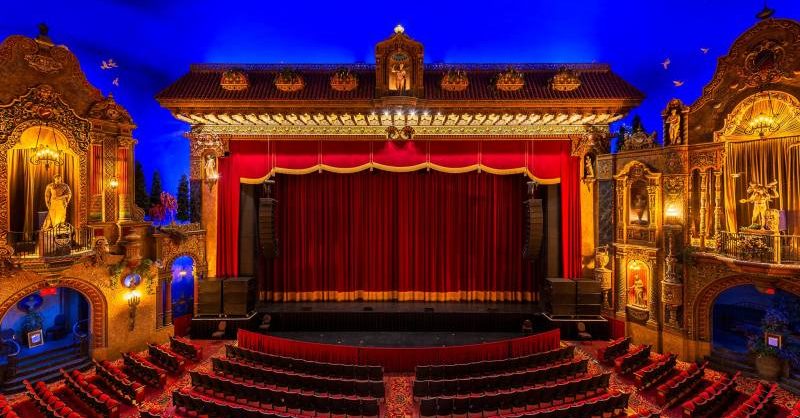
Louisville Palace Theater
Standing on the east side of South Fourth Street in downtown Louisville, the Louisville Palace announces itself before you ever reach the door. Castle-like towers flank a copper-domed marquee blazing the word PALACE in synchronized light. Terra-cotta niches, cartouches, and finials crawl across the Churrigueresque facade in a riot of Spanish Baroque ornamentation that feels closer to a fever dream of old Madrid than a Kentucky movie house. That disorienting grandeur is entirely intentional. It was designed that way from the beginning to pull you out of your life the moment you arrived. Architect John Eberson — an Austrian immigrant trained in electrical engineering who found his calling building fantastical movie palaces across America — designed the building in 1928 for Loew's and United Artists as a first-run cinema seating 3,300. Eberson called his style "atmospheric theater." His theory was that audiences should feel transported before the film even started, and the Louisville building delivers on that completely. Step through the front doors and you enter what reads as an elaborate Spanish courtyard open to the night sky. The barrel-vaulted ceiling overhead is painted midnight blue and studded with lights positioned after a photograph in National Geographic to approximate actual stars. Over 500 plaster statues and reliefs populate the walls and alcoves. The mezzanine Faces Lobby is lined with 139 sculpted busts of historical figures — composers, philosophers, writers — gazing down from every surface. The original 1,000-pipe Wurlitzer organ was still in place at opening night on September 1, 1928, when Eberson himself attended, accompanied by a live macaw, the Loew's company mascot. It was immediately heralded by the Louisville Courier-Journal as an architectural marvel. For decades the Palace was the premier entertainment destination on Fourth Street, which the locals called Theater Square. Frank Sinatra performed there in 1941 during his early career. Ray Charles appeared in 1959. Al Capone, legend holds, frequented the theater during Prohibition, traveling there from the Seelbach Hotel through underground steam tunnels beneath the city. The building carried Louisville's glamour through the post-war era before the familiar forces of suburban flight and multiplex competition hollowed out downtown entertainment districts everywhere. The Palace went dark in the 1970s, was briefly reborn in 1981 under local businessman John Siegel's ambitious $4.4 million restoration, then closed again in 1985 when the costs of maintaining a century-old atmospheric theater outran the revenue. Siegel eventually declared bankruptcy. The building sat in fragile limbo until Sunshine Theater Inc. brought it back in 1994. Live Nation has owned it since 2005, and it operates today as a 2,800-seat concert and event venue — the only surviving movie palace of its era in the city, listed on the National Register of Historic Places since 1978. The paranormal claims here are numerous, specific, and consistently reported by staff, workers, and visitors across multiple decades. The most documented figure is Ferdinand Frisch, a theater employee who died in the building in 1965. During the 1990s restoration, workers began encountering an older man in work clothes, flat-top haircut, and outdated eyeglasses appearing at various points throughout the building — sitting in the balcony watching workers on stage, standing in corners, observed by multiple unrelated crew members. Tools were moved. Voices were heard in empty spaces. One painter who fell asleep on scaffolding near a high ceiling was woken by a voice speaking directly in his ear, and found himself dangerously close to the edge. His name has reportedly been found scratched into the dust in the basement. Current staff refer to him as Bernie, and the projection booth — where a separate apparition, believed to be a projectionist who suffered a fatal heart attack on the job, is also reported — remains one of the most consistently active areas in the building. The Grand Staircase leading to the mezzanine lobby has its own persistent figure: a faceless woman in 1940s clothing, seen climbing the stairs, who vanishes before she reaches the top. A man in 1930s attire has been spotted repeatedly in the balcony by ushers; when approached, he disappears. The Ladies' Parlor bathroom has generated reports of a child giggling, and a production manager arriving to lock up alone one night reported hearing running footsteps, searching the building and finding it empty, then being physically shoved from behind as he headed for the exit — followed by the sound of two children laughing and running away. The theater's marketing manager has publicly described seeing the Grey Lady: a translucent female figure walking four or five paces in the lobby before simply ceasing to exist mid-step. She noted that nearly every member of the facilities staff has had their own encounter with the same figure. The Louisville Palace is open for performances year-round. The stars on the ceiling still burn. The faces in the lobby still watch. And the people who work there after the crowds leave have stopped being surprised by what shares the building with them.

Hannan Playhouse
Raymond, Washington sits at the head of the Willapa River estuary in Pacific County, about as far into the rainy, timber-shadowed southwest corner of the state as you can get without running out of land. The town was built starting in 1903 on stilts above the tidelands and sloughs of the river delta, its original boardwalks spanning water twice a day as the tides moved beneath them. Old-growth fir and cedar blanketed the surrounding Willapa Hills, and the mills ran twenty-four hours a day converting that forest into lumber destined for San Francisco, South America, and Hawaii. At its peak around 1913, Raymond claimed a population of six thousand — workers and merchants and the immigrant families who followed the work — and billed itself with characteristic Pacific Northwest optimism as the Empire City of Willapa Harbor. Among those immigrant communities were German, Greek, Finnish, and Polish workers, each establishing the social institutions that working-class immigrant populations built wherever they settled: churches, fraternal orders, mutual aid societies, and, in the Polish community's case, a hall. That hall — the Raymond Polish Hall — stood at 518 Eighth Street, a modest building serving as the social and cultural center for the Polish community that had come to the Willapa Valley to work the mills. Polish fraternal halls were a fixture of industrial immigrant life across the American Northwest and Midwest, providing gathering space for dances, meetings, weddings, and the kind of communal maintenance of culture that helped people remain coherent as a community far from home. The building served the Polish community through the first half of the twentieth century, through the boom years and through the Depression, through the decline of the old-growth harvest and the gradual softening of the industrial roar that had drawn those families to Raymond in the first place. By the time the timber economy began its long contraction in the mid-twentieth century, the community institutions built to serve it had aged alongside the town itself. The Willapa Players, a community theater group with roots going back to the 1930s and a formal resurgence in 1956, had been putting on productions in the Raymond area for years. The group was partly the creation of the Hannan family — a Raymond attorney named Hannan had been among its organizers in the early years, directing productions and building the troupe into a Pacific County institution. His wife had trained at the Cornish School in Seattle and the San Francisco Opera Ballet School and had spent her career as a dance instructor and choreographer throughout the region. In 1969, the Willapa Players acquired the old Polish Hall on Eighth Street and began converting it into a proper playhouse, which they named for the family most associated with its founding. The renovation was straightforward enough in conception — a community theater carved from a fraternal lodge — but it did not proceed quietly. The building that emerged from the conversion is a small, functional playhouse: a main stage, a seating house, dressing rooms, an attic above the stage, and the particular acoustic intimacy of a space designed for community gathering rather than professional performance. The Hannan seated audiences in close proximity to the stage, the kind of theater where the actors and the house are genuinely in the same room. For decades it served as the only dedicated performance venue in Pacific County, and the Willapa Players used it for adult productions, youth shows, and concerts that brought the region together in the way the Polish Hall had done for the immigrant community before them. The paranormal reports at the Hannan began during the 1969 renovation itself, before the theater had opened. Construction crew members heard footsteps in the attic when no one was up there. Props shifted position on the stage overnight. Doors opened and closed without explanation. Dusty footprints appeared on surfaces that had not been walked. A cat appeared inside the building and vanished. When the Willapa Players held their grand reopening, a company member found a set of footprints pressed into several inches of accumulated dust on the main stage — the building had been locked for years, and no one had been on that stage. Reports multiplied once the theater was in regular operation. Four distinct presences have been described by actors, crew members, and audience members across the decades: a laughing caretaker figure seen in the main house; a female costume designer appearing in the dressing rooms; a black cat observed crossing the stage during live productions; and a spirit called Oscar, understood in the theater's tradition to be the ghost of a Polish immigrant who died in the building during its years as the Polish Hall, and who has become the resident personality of the Hannan — protective, theatrical, watching over the actors as productions unfold in what was, in its earlier life, his community's gathering place. Paranormal investigators from Love the Dead Paranormal conducted multiple formal sessions at the theater, capturing an EVP of a voice saying the name "Chester," recording orb activity on video, and noting persistent EMF spikes in the dressing rooms and in the seats of the stage area. Actors who have worked multiple productions at the Hannan describe a specific accumulation of experience: cold spots appearing suddenly at stage right, objects seen moving on the rafters, shadows near the dressing room corridor, and an oppressive heaviness reported in the upper reaches of the building after hours. House lights have switched on after the lighting crew has left. In one well-documented account, an actor mid-scene looked up to see an object slide off a rafter above the stage, seconds before a cold zone settled across the right side of the stage and two people reported being physically touched. The experiences are specific enough and consistent enough across productions that the Willapa Players eventually leaned into them — local playwright and troupe president Russell Wiitala wrote an original musical called The Haunted Hannan Playhouse, drawing on sixty years of accumulated first-person accounts from people who had worked and performed in the building. The Willapa Players sold the Hannan Playhouse in 2020 and relocated to a former Methodist church in nearby South Bend, leaving the Eighth Street building behind. The move was practical — the old seats were, in Wiitala's words, like a torture chamber, and the lighting booth was the size of a fighter-plane cockpit. Whatever the practical case for leaving, the Hannan itself remains on the corner across from the park, its stage dark, its dressing rooms empty, its attic sitting above a building that began as a gathering place for people far from home and ended as the most haunted theater in the Pacific Northwest by the honest testimony of the people who spent decades performing inside it. Oscar, if he is still there, is watching an empty house.
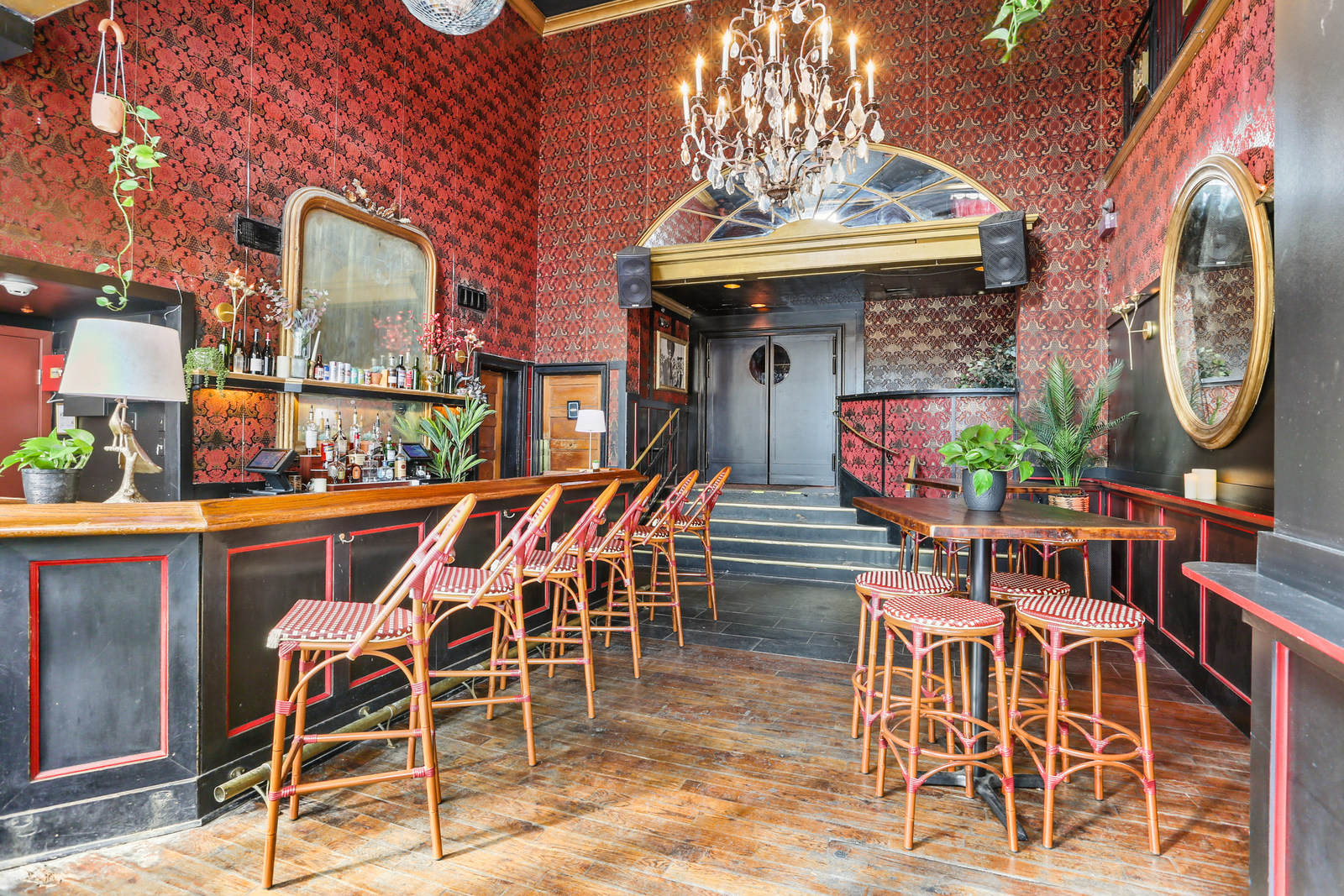
Toulouse Theatre (Maxwell’s Jazz Cabaret)
On Toulouse Street in the French Quarter of New Orleans, a half block from Bourbon, the building at 615 has cycled through more identities than most structures accumulate in twice its lifespan. It has been a cinema, a cabaret, a vaudeville theater, a rock club, a burlesque venue, and a jazz room. Under its current incarnation as the Toulouse Theatre, it is owned by a group that includes Preservation Hall proprietor Ben Jaffe. But long before any of its documented twentieth-century lives, the site carried a history rooted in the kind of French Quarter enterprise that rarely left clean records—and that history, according to local accounts, left something behind that outlasted every renovation. The current building at 615 Toulouse was constructed beginning in 1969 as a single-screen Walter Reade cinema featuring first-run films. In June 1977, the facility began its life as a live performance space with an opening night set by the Neville Brothers. Through the late 1970s and early 1980s, the venue became known for hosting regular performances of Vernel Bagneris's acclaimed vaudeville musical One Mo' Time, while the lobby bar featured a residency by the legendary and troubled New Orleans piano virtuoso James Booker. In the 1990s, the space became Maxwell's Toulouse Cabaret, a jazz venue operated by Jimmy Maxwell and other members of his family. The cabaret celebrated traditional New Orleans music and featured performers including Harry Connick Sr. at the piano and vocalist Rene Netto. The Jimmy Maxwell Orchestra papers, now held by the Historic New Orleans Collection, document this era of the building's musical life. After Maxwell's closed, the venue was reinvented in 1998 as the Shim Sham Club by Morgan Higby Night, followed in 2002 by One Eyed Jacks, which operated as a beloved rock and indie venue for nearly two decades before closing in March 2020. The building was purchased and renovated by Jaffe's group and reopened as the Toulouse Theatre, reclaiming the name the space had carried in its earliest days. The paranormal claims associated with 615 Toulouse Street predate the modern building and are tied to what occupied the site before the 1969 construction. According to local accounts, the location served as a speakeasy during Prohibition, concealed behind a veterinary office that functioned as a front. The arrangement was characteristic of the French Quarter during the 1920s and early 1930s, when dozens of illegal drinking establishments operated behind legitimate businesses, some with ties to organized crime networks running liquor and gambling operations across the Gulf South. Three spirits are said to be associated with the site. The first is described as a gangster—consistent with the speakeasy era and the violent enforcement that accompanied Prohibition-era commerce in the Quarter. The second is a lady in white, a figure reported by witnesses in the building over the years whose identity and era of origin have never been established. The third is a musician who is believed to have died on the premises, a claim that resonates with particular weight given the building's unbroken association with live music spanning more than half a century. In a city where musicians have lived, performed, and died in the same rooms and on the same stages for generations, the idea of one remaining attached to a venue is less legend than occupational hazard. Today the Toulouse Theatre operates as a renovated live music and events venue, its interior restored and its programming reflecting both the building's heritage and the broader mission of preserving New Orleans musical culture. The building sits in a stretch of Toulouse Street dense with French Quarter history, flanked by structures carrying their own hauntings and their own centuries of accumulated human drama. Whether the spirits reported at 615 Toulouse belong to the speakeasy era, to one of the musicians who played the room across its many incarnations, or to something older still embedded in the ground beneath the foundation, the building continues to function as it always has—as a place where the living gather to hear music in a city where the dead have never been known to stay quiet.

Chief Theater
The Chief Theater stands as a cultural institution dedicated to theatrical performance and community entertainment, serving an important function in the civic and cultural life of its locality. The structure was built to accommodate audiences for dramatic presentations, musicals, and other stage productions that bring together performers and spectators in shared artistic experience. The theater's design incorporates elements essential to theatrical presentation, including a stage with appropriate dimensions for performance, seating arranged to provide viewing angles and acoustic properties conducive to audience engagement, and technical infrastructure supporting lighting, sound, and scenery requirements. The building's architecture reflects theatrical traditions and aesthetic conventions appropriate to its purpose, creating an environment deliberately designed to facilitate dramatic experience and emotional engagement through live performance. The facility has maintained its cultural function over the years, hosting theatrical productions and community events that utilize the performance space. The physical layout of the Chief Theater includes a stage platform where performers conduct their work, visible to audiences arranged in seating areas throughout the theater space. The stage area connects to backstage regions containing dressing rooms, storage for costumes and scenery, and technical support areas. The front-of-house spaces include lobby areas, concession facilities, and box office services supporting theatrical operations. Seating in the theater is typically arranged in orchestra and balcony sections, creating multiple viewing perspectives from different elevations. The theater's acoustic design incorporates elements intended to project performers' voices and stage sounds clearly to all audience members regardless of location. The lighting infrastructure provides capabilities for dramatic illumination effects essential to theatrical production. The combination of architectural elements creates a space dedicated specifically to theatrical performance and audience reception of that performance. The Chief Theater harbors paranormal phenomena associated with deceased individuals tied to the location through their lives and dramatic circumstances. An entity known as Tom inhabits the theatrical space, with historical records suggesting this individual had significant connection to the theater, possibly as a performer, technician, or member of the community who spent considerable time within the facility. Additionally, the spirit of a deceased woman is said to occupy the theater, her presence residual from dramatic events surrounding her death or emotional connection to the venue. The exact circumstances surrounding these individuals' deaths and their reasons for persisting as entities remain incompletely documented, though their paranormal presence is consistently reported by those who experience it. The theatrical environment itself may amplify paranormal manifestations, given the inherent emotional intensity and dramatic energy characteristic of theatrical performance and rehearsal. Paranormal activity has been reported with consistency, establishing the theater's reputation as genuinely haunted. Observers describe various phenomena during performances and rehearsals. Some reports reference apparitional sightings, others describe auditory phenomena and physical manifestations. Theater hauntings appear particularly prone to paranormal activity given the emotional intensity of theatrical spaces. The documented haunting contributes to the theater's cultural identity, showing the facility hosts not merely living audiences but also resident spirits. The Chief Theater continues to serve its cultural function, becoming known among paranormal enthusiasts as a location where theatrical experience merges with otherworldly presence. The coexistence of cultural programming with paranormal phenomena creates a distinctive identity where the theater's performance reputation becomes inseparable from its haunted status. Paranormal investigations contribute to documentation of phenomena and understanding of theater hauntings. The Chief Theater represents a location where artistic and paranormal elements converge, creating an environment charged with dramatic energy from both living performances and resident spirits.
Lorden Plaza
The Plaza Theatre emerged as an architectural and cultural landmark in Kansas City, Missouri, during the early twentieth century when motion picture technology transformed entertainment and leisure practices. The theatrical establishment represented an investment in public amusement infrastructure, providing a space where diverse audiences could gather to experience cinema and vaudeville performances. The building's architecture reflected the grandiose aesthetic sensibilities characteristic of early cinema palaces, designed to create an atmosphere of luxury and escape from daily existence. The theatre occupied a prominent location within Kansas City's commercial and entertainment district, positioned to attract substantial foot traffic and serve as a community gathering place. The establishment's operations extended across much of the twentieth century, though like many independent theatres, it eventually encountered economic pressures and changing entertainment preferences. The physical structure persisted as a reminder of an earlier era's cultural values and architectural ambitions, retaining distinctive character. The geographical location of the Plaza Theatre positioned it within a region carrying deep historical significance extending back to pre-Columbian indigenous habitation. The area that would become Kansas City served as home to Native American peoples including the Kansas and Osage nations, who developed sophisticated cultural systems and territorial relationships with the natural environment. The arrival of European traders, settlers, and military forces during the nineteenth century fundamentally disrupted indigenous societies, resulting in displacement, disease, warfare, and cultural transformation. The theatre building, constructed during the twentieth century, occupied territory that had been the site of centuries of indigenous occupation and cultural activity. This historical context of native peoples' displacement and territorial erasure created a foundation of unresolved historical trauma and spiritual disruption that paranormal researchers suggest contributed to the location's emergence as a haunted site. Paranormal investigations at the Plaza Theatre have documented the presence of multiple spiritual entities and manifestations suggesting complex layers of supernatural activity. Most prominently, paranormal researchers have identified Native American spirits seemingly attached to the location, their continued presence interpreted as a manifestation of historical trauma and spiritual connection to the geographic area. These entities appear to represent indigenous peoples whose lives were disrupted by colonial expansion and whose deaths occurred within or near the location. The manifestations are described as disembodied spirits and apparitions capable of interaction and communication with living individuals. Additional paranormal entities appear to represent individuals who died during the theatre's operational period, their spirits seemingly attracted to or trapped within the space. Visitors have reported diverse paranormal experiences including temperature drops, sensations of emotional distress, apparitions in doorways and empty seats, disembodied voices, and manifestations suggesting multiple non-corporeal entities inhabiting the space simultaneously. The theatre's historical architecture and cultural significance have made it a destination for paranormal researchers seeking to understand how historical trauma, indigenous spiritual presence, and theatrical space intersect to create paranormal manifestation conditions. The location exemplifies how American sites of historical indigenous displacement have become recognized as locations of elevated paranormal activity, suggesting spiritual consciousness carries memory of historical injustice and persists across temporal boundaries. The Plaza Theatre stands as a testament to how architectural preservation can create spaces where multiple historical periods and spiritual realities appear to coexist simultaneously, accessible to those investigating paranormal phenomena.
Poncan Theatre
The Poncan Theatre stands as a historic performing arts venue in Ponca City, Oklahoma, representing a significant cultural landmark for the region throughout the twentieth century. Built during the early 1900s, the theatre was designed as an entertainment center for the growing community and became a gathering place for theatrical performances, motion pictures, and civic events. The architectural style reflects classical theatre design principles of the era, with ornate interior detailing and a balcony level commanding views of the performance stage. Like many theatrical venues of its vintage, the Poncan Theatre witnessed countless human dramas both on stage and behind the scenes, from opening nights to performances that entertained multiple generations of Ponca City residents. The theatre's operational history spans decades of cultural significance within the community, serving as a venue for traveling theatrical troupes, local productions, and the transition to motion picture exhibition that transformed American entertainment. The building's architectural features, including its elevated balcony and ornate ceiling, created distinct spatial zones within the venue contributing to its character and appeal. Throughout its active years as a performance venue, the theatre became embedded in the social fabric of Ponca City, hosting events that brought community members together and creating memories persisting long after individual performances concluded. Paranormal activity reported at the Poncan Theatre centers on a woman in white dress frequently observed in the upstairs balcony section, particularly in one specific seating area where multiple witnesses report consistent sightings. The woman appears to be an older female figure dressed in period theatrical attire, suggesting a connection to the venue's performance history. Disembodied footsteps have been reported echoing through the theatre during both operational hours and after closing, with sounds originating from various sections including the main floor and backstage areas. A mysterious blood stain has been documented on the theatre's ceiling, which reportedly reappears even after cleaning attempts, with origins remaining unexplained despite numerous investigations. The sounds of Native American drums have been reported by multiple witnesses, suggesting a layered history of paranormal presence predating the theatre's construction. Disembodied voices have been documented by paranormal investigation teams, with recorded sessions capturing inexplicable audio phenomena. Professional paranormal investigators have documented the theatre's haunted phenomena through technical equipment deployments and eyewitness testimony from both staff members and visitors. The consistent reporting of the woman in white figure, the mysterious ceiling stain, and the recurring sounds of native drums have established the Poncan Theatre as a location with significant paranormal activity. The theatre's historical significance as a performance venue, combined with reports of untimely deaths occurring within its walls, has led researchers to propose connections between historical events and contemporary paranormal manifestations. The building's architectural complexity, with multiple backstage areas and storage spaces, provides numerous locations where paranormal phenomena continue to be reported. Today the Poncan Theatre remains a subject of both cultural and paranormal interest. The historical nature of the structure, combined with documented paranormal phenomena, has attracted paranormal tourism interest and investigation groups seeking to understand the apparent hauntings. The theatre stands as a reminder of early twentieth-century entertainment culture while serving as a focal point for paranormal researchers studying the intersection of historical trauma and supernatural manifestation.
Capitol Theatre
Capitol Theater in Salt Lake City, Utah stands as one of the region's most significant architectural and cultural landmarks, representing the grandeur and ambition of early twentieth-century American theater design. The theater's ornate interior spaces, elaborate stage facilities, and sophisticated acoustic engineering established it as a premier venue for musical performances and theatrical productions throughout its operational history spanning more than a century. The building's architectural styling reflects the opulent sensibilities of the early twentieth century, with decorative elements and gilded surfaces intended to transport audiences into an atmosphere of refinement and cultural sophistication. The theater's location within Salt Lake City's downtown district established it as a central gathering place for the community's cultural and social elite, hosting performances that attracted audiences from throughout the region. The continuous use of Capitol Theater across multiple decades and changing entertainment paradigms created an accumulation of human experience and emotional intensity concentrated within the building's physical structure. The most persistently documented paranormal presence within Capitol Theater centers on the spectral manifestation associated with Richard Duffin, a former usher employed at the theater during its early operational period who allegedly met a tragic and violent death within the building. Historical documentation regarding the specific circumstances of Duffin's death remains somewhat limited, though accounts consistently suggest his demise was unexpected and occurred in a manner leaving unresolved emotional content that apparently drew his spirit back to the location of his greatest employment. The lower levels of Capitol Theater, including basement areas, mechanical spaces, and the piano room, represent the most active focal points for Duffin's paranormal manifestations. The elevator system connecting various levels appears to serve as a particular nexus of paranormal activity, with documented incidents suggesting Duffin's spirit somehow interacts with this mechanical system, creating inexplicable malfunctions. The hallways connecting various theater zones contain numerous reported encounters with his presence. The paranormal manifestations documented within Capitol Theater span a comprehensive range of phenomena types, each contributing substantially to documented evidence of Duffin's continuing presence and activity. Slamming doors occur repeatedly and with particular intensity, with doors moving violently despite secured conditions and no evidence of mechanical malfunction. Burning smells materialize spontaneously throughout theater spaces, particularly in lower level areas, creating an acrid and distinctive odor suggesting fire or electrical burning despite the absence of visible fire. Elevator incidents, including unexpected movements and malfunctions, occur with sufficient frequency to warrant special notation in theater maintenance records. Black shadows materialize in hallways and backstage areas, indistinct forms moving through spaces without apparent physical substance. Ragtime music and phantom piano performances emanate from the piano room and adjacent areas, musical sounds occurring when no musicians occupy the space. Disembodied voices speak individual words and engage in ghostly conversations captured during paranormal investigations. These comprehensive manifestations establish Capitol Theater as one of Salt Lake City's most thoroughly documented and actively haunted locations. Capitol Theater remains operational as a performing arts venue and cultural landmark, with management and staff acknowledging the location's paranormal reputation as integral to its historical significance. The documented paranormal activity has been featured in paranormal investigation television programs, most notably appearing in a full episode of the Paranormal Witness television series. The theater's lower levels, though restricted from general public access, have been documented by multiple paranormal investigation teams whose findings consistently verify reported phenomena and contribute to understanding of Duffin's presence. The combination of Capitol Theater's architectural grandeur, long operational history, and thoroughly documented paranormal phenomena establishes it as a location where artistic and entertainment traditions intersect with unexplained supernatural manifestations, attracting both cultural institutions and paranormal research communities.
Avila Adobe
The Creede Repertory Theatre stands in Creede, Colorado, a small mountain town established during the silver mining boom of the late nineteenth century. The theatre building itself dates to the Old West era, serving initially as a commercial or entertainment venue during Creede's heyday as a mining community that attracted prospectors, merchants, and the various characters associated with frontier mining towns. The structure embodies the architectural character of late nineteenth century Colorado, constructed with the materials and craftsmanship available in the remote mountain setting. Creede itself became a legendary location in American mining history, known for the phrase "It's day all day in the daytime and there is no night in Creede," reflecting the frenetic commercial activity and round-the-clock mining operations that characterized the town during its peak prosperity. The Creede Repertory Theatre has evolved from its original purpose to become a cultural institution, hosting theatrical productions and serving as a center for live performance arts in a region where such cultural amenities are relatively rare. The paranormal phenomena at the Creede Repertory Theatre manifest primarily on the main stage, in the attic, and throughout the dressing rooms, suggesting that multiple locations within the building serve as focal points for distinct manifestations. The most visually striking phenomenon involves an apparition of a bloody female figure that appears on stage or in nearby areas, a grotesque and disturbing manifestation that suggests the individual met a violent or traumatic end. This apparition is described as having injuries consistent with violence or tragic circumstances, with visible blood staining her appearance and creating an impression of recent trauma despite the historical distance separating contemporary observers from the original event. Other disembodied apparitions have been documented moving through various areas of the theatre, appearing as translucent figures engaged in activities or simply passing through spaces without acknowledgment of living observers. The attic of the theatre building has become a particularly active zone, with heavy boots walking audibly across wooden flooring when no visible person accounts for the footsteps. These sounds suggest a male presence, possibly miners or workers associated with the building's origins during the mining era. The footsteps appear to follow regular patterns, as if the spectre is engaged in familiar routines or familiar with the layout of the attic space. Paranormal possession experiences have been reported by individuals visiting or working in the theatre, with some people describing sensations of foreign presences or consciousnesses attempting to communicate or interact with them. These experiences appear more pronounced among individuals sensitive to paranormal phenomena or those with prior experiences with supernatural manifestations. The phenomena suggest a complex haunting involving multiple distinct entities with varying levels of consciousness and communicative intent. Historians and paranormal researchers theorize that the spirits haunting the Creede Repertory Theatre may include miners who died during Creede's mining operations, individuals who perished in accidents, violence, or other traumatic circumstances associated with the mining industry. The bloody female figure likely represents a specific individual whose death involved violence or tragedy, though historical documentation specifically identifying her remains incomplete. The building's original function may have brought it into association with the rough, sometimes violent culture of frontier mining camps, where deaths from accidents, violence, and disease were relatively common occurrences. Multiple deaths and traumas accumulating within the same location over decades of operation may have created the complex paranormal ecology currently observed within the theatre. Today, the Creede Repertory Theatre continues to function as a theatrical venue and cultural institution while hosting persistent paranormal phenomena that have become integral to the location's identity. Theatre staff and performers have generally adapted to the regular manifestations, incorporating the paranormal reputation into the theatre's character while maintaining professional theatrical operations. Paranormal investigation teams and ghost enthusiasts regularly visit the theatre to document the phenomena and attempt communication with the spirits believed to inhabit the space. The intersection of live theatrical performance and paranormal activity creates a unique atmosphere within the Creede Repertory Theatre, where artistic creation and spectral presence coexist in an ongoing performance that transcends the boundary between the material and spiritual worlds.
McMorran Place Theater
McMorran Place Theater in Port Huron, Michigan represents an important cultural institution in a city that served as a major transportation and commerce hub throughout the twentieth century. Constructed during the era of grand movie palaces, when cinema represented cutting-edge entertainment technology and architectural ambition, the theater embodies the values and aspirations of its era. The structure features ornate detailing, sophisticated mechanical systems, and design elements meant to elevate attending theatrical performances to transcendent cultural events. The building has witnessed countless productions, musical performances, and screenings that constituted Port Huron's cultural life across multiple generations. Like many theaters of its era, McMorran Place has adapted to changing entertainment technologies and audience preferences while maintaining its fundamental identity as a gathering space for civic and cultural participation. The paranormal phenomena reported at McMorran Place Theater center on a female spirit of unknown identity, the defining feature of the building's supernatural reputation. According to witness accounts and paranormal investigation reports, this female entity appears most frequently in the balcony area of the theater, the elevated seating section historically reserved for patrons of lesser social status, suggesting her spirit remains anchored to this particular location. The identity of this female spirit remains unconfirmed, though speculation includes the possibility that she was an actress, performer, or staff member who experienced tragic death within the building and whose consciousness refused to depart the space so central to her living identity. Additional male spirits have been reported within the theater, their identities and circumstances equally obscure, creating the impression of multiple supernatural presences. The concentration of female apparitions in the balcony area suggests either more powerful attachment to that location or more vivid manifestation patterns that make these spirits more easily perceived. Paranormal experiences at McMorran Place Theater encompass phenomena both visual and psychological. Witnesses have reported ghostly eyes visible in empty seats, a disturbing phenomenon suggesting a spectral presence watching performances even after death severed the connection between consciousness and corporeal embodiment. Floating orbs have been documented in photographs throughout the theater, anomalies that paranormal investigators interpret as visible manifestations of spiritual energy. Multiple apparitions have been observed in eyewitness accounts and photographic documentation. Most remarkably, electronic voice phenomena investigations have captured what researchers interpret as a spirit communicating the phrase "I don't belong here!" This message, repeated across multiple investigation sessions, suggests consciousness struggling with displacement, a spiritual entity unable to accept its departed status and desperate to communicate existential distress to the living world. Such explicit verbal communication during paranormal investigations remains relatively rare, making the theater's evidence particularly significant. McMorran Place Theater continues to operate as an entertainment venue in Port Huron, hosting concerts and theatrical productions. The theater's management is aware of its paranormal reputation and has permitted paranormal investigators to conduct investigations within the building. The female spirit and her declaration of not belonging have become central to local folklore and paranormal tourism circuits. The building represents an intriguing case of how specific locations become focal points for paranormal activity, how the balcony can become a site of ongoing spiritual attachment even as the physical building hosts the living.
Britton Cinema
The Britton Cinema in Tampa, Florida, represents a unique category of haunted location, being one of the relatively few documented instances of paranormal activity occurring in a commercial entertainment venue rather than a historical or residential structure. The cinema operated as a multiplex theater facility, screening commercial films and serving as a gathering place for community members seeking entertainment and cultural experience. The facility contained multiple individual theater auditoriums, each equipped with screens, projection equipment, and seating for audiences. The building's design reflected the architectural conventions of mid-twentieth century commercial cinema construction, with distinct theater spaces organized around central service areas including concession stands, restrooms, and hallway corridors connecting the various auditoriums. The physical infrastructure of the cinema, including the projection booths, storage areas, and mechanical systems, were located in restricted areas not typically accessed by the general public. The history of the Britton Cinema as a place of entertainment and public gathering creates an interesting contrast with the paranormal phenomena documented within its walls. The facility's function as a commercial entertainment venue meant that large numbers of individuals passed through the cinema on a daily and weekly basis, experiencing the location during different times of day and under varying atmospheric conditions. The cinema's closure or cessation of regular operation appears to have coincided with the intensification of paranormal phenomena reported by paranormal investigators and occasional explorers who accessed the building during its periods of non-operation. The paranormal phenomena reported at Britton Cinema involve multiple distinct entities and manifestations occurring in different locations throughout the building. An unidentified male spirit appears to have established presence in the ushering area and concession stand region of the cinema, the spaces where male employees typically worked during the facility's operational period. This male entity exhibits characteristics of residual haunting, appearing to perform actions and movements consistent with work duties performed during the cinema's operational period. The male apparition is described as maintaining awareness and interaction with the physical environment, suggesting a level of consciousness or intentionality rather than purely mechanical repetition of actions. Additional unidentified entities, identified as both female and male spirits, are reported in various locations throughout the cinema complex. These additional entities manifest through phenomena including disembodied voices in the hallways and theater auditoriums, shadowy figures appearing in the peripheral vision of visitors and investigators, and apparitions visible within the theater spaces themselves. The particular manifestations reported in individual theaters suggest that different spiritual entities may be associated with specific auditoriums or areas of the facility, creating a geographically distributed paranormal presence rather than concentrated activity in a single location. The paranormal manifestations at Britton Cinema exhibit some unique characteristics related to the specific nature of the building's design and function. Toilets flushing on their own have been documented in the women's restroom, plumbing fixtures operating without human activation or direct causation. Doors in the bathroom facilities lock and unlock without manual operation, suggesting non-corporeal entities capable of interacting with mechanical systems and physical barriers. Ghostly voices emanate from various locations throughout the cinema, with investigators documenting disembodied speech and vocal phenomena in auditoriums, hallways, and service areas. Shadowy figures move through the hallways of the cinema during investigations and occasional visits, appearing with enough clarity to be observed but maintaining the translucent or non-corporeal characteristics typical of spectral manifestation. Apparitions appear in the theaters themselves, observed by witnesses as full-bodied or partial figures visible within the auditorium spaces. The concentration of paranormal activity in theater auditorium three and five specifically suggests that significant events may have occurred in these particular spaces, though documented historical records regarding specific incidents at the cinema remain incomplete. The paranormal database entries and comprehensive listings of haunted Florida theaters consistently include the Britton Cinema, acknowledging the consistency and credibility of reported phenomena at this location. The cinema's status as a paranormal hotspot has attracted paranormal investigators, paranormal television programs, and enthusiasts seeking to document and understand the nature of spirits that have chosen to remain in this entertainment venue rather than moving to whatever destination awaits them following physical death and corporeal dissolution.
CEPA Building
The Cepa Building, located in Pell City, Alabama, represents a commercial or mixed-use structure within this smaller American city, constructed during a period that reflects the architectural and economic conditions of its era. The building designation CEPA likely represents an acronym or the building's historical name, potentially standing for a civic organization, business entity, or cultural institution that occupied or owned the structure during a particular historical period. Pell City, situated in Saint Clair County in east-central Alabama, developed as an industrial and residential community along the Coosa River, and its urban infrastructure reflects the economic activities and cultural values typical of Alabama communities of its size and region. The Cepa Building presumably contributed to the commercial viability and cultural functions of downtown Pell City, providing space for business operations, entertainment, or civic activities that served the surrounding community. The structure likely features distinctive architectural characteristics reflecting period building practices, materials, and design aesthetics appropriate to early twentieth century Alabama commercial construction. The presence of performing arts spaces within the building suggests it may have functioned as a theater, concert hall, or entertainment venue, or contained spaces rented to performance companies and cultural organizations serving the Pell City area. The lobby area, mentioned in paranormal documentation, represents the primary public entrance and circulation space, the location where visitors first encountered the building's interior and where public performances or events may have been announced and promoted. The historical context surrounding the Cepa Building haunting likely involves specific tragic events or deaths that occurred within the structure, events significant enough to create lasting psychological and spiritual impressions within the paranormal landscape of the building. The documentation available regarding the Cepa Building haunting identifies multiple distinct spirits inhabiting the structure, including a child spirit characterized as a little girl and the spirit of a man whose death circumstances involved hanging or strangulation. The specific identities of these deceased individuals remain incompletely documented in available sources, though their continued presence within the building suggests either violent deaths, unexpected tragic circumstances, or unresolved trauma creating the psychological conditions favorable to persistent spiritual manifestation. The tragic nature of deaths apparently occurring within the building, particularly the death of a child and the apparent violent demise of an adult male, suggests a location marked by tragedy and suffering capable of imprinting itself upon the spiritual landscape. The Cepa Building's period of primary historical significance and the presumed dates of the deaths that generated the haunting remain unclear, though the consistency and intensity of reported paranormal phenomena suggest the entities have established relatively permanent residence within the building's psychic environment. The paranormal manifestations at the Cepa Building present a distinctive pattern involving auditory phenomena and emotionally resonant spiritual expressions suggesting entities with specific identities and historical circumstances. The most distinctive and heartbreaking manifestation involves the crying of a little girl heard emanating from areas within the building, particularly within the performing arts spaces and lobby areas. The quality of the crying has been consistently described as genuinely resembling that of a distressed child, rather than wind sounds, mechanical noises, or other natural phenomena that might superficially resemble infant or child vocalizations. The persistent manifestation of child crying over an extended period suggests either the spirit of a deceased girl expressing ongoing distress or a traumatic incident involving child suffering that has imprinted itself upon the building's psychic landscape. The second major paranormal manifestation involves phenomena attributed to the spirit of a man who died by hanging, suggesting his death was either murder, suicide, or accidental strangulation occurring within or near the building. The haunting associated with this male spirit includes a distinctive low hum or moan sound described as emanating from the lobby area, a vocalic phenomenon suggesting either the death cry preserved as residual psychic energy or an intentional expression of emotional content from the spirit. The low, resonant quality of the sound creates an unsettling atmosphere distinct from the higher-pitched crying of the child spirit, suggesting different emotional states and possibly different historical time periods or circumstances associated with the two entities. Paranormal investigation teams have conducted formal investigations at the building, documenting phenomena and collecting electromagnetic data and audio recordings that contribute to the accumulated evidence base regarding the Cepa Building's paranormal characteristics. The Cepa Building continues to exist within Pell City's urban landscape, though its contemporary functions and current use status remain incompletely documented in available paranormal research sources. The building's documented paranormal activity has contributed to its recognition within paranormal research and ghost hunting communities, attracting investigative attention and inclusion in comprehensive databases of American haunted locations. Paranormal investigation events have been organized at the Cepa Building, providing opportunities for dedicated paranormal researchers to document phenomena and collect firsthand eyewitness testimony from participants experiencing the building's supernatural manifestations. The specific emotional intensity associated with the crying of the child and the moaning of the male spirit creates a particularly poignant paranormal environment, one where human tragedy and suffering have left indelible marks upon the physical structure and its spiritual landscape. The Cepa Building exemplifies how commercial structures and public buildings can become repositories for spiritual unrest and emotional trauma, locations where historical tragedy continues to manifest in forms perceptible to sensitive individuals and equipped investigators. The building stands as a testament to the vulnerability of children and the capacity for violent tragedy to leave lasting psychic impressions, phenomena that persist within the Cepa Building and continue to intrigue paranormal researchers seeking to understand the mechanisms and manifestations of spiritual haunting in American urban environments.
Douglass Theatre
The Douglass Theatre occupies a significant place in Macon, Georgia's cultural landscape as a historic venue that has witnessed more than a century of performances, gatherings, and human experiences. The theater's architectural design reflects the early twentieth-century theatrical traditions, with its stage area serving as the focal point for countless productions ranging from dramatic performances to musical presentations. Like many historic theaters across America, the Douglass Theatre has undergone multiple phases of operation, periods of decline, and subsequent restoration efforts aimed at reclaiming its original grandeur. These cycles of abandonment and renovation have marked the building's physical structure, leaving visible evidence of different eras' aesthetic choices and construction techniques. The venue's historical significance extends beyond its architectural merit, representing a cultural hub where the community gathered for entertainment, social events, and the collective experience of live theater that defined entertainment before the age of motion pictures and television. The restoration efforts undertaken at the Douglass Theatre involved comprehensive work to modernize electrical systems, reinforce structural elements, and restore period details that had deteriorated over decades of variable use and maintenance. During these restoration activities, staff members became acutely aware of unusual phenomena that suggested the building's occupancy by more than merely human inhabitants. The most consistent and reliable reports involved the theater's lighting systems, which exhibited unexplained behavior that defied technical explanation. Lights would grow dim gradually and without apparent cause, defying the expectations of electricians who had recently serviced and updated the systems. These dimming incidents occurred with sufficient frequency and consistency to establish a pattern rather than representing isolated electrical malfunctions. Witnesses documented that the phenomenon occurred across different areas of the theater's interior spaces, suggesting a pervasive rather than localized cause. Paranormal investigators examining the Douglass Theatre have noted that lighting phenomena constitute the most documented class of manifestations at the location, with multiple independent accounts corroborating similar experiences. The stage area in particular has been identified as a focal point for these electrical anomalies, a location traditionally associated with performance, attention, and the gathering of emotional energy during live presentations. Theater-based hauntings represent a recognized category within paranormal research, with researchers noting that performance venues seem to attract or generate paranormal activity at higher rates than comparable structures without such dramatic histories. The combination of intense human emotion, concentrated attention, and the architectural features designed to amplify sound and light may create conditions favorable to paranormal manifestations, though the precise mechanisms remain speculative. The identity of the spirits responsible for the observed phenomena remains undetermined, with staff and investigators unable to link the activities to specific historical figures or documented tragedies. The Douglass Theatre continues to operate as an active cultural venue in downtown Macon, presenting performances and hosting community events that maintain its role as a gathering place for residents and visitors. The ongoing paranormal phenomena have neither deterred programming nor created significant disruption, instead becoming part of the theater's identity and lore. Some staff members have expressed comfort with the paranormal manifestations, viewing them as benign or even protective presences that have claimed the theater as their domain. The ambiguous nature of the hauntings, lacking any documented history of violence or malevolence, has allowed the theater to maintain its function while acknowledging the unusual phenomena that characterize the location. Whether the dimming lights represent residual imprints of past performances, intentional communication from discarnate entities, or unexplained electrical behavior, the Douglass Theatre remains an active stage where both living performers and unseen inhabitants continue to share the same atmospheric space.
Pueblo Auditorium
Pueblo Auditorium stands as one of Colorado's most prominently haunted entertainment venues, occupying a distinctive position within Pueblo's historic downtown district. The facility was constructed as a cultural and entertainment center, hosting theatrical productions, concerts, lectures, and community gatherings throughout its decades of operation. The building represents significant civic investment during the early twentieth century, when expanding cities throughout the American West invested in grand theaters to demonstrate pride and economic vitality. The auditorium's multi-level design, including basement areas, ground-level seating, and elevated balconies, creates spatial complexity conducive to paranormal manifestations. The accumulated emotional energy generated by countless performances and gatherings over decades has likely contributed to the building's reputation as a nexus for spectral activity. The paranormal residents of Pueblo Auditorium center primarily around child entities, including a young girl whose death remains historically documented in paranormal literature. Multiple investigations have suggested additional child spirits inhabiting the structure, raising questions about whether a specific traumatic incident claimed multiple lives or whether unrelated deaths across different time periods created accumulated child ghosts. The basement areas harbor unknown entities whose origin and nature remain subjects of active investigation within the paranormal research community, generating phenomena distinct from those associated with the documented child spirits and suggesting potentially violent or traumatic origins that impressed powerful emotional imprints upon the physical location. Paranormal activity manifests across multiple sensory modalities throughout different building sections. The basement has produced compelling phenomena including footsteps without visible sources and audible evidence of movement. Disembodied laughter of children has been recorded with clear juvenile voice tones distinguishing these phenomena from building settling sounds. Shadowy figures manifest in peripheral vision or photographic documentation, appearing most frequently adjacent to basement entrances and in upper balcony sections. Loud bangs and percussive sounds emanate from apparently empty sections, with investigators unable to identify mechanical causes. The apparition of a small girl has been observed repeatedly in the upper balcony, occasionally accompanied by a spectral young boy, suggesting possible sibling spirits or separate entities drawn through unknown connections. Pueblo has established itself as one of Colorado's premier paranormal tourism destinations, with the auditorium serving as a centerpiece attraction for organized ghost tours and paranormal investigation groups. The building's operational history combined with documented spectral activity has generated substantial interest among paranormal researchers. Several paranormal research organizations have conducted formal investigations, deploying thermal imaging systems, digital audio recorders optimized for capturing disembodied voices, and electromagnetic field meters designed to detect localized energy anomalies. These investigations have produced data consistent with spectral manifestation patterns observed at other major haunted locations. Pueblo Auditorium continues operating as an entertainment venue while maintaining its status as one of the region's most active paranormal sites. Management has accommodated paranormal investigators and tour operators seeking building access during non-operational hours, recognizing cultural interest generated by the haunted reputation. The coexistence of entertainment programming with documented supernatural activity creates an environment where the living and deceased share physical space in apparent equilibrium. The spirits inhabiting Pueblo Auditorium persist in generating phenomena that continue to intrigue paranormal researchers and attract visitors.
American Theatre
The American Theatre stands as a landmark venue whose distinguished architectural heritage and cultural significance have been enriched by generations of performances and memorable entertainment experiences, yet underlying this public-facing legacy lies a distinctly haunted dimension that has captured the attention of both casual observers and serious paranormal researchers. The theatre's construction during the early-to-mid twentieth century established it as a premier destination for vaudeville, film, and theatrical performances, attracting audiences from surrounding communities who came to experience the glamour and artistic excellence that defined the era's entertainment culture. Among the theatre's most notable historical figures was Mr. Goldie, the entrepreneurial founder and proprietor whose visionary leadership transformed the venue into a thriving cultural institution and whose personal investment in the theatre's success became inseparable from the building's identity. The relationship between Mr. Goldie and the American Theatre evolved into something transcendent of conventional business management, suggesting a spiritual attachment to the venue that may have persisted beyond his natural death and continued to manifest through paranormal phenomena observable to staff and patrons across subsequent decades. The primary paranormal phenomenon most consistently reported within the American Theatre involves the apparently autonomous rocking of seats in the audience seating areas, an activity that occurs without apparent external cause and has been witnessed by multiple observers simultaneously on numerous occasions. Theatre employees have provided detailed accounts of seat rocking incidents where the motion appears to follow a slow, rhythmic pattern that suggests intentional manipulation rather than mechanical failure or environmental movement, implying an intelligence directing the phenomenon. The paranormal manifestations extend throughout the building's interior spaces, with staff members reporting encounters with what they have come to understand as the persistent presence of Mr. Goldie, the former owner whose apparent inability or unwillingness to permanently depart from his beloved theatre has created a situation of indefinite coexistence between the living and the deceased within the venue's boundaries. These encounters typically manifest as presence sensations rather than dramatic visual apparitions, creating an atmosphere of subtle but unmistakable paranormal activity that employees have learned to accommodate and normalize within their working environment. Theatre employees have documented an extensive collection of paranormal stories and accounts derived from their daily interactions within the building, narratives that accumulate into a comprehensive portrait of ongoing supernatural activity that has become virtually synonymous with the American Theatre's operational history. The experiences reported by staff demonstrate remarkable consistency in their descriptions of the supernatural phenomena, suggesting that the haunting follows comprehensible patterns and behavioral characteristics rather than manifesting randomly or unpredictably. Many staff members acknowledge having developed a form of respectful coexistence with the haunting, understanding Mr. Goldie's presence as neither threatening nor malevolent but rather as a testament to his enduring dedication to the theatre and his reluctance to abandon the venue that had become the defining focus of his professional life and personal identity. The American Theatre's reputation as a haunted venue has become integrated into its contemporary identity, with patrons and staff alike acknowledging the paranormal dimension of the space as an authentic component of the theatre experience rather than treating it as mere urban legend or sensationalized folklore. Paranormal investigators who have conducted research within the building have gathered evidence consistent with the presence of a residual haunting centered on the venue's interior spaces, particularly areas most frequently occupied by the theatre's administrative and performance personnel. The continued operation of the American Theatre as an active entertainment venue, combined with the persistent paranormal phenomena reported by employees and visitors, creates a unique situation where the building functions simultaneously as both a cultural destination and a site of significant ongoing paranormal activity.
Shreveport Municipal Memorial Auditorium
The Shreveport Municipal Memorial Auditorium stands as one of northeastern Louisiana's most significant cultural institutions, a grand public building constructed to serve the entertainment and civic needs of Shreveport residents through theatrical productions, musical performances, and public gatherings. This substantial architectural structure, designed and constructed during the early twentieth century, represents the aspirational ideals of American municipal architecture during a period when cities invested substantially in public cultural institutions as markers of civic progress and community identity. The building's grand design incorporates theatrical elements characteristic of its historical period, including an expansive stage equipped with sophisticated technical systems, extensive backstage facilities, and a substantial seating capacity. Significantly, the auditorium's basement contains the remnants of a former morgue facility, a fact that substantially adds to the location's sinister reputation and provides historical context for the intensity of paranormal claims associated with the building. During its operational history spanning nearly a century, the Shreveport Municipal Memorial Auditorium developed a dark reputation extending far beyond its legitimate theatrical function, with documented accounts suggesting that tragic deaths and dramatic events occurring within the building had created supernatural attachments to the location. Multiple distinct entities are believed to inhabit the auditorium, each allegedly connected to specific tragic circumstances or individual narratives that bound their spirits to the physical space. A Lady in White, believed to be the spirit of an actress from the 1940s theatrical era, is among the most frequently reported entities, described as appearing in elegant period costume and manifesting within various sections during performances and investigations. A young boxer spirit and a young girl dressed in a blue dress have also been reported by multiple witnesses, suggesting additional tragic narratives bound to the building's history. Paranormal phenomena at the Shreveport Municipal Memorial Auditorium have been extensively documented by paranormal investigators, ghost tour companies, and amateur researchers. Electronic voice phenomena, recordings of allegedly disembodied voices captured on audio equipment during investigations, have been consistently documented in various sections, particularly in basement areas and backstage regions. Shadowy humanoid figures have been observed in peripheral vision and captured in photographic documentation, appearing and disappearing with apparent independence of physical laws governing human movement. The Lady in White apparition has been repeatedly encountered by multiple independent witnesses, described with remarkable consistency regarding her appearance and behavioral patterns. Most significantly, investigators and visitors have reported experiences of being physically touched or grabbed by unseen forces, particularly on staircases and in isolated backstage areas, suggesting aggressive paranormal entities inhabiting the space. The Shreveport Municipal Memorial Auditorium continues to function as a performance venue and community gathering space, though its paranormal reputation has become integral to its public identity. The documented accounts of supernatural phenomena have made the location a primary destination for paranormal tourism in Shreveport, with multiple ghost tour companies offering guided investigations of the facility and its most actively haunted sections. The specific character of paranormal activity, particularly the physically interactive experiences reported by visitors and investigators, distinguishes this location from many other allegedly haunted theaters throughout the American South. The historical significance of the former morgue facility in the basement, combined with the theatrical history of the main auditorium and the traumatic events allegedly occurring throughout the building's operational period, has created a complex overlay of historical tragedy and paranormal manifestation that continues to attract researchers and paranormal enthusiasts.
LJ Williams Community Theater
LJ Williams Community Theater stands as a cultural institution dedicated to fostering dramatic arts and theatrical performance within the community of Visalia, California, providing space and resources for community members to develop theatrical skills, produce dramatic works, and gather as an audience for live performance within an intimate and collaborative environment. The building housing the theater likely dates from the mid-twentieth century or earlier, constructed during periods when community theater represented an important cultural force in American small towns and mid-sized cities, providing both entertainment and collaborative creative opportunity for residents at a time when professional theatrical productions remained accessible primarily to residents of major urban centers. The theater space itself embodies the particular aesthetic and functional character of community theatrical facilities, with modest but functional stage infrastructure, dressing rooms designed to accommodate multiple performers, and audience seating arranged to create the acoustic and visual intimacy necessary for effective dramatic performance in non-professional settings. The paranormal phenomena documented at LJ Williams Community Theater present a particularly complex manifestation centered upon the apparent spirit of a teenage girl who reportedly took her own life in the building's dressing room following emotional trauma resulting from failure to obtain a desired theatrical role, creating a narrative of artistic disappointment and psychological despair that culminated in tragic self-harm within the very space dedicated to artistic expression and creative fulfillment. This primary apparition is reported to maintain presence within the dressing room area with remarkable consistency, with the temperature in that space reportedly dropping significantly below ambient levels despite conventional heating systems operating normally, a phenomenon characteristic of paranormal manifestation across many documented haunted locations. The teenage girl's ghost is accompanied by manifestations involving two younger apparitions described as ghostly children, whose presence within the theater building and purposes for manifestation remain subject to investigation and interpretation by paranormal researchers attempting to understand the relationship between these multiple spiritual entities and their apparent attachment to the theater space. Beyond the visual apparitions, witnesses and staff at LJ Williams Community Theater report extensive secondary paranormal phenomena including persistent sensations of being observed and watched by invisible presences, feelings of heaviness and oppressive atmosphere in specific areas of the building, the apparently autonomous operation of doors that open and close without visible human action or mechanical failure, strange and unexplained noises emanating from areas lacking apparent source or explanation, and the disturbing manifestation of faces appearing in windows from inside the building despite the absence of any living person visible when windows are examined from external vantage points. The phenomena manifest with particular intensity during periods of active theatrical production and rehearsal, suggesting correlation between elevated emotional engagement, artistic creativity, and the manifestation intensity of paranormal activity. Actors and theater patrons report experiences ranging from mild unease and distraction to more pronounced and distressing encounters with the apparent supernatural forces inhabiting the building, with some individuals reporting violent paranormal activity that creates danger and liability concerns for the theater management. The contemporary operation of LJ Williams Community Theater has adapted to accommodate the persistent presence of documented paranormal phenomena through acknowledgment of the building's spiritual inhabitants while maintaining its primary function as a community theatrical venue serving the dramatic arts interests and needs of the Visalia population. Theater management and the artistic community utilizing the space have developed cultural understandings and informal protocols regarding the apparent paranormal activity, often framing the ghosts as part of the theater's character and history rather than as threatening intrusions requiring elimination or exorcism. The tragic backstory of the teenage girl whose spirit is believed to inhabit the dressing room has become part of theater folklore and community cultural knowledge, with the narrative of artistic disappointment and psychological crisis informing local understanding of the building's supernatural character. LJ Williams Community Theater thus exemplifies the intersection of theatrical performance, community cultural engagement, and paranormal phenomena, creating a unique environment in which artistic endeavor and apparent spiritual manifestation coexist within a space dedicated to the exploration of human emotion and dramatic experience, suggesting potential relationships between artistic creativity and the manifestation of paranormal forces that merit further investigation and contemplation.
Beaver Dam Community Theater
The Beaver Dam Community Theater in Beaver Dam, Wisconsin, represents a cherished cultural institution serving the performing arts needs of a rural Wisconsin community, yet the venue carries within its walls a tragic history that supernatural researchers believe has left profound paranormal residue. Constructed during an era when community theaters flourished as gathering places for amateur and semi-professional performing artists throughout the American Midwest, the facility provided essential infrastructure for theatrical productions, musicals, and dramatic performances that enriched the cultural life of the region. The theater building itself reflects the functional architecture of mid-twentieth-century performance venues, featuring a modest stage, audience seating arranged in traditional theater configuration, and practical spaces for costume storage, set construction, and technical operations. Among the building's notable features is an elevated loft area above the main performance space, a storage and technical zone that has become the focal point of the most significant paranormal activity documented at the location. The tragic event that is believed to have precipitated the paranormal phenomena at Beaver Dam Community Theater occurred during an audition or casting decision for a theatrical production, events which carry inherent emotional weight and potential for disappointment among performers. A promising local actress named Lacy, known for her talent and dedication to the theater community, auditioned for a role she deeply desired within a significant production but was not selected for the part. The rejection, apparently catastrophic to Lacy's psychological state and personal identity, led her to an act of profound desperation that brought her life to a tragic end. According to documented accounts and paranormal research reports, Lacy ascended to the loft area of the theater and took her own life by hanging, a suicide that occurred within the very institution where she had invested so much of her artistic passion and personal hope. The paranormal activity documented at Beaver Dam Community Theater centers upon manifestations widely attributed to Lacy's restless and tormented spirit, an entity whose behaviors and characteristics suggest profound emotional anguish and an inability to move beyond the circumstances of her death. The most prevalent paranormal phenomena reported within the loft area and throughout the theater include recurring episodes of audible weeping and crying sounds that appear without apparent human source, mysterious footsteps that traverse the loft and upper reaches of the theater with no visible person responsible for the sound generation. Witnesses have reported electrical anomalies including lights that malfunction, activate without human intervention, and respond to the presence of investigators in ways that suggest intentional communication. Multiple paranormal investigation teams have documented these phenomena using thermal imaging, audio recording equipment, and electromagnetic field detectors, with results indicating unusual patterns of electrical and thermal activity in the loft region that cannot be readily explained through conventional mechanical or electrical means. The intensity of the paranormal manifestations appears to intensify during times when auditions are being conducted or cast selections are being made, suggesting that Lacy's spirit reacts with heightened agitation to the very activities that precipitated her original tragedy. Paranormal researchers have identified distinct behavioral patterns among the documented manifestations that offer insights into the possible psychological state of the haunting entity. The crying sounds and emotional displays recorded by investigators suggest ongoing distress and unresolved emotional trauma. The footsteps reported in the loft appear purposeful rather than random, suggesting entity movement through specific areas with apparent intention or routine. The Beaver Dam Community Theater continues its mission as an active performing arts venue while simultaneously attracting paranormal investigation teams interested in documenting and understanding the supernatural phenomena that persist within its walls.
Manatee Playhouse
The Manatee Playhouse in Bradenton, Florida, represents one of the most significant cultural institutions in the region, providing performance venues for theatrical productions. The playhouse stands as a testament to the region's commitment to fostering performing arts, its stages having hosted countless productions spanning decades of continuous operation. The architectural design and interior layout, with its performance stage, audience seating, dressing rooms, and backstage areas, creates a complex environment increasingly recognized as the site of persistent paranormal phenomena. The integration of the playhouse into organized ghost tours of downtown Bradenton has established the location as a prominent paranormal attraction. The theatrical nature of the performance space appears particularly conducive to paranormal manifestation, with certain areas demonstrating concentrated paranormal activity. Paranormal entities documented at the Manatee Playhouse include the spirit of a young girl whose apparition has been observed by multiple witnesses. The girl's identity and the specific circumstances of her death remain unclear based on available historical documentation, yet her presence has been consistently reported across multiple paranormal investigations. Additional entities include two unidentified male and female spirits whose presence manifests throughout the playhouse. The identities of these additional entities remain largely obscure, though paranormal investigators have developed hypotheses regarding their possible historical connections to the building. The concentration of multiple spirits within a single location suggests either a catastrophic event claiming multiple lives or the accumulation of spiritual manifestations across the building's extended operational history. Paranormal phenomena manifesting within the Manatee Playhouse demonstrate characteristics suggestive of intelligent, interactive entities rather than simple residual hauntings. The apparition of a young girl has been observed moving through the playhouse interior, particularly in the stage area and backstage regions. The spirit's appearance remains stable across multiple sightings, allowing observers to identify consistent physical characteristics. Running footsteps have been documented throughout the facility, sounds of rapid movement in apparently empty corridors with sufficient clarity that environmental noise explanations have been ruled out. The footsteps appear to follow logical directional patterns and respond to investigator presence, suggesting deliberate movement. The male and female ghosts documented at the Manatee Playhouse have been observed by investigators and visitors, their manifestations adding layers of complexity to the overall paranormal activity. Paranormal investigation teams have conducted extensive investigations using contemporary detection equipment, capturing evidence that supports anecdotal reports from witnesses and staff members. Electronic Voice Phenomena recordings conducted within the playhouse have captured disembodied voices engaged in seemingly interactive communication, with some recordings suggesting responses to investigator inquiries. The spiritual presences appear to respond to human interaction and investigation, creating dynamic paranormal situations. The Manatee Playhouse continues to operate as an active performance venue and cultural institution, hosting theatrical productions while simultaneously serving as a documented paranormal location attracting paranormal investigators and enthusiasts. The theatrical community operating within the playhouse has developed familiarity with documented paranormal phenomena, incorporating acknowledgment of the spirits into the operational culture of the facility. Performers and staff members report regular interactions with the manifestations, creating a unique environment where artistic performance occurs in the context of active paranormal presence. The inclusion of the Manatee Playhouse in downtown Bradenton ghost tours has elevated the location's paranormal profile. The young girl's spirit, along with the male and female entities, continue to manifest within the performance spaces, contributing authenticity to the cultural institution's ongoing operational experience.
Peoria Players Theatre
The Peoria Players Theatre stands as a landmark of cultural and dramatic significance within Peoria, Illinois, serving as a venue for theatrical productions, community performances, and artistic expression for multiple generations of actors, musicians, and theater patrons. The structure itself reflects the architectural traditions and building practices of the era in which it was constructed, embodying the aesthetics and construction standards of a time when theater buildings were designed as public monuments to the dramatic arts and cultural aspiration. The theater's interior spaces include a main performance stage, seating for audiences, dressing rooms, backstage facilities, and the various support spaces required to mount theatrical productions and accommodate performers and staff. The venue has hosted countless performances across its operational history, from Broadway-style productions to local community theater, amateur performances, and special events that drew audiences from throughout the region. The theater maintains its position as a cultural institution within Peoria, continuing to serve as a gathering place for those who appreciate the dramatic arts and the communal experience of live performance. The architectural character and functional design of the theater reflect the values and aspirations of the period of its construction, creating a physical manifestation of cultural identity and community dedication to artistic expression. The paranormal history of the Peoria Players Theatre centers on the figure of Norman, the ghost of a former theater director who died in 1960 at the age of thirty-four, suggesting a life cut short and the possibility of unresolved circumstances surrounding his death. Norman's attachment to the theater appears to transcend the normal boundaries of mortality, with his spiritual presence remaining bound to the spaces he once occupied and the work he once directed. Historical records and theater documentation indicate that Norman possessed significant influence and involvement in the theatrical life of Peoria, and his premature death at a relatively young age suggests the possibility of tragedy or unexpected circumstances that may explain his lingering spiritual presence. Beyond Norman's distinctive presence, the theater is also understood to harbor an unknown sinister entity of unidentified origin, suggesting that the paranormal manifestations at the Peoria Players Theatre are not limited to a single spiritual presence. The nature, origins, and specific manifestations associated with this unnamed sinister entity remain subject to ongoing investigation and speculation, though its presence adds a dimension of menace to the paranormal atmosphere of the location. The paranormal phenomena at the Peoria Players Theatre manifest most consistently in the backstage areas and the women's dressing room, locations closely associated with theatrical preparation and performer activity. Norman, the theater director's ghost, is known for playful paranormal behavior, particularly the manifestation of flushing toilets occurring without human agency or physical explanation, suggesting that the spirit retains both presence and the ability to interact with physical objects within the theater. Paranormal activity backstage has been documented by performers, stage crew, and paranormal investigators, with manifestations including unexplained sounds, moving objects, and the sensed presence of non-physical entities occupying the same spaces. The women's dressing room has become a focal point for paranormal phenomena, with multiple documented occurrences of unexplained paranormal activity concentrated in this space. The specific nature of the manifestations in the dressing room, combined with the prevalence of these experiences, suggests that this location may carry particular significance for the spirits present or may represent a focal point for the concentration of paranormal energy within the theater structure. The theatrical nature of Norman's manifestations, particularly the playful toilet-flushing episodes, suggests that his spirit retains something of the theatrical personality and whimsical character that may have defined his living personality. Today, the Peoria Players Theatre continues to function as a venue for theatrical performances and community cultural events, maintaining its role as a center for dramatic arts within Peoria while simultaneously functioning as an active location for paranormal phenomena. Performers preparing for productions sometimes report encounters with the paranormal manifestations attributed to Norman and the other entities present within the theater. The backstage areas and dressing rooms remain places where paranormal activity is anticipated and experienced by those working within the theater's technical and performance operations. The theater has become known within paranormal research communities as a location of significant haunting phenomena concentrated in specific areas of the building, attracting paranormal investigators interested in documenting and understanding the manifestations present. The Peoria Players Theatre represents a unique intersection of cultural institution, performing arts venue, and paranormal hotspot, where the work of theater continues simultaneously with the ongoing manifestation of spiritual entities whose presence has become an integral part of the location's identity and reputation.
Lyric Theatre
The Lyric Theatre in Tupelo, Mississippi, stands as a significant example of early twentieth-century entertainment architecture, constructed during an era when theatrical venues served as primary centers of cultural life and social gathering for surrounding communities. Built to accommodate the region's growing demand for live performance venues and motion picture exhibitions, the theatre represented a substantial investment in cultural infrastructure and entertainment provision for Tupelo's residents and visitors. The structure exhibits architectural characteristics typical of prestigious theatrical venues from its construction period, with careful attention to acoustic design, sightline optimization, and decorative elements that enhanced the audience's aesthetic experience. The theatre's interior spaces include a main performance hall, projection facilities, backstage areas, and accessory spaces designed to support theatrical productions and film screenings of various scales. Throughout its operational history extending across multiple decades, the Lyric Theatre hosted numerous performances, cultural events, and community gatherings that contributed substantially to Tupelo's social fabric and cultural identity. The venue accommodated musical performances ranging from local amateur productions to traveling professional ensembles, theatrical presentations, dance recitals, and educational programs that served diverse audiences within the surrounding region. The theatre's stairways and public spaces became familiar to generations of visitors who attended performances and events, creating a shared cultural experience that contributed to community cohesion among Tupelo's residents. The theatre's operational significance extended beyond mere entertainment provision to encompass its role as a gathering space where diverse community members convened in shared appreciation of performance and artistic expression. The paranormal phenomena documented at the Lyric Theatre center upon the presence of an entity the current staff and regular visitors have collectively designated as Antoine, a designation suggesting either a personal name or nickname assigned to the resident spirit inhabiting the venue. Antoine's presence manifests through a consistent pattern of behavioral phenomena documented by multiple witnesses across extended time periods, establishing the entity as a genuine and persistent presence rather than a transient or isolated occurrence. The ghost demonstrates apparent agency and intentional action, including the manipulation of physical objects, the production of audible phenomena, and the generation of cold spots in specific locations within the theatre's interior spaces. Antoine's behavior pattern suggests an entity capable of deliberate interaction with the physical environment and potentially interested in maintaining a presence within the theatre space. Detailed accounts of paranormal phenomena at the Lyric Theatre describe Antoine's characteristic behaviors and the sensory experiences associated with encounters with the entity. Witnesses report hearing phantom footsteps ascending and descending the theatre's stairways at times when no living individuals are present, with the sounds demonstrating consistent patterns and directionality suggesting purposeful movement rather than random acoustic phenomena. Staff members and visitors have reported hearing Antoine humming, often in a pattern consistent with musical passages associated with performances held at the venue. Documented accounts describe disembodied voices producing indecipherable muttering throughout various interior spaces, accompanied by distinct cold spots. Additional witnesses report encountering a female voice within the theatre's interior, producing sounds described as shrieking or crying, suggesting a second entity or additional manifestations. The Lyric Theatre remains operational in contemporary times, continuing to serve cultural and entertainment functions within the Tupelo community through its ongoing programming and events. The theatre has achieved recognition within paranormal research circles as a location of documented and sustained supernatural phenomena. Visitors and staff members continue to report experiences consistent with previous documentation, suggesting that the entities inhabiting the space, particularly Antoine, remain actively engaged with the theatre and its current occupants. The continued presence of theatrical spirits stands as a testament to the enduring power of beloved locations to create supernatural attachments that persist beyond the boundaries of mortal existence.