
Haunted Roads & Highways in America
229 haunted locations
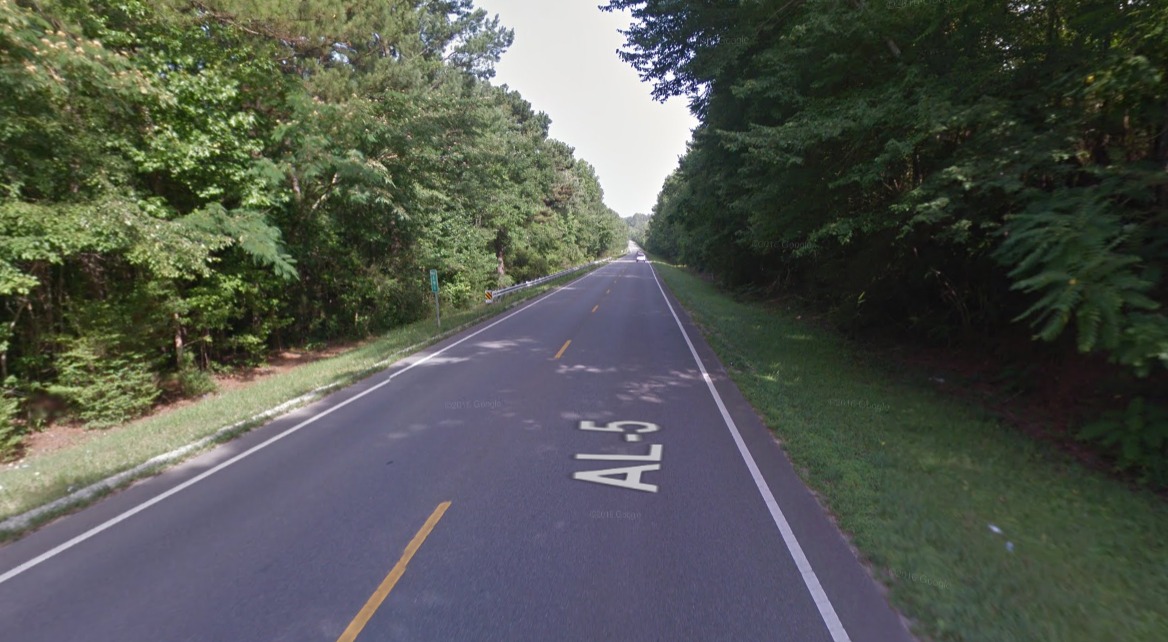
Highway 5 Ghost
Running through the piney hills of northwest Alabama, Highway 5 cuts a quiet and largely unremarkable path through Winston County, connecting communities like Natural Bridge to the north and Jasper to the south. The road passes directly through Lynn, a small town that today holds a population of just over 800 people and barely registers on most maps of the state. But among truck drivers who haul freight through this stretch of Alabama backroad, Lynn carries a reputation that has circulated for generations — and that reputation has nothing to do with farming, lumber mills, or the Northern Alabama Railroad that first gave the town its name. The area around what is now Lynn began to be settled as early as 1814, five years before Alabama achieved statehood. In 1888, a local landowner named John White Lynn donated land for a railroad right-of-way with the condition that the surrounding community bear his name. A post office followed that same year, and the lumber industry arrived behind the railroad, briefly expanding the population before the mills shuttered and the town settled into the quiet it has kept ever since. Lynn was not formally incorporated until 1952, a vote held largely to legitimize a local pool room under state law. By any measure, this is not a place built around drama or notoriety. Winston County itself was forged in isolation — its craggy hills and rocky terrain leaving settlers outside the mainstream geographically, economically, and politically. During the Civil War, residents famously resisted joining the Confederacy, having no large plantations and virtually no enslaved labor, and at one point attempted to declare themselves the independent Free State of Winston. It is the kind of place where independence runs deep, where stories are passed down through families rather than written into official records, and where a legend can take root on a rural highway and outlast every person who first told it. The ghost of Highway 5 belongs to that tradition. The story holds that many years ago, on a rainy night in Lynn, a teenage girl was traveling home from prom with her boyfriend when an argument broke out. She asked to be let out, he complied, and she walked the rest of the way alone. While making her way along the side of the highway, she was struck by an 18-wheeler. The driver fled the scene, and her body was found the next morning in a ditch. The details shift depending on who is telling it — some versions place the argument at a local dragstrip, others at a prom, and some name a coal truck rather than a semi. One researcher who spent years combing through county and state records reported finding no documentation of a girl killed on that road at all, leaving the origin story unverifiable and the legend untethered to any confirmed event. What cannot be dismissed as easily are the accounts themselves. The central claim is consistent across dozens of reports: if an 18-wheeler travels Highway 5 on a rainy night, the girl will climb onto the side of the truck and peer in through the cab window, searching for the face of the man who killed her. Many truckers, rather than risk the encounter, chose to reroute entirely onto Highway 13 — a significantly longer detour — rather than pass through that stretch after dark. Some accounts describe her appearing in a long white dress, standing clean and dry at the road's edge despite rain and mud, then vanishing completely from the side mirrors of passing trucks. Others describe a knock on the cab door, a face at the glass, a figure that simply disappears. One account from 1999 describes a trucker so convinced he had struck someone that he stopped, called 911, searched the entire undercarriage of his vehicle, and found nothing — no body, no damage, no sign of impact. Another driver described pulling alongside a young woman and offering her a ride, only to have her exit near the drag strip and dissolve into the dark. Some versions of the legend include a resolution: the driver who struck the girl eventually confessed his crime, and after that, the activity along the highway diminished noticeably. Whether that detail was added to give the story a clean ending it never had, or whether it reflects something that actually quieted a restless presence, depends entirely on what you believe is happening on that road. Skeptics have reasonable ground to stand on. A narrow, poorly lit rural highway in rainy conditions produces exactly the kinds of visual distortions and psychological pressure that generate sightings. The legend is old enough and well-traveled enough that any driver who knows it arrives already primed to see something. And without a verifiable death to anchor the story, the whole structure floats on folklore alone. But the accounts keep coming — from truckers who had never heard the legend before stopping, from locals who grew up miles from the spot and still won't drive it alone at night, from people whose experience of that road defies easy explanation. Highway 5 doesn't have a ruined building or a documented death toll. It has something simpler and in some ways harder to shake — a stretch of open road in a small Alabama town where the darkness feels occupied, and where the rain, when it comes, still makes certain drivers choose a longer way home.
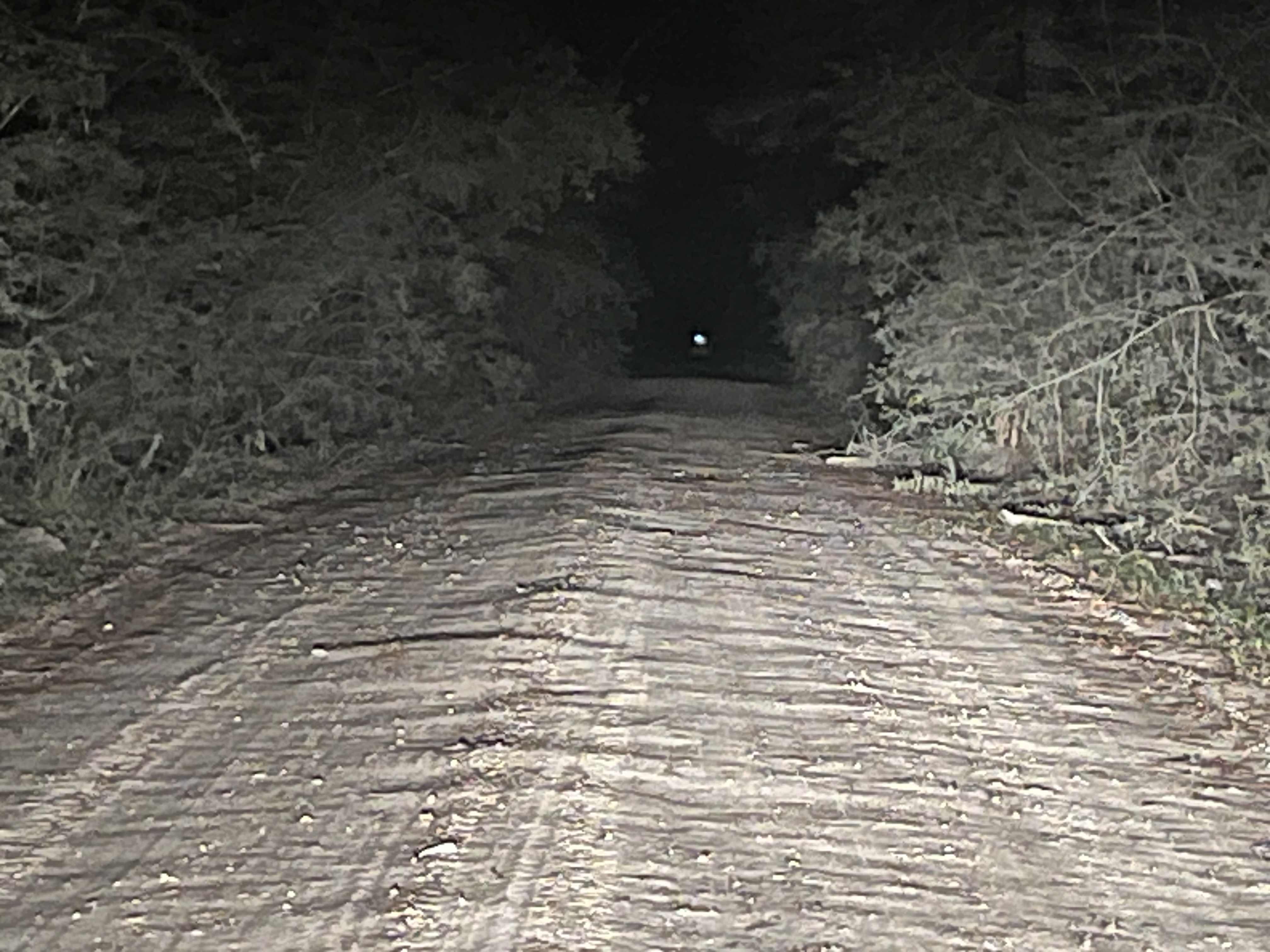
Light of Saratoga – Bragg Road Ghost Lights
Bragg Road cuts eight miles through the Big Thicket of Southeast Texas in a line so straight it looks drawn with a ruler, a dirt track running north-south between Farm-to-Market Road 787 near Saratoga and Farm-to-Market Road 1293 near the ghost town of Bragg Station in Hardin County. During the day it is an unremarkable passage through dense piney woods, the canopy closing overhead in a green tunnel, the sandy road wide enough for two cars with a few small turnouts along its length. At night it becomes something else entirely. The trees block out all ambient light. The darkness is absolute. And somewhere down the road, almost every time someone drives it after dark, a light appears—a single orb, roughly the size of a small pumpkin, hovering at an indeterminate distance, shifting in color from pale yellow to green to blue, bobbing gently, approaching and retreating but never arriving. It is called the Light of Saratoga, and it has been reported for over a century. The road exists because of the railroad. In 1902, the Gulf, Colorado and Santa Fe Railway cut a survey line through the Big Thicket from Bragg Station to Saratoga, bought right-of-way, and laid tracks to serve the booming East Texas oil fields and the timber industry that was stripping the region's longleaf pine. The Saratoga train made daily trips to Beaumont, hauling oil, logs, cattle, and passengers through some of the densest and most inhospitable forest in the American South. The Big Thicket was swamp and wilderness, thick with cypress sloughs, alive with snakes, mosquitoes, and malaria. Railroad crews suffered casualties from accidents and disease, and the work of maintaining the line was brutal. By 1934, the railroad had become obsolete. The rails and ties were pulled up, but the roadbed remained—arrow-straight, flat, and useful enough that it became a link road for local traffic. No one built along it. No one claimed it. The road simply existed, a corridor through darkness that no longer served any industrial purpose. The ghost light was reported while the tracks were still down. The earliest accounts predate automobile traffic in the area, which eliminates the most common skeptical explanation—that the light is a refraction of headlights from a nearby highway. The highway in question, FM 787, can only be seen from the south end of the road, while the light is typically observed facing north. Reports increased after the rails were removed, and in the summer of 1960, Archer Fullingim, the editor of the Kountze News, began running front-page stories about the phenomenon. Metropolitan newspapers across Texas picked up the coverage, and Bragg Road entered the broader public consciousness as one of the most persistently haunted locations in the state. The legends that have attached themselves to the light share a common architecture. The most widely told involves a railroad worker—sometimes a brakeman, sometimes a conductor—who was decapitated in a train accident on the Saratoga line. His body was recovered but his head was never found, and the light is his lantern, still swinging as his headless ghost walks the roadbed searching for what was taken from him. A second story involves a newlywed bride who wandered away from a nearby hotel after her wedding and never returned. Her groom seized a lantern and spent every night of his remaining life walking Bragg Road looking for her, and the light is the residue of that search, carried forward past his death. A third, grimmer tale holds that a Mexican road crew was murdered by their foreman rather than paid their accumulated wages. The workers were buried hastily in the dense woods alongside the road, and their restless spirits haunt the ground that cost them their lives. None of these stories have been historically corroborated. What has been corroborated, by generations of witnesses, is the light itself. Visitors describe it appearing most often in the early evening, hovering at a distance that makes it impossible to judge size or proximity. It shifts color. It moves laterally and vertically in ways inconsistent with a fixed light source. It does not grow larger or brighter as one approaches—a behavior incompatible with oncoming headlights. Some witnesses describe it darting toward their vehicles at startling speed before vanishing. Others watch it bob gently for minutes before winking out. The experience is consistent enough to constitute a rite of passage for East Texans, who have been driving their friends and children out to Bragg Road after dark for as long as anyone can remember. The scientific explanations are plausible but incomplete. Will-o'-the-wisp—the combustion of swamp gases such as methane and phosphine—is a documented phenomenon in wetlands worldwide, but no laboratory has successfully reproduced it under controlled conditions, and some observers note that Bragg Road does not run through active swampland. Atmospheric refraction of distant light sources is possible along a straight, flat corridor, but the light's behavior does not match the predictable characteristics of refracted headlights. The road is maintained as a park by Hardin County, with weathered historical signs at each end describing the railroad era and the oil boom that brought it into being. Four cemeteries sit in the surrounding woods. Today, Bragg Road remains open and drivable, though it is unpaved and can become impassable after heavy rain. The nearest town is Saratoga, birthplace of country legend George Jones, roughly sixteen miles west of Kountze. There is no admission, no gate, no guide. You drive in from one end, kill your headlights if you dare, and wait. The peepers sing. The fireflies drift. And somewhere ahead, more often than not, a light appears in the darkness that has no business being there—steady, shifting, patient, and impossible to reach. Whether it belongs to a headless brakeman, a heartbroken groom, a murdered road crew, or a pocket of burning gas that science cannot quite replicate, the Light of Saratoga has been answering the darkness on Bragg Road for over a hundred years, and it shows no sign of going out.

206 N. Broadway
206 North Broadway stands as an impressive mansion structure in Joliet, Illinois, an architectural gem that exemplifies the grand residential construction favored by wealthy families and industrial magnates during an era of significant American industrial prosperity and economic expansion. The building showcases sophisticated design elements and materials consistent with Joliet's development as an important industrial center strategically served by canal transportation routes and extensive railroad infrastructure. The mansion represents the aspirations, achievements, and social ambitions of successful business figures and prominent families who deliberately sought to establish and demonstrate their elevated status through the construction of impressive residential architecture. Multiple rooms throughout the expansive interior suggest the original purpose as a family residence housing numerous occupants across multiple generations, with specialized spaces designed for entertaining, dining formally, sleeping privately, and conducting the daily affairs of a prominent household. The transition of such grand properties through different ownership periods, fluctuating economic conditions, and the changing circumstances of the surrounding community creates the essential context within which paranormal phenomena typically emerge and intensify. The documented hauntings at 206 North Broadway center specifically on a singular, particularly tragic event that occurred within the structure's walls during a gathering of social significance. A nineteen-year-old individual was shot and killed during a party held at the mansion, a violent death that occurred suddenly and completely unexpectedly during what should have been a joyful social gathering among young people. The youth's sudden and violent transition from active life to death through gunshot occurred at this location, creating profound spiritual and energetic conditions that persist with remarkable consistency into the present era. The death of a young person in the prime of life through violent circumstances, surrounded immediately by numerous witnesses and party participants, generates extraordinarily powerful emotional and spiritual consequences that can anchor a confused spirit entity permanently to the location of sudden death. The paranormal activity at 206 North Broadway manifests subtly and psychically through emotional sensations rather than through obvious visual apparitions or dramatically physical phenomena and disturbances. Visitors and paranormal investigators consistently report sensing powerful energy within various rooms throughout the mansion structure, a presence that is felt intensely through emotional and psychic perception rather than perceived through conventional sensory mechanisms. The manifestations suggest a consciousness aware of the living presence within the building, an entity that interacts meaningfully with visitors and investigators through feeling, intuition, and emotional transmission. Paranormal phenomena are reported consistently throughout the different rooms of the mansion, suggesting that the entity traverses the entire structure rather than remaining confined to the specific location where death originally occurred. The spirit appears not malevolent or aggressive but rather deeply confused or emotionally distressed regarding the traumatic circumstances of death and the bewildering continued existence following violent departure from the physical body. The mansion's paranormal reputation gained significant public attention when the property was offered for sale, with the real estate transaction generating substantial local and regional media coverage and public interest. The sale process became notable throughout the region for the intensive competitive bidding that occurred among multiple interested buyers, each expressing genuine interest in acquiring the haunted mansion, suggesting that the paranormal history has become an integral aspect of the property's distinctive identity and cultural significance rather than a factor that diminishes its market desirability.
Marfa Lights
The Marfa Lights phenomenon represents one of the most extensively documented and studied unexplained light displays in North America, occurring in the desert landscape near the remote west Texas town of Marfa. The lights appear in the Mitchell Flat region east of Marfa, with observations recorded from various vantage points including designated viewing areas established specifically for this purpose. The phenomenon has been observed with consistency spanning over a century, creating one of the longest-documented paranormal occurrences in the United States. The geographic setting is characterized by vast open desert, sparse vegetation, and minimal light pollution, providing ideal conditions for observation of the aerial manifestations. The lights have attracted scientific researchers, paranormal investigators, and curious visitors seeking to witness and understand the nature of these recurring apparitions. The specific geography of Marfa Lights sightings includes the Mitchell Flat, an expansive desert plain offering unobstructed views of the eastern horizon, and Paisano Pass, a mountain passage where lights have also been documented. The area surrounding Marfa is inhabited sparsely, with vast stretches of uninhabited desert creating isolation that enhances the distinctiveness of the phenomenon. The landscape has remained largely unchanged over the past century, providing consistency in the observation environment. The climate of the region—characterized by clear night skies and minimal cloud cover—creates optimal conditions for visibility of the phenomena. The established viewing area, known as the Marfa Lights Viewing Area, provides organized access for interested observers seeking to experience the lights firsthand. Historical documentation of the Marfa Lights extends back to reports from Spanish conquistador expeditions in the territorial period, with accounts suggesting that these lights were observed for centuries prior to modern scientific study. The legends and oral traditions of indigenous peoples and early Spanish settlers contain references to mysterious lights in the region, suggesting that the phenomenon may have cultural and spiritual significance extending deep into the past. Spanish conquistador spirits are said by some paranormal theorists to be associated with the lights, possibly explaining certain characteristics and the apparent intelligence attributed to the manifestations. The phenomenon gained widespread attention in the modern era following increased tourism and systematic documentation, though accounts from earlier centuries establish a long historical record of observations. The physical characteristics of the Marfa Lights have been consistently described by witnesses across generations of observations. The manifestations typically appear as glowing orbs or spheres of light, varying in intensity from barely visible to remarkably bright. The predominant coloration is described as yellow-orange, creating a warm-toned luminescence visible across considerable distances. However, witnesses have also reported occasional variations in color, with green, blue, and red hues documented in specific sightings. The lights display remarkable behavior patterns that defy simple mechanical or natural explanation. Some observed lights remain stationary for extended periods, while others move across the landscape with apparent purpose and direction. The movement patterns are sometimes described as purposeful and intelligent, with reports of lights appearing to respond to observers or changing behavior based on external stimuli. Lights have been observed splitting into multiple separate orbs and merging back into unified forms, suggesting a degree of control or coordination inconsistent with natural phenomena. The intensity of individual lights fluctuates, brightening and dimming in patterns that sometimes appear rhythmic or pulsating. The Marfa Lights continue to appear regularly. Various scientific explanations have been proposed, including temperature gradient mirages and natural gas phenomena, though none fully account for the intelligent behavior and documented responses to observer presence. Paranormal researchers have proposed alternative theories including extraterrestrial visitation and spiritual manifestations. The phenomenon remains officially unexplained, continuing to generate interest from scientists and paranormal enthusiasts. The Marfa Lights represent genuinely unexplained phenomena where observation remains possible for any visitor.
Bayou Sale Road
Bayou Sale Road, designated as Louisiana State Highway 57, traverses the marshy bayou landscapes characteristic of southeastern Louisiana, extending through wetland terrain where the bayou ecosystem defines the landscape and environment. The roadway was constructed to provide transportation access through terrain presenting significant engineering challenges due to wetland conditions and variable ground composition. Highway 57 connects communities and provides access to isolated areas within the bayou, serving both local residents and travelers moving through the region. The road's path creates a distinctive corridor of human activity within an otherwise undeveloped natural landscape. Bayou Sale Road has become recognized as one of Louisiana's most haunted roadways, with accumulated folklore and paranormal reports creating a reputation extending beyond ordinary haunted locations. The historical context of Bayou Sale Road encompasses centuries of human activity within Louisiana's bayou regions, with indigenous populations, French colonizers, Spanish settlers, and American frontier populations contributing to the layered history. The roadway's construction occurred during the twentieth century, providing modern transportation infrastructure through terrain previously navigated primarily by water-based transportation. Bayou regions of Louisiana have long been associated with distinctive cultural practices, linguistic traditions, and folklore emerging from the intersection of European, African, and Caribbean cultural influences. The isolation of bayou communities created distinctive cultural developments and social structures adapted to wetland living challenges. Throughout the nineteenth and twentieth centuries, the bayou served as refuge for individuals seeking isolation from mainstream society, contributing to paranormal folklore accumulation. Paranormal phenomena reported along Bayou Sale Road concentrate on multiple categories of supernatural manifestation suggesting a richly haunted roadway with diverse paranormal entities. A hitchhiker ghost, described as a male figure, has been reported appearing at various locations along the roadway, materializing before drivers who subsequently observe the figure disappearing from vehicles despite having no opportunity to exit. This phenomenon represents the classic hitchhiker ghost narrative pattern appearing across haunted road folklore throughout the United States. A phantom female figure known as the "Bayou Bride," described as appearing in white dress suggesting bridal attire, has been reported along Bayou Sale Road, with the figure allegedly manifesting and disappearing in ways consistent with paranormal phenomena. Phantom lights, described as unexplained glowing illuminations hovering over or moving along the roadway, have been reported with considerable frequency by witnesses describing these lights exhibiting behavior inconsistent with conventional vehicles or electrical sources. The sensory phenomena reported include icy chills experienced by witnesses despite ambient temperatures, whispers and disembodied voices carried on the wind without identifiable speakers, and the overall impression of a landscape pervaded by supernatural presence. The concentration of paranormal reports has established Bayou Sale Road as a significant destination for paranormal investigation and paranormal tourism, with researchers and enthusiasts traveling to the location to document phenomena. Bayou Sale Road continues functioning as an active transportation corridor, with residents and travelers traversing the roadway for legitimate purposes despite accumulated paranormal reports and notorious reputation. The coexistence of routine vehicular traffic and documented paranormal activity creates an ongoing reality where contemporary transportation infrastructure passes through a landscape dense with reported supernatural manifestation. The Bayou Bride, the hitchhiker ghost, and phantom lights persist in folklore and reported experiences of witnesses encountering phenomena. The bayou landscape remains largely undeveloped and isolated, preserving environmental conditions characterizing the region's distinctive geography. Bayou Sale Road represents an unusual intersection of modern transportation infrastructure with deeply embedded paranormal traditions and phenomena continuing to generate investigation and interest.
Abandoned Factory on Herman Street
The Abandoned Factory on Herman Street in East Rutherford, New Jersey stands as a silent monument to the industrial heritage of the northeastern United States, representing the manufacturing boom that defined the region during the nineteenth and twentieth centuries. The structure rises prominently along Herman Street, its large windows and imposing facade testifying to the scale of operations that once occurred within its walls. The factory operated for decades, employing workers who toiled in the production of goods that were distributed throughout the eastern seaboard and beyond, contributing to the economic vitality of East Rutherford and the surrounding region. Like many industrial facilities built during the peak of American manufacturing, the factory eventually ceased operations as economic shifts, changing technologies, and relocation of manufacturing to other regions rendered the facility obsolete. The building fell into disuse, its machinery abandoned, its windows darkened, and its doors sealed against further human occupation. The specific history and purpose of the factory remain somewhat obscured by time and the lack of readily available documentation, though the scale of the structure and its architectural design suggest it was engaged in substantial manufacturing operations requiring significant workspace and mechanical infrastructure. The building may have been involved in textile production, machinery manufacturing, chemical processing, or one of numerous other industrial enterprises that defined the region's economic character. Whatever its original purpose, the factory accumulated decades of human labor, industrial accidents, workplace conflicts, and the routine occurrences of industrial life. Workers suffered injuries, illnesses, and the psychological toll of repetitive labor within the factory's confines. Some may have perished within the structure, their deaths occurring under circumstances ranging from occupational accidents to sudden health crises. The accumulation of human suffering and industrial trauma appears to have left an energetic imprint that persists long after the machinery fell silent and the workers departed. The paranormal activity at the Abandoned Factory has been documented by investigators, trespassers, and locals who have approached the location despite its dangerous condition and its status as private property. The primary manifestation involves a ghost that moves about the factory interior, its presence detected through various means including motion-activated equipment, thermal imaging, and direct visual sightings. Witnesses report seeing a humanoid figure moving through the factory spaces, sometimes appearing solid and corporeal, at other times seeming translucent or more ethereal in appearance. The spirit appears territorial and protective of the space, actively discouraging human intrusion through direct confrontation rather than passive haunting phenomena. Curious individuals who peer through the factory's windows attempting to observe the interior have reported being chased away by the apparition, which manifests with apparent awareness and intent to repel the intruders. The paranormal activity appears concentrated within the interior of the factory structure and at the window locations where the apparition has been observed conducting the curious away. The entity demonstrates intelligent behavior, responding to the presence of living individuals and appearing to understand human intentions and actions. The ghost does not appear inherently violent but rather protective and possessive of the space, suggesting that it may be the spirit of someone who died within the factory walls and feels compelled to maintain dominion over the location. Some investigators theorize the entity may be actively engaged in preventing others from sharing its tragic fate, warning intruders away from a dangerous and decaying structure. The manifestations are most frequently reported during daylight hours when curious visitors are most likely to attempt observation of the interior, though paranormal activity has been documented during evening and nighttime investigations. The Abandoned Factory on Herman Street remains sealed and off-limits to the general public, its haunted reputation adding to its mystique and notoriety within paranormal investigation circles. The building continues to deteriorate as exposure to the elements takes its inevitable toll on the aging structure, though the paranormal activity shows no signs of diminishing. Paranormal investigation teams have conducted visits documenting the phenomena, adding the location to inventories of active haunted sites in New Jersey. The factory represents a poignant example of how industrial decline and abandonment can create both physical decay and spiritual unrest, anchoring the victims of historical tragedy to the locations where they suffered their final moments. Whether future redevelopment or demolition of the structure will result in the spirit's release remains unknown, though the protective and assertive nature of the entity suggests it may not willingly depart from the location it apparently claims as its own.
Auditorium Theatre
The Auditorium Theatre stands as one of America's most architecturally significant performance venues, its ornate interior and storied history spanning more than a century of theatrical productions. Built during the golden age of vaudeville and live performance, the theatre's design reflects the ambitions of its era, featuring balcony seating that extends into multiple sections and a grand lobby designed to impress arriving patrons. The venue has hosted countless theatrical productions, musical performances, and cultural events that have drawn audiences from throughout its region, establishing itself as a cornerstone of the performing arts community. Throughout the twentieth century, the theatre became an integral part of the city's cultural identity, serving as a gathering place for artists and audiences alike, with generations of families marking important occasions by attending performances within its walls. The theatre's paranormal reputation developed gradually over decades, with reports of supernatural activity emerging from staff members and patrons who experienced unexplained phenomena within its walls. A distinctive figure dressed in a red coat, described as the apparition of a male usher from the theatre's earlier era, has been observed most frequently in the lobby area after hours when the venue is closed to the public. Multiple witnesses have reported seeing this spectral figure in the balcony sections as well, suggesting the spirit frequents areas where it once worked during the theatre's active performance hours. The ghost appears so vivid and realistic that witnesses initially mistake the apparition for a living employee, only experiencing shock when the figure vanishes into empty air with no rational explanation for its sudden disappearance. Beyond the red-coated apparition, the Auditorium Theatre hosts a broader range of paranormal phenomena suggesting multiple spirits with connections to its theatrical past and the building's cultural significance. Unexplained voices have been heard emanating from empty areas, including disembodied conversations and whispered names that cannot be attributed to living persons. Ghostly apparitions resembling audience members and performers from previous eras have materialized in various sections, appearing briefly before vanishing without explanation. Cold spots have been documented in areas where the ghost is most often sighted, and electronic equipment has occasionally malfunctioned during periods of heightened activity, suggesting the spirits maintain capacity to influence physical systems and environmental conditions within the structure. The lobby has emerged as the primary focal point of paranormal activity, where encounters with the red-coated ghost occur most frequently and with remarkable consistency across different time periods and seasons throughout the year. The balcony sections, particularly those elevated areas providing views of performances and affording sightlines of the audience below, also attract investigative attention from those seeking to document the theatre's spectral inhabitants. Multiple paranormal investigation teams have conducted research within the theatre, utilizing thermal imaging and electronic recording devices to document evidence of the phenomena occurring within the structure. In the present day, the Auditorium Theatre continues operating as a vital cultural institution while maintaining awareness of its paranormal legacy and the spirits that appear to maintain presence within its historic walls. Staff members acknowledge the ghostly reputation openly, and paranormal researchers regularly visit to investigate and document the phenomena occurring within its historic walls, contributing to an ongoing and continually expanding body of evidence supporting the reality and consistency of the documented hauntings.
Brea Canyon Road
Brea Canyon Road winds through the terrain of Diamond Bar, California, connecting communities while traversing a landscape shaped by geological formations, natural drainage patterns, and the urban expansion that has gradually encroached upon previously undeveloped areas. The road itself is relatively modern compared to the ancient geological history of the region, constructed during the mid-twentieth century as the area underwent suburban development and residential expansion. The landscape through which the road passes includes canyons, hillsides, and natural features that create an environment somewhat isolated from the densest urban development, maintaining pockets of relative wilderness within the greater Los Angeles metropolitan area. The road initially attracted few paranormal reports, and only gradually did accounts of supernatural phenomena emerge to transform Brea Canyon Road into a recognized location of active haunting and dangerous manifestations. The paranormal reputation of Brea Canyon Road became established through a pattern of deaths and accidents that occurred along the roadway over a concentrated period spanning approximately two decades. Nearly a dozen deaths were recorded during this period, far exceeding the statistical expectation for a road of comparable length and traffic volume in the region. The accidents appeared to follow patterns that suggested supernatural causation rather than ordinary mechanical or human failure, with witnesses reporting encounters with phantom hitchhikers before or immediately following tragic incidents. The phantom hitchhikers are described as appearing at specific locations along the road, presenting themselves as needing transportation, and then vanishing from vehicles either during transit or immediately after entering them. The encounters have been temporally associated with subsequent accidents, suggesting that the apparitions may be harbingers of coming disaster or actively engaged in causing the tragic incidents themselves. The presence of phantom hitchhikers along Brea Canyon Road has been extensively documented through eyewitness reports, paranormal investigation recordings, and regional folklore that has accumulated over decades. The hitchhikers are described as appearing solid and corporeal, giving no obvious indication that they are supernatural until the moment of their vanishing, which typically occurs abruptly and without logical explanation. Some witnesses report that the hitchhikers appeared wet or showed signs of trauma, suggesting they may be victims of previous accidents on the road manifesting to draw others into similar circumstances. Others describe the apparitions as appearing dazed or confused, as though uncertain of their own location or current state. The encounters generate profound psychological effects in witnesses, with survivors describing overwhelming feelings of dread, disorientation, and sometimes complete loss of memory regarding the incident. Various theories attempt to explain the concentrated paranormal activity and unusual death rate on Brea Canyon Road. One prominent explanation suggests that the road may have been constructed directly over the site of a failed scientific experiment or military research project that resulted in multiple deaths and left residual paranormal energy in the location. This theory proposes that surviving experimental subjects or affected individuals may have been trapped in a paranormal state, manifesting as the phantom hitchhikers observed by contemporary drivers. Other explanations propose that the location is a dimensional thinning where spirits from alternative realities can cross over, or that natural geological formations create electromagnetic anomalies that trigger both accidents and paranormal manifestations. Despite the various theories, the consistent documentation of multiple deaths combined with paranormal eyewitness reports firmly establishes Brea Canyon Road as a location of active and apparently dangerous haunting phenomena. The eerie phenomena intensify during nighttime driving, with the darkness appearing to amplify both the frequency of encounters and the severity of the paranormal manifestations. Brea Canyon Road remains open to vehicular traffic, though the location has achieved notoriety among paranormal researchers and supernatural enthusiasts who visit attempting to document the phantom hitchhikers and other phenomena. The road has been featured in paranormal investigation programs and paranormal research forums where individuals share accounts of their experiences. Modern drivers are generally unaware of the road's haunted reputation unless they specifically research the location or have prior knowledge of regional paranormal phenomena. Local authorities have maintained records of accidents on the road, contributing to the body of evidence supporting the claim of unusual death rates. The concentration of phantom hitchhiker encounters and associated fatalities has transformed Brea Canyon Road into one of California's most notorious haunted locations, a place where the boundary between the living and the dead appears to have become dangerously permeable.
Pond Road
Pond Road in the Asheville, North Carolina area winds through a landscape of dense forest and rocky terrain, a rural byway that has been travelled for generations by local residents and occasional visitors seeking an alternative route through the region's mountainous terrain. The road's construction dates back several decades, with its current configuration established during the mid-twentieth century as regional infrastructure expanded to accommodate increased vehicle traffic and economic development. The roadway passes in close proximity to a former quarry operation, an excavation site that was historically significant for stone extraction but has since been abandoned and reclaimed partially by advancing vegetation and accumulated precipitation. The road's elevation and winding path provide dramatic vistas of the surrounding Appalachian landscape, though the terrain surrounding Pond Road is notably isolated, with few nearby residences and limited lighting infrastructure, creating an atmosphere of remoteness that persists even in contemporary times. Local residents have traveled this route for decades, establishing informal patterns of traffic and behavioral norms, yet the road has consistently attracted paranormal reports and unusual incidents that have steadily accumulated in local folklore. During the historical period spanning multiple decades, numerous witnesses traveling Pond Road reported sightings of an anomalous canine entity that appeared with distinctive and frightening characteristics inconsistent with any known dog breed or natural animal. The creature was repeatedly described as a ghostly, translucent apparition of a large dog that manifested along the roadside or directly across the driving path, forcing motorists to make sudden evasive maneuvers. Witnesses reported the entity exhibiting behavior that defied natural animal conduct, including the apparent ability to leap enormous distances over roadside barriers and to traverse terrain with unnatural agility that seemed physically impossible for any biological creature. The phantom dog produced vocalizations described as an otherworldly howling sound, distinctly different from any natural canine call, with a quality that witnesses described as chilling and unnatural. The apparition reportedly appeared most frequently during nighttime hours or during weather conditions characterized by fog, mist, or reduced visibility, though day-time sightings were also documented. The ghost dog seemed particularly active in areas of the road that passed closest to the abandoned quarry, suggesting a potential connection between the paranormal entity and the site of the industrial excavation. Paranormal researchers investigating Pond Road documented compelling evidence of a persistent supernatural presence associated with the phantom dog apparition. Investigators who spent extended time on the roadway during nighttime hours reported visual phenomena consistent with witness accounts, including glimpses of a canine-like silhouette and the capture of photographs suggesting the presence of an anomalous entity that was not visible to the unaided human eye at the moment of image capture. Audio recordings made along the roadway captured vocalizations that did not correspond to any known animal sound or natural phenomenon. The ghost dog appeared to maintain specific territories along the road, manifesting most consistently in particular sections that bordered the quarry area, suggesting a territorial attachment to a specific location rather than random wandering. Investigators theorized that the entity might be the spirit of a dog that died at or near the location under traumatic circumstances, or potentially a manifestation of psychic energy associated with the quarry site itself. The apparent intelligence displayed by the entity in its interactions with vehicles and its deliberate signaling of warnings to travelers suggested something more substantial than a simple residual haunting or unconscious recording of past events. In the present day, Pond Road continues to attract the attention of paranormal enthusiasts and casual visitors seeking documented supernatural encounters in the North Carolina mountains. The road maintains its isolated, rural character, with minimal development surrounding the thoroughfare, preserving the atmospheric conditions that may contribute to paranormal activity in the location. Locals familiar with the road's reputation exercise caution when traveling the route, particularly during nighttime hours, and many maintain a respectful distance from the abandoned quarry area where the ghost dog's appearances are most frequently reported. Paranormal investigation teams periodically conduct formal investigations along the roadway, setting up remote monitoring equipment and attempting to capture visual or audio evidence of the phantom canine entity. The consistency of reports spanning multiple decades, the reliability of numerous independent witnesses, and the unusual characteristics of the phenomena described have established Pond Road as a recognized location of paranormal activity worthy of serious investigation and documentation by researchers seeking genuine supernatural encounters.
Holly Ridge Railroad Tracks
The Holly Ridge Railroad Tracks in Jackson Parish, Louisiana represent one of the American South's most enduring examples of a location-based haunting phenomenon intrinsically connected to a single tragic incident that occurred decades ago. The railroad lines, which still carry commercial and freight traffic across the rural landscape of northern Louisiana, cut through forested terrain and swampland, serving as vital transportation arteries for the region's economic activities. These tracks have witnessed the passage of countless trains over many decades, from the early steam locomotives of the nineteenth century through modern diesel-powered freight trains that dominate contemporary rail transport. The landscape surrounding the tracks bears the characteristic marks of railroad history, with abandoned stations, deteriorated signal boxes, and weathered railroad ties scattered across the terrain as testament to the infrastructure's long operational history. However, the primary claim to historical distinction rests not with the tracks themselves but with the tragic event that allegedly occurred at this location many years ago. The paranormal folklore surrounding Holly Ridge Railroad Tracks centers on a brakeman or conductor whose life ended in catastrophic violence when he fell from a moving train, an incident that reportedly resulted in decapitation. Historical records of the exact date and circumstances of this death remain fragmentary, though oral tradition within the region places the incident in the early-to-mid twentieth century. The specifics of how the worker came to fall from the train vary depending on the source consulted, with some accounts attributing the tragedy to mechanical failure, others to momentary inattention, and still others to deliberate criminal action. What remains consistent across all accounts is the grim outcome and the subsequent manifestation of persistent paranormal phenomena. Following this incident, the railroad tracks became notorious for manifestations of a distinctly spectral character that have persisted for generations. The most documented phenomenon involves the appearance of a red light traveling along the tracks during nighttime hours, particularly during severe weather conditions when atmospheric conditions are unstable and visibility is naturally compromised. Witnesses describe the red light as distinctly anomalous, moving with a purposefulness that defies explanation as a reflection from conventional sources. Some observers report that the light moves along the tracks in patterns consistent with someone actively searching for something lost, supporting the folk narrative that the decapitated brakeman's spirit searches eternally for his severed head. Beyond the iconic red light phenomenon, investigators have documented the appearance of a full-bodied apparition of a railroad worker dressed in early twentieth-century work clothing, sometimes observed standing on or near the tracks. Spectral orbs have been captured in photographic evidence collected by paranormal research teams, appearing with particular frequency near the location where the fatal incident allegedly occurred. Contemporary visitors to the location during inclement weather report experiencing unexplained cold spots, electromagnetic phenomena that cause sensitive instruments to malfunction, and sensations of overwhelming dread. The Holly Ridge Railroad Tracks remain active as a transportation route, yet the location's paranormal reputation ensures continued interest from those seeking to understand the relationship between catastrophic human tragedy and persistent supernatural manifestation.
Rifle Range Trail
Rifle Range Trail on Mackinac Island, Michigan, winds through forested terrain between Fort Holmes and Fort Mackinac, historic military installations that played crucial roles in American frontier defense, regional military operations, and strategic positioning during the nineteenth century and earlier periods of American expansion. The trail itself covers approximately two miles of elevated land overlooking the Straits of Mackinac, passing through dense woodland and rocky terrain that has changed little since the fort's establishment in the early 1800s, creating a landscape that preserves the historical atmosphere of the period when military justice was administered on these grounds. The most significant historical event associated with the trail occurred in 1817, when a soldier named James Brown was court-martialed for the murder of a fellow serviceman under circumstances that remain historically controversial and disputed, with substantial evidence suggesting potential injustice in his conviction. Brown was subsequently hanged at a location along the trail designated specifically for military executions, becoming one of the most notorious examples of possibly wrongful execution at a military installation. The gallows constructed for this purpose became a permanent fixture in the landscape, though the structure itself has long since deteriorated, leaving only the location as a marker of the tragedy and the emotional imprint that continues to affect the surrounding environment. James Brown's ghost has been extensively documented by paranormal researchers and visitors to the island, with consistent reports of his apparition along the trail pleading his innocence and expressing profound despair about the injustice of his execution and the manner of his death. The soldier ghost appears particularly active in the evening hours and during inclement weather, when witnesses report seeing a translucent military figure in nineteenth-century uniform walking the trail with a posture of profound sadness and what witnesses describe as visible anguish. The disembodied voice of James Brown himself has been recorded by paranormal investigators using contemporary audio equipment, captured in documentation that preserves his protestations of innocence regarding the murder charge with a clarity that suggests direct communication from the spirit realm. Footsteps of an unseen soldier regularly echo along the trail, particularly in the vicinity of the original gallows location, with hikers reporting the distinct sensation of being followed by an invisible presence that maintains pace with their movement. Cold spots appear suddenly along the trail pathway, dropping temperatures by as much as twenty degrees Fahrenheit in localized areas where no meteorological or geographical explanation for such phenomena can be rationally established. Visitors consistently report hearing gunshot sounds during visits despite the complete absence of any active military operations, hunting activities, or other sources that could logically produce such auditory phenomena, sounds that appear to originate from the direction of the fort but vanish immediately upon investigation. The feeling of being watched intensifies as hikers approach the historical gallows location, and numerous paranormal research teams have documented electromagnetic fluctuations spiking dramatically in the vicinity, suggesting the presence of non-corporeal entities manipulating electromagnetic fields. The trail has been featured prominently on major paranormal-focused television networks including recognized paranormal investigation programs and in conservation organization documentation emphasizing the location's historical and supernatural significance, with multiple video recordings capturing unexplained shadows and light anomalies that defy conventional photographic explanation. Modern visitors to the trail often report an overwhelming sense of oppression and melancholy that seems to emanate from the very earth itself, as if the profound injustice of James Brown's execution and the possible miscarriage of military justice continue to weigh heavily upon the land's spiritual essence.
Long Trail
Leonardo's Discovery Warehouse occupies a building constructed in 1920 as Alton's Mercantile, a commercial establishment built to serve the retail and mercantile needs of Enid, Oklahoma during a period of economic expansion and commercial development in the region. The building's original function reflected the period's retail traditions, with substantial interior space designed to display merchandise and accommodate customer transactions. Harry Alton, the founder and proprietor of the mercantile enterprise, invested resources and vision into establishing a successful commercial venture in the developing Oklahoma community. The architectural structure, while modified over the decades to accommodate different commercial purposes, retained sufficient historical character and structural integrity to remain recognizable as a representative example of early twentieth-century commercial architecture. The building has undergone substantial adaptive reuse, transitioning from mercantile to its current function as Leonardo's Discovery Warehouse, an interactive children's museum designed to provide educational and entertainment experiences for young visitors. This transformation from adult-oriented retail to child-focused educational institution represents a fundamental shift in the building's purpose, clientele, and operational rhythm, yet the structure's paranormal phenomena have persisted across these transitions. The paranormal history of Leonardo's Discovery Warehouse centers on a single catalyzing tragedy that appears to have generated ongoing manifestations extending across more than a century following the initial event. In 1924, Harry Alton, the proprietor whose vision established the mercantile enterprise, died by hanging himself on the premises. The act of suicide, occurring within the building he had established and presumably invested substantial emotional resources in constructing, appears to have created a paranormal anchor binding his spirit to the location. The specific mechanism of his death, the context of suicide suggesting profound despair or psychological crisis, and the location's association with his identity and accomplishments all appear relevant to understanding why his spirit remains associated with the building. His manifestation has persisted through the building's transitions from mercantile to its current incarnation as an educational institution, suggesting that the binding force securing his presence transcends the building's functional or operational changes. The paranormal phenomena documented at Leonardo's Discovery Warehouse take forms particularly disturbing given the building's contemporary function as an interactive children's museum. Harry Alton manifests as a man appearing in a white butcher's coat, the significance of which remains unclear from documented accounts though the specific detail of the coat suggests either a professional context or a detail of particular paranormal significance. This figure appears primarily on the upper floors of the structure, maintaining spatial separation from the primary children's museum operations even while inhabiting the same building. Mysterious phone calls originating from the building have been received after hours, a phenomenon that persisted before the building's conversion to museum status and perhaps continuing after, though documentation of contemporary calls remains unclear. An answering machine repeatedly receives mysterious calls from an empty building, generating recordings of unclear origin and purpose. The freight elevator operates spontaneously, activating without human direction or apparent mechanical cause, its operation generating startling disruptions in the building's normal operational patterns. These unsettling noises and phenomena have generated considerable concern among staff and managers of the Discovery Warehouse, creating questions regarding the appropriateness of maintaining a children's educational institution within a location haunted by a suicide victim's persistent paranormal presence. Leonardo's Discovery Warehouse continues to operate as an interactive children's museum despite the documented paranormal phenomena occurring within its walls. The coexistence of a modern educational institution dedicated to children's learning and development alongside persistent paranormal manifestations connected to adult tragedy creates a unique and potentially problematic situation. Museum staff and management have presumably incorporated acknowledgment of the building's paranormal history into their operations and institutional culture, though the specific approach to addressing paranormal concerns remains undocumented in available sources. The building's architecture, now dedicated to interactive learning experiences and educational engagement, continues to be marked by unsettling phenomena that defy conventional explanation and threaten to intrude upon the positive experiences intended for child visitors. Whether the paranormal manifestations represent residual psychological imprints from Harry Alton's suicide, active spiritual presences of the deceased proprietor, or unexplained phenomena unconnected to documented historical tragedy, Leonardo's Discovery Warehouse demonstrates how buildings' paranormal histories may persist despite dramatic functional and operational changes, continuing to manifest in forms that create ethical and practical challenges for institutions operating within their walls.
East 8 Mile Road
East 8 Mile Road extends through Stockton, California as a thoroughfare bearing the accumulated paranormal reputation characteristic of certain highways and roads across North America that have become associated with distinctive categories of ghostly phenomena. The road itself represents standard contemporary transportation infrastructure, serving as a major conduit for regional traffic while simultaneously functioning as a landscape bearing historical memory and folklore traditions. The surrounding terrain alternates between developed commercial areas, residential communities, and less densely populated stretches where forests and agricultural lands persist. This intersection of developed infrastructure with landscapes bearing older indigenous and settler histories creates distinctive conditions conducive to the accumulation of paranormal narratives. Multiple paranormal phenomena have been reported along various segments of East 8 Mile Road, creating a pattern of activity that extends beyond a single specific location and instead characterizes a broader geographic area. The most prominently reported paranormal manifestation along East 8 Mile Road involves the appearance of a woman in white, a figure representing a widespread category of paranormal phenomena documented across numerous locations throughout North America. This apparition has allegedly appeared standing along the roadside, often near the embankment areas where road and landscape intersect, and has been reported entering or appearing in the back seats of automobiles operated by passing drivers. The woman in white figure is typically described as wearing period clothing inconsistent with contemporary fashion, suggesting historical connection or temporal displacement. Additional paranormal entities reported in the area include a Native American girl whose screaming has allegedly been heard during nighttime hours, particularly during full moon periods when moonlight illuminates the landscape. A female Native American spirit, potentially distinct from or synonymous with the screaming girl, has also been reported in various accounts. These multiple entities suggest a complex paranormal landscape bearing witness to historical displacement, tragic death, and cultural loss associated with Native American populations and the landscape transformations accompanying European settlement and agricultural development. Paranormal investigators have conducted systematic documentation along East 8 Mile Road, conducting nighttime investigations, photographic documentation sessions, and audio recording in attempts to capture evidence of reported phenomena. The accessibility of the road and the availability of documented accounts have made East 8 Mile Road a destination for paranormal research organizations seeking to investigate roadside apparition phenomena and document paranormal manifestations in natural and semi-developed landscape settings. The road's integration into regional paranormal narratives reflects broader patterns where transportation corridors become associated with distinctive paranormal phenomena, particularly apparitions appearing to interact with or cross vehicular traffic. Multiple independent witnesses across distinct time periods have reported encounters with the woman in white figure, lending credibility to the consistency of the manifestation despite the inherent challenges in documenting paranormal phenomena occurring along public roadways. East 8 Mile Road continues to function as an active transportation corridor serving regional traffic needs while simultaneously maintaining an identity as a paranormally active location known among paranormal enthusiasts and regional folklore communities. The road exemplifies how landscape features and transportation infrastructure can accumulate paranormal significance through the convergence of historical memory, cultural displacement narratives, and the particular suitability of road environments for certain categories of paranormal phenomena. Researchers have documented the legends and accounts associated with East 8 Mile Road through interviews, historical research, and contemporary investigation, creating a record of paranormal narratives embedded within the broader California landscape. The location represents the intersection of indigenous history, settler expansion, modern infrastructure development, and contemporary paranormal belief systems that together create distinctive cultural spaces where historical consciousness and supernatural narrative coexist within the physical landscape.
Gray Road
Gray Road in Minetto, New York, has accumulated one of the region's most storied and persistent paranormal reputations, earning documentation in multiple paranormal reference materials and haunted location databases that identify it as one of New York's most actively haunted roadways. The road stretches through rural Oswego County terrain, passing through forested areas interspersed with residential structures and agricultural properties that characterize the broader region's landscape and settlement patterns. The distinctive paranormal phenomena concentrated along this specific roadway have prompted extensive investigation and documentation by paranormal research groups seeking to understand the mechanisms underlying the location's apparent supernatural properties. Gray Road's paranormal reputation has persisted across multiple decades despite changing populations and development patterns, suggesting that the phenomena may relate to underlying geological features or deeply rooted historical events rather than specific residential occupants or transient circumstances. The most widely documented paranormal phenomenon associated with Gray Road involves the apparition of a ghost that motorists report seeing on the roadway, particularly in areas proximate to the railroad tracks that parallel portions of the road. Travelers who intentionally stop their vehicles on the railroad tracks report seeing a distinctive apparition approaching their car, described as a translucent humanoid figure that generates intense fear and disorientation in observers. This apparition is theorized by investigators to represent the spirit of a young boy who died in a carriage accident on the train tracks, an event documented in historical records as occurring during the late nineteenth or early twentieth century. The boy's death appears to have created a residual haunting that manifests as a repetitive phenomenon responding to specific behavioral triggers, with the apparition appearing specifically to vehicles stopped on the tracks rather than to all passing motorists. A secondary paranormal phenomenon documented along Gray Road involves sightings of a Headless Horseman figure, a legendary entity whose appearances align thematically with broader American folklore traditions while appearing in this location with sufficient frequency and consistency to warrant documentation as an authentic local legend. Witnesses describe an apparition riding a dark horse along Gray Road, visible only briefly before vanishing or being obscured by mist or darkness despite the observer's attempt to maintain visual contact. The Headless Horseman phenomenon has been documented over many decades, with contemporary witnesses providing descriptions consistent with historical accounts separated by half a century or more. Paranormal researchers theorize that the Headless Horseman may represent either a legendary figure whose mythology has coalesced around the location or a distinct paranormal entity whose appearance corresponds coincidentally with established folklore patterns. The nearby suicide death of Ethel Guinup, who hanged herself on Snell Road in 1926, has been integrated into the broader paranormal mythology surrounding Gray Road, though the precise relationship between this documented death and specific paranormal manifestations remains unclear. Guinup's death occurred in the immediate vicinity of Gray Road and has prompted speculation that her spirit may interact with or contribute to the road's paranormal phenomena, though no direct documentation explicitly attributes specific manifestations to her presence. Historical records indicate that Guinup's death received substantial local attention and sparked investigation into the circumstances surrounding her suicide, with contemporary newspaper accounts providing detailed information about the event. The temporal proximity of Guinup's death to documented Gray Road paranormal phenomena has prompted historians and paranormal researchers to investigate potential correlations, though definitive causal relationships remain elusive. A distinctive paranormal phenomenon documented at a residential property adjacent to Gray Road involves an annual occurrence where candles mysteriously light within a home despite no human inhabitant igniting them or any apparent mechanical device activating combustion. This candle-lighting phenomenon occurs with remarkable regularity, typically manifesting during the anniversary of significant historical events associated with the property or nearby locations. Witnesses and investigators theorize that this phenomenon may represent a deliberate communication attempt or commemoration from a deceased entity associated with the property, using the candle illumination as a symbolic gesture. The persistence of this phenomenon across multiple decades and through different property occupants suggests that the underlying cause derives from established paranormal phenomena rather than from specific residential inhabitant actions or installed mechanical systems. Gray Road maintains its reputation as one of New York's most consistently documented haunted highways, with contemporary paranormal investigation groups continuing to document phenomena and gather witness testimony consistent with historical accounts spanning more than a century.
Greenbriar Road Ghost Lights
Greenbriar Road, located near the junction of San Jose Boulevard and County Road 210 in the Jacksonville, Florida area, has achieved modest but notable prominence in paranormal lore as the site of a distinctive spectral phenomenon known colloquially as a ghost light. Ghost lights represent a category of paranormal phenomena documented across multiple regions and spanning centuries of historical documentation, characterized by mysterious luminous manifestations appearing on roads or in isolated locations without apparent physical source or logical explanation. The specific location at the intersection of San Jose Boulevard and County Road 210 has become associated with a utility pole and cable infrastructure, suggesting that the ghost light phenomenon may relate to the electrical properties of the surrounding infrastructure or to the location's association with technological systems. The phenomenon appears to have been most prominent during the period from the 1960s into the early 2000s, though documentation of its current manifestation status remains somewhat ambiguous in contemporary paranormal literature. The location has developed significance as a destination for legend tripping, a cultural practice wherein young people travel to sites of documented or alleged paranormal phenomena seeking personal experiential encounters with supernatural forces. The ghostly phenomenon at Greenbriar Road is believed to originate from the tragic death of a young motorcyclist who died in a motorcycle accident at or near the location documented in the historical record. The spectral manifestation has been characterized as appearing remarkably similar to a headlight from a motorcycle, creating a visual phenomenon that could potentially be misinterpreted as an approaching vehicle before disappearing suddenly and without warning. The motorcyclist's death appears to have been violent or traumatic, and the location of the accident apparently impressed the victim's essence so profoundly upon the physical place that repeated manifestation of a spectral headlight became a persistent phenomenon. Some paranormal researchers and folklore scholars theorize that the ghost light may represent either residual psychic energy impressed upon the location through the trauma of the accident or an intelligent haunting wherein the decedent's spirit continues to manifest the vehicle that caused his death. A second theory suggests that the apparition may represent a decapitated rider, with the isolated headlight metaphorically or literally embodying the dismembered or disembodied nature of the victim's death. The ghost light phenomenon at Greenbriar Road manifests as a mysterious luminescence appearing on the roadway, described as resembling an approaching headlight before vanishing into darkness and disappearing entirely. The manifestation demonstrates apparent intentionality in its behavior, as the light appears to approach vehicles traveling the roadway before abruptly ceasing to appear at a specific location consistently referenced in multiple eyewitness accounts. Spectral illumination characterizes the visual experience, with the light possessing qualities that distinguish it from conventional automobile headlights, though the similarity is sufficient to create momentary confusion or concern among witnesses unprepared for paranormal phenomena. The headlight phenomena associated with the ghost light appear and disappear within a circumscribed area, suggesting that the paranormal manifestation operates within defined geographic boundaries rather than extending indefinitely across the roadway. Greenbriar Road has been documented as a popular destination for legend tripping among young people seeking paranormal experiences, with the location gaining prominence as part of Jacksonville paranormal folklore during the latter decades of the twentieth century and early years of the twenty-first century. The ghost light was included in contemporary compilations of Florida's most famous paranormal road phenomena, achieving recognition within broader paranormal tourist and research communities. Paranormal traditions associated with Greenbriar Road exemplify how localized ghost stories and documented paranormal phenomena become embedded within regional folklore and cultural memory, creating destinations that attract multiple generations of paranormal enthusiasts. Contemporary documentation of the ghost light's status remains somewhat uncertain, with some sources suggesting that the phenomenon may have ceased manifesting or become less frequent in recent years, though the location continues to maintain significance within Jacksonville paranormal traditions and amateur paranormal research communities.
Point Defiance Park
Point Defiance Park, sprawling across nearly seven hundred acres of forested terrain overlooking Puget Sound in Tacoma, Washington, represents one of the Pacific Northwest's premier urban natural spaces and recreational destinations. The park was formally established in the late nineteenth century, incorporating land that had previously been the site of Native American settlements and later colonial-era military fortifications. The distinctive Five Mile Drive meanders through old-growth forest and along coastal bluffs, offering panoramic vistas of the Cascade Mountains and the waters below. Over the decades, the park has been expanded with botanical gardens, zoo facilities, aquarium installations, and various recreational amenities that have made it a destination for hundreds of thousands of visitors annually. The landscape itself bears the marks of its complex geological and human history, with trails winding through forest ecosystems that have existed for centuries and offering glimpses of the region's pristine pre-development character. The reputation of Point Defiance Park as a location of paranormal significance emerged gradually through anecdotal reports collected from park visitors, maintenance staff, and regular users of the trails spanning several decades. These reports cluster around specific areas within the park, particularly the Five Mile Drive scenic route and the regions near the botanical Pagoda structures. The phenomena are not uniformly distributed across the entire park but rather appear concentrated in locations with particularly tragic histories or unusual atmospheric qualities. Local folklore and contemporary paranormal investigation documentation trace many of the reported phenomena to specific historical events that occurred within park boundaries. The park's remote areas, particularly dense forest sections and isolated vistas, have become known as locations where unusual experiences have been reported with sufficient frequency to attract serious paranormal research attention and documentation efforts. The most prominent paranormal reports at Point Defiance Park involve the apparition of Jennifer Bastian, whose tragic death decades ago left an indelible mark on the location's spiritual landscape. Witnesses describe encountering the ghostly form of a young woman with a peculiar, unsettling appearance characterized by a blank stare and an incongruous smile that observers find deeply disquieting. The apparition is most frequently reported along specific sections of the Five Mile Drive and in forest clearings near the Pagoda, manifesting with greatest frequency during twilight hours or in fog-shrouded conditions that reduce visibility. Additional paranormal phenomena include reports of a ghostly homeless man whose apparition has been observed by multiple independent witnesses in various locations throughout the park, particularly near wooded areas distant from main pathways and recreational facilities. These entities appear to remain attached to specific locations rather than demonstrating the mobile behavior sometimes reported at other paranormal sites. Paranormal investigators conducting formal research at Point Defiance Park have documented electromagnetic anomalies, temperature fluctuations, and audio phenomena including unexplained voices and footsteps following no discernible pattern of human activity. The emotional tenor of reported paranormal experiences often involves feelings of distress, melancholy, and inexplicable apprehension that visitors attribute to the spiritual presence rather than to the natural atmosphere of isolated forest areas. Some researchers theorize that the park's natural beauty and recreational popularity create a stark contrast with its hidden tragic history, potentially amplifying the spiritual imprint of those who died under circumstances of violence or desperation. Despite its reputation as one of Tacoma's most valued recreational spaces, Point Defiance Park has earned recognition among paranormal communities as a location where the boundary between the material and spiritual realms appears remarkably permeable, making it a subject of ongoing investigation and documentation.
Ghost Lights of Bereah Road
The Ghost Lights of Bereah Road manifest in the rural landscape of Frostproof, Florida, at a specific location marked by the intersection of Bereah Road and Country Line Road, a desolate stretch of highway passing through terrain characterized by dense vegetation, swampy conditions, and isolated residential properties scattered at great distances from one another. This intersection occupies an important position in the folklore and paranormal history of Polk County, Florida, where documented sightings of unexplained luminous phenomena date back across multiple generations of local residents, creating an archive of eyewitness testimony that transcends the characteristic skepticism often directed toward isolated paranormal claims. The landscape surrounding the intersection has remained largely undeveloped and fundamentally unchanged across the decades during which the phenomena have been reported, a continuity that lends particular significance to the consistency of witness descriptions and the unchanging nature of the manifestations observed. Local historical records and oral traditions suggest that the road may have been constructed through territory that held particular historical or spiritual significance to Native American populations, specifically the Seminole Nation, whose relationship to the land predated European settlement by centuries. The paranormal phenomena reported at the Bereah Road intersection consist primarily of visually striking luminous manifestations that appear with unpredictable temporal patterns, though witnesses report that frequency and intensity of sightings seem to increase during periods of fog, precipitation, or atmospheric conditions that reduce visibility and heighten the contrast of any light source against the surrounding darkness. The lights are consistently described as brilliant and multihued, manifesting suddenly and without apparent source or warning, and possessing an apparent intelligence or intentionality that distinguishes them from conventional explanations involving vehicle headlights, distant fires, or electrical phenomena. One of the most notable characteristics of the ghost lights is their apparent attraction to automobiles traveling along the road, with multiple reliable witnesses reporting that the luminous forms appear to follow vehicles for sustained periods, matching the speed of the car and maintaining consistent distance while hovering just ahead of or beside the windshield. The lights demonstrate apparent responsiveness to observer attention, brightening when vehicles slow or attempt to approach, and fading or vanishing completely when vehicles accelerate or turn away. Beyond the primary phenomenon of the visible lights, witnesses report ancillary paranormal experiences including sudden temperature drops creating isolated cold spots within vehicles, high-pitched and distinctly eerie sounds of undetermined origin, and unexplained movement and disturbance in the vegetation and natural landscape surrounding the road. The historical context surrounding the Bereah Road phenomenon includes oral tradition maintaining that the ghost lights are manifestations of spirits connected to the indigenous peoples who occupied the region prior to European colonization, with accounts suggesting that the lights represent the restless spirits of Seminole Indians whose relationship to their ancestral land was violently disrupted by displacement, warfare, and governmental removal policies implemented during the nineteenth century. Alternative explanations invoking purely natural or technological causes have been proposed by skeptical investigators, including references to phosphorescent gases, geological luminescence, and other scientifically grounded phenomena, yet none of these explanations fully account for the apparent intelligent response of the lights to observers or their consistent characterization as evasive and deliberately mysterious by multiple independent witnesses across multiple decades. The consistency of reports from the intersection of Bereah and Country Line Roads stands as remarkable testament to the persistence and apparent stability of the manifestation, with documentation extending back sufficiently far that contemporary witnesses may include the grandchildren and great-grandchildren of earlier observers. The contemporary investigation and study of the Ghost Lights of Bereah Road continues to attract paranormal research teams and local enthusiasts who maintain overnight vigils at the intersection in hopes of capturing photographic or video documentation of the phenomenon, yet the ghost lights demonstrate a frustrating tendency to resist technological recording, appearing far less frequently or vividly when cameras are actively operated than when observed through human perception alone. The location has achieved regional prominence within paranormal folklore throughout central Florida and has been featured in multiple published collections of ghost stories and unexplained phenomena accounts. Local residents maintain the site as a destination for cautious visitation by those curious about the paranormal, while many recommend approaching with respect and restraint, noting that aggressive attempts to investigate or capture the phenomenon often result in its apparent withdrawal or cessation for extended periods. The Ghost Lights of Bereah Road thus remain among the most persistent and reliable paranormal phenomena documented in Florida, a manifestation that appears to respond to human perception and intention while maintaining mysterious origins rooted in the land's complex cultural and historical past.
Gold Camp Tunnels
Gold Camp Road, a scenic byway connecting Colorado Springs to the mountain communities surrounding the Pikes Peak region, winds through terrain rich with gold mining history and natural beauty, creating a roadway that transcends its function as a mere thoroughfare to become a passageway through the geological and cultural heritage of Colorado's mining era. The road itself was constructed by the Cripple Creek and Colorado Springs Railroad in the late nineteenth century, following gold rush activity that had transformed the region into a hive of economic frenzy and human endeavor, attracting prospectors and fortune seekers from across the nation who arrived with visions of untapped mineral wealth. The railroad tunnel system was engineered into the mountainside to maintain grade and facilitate the transportation of ore and equipment necessary to sustain the booming mining operations that depended on efficient logistics and reliable infrastructure. These tunnels represent remarkable engineering achievements for their time, carved through solid rock with nineteenth-century technology and explosive force, creating passages that would endure well beyond the era that brought them into being. Over the decades following the peak of mining activity, the tunnels remained, silent monuments to an era of resource extraction and economic ambition, their purpose gradually diminishing as mining declined and modern transportation routes superseded the railroad corridor. The most persistent and haunting legend associated with Gold Camp Road involves a school bus tragedy that allegedly occurred on or near the road during the mid-twentieth century, an event that seared itself into local folklore and became inseparable from the paranormal reputation of the location. According to the legend, a bus carrying children encountered either structural failure or an accident within or immediately following one of the tunnels, resulting in the loss of young lives in a sudden and tragic manner. The specifics of the incident vary across different tellings, with some versions suggesting mechanical failure, others emphasizing environmental factors, and still others claiming deliberate foul play, yet the core narrative remains consistent: children died within or near the tunnels in an untimely and terrible way. Despite searches through historical records and official documentation, no definitive evidence of such an incident has been conclusively verified, leading some researchers to question whether the story represents an actual historical event or evolved from misremembered occurrences or local imagination. However, the power of the legend has transcended questions of verifiability, becoming deeply embedded in Colorado Springs regional consciousness and paranormal tradition. The paranormal phenomena reported within the Gold Camp Road tunnels form a constellation of interconnected experiences that collectively create an atmosphere of supernatural presence and unsettling activity that defies rational explanation. Visitors and travelers passing through the tunnels report discovering tiny handprints appearing in the accumulated dust on tunnel walls and surfaces, handprints that are distinctly smaller than those an adult could produce, suggesting the presence of child-sized spirits moving through the darkness. The sensation of being grasped or touched by unseen hands is frequently reported, with witnesses describing sudden, unexplained groping sensations that occur without any visible source, creating feelings of profound violation and fear in those who experience these encounters. Whispers and disembodied voices echo through the tunnel passages, speaking words that are often indecipherable or speaking in tones that convey distress and anguish without clarity of message. Shadowy humanoid figures materialize briefly within the tunnel passages before vanishing into the darkness, their forms too ephemeral to be clearly identified but unmistakably suggestive of human shape and presence. The sounds of children laughing and playing have been reported echoing through the tunnels, a juxtaposition of innocence and location that creates an eerie psychological dissonance in those who hear it. Vehicles traveling through the tunnels have reported experiencing inexplicable pushing sensations, as though unseen forces are attempting to guide or propel the vehicles through the passages, with some drivers experiencing sudden acceleration or directional changes that could not be attributed to mechanical malfunction. The investigation of paranormal activity at Gold Camp Road has attracted paranormal research teams, ghost hunters, and curious enthusiasts from across Colorado and beyond, drawn by the combination of a compelling legend and consistent contemporary reports of supernatural phenomena. Documented investigations have recorded electromagnetic anomalies, temperature variations that cannot be explained by environmental conditions, and audio recordings that capture sounds seemingly inconsistent with the location's current status as an abandoned roadway serving minimal traffic. The tunnel structures themselves have been subject to geological and historical examination, with researchers attempting to understand whether the physical characteristics of the location might contribute to misidentification of natural phenomena as paranormal activity. Some theorists have suggested that the tunnels' particular acoustical properties, combined with psychological expectation and the power of suggestion invoked by the school bus legend, might amplify and distort ordinary sounds into apparently paranormal phenomena. However, such rational explanations have failed to account for certain reported experiences, particularly the physical phenomena of handprints and the touching sensations, which seem to demand explanation beyond conventional interpretation. Today, Gold Camp Road remains a popular recreational route for drivers and motorcycle enthusiasts seeking scenic mountain travel, yet it has simultaneously become recognized as one of Colorado's most persistently haunted locations, a place where the boundary between natural landscape and supernatural realm seems particularly permeable and active. The road's accessibility and continued use ensure that new reports and contemporary accounts continually emerge from drivers and passengers who experience unexplained phenomena during their passage through the tunnels. The unresolved status of the school bus legend and the absence of conclusive historical verification paradoxically seem to strengthen rather than weaken the location's paranormal reputation, as the mystery and ambiguity surrounding the legend allow it to evolve and adapt to contemporary understandings of the supernatural. Visitors to Gold Camp Road often approach the tunnels with a combination of cultural awareness regarding their paranormal reputation and an openness to experiencing something beyond the ordinary, creating a psychological and emotional context that may amplify their sensitivity to subtle manifestations. The tunnels continue to serve as a liminal space where Colorado's mining heritage, automotive culture, the power of local legend, and genuine paranormal phenomena intersect, creating one of the state's most compelling and mysterious locations.
Three Bridges Road
Three Bridges Road represents a rural thoroughfare within the South Carolina landscape, carrying layers of historical significance extending through centuries of regional history encompassing indigenous populations, colonial settlement, agricultural development, and the traumas of slavery and the American Civil War. The road traverses a region marked by creeks, natural waterways, and bridges facilitating passage across water barriers, creating the physical conditions from which the road's distinctive name derives. The broader Powdersville area contains numerous historical significance sites related to the antebellum South, Civil War period, and postbellum reconstruction. The natural landscape surrounding the road contains elements that may have held spiritual significance to indigenous peoples prior to European settlement, and the region's abundant water resources drew settlement and activity from various populations across centuries. The combination of natural features, historical events, and accumulated human tragedy has created a landscape rich in paranormal reports and documented ghostly phenomena. The most prominent paranormal entity is the spirit of a woman named Eloise, believed enslaved during the antebellum period who suffered violent death within the immediate vicinity of the road, possibly within or near the creek beneath one of the bridges. Historical records and oral traditions from local residents and African American communities suggest Eloise's death resulted from violent circumstances including potential murder or summary execution related to slavery's brutal realities. Witnesses and paranormal investigators have documented an apparition appearing in nineteenth-century clothing consistent with the slavery and Civil War era. The entity's manifestations frequently include disembodied screams, anguished vocalizations, and desperate sounds suggesting extreme trauma, suffering, and unresolved emotional agony. The spirit appears most active in areas proximate to the creek and bridge structures, suggesting geographical connection to where her death or greatest suffering occurred. An alternative narrative suggests Three Bridges Road may be haunted by the spirit of a young girl who suffered torture and murder at perpetrators' hands whose identities and motivations remain historically obscured. This second narrative proposes violent death of a young female victim occurred within the immediate vicinity during an unspecified historical period, possibly during the twentieth century rather than the nineteenth-century slavery era. The two narratives create ambiguity regarding the precise historical basis for the haunting, though both involve violent deaths of female victims and both point to unresolved trauma and injustice as probable causes of paranormal manifestations. Paranormal investigators and ghost story chroniclers have documented both legend versions, presenting conflicting accounts as alternative explanations for phenomena consistently reported by multiple witnesses. Paranormal activity documented along Three Bridges Road extends beyond singular apparition encounters to include broader environmental phenomena and supernatural presence manifestations affecting multiple visitors and investigators across extended periods. Witnesses consistently report profound emotional disturbance, inexplicable fear and anxiety, sensations of being watched or followed, and encounters with shadowy forms in the vicinity of bridges and creek areas. Paranormal investigation teams have documented electromagnetic anomalies, temperature fluctuations, and audio phenomena consistent with spiritual presences using specialized equipment. The road has become established within regional paranormal folklore, attracting paranormal investigators, curious visitors, and those interested in South Carolina haunted locations. The uncertainty regarding precise historical basis does not diminish consistency of reports from multiple independent witnesses or the apparent genuine nature of paranormal phenomena, making Three Bridges Road a significant example of the intersection between historical tragedy and documented paranormal activity.
Pondtown Road
Pondtown Road in Hartford, Alabama, winds through the state's interior, a remote stretch of pavement connecting scattered communities through areas of natural beauty and geographical isolation characteristic of rural Appalachian and Deep South terrain. Justice Mills Creek runs parallel through sections, its waters having carved valleys over geological timescales while serving indigenous peoples and settlers as a water, power, and transportation source. The road represents a relatively recent human imposition on landscape, a modern asphalt strip connecting isolated homes while cutting through terrain that for millennia existed without such infrastructure. The area contains rich biodiversity of wildlife and forests logged and regrown multiple times, maintaining a sense of remoteness despite contemporary roads and communication technology. Alabama's landscape and settlement history reflect the convergence of multiple cultural traditions, economic systems, and ecological realities shaping human experience across centuries. Native peoples inhabited these lands long before European contact, developing sophisticated cultures adapted to regional conditions. When European settlers arrived, they brought disease, different economic systems, and different land relationships, creating profound disruptions and eventual displacement. The land itself retained qualities many found unsettling, a sense of otherness and ancient presence persisting despite settlement and development. Certain locations became known as places where unusual phenomena occurred, where travelers reported strange encounters defying easy explanation. Pondtown Road has become recognized within paranormal and cryptozoological communities as a location associated with unusual animal sightings not conforming to known regional fauna or documented species behavior. The most prominent entity is identified as a German Shepherd, described in paranormal literature and eyewitness accounts as having characteristics defying straightforward identification. Whether this entity represents a genuine spectral animal, a cryptid misidentified as a familiar domestic animal, or a genuine but unusual canine creature remains subject to ongoing research debate. The historical human activity associated with mills and water power suggests the possibility of historical tragedy that may have created conditions for spiritual manifestations. The German Shepherd manifests in ways suggesting paranormal rather than purely biological nature. Witnesses describe unusual characteristics and behaviors not matching documented German Shepherd temperament or physiology. The creature appears on roadways at night, observed in headlights, and subsequently vanishes when pursued, suggesting ethereal rather than physical nature. Some accounts describe aggressive stances while others report watchful, observational demeanor as though monitoring human activity. The concentration of sightings along specific stretches suggests the entity may be bound to particular locations or respond to specific environmental or temporal conditions. Pondtown Road has achieved recognition in paranormal folklore and cryptozoological databases as one of Alabama's genuinely unusual locations, cited alongside more famous haunted highways. Researchers have attempted documenting sightings through wildlife cameras, road surveys, and eyewitness collection from local residents and travelers. The Alabama countryside contains multiple paranormal legends and cryptid reports, but Pondtown Road's German Shepherd phenomenon makes it a specific point of interest for studying anomalous animal phenomena. The road continues functioning as a normal transportation route while simultaneously serving as a location where the boundary between ordinary animal encounters and paranormal phenomena blurs. The entity's identity, nature, connection to historical events, and explanation for persistent manifestation remain open questions for continuing research.