
Haunted Residences in the U.S.
121 haunted locations
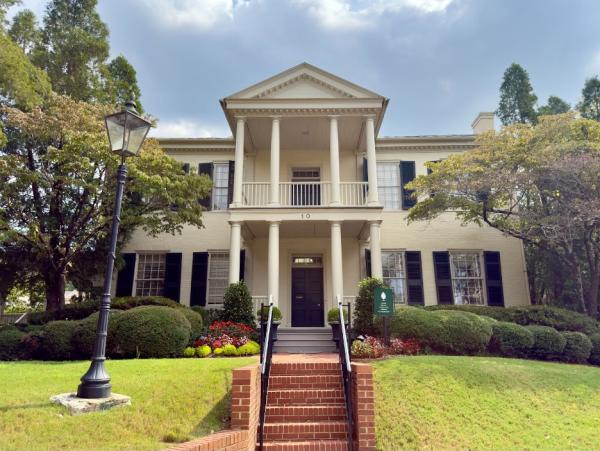
Cedarhurst Mansion
Tucked inside a quiet gated subdivision off Drake Avenue in Huntsville, Alabama, Cedarhurst Mansion doesn't announce itself the way haunted places often do. There are no rusted gates, no crumbling facades, no dramatic hilltop silhouette. What stands instead is a handsome two-story Federal-style structure built in 1823, its fifteen-inch-thick brick walls still solid after two centuries, now serving as a clubhouse for the surrounding residential community. It is a place that has aged gracefully on the outside while carrying, on the inside, one of the most persistently retold ghost stories in the entire state of Alabama. Stephen Ewing built Cedarhurst shortly after Alabama achieved statehood, making it one of the earliest substantial private residences in Huntsville. The Ewing family established themselves as prominent figures in the growing city, and the mansion reflected their standing — a well-proportioned, carefully constructed home in a region still finding its footing. By the 1820s and 1830s, Huntsville was developing rapidly, and properties like Cedarhurst represented the aspirations of its merchant and planter class. Ewing himself met an untimely end and did not enjoy his estate for long, leaving the mansion to pass through family hands. It was through those family connections that the defining event of Cedarhurst's history arrived. In 1837, a young woman named Sally Carter came to visit her sister Mary Ewing at the mansion. Sally was fifteen years old, just three weeks shy of her sixteenth birthday, when an unexpected illness overtook her during the stay. She became bedridden not long after arriving and died at Cedarhurst on November 28, 1837. She was buried on the property in the family cemetery plot, her grave marked with a stone that bore an epitaph reflecting the religious sensibilities of the era. The loss of a young woman in a household is not an uncommon tragedy for the antebellum South, but Sally Carter's story did not end with her burial. For decades, the grave sat quietly on the estate. The legend didn't fully ignite until 1919, when a seventeen-year-old boy from Dothan, Alabama, was visiting the mansion with his family and sleeping in the room that had once been Sally's. During a violent storm that night, he experienced what he described as a dream so vivid it barely felt like sleep. A tall girl with dark hair appeared before him and pleaded with him to help her — the wind had knocked her tombstone over, and she needed it set right. When he woke and told his family, they dismissed it as nothing more than a dream brought on by the weather. But the boy felt compelled enough to walk to the family cemetery and check. Sally Carter's headstone was face down in the grass. He returned to Dothan and, by most accounts, never came back to Huntsville again. That story became the foundation of a local legend that has only grown in the century since. Sally Carter became Huntsville's most famous ghost — a gentle, melancholy presence rather than a menacing one. Reports describe her spirit watching over children as they sleep, a behavior that tracks with the nature of her appearance in the 1919 account. Visitors and residents have described seeing a figure moving through the halls and across the grounds outside, always described as a young woman, always unhurried. Disembodied footsteps have been reported in empty corridors. Voices have been heard with no source. Electrical devices malfunction without explanation. Furniture has reportedly shifted position on its own. The cemetery itself became a focal point of curiosity for generations of Huntsville teenagers and paranormal enthusiasts, which eventually caused significant problems for the property. Repeated vandalism of Sally's grave led the family to make a difficult decision in 1982, when development of the surrounding subdivision began — they had her remains, along with others in the family plot, exhumed and relocated to Maple Hill Cemetery. The new location was never publicly disclosed. The vandalism stopped, but the sightings did not. Sally's presence, according to those who report it, seems tied to the house itself rather than to any grave. There is ongoing debate about the historical verifiability of Sally Carter's existence. Some researchers have found no official death records, birth records, or burial records under her name, pointing to this absence as evidence that the story is folklore rather than fact. Others note that record-keeping in rural Alabama in the 1830s was inconsistent at best, and that unmarked or poorly documented graves at Maple Hill are not unusual for that period. The epitaph on her original stone has been quoted in historical accounts, suggesting something physical once existed. Whether Sally Carter was a real person who died young or a legend that crystallized around a stone and a storm, the story has outlasted nearly everything else about the mansion's history. Today Cedarhurst is not open to the public. The gated community surrounding it means access is restricted to residents and their guests, and organized paranormal investigations of the property are not a regular feature. The mansion endures as a private space carrying a very public legend — a building that looks entirely ordinary from the outside and holds, according to the people who have spent time inside it, something that ordinary buildings do not. Whether that something is the restless spirit of a teenage girl who loved the estate enough to stay, or simply the accumulated weight of a story told for nearly two centuries, Cedarhurst Mansion remains one of the most quietly compelling haunted locations in the American South.
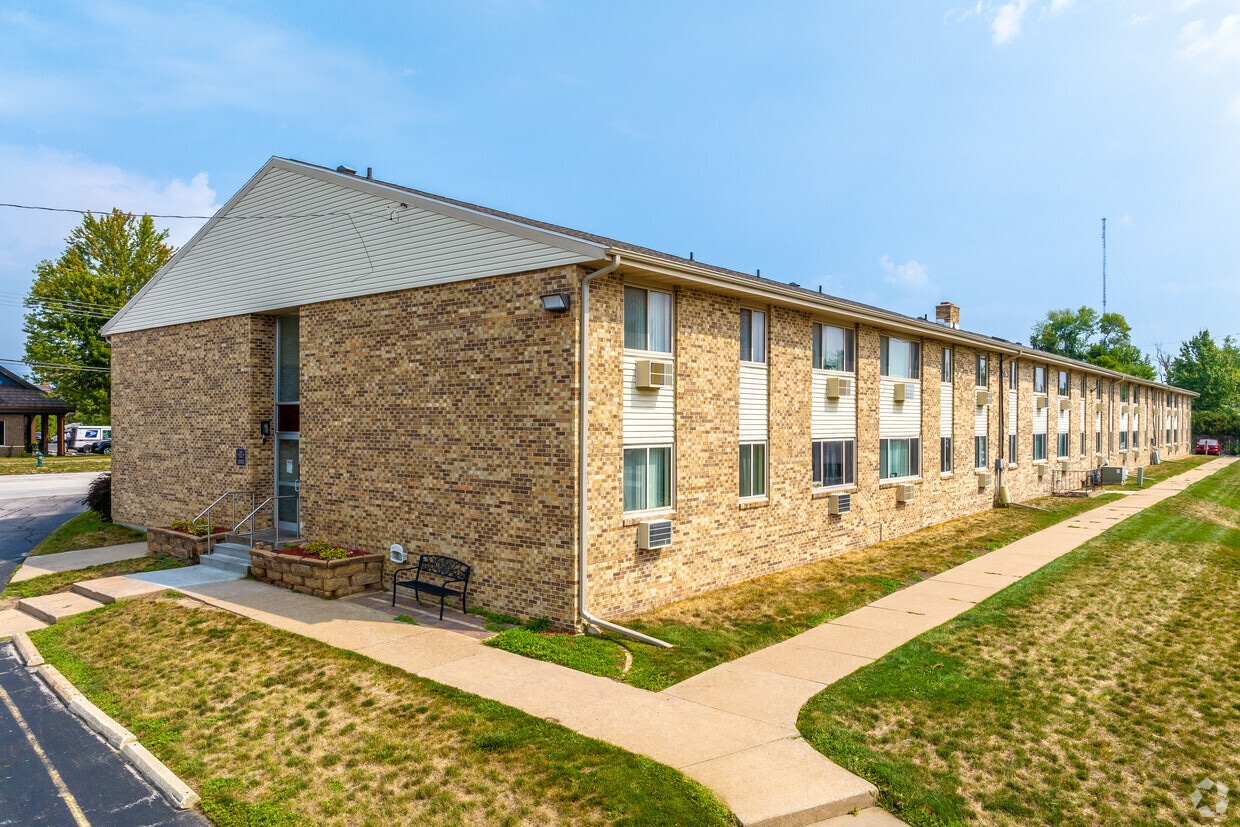
Wildwood Apartments
Situated on Old Marion Road on the northeast side of Cedar Rapids, Iowa, Wildwood Apartments occupies a stretch of flat suburban ground between the city proper and the neighboring community of Marion. The complex sits adjacent to Elmcrest Country Club, a private golf course that has operated since the 1930s, and within the boundaries of the Kenwood Park neighborhood—a former independent town incorporated in 1886 and annexed into Cedar Rapids in the late 1920s. The area around Old Marion Road developed steadily through the mid-twentieth century as Cedar Rapids expanded outward from its downtown core along the Cedar River, filling in residential tracts between the older neighborhoods closer to the business district and the farmland that once separated the two cities. Wildwood Apartments was built in 1968, part of the postwar suburban apartment boom that reshaped the edges of midsize Midwestern cities during the 1960s and 1970s. The complex is a modest two-story affair comprising 128 units spread across multiple buildings, with a pool, clubhouse, and gazebo on the grounds. It was and remains workforce housing—affordable, functional, unremarkable in architecture, and designed for a transient population of renters rather than long-term homeowners. The property has been under professional management since at least the mid-1980s, and it continues to operate as an active rental community today. Nothing in the building's construction history or documented record points to a dramatic origin story. There is no institutional past, no former use as a hospital or asylum, no connection to a notable disaster. Wildwood Apartments is, by all outward appearances, an ordinary apartment complex in an ordinary part of town. That ordinariness is part of what makes the haunting legend attached to it notable—not for its scale, but for how persistently it has circulated despite limited evidence. The story that appears on multiple paranormal listing sites and local haunted-location databases follows a consistent outline. According to the account, a convicted child molester once lived in one of the buildings at Wildwood Apartments. At some point—usually described as roughly twenty years prior to the earliest online postings, which would place the alleged event somewhere around the 1990s—one of the victims' parents confronted the man and beat him to death. His body, according to the story, was not discovered for three days. In the years since, residents and visitors have reportedly heard what they describe as the cries of children echoing through the apartment hallways late at night, particularly in the building associated with the alleged killing. The legend has no verifiable anchor in public records. At least one former resident who claims to have investigated the matter through official channels has stated flatly that no documentation supports the story—no police reports of a fatal beating matching the description, no corroborating court records, no news coverage. Others who have lived at the complex describe nothing more unusual than the typical sounds of a densely occupied apartment building with thin walls: footsteps overhead, voices carrying through corridors, the ambient noise of families in close quarters. One former tenant, a college student who lived in a ground-floor unit, reported a different kind of unsettling experience altogether—old copies of the Saturday Evening Post appearing under the apartment door at irregular intervals, with no one in the building claiming responsibility. The tenant found it strange enough to move out, though the incident was never connected to the broader haunting legend. Skeptics, and there are many even within the complex's own resident population, point to the obvious: the building's thin walls and long interior hallways create an acoustic environment where sounds travel easily and are easily misidentified. An aging apartment complex occupied largely by lower-income tenants will inevitably produce nighttime noise—arguments, crying children, doors slamming—that can take on a different character when filtered through a preexisting ghost story. The legend itself has the hallmarks of an urban myth that attaches to affordable housing complexes in many American cities: a violent crime, a vague timeframe, no named individuals, and a haunting that conveniently resists verification. No formal paranormal investigations of Wildwood Apartments appear in any published record. The location does not feature on ghost tour circuits, has not been the subject of any known documentary or television coverage, and draws no organized visitation from paranormal research teams. Its presence on haunted-location databases is driven entirely by user submissions repeating the same core legend, sometimes with minor variations in detail. Wildwood Apartments remains a fully occupied, actively managed rental property. It operates under the name Wildwood Pool Apartments, managed by One Property Management Iowa, and continues to offer one-, two-, and three-bedroom units to tenants in the Cedar Rapids area. The pool still opens in summer. The clubhouse still hosts residents. The hallways still carry sound the way hallways in buildings like this always have—faithfully, indiscriminately, and sometimes in ways that make a person pause and listen a moment longer than they intended.

Masonic Building – Gumbo’s North
The Square, located in an unspecified downtown area of a mid-sized American city, represents a distinctive architectural and commercial landmark that likely developed during the late nineteenth or early twentieth century when downtown squares served as the civic, commercial, and social heart of American communities. The building associated with this haunting appears to have functioned as a multipurpose structure, containing retail spaces, dining establishments, and office areas that would have served the surrounding downtown business district. Historic downtown squares in American cities typically feature distinctive architecture, often Victorian or early Modern styles, with varied interior configurations adapted to different commercial purposes over the course of decades. The Square building shows evidence of substantial alterations and renovations across its lifetime, including modernization of mechanical systems, conversion of interior spaces to accommodate changing commercial needs, and modifications to facades and entryways reflecting evolving architectural tastes. The existence of a bar room within the structure suggests it operated, at least during certain historical periods, as an entertainment and social gathering venue where customers congregated for alcoholic beverages and social interaction. The presence of a staircase connecting multiple floors indicates vertical organization of space, a common feature in urban commercial buildings designed to maximize the utilization of limited downtown real estate. The historical context of The Square building suggests it likely witnessed significant cultural and social changes across the decades or even centuries of its operation, experiencing economic prosperity during boom periods and financial challenges during economic downturns, shifting demographics, and changes in urban commercial patterns. The structure may have been part of a deliberate urban renewal or historic preservation initiative in recent decades, as many American downtown squares have experienced revitalization efforts aimed at restoring vitality to aging commercial districts. The presence of documented Masonic lodge connections in the historical accounts of similar haunted downtown square buildings suggests that The Square may have served fraternal organizations or maintained connections to Masonic philosophical traditions that were influential in American civic life during the nineteenth and twentieth centuries. The physical layout of the building, with its bar room at ground level and upper floor spaces accessible via the prominent staircase, reflects spatial hierarchies common in period commercial architecture, with public commercial spaces on lower floors and more private or specialized spaces occupying upper stories. The paranormal phenomena documented at The Square present a classic pattern of residual haunting characterized by repeated, autonomous physical manifestations that do not appear to indicate conscious, intentional interaction from the haunting entity. The most commonly reported manifestations involve doors opening and closing of their own volition, independent of wind currents or obvious mechanical explanations, occurring with particular frequency in the bar room and staircase areas. These door movements appear to follow no consistent pattern in terms of timing or specific doors affected, suggesting they may represent recurring imprints of daily activities from periods when the building experienced higher occupancy and more frequent use. Cold spots, areas of localized temperature reduction that cannot be attributed to mechanical cooling systems or air circulation patterns, are reported throughout the building, with particular concentration in the bar room and second floor areas. Lights flickering or extinguishing without apparent electrical malfunction have been documented multiple times, consistent with electromagnetic disturbances that paranormal researchers often associate with spiritual manifestations and energy fluctuations. The most compelling evidence of intentional haunting manifestations involves the apparition of a spectral female figure observed at or near the staircase, described as dressed in period clothing and appearing somewhat translucent or indistinct. The presence of this ghostly lady suggests an entity with a specific identity and historical connection to the building, though her specific identity and the circumstances of her demise remain unclear based on available documentation. The Square continues to function as a commercial and/or entertainment venue in the contemporary era, though the nature and vitality of downtown commercial districts have changed substantially since the building's construction. Modern investigators visiting the location have documented paranormal phenomena using contemporary investigative equipment, including electromagnetic field meters, thermal imaging cameras, and audio recording devices designed to capture disembodied voices or unexplained sounds. The documented physical manifestations suggest a building rich with spiritual history and layered with impressions of past inhabitants and visitors. Historic preservation efforts may have contributed to increased awareness of and interest in the paranormal history of The Square, as communities across America increasingly recognize haunted historic buildings as valuable resources for cultural tourism and historical education. The building's location on a downtown square likely positioned it as a focal point for community activity across generations, potentially creating the accumulated psychological and emotional energy that some paranormal theorists believe contributes to haunting manifestations. The Square remains accessible for investigation and visitation, contributing to ongoing documentation of paranormal phenomena in American historic buildings and continuing to intrigue researchers and enthusiasts fascinated by the intersection of architectural history, urban development, and the unexplained manifestations that persist in locations marked by significant human activity and historical tragedy.
Old Spaghetti Factory
The Old Spaghetti Factory in Vancouver stands as a testament to the city's industrial heritage, occupying a heritage building in the historic Gastown district that reflects the commercial vitality of late nineteenth-century British Columbia. The restaurant has become renowned not only for its classic Italian cuisine but for the persistent paranormal phenomena that visitors and staff have documented over decades of operation. The building's architectural significance derives from its role in the region's mercantile expansion, and within its spaces, particularly the historic trolley car positioned inside the restaurant, evidence of otherworldly presence has accumulated through countless eyewitness accounts and documented supernatural activity. The hauntings at the Old Spaghetti Factory have been attributed to four distinct entities whose histories remain intertwined with the building itself. The most visible of these is a full-uniformed tram conductor who regularly manifests within the vintage trolley car displayed as a centerpiece of the establishment. Witnesses have described observing this spectral figure in period-appropriate attire, seemingly operating the ancient vehicle with an otherworldly dedication that transcends the boundaries between life and death. Staff members report the figure appearing with such clarity and consistency that questions arise regarding whether the distinction between historical artifact and supernatural presence maintains its conventional meaning in this location. A phenomenon referred to as the Little Red Man, also identified through paranormal investigation as an entity known as Edward, demonstrates aggressive poltergeist-like behavior focused primarily on the restaurant's tableware. Multiple patrons have reported witnessing cutlery bent impossibly on tables without any physical intervention, suggesting a malevolent or at least mischievous presence that seeks attention through manipulation of mundane objects. The bending of silverware has become so characteristic of the location that some servers have begun documenting these incidents as part of the restaurant's unwritten paranormal record. Additionally, a young girl carrying a balloon has been sighted by numerous guests, particularly in the back restaurant areas, suggesting the presence of a child spirit whose tragic history remains largely unknown. Paranormal researchers investigating the Old Spaghetti Factory have theorized that the hauntings stem from a vortex—a point of concentrated supernatural energy—that may have established itself in the location over the passage of decades or centuries. This vortex appears to serve as an anchor for spirits whose attachments to the building's historical artifacts, particularly the trolley car and various period objects, have prevented their peaceful transition to the afterlife. Visitors to the restaurant frequently report overwhelming sensations of being watched, sudden temperature fluctuations, the inexplicable movement of objects, and encounters with transparent or semi-transparent figures that vanish upon approach. The restaurant's current management has come to accept and even embrace these phenomena as part of the establishment's unique identity and appeal. Today, the Old Spaghetti Factory continues to operate as a functioning restaurant while simultaneously serving as an informal paranormal investigation site, attracting both culinary enthusiasts and ghost hunters seeking documented hauntings. The coexistence of the supernatural with the ordinary has normalized the paranormal experience to such an extent that the restaurant's paranormal reputation has become one of its primary distinguishing characteristics. Staff members speak matter-of-factly about encounters with the spirits, and visitors often arrive specifically to attempt their own paranormal experiences. The building remains an active site where the boundaries between the historical, the commercial, and the supernatural intersect in ways that continue to generate genuine documentation of unexplained phenomena.
Riverview Apartments #205
The Riverview Mansion Hotel, located in the historic Illinois community with connections to Golconda and the Mississippi River valley, stands as a testament to nineteenth-century architectural ambition and economic prosperity rooted in riverine commerce. The mansion was constructed during an era when river towns flourished as centers of trade and cultural exchange, with impressive residences marking wealth and social status within developing communities. The building features characteristic period architecture including grand entrances, multiple stories designed to command river valley views, and interior spaces appointed with decorative and functional elements of the era. The property has been converted to hotel use, allowing visitors to experience the historical environment while the weight of past events persists within its walls. Golconda witnessed the full arc of frontier settlement and development, from indigenous presence through exploration, settlement, and commercial expansion. The Mississippi River served as a conduit for disease, commerce, migration, and cultural exchange, bringing people from distant regions into close contact. The Riverview Mansion Hotel, positioned to overlook and benefit from river access, was intimately connected to the human movement characterizing life in such river towns throughout the nineteenth and early twentieth centuries. This constant flow of humanity created both prosperity and vulnerability, particularly during epidemic periods when communities confronted unprecedented mortality. The primary entity identified within the hotel is Miss Lucy Morse, whose historical presence and manner of death are imperfectly understood but whose spiritual presence has been consistently reported by guests and staff over extended periods. Miss Morse's apparition appears in Room Number Eight, the epicenter of paranormal activity, though her presence may extend to adjacent areas. A second male spirit also inhabits the hotel, whose identity remains more obscure but whose presence is felt distinctly enough that witnesses often report sensing two separate entities. The relationship between these spirits remains unclear, whether they were contemporaries or individuals who died at different times and became bound to the location. Guests staying in Room Eight and nearby areas report experiences consistent with active haunting phenomena, including apparition sightings, disembodied footsteps in corridors, unexplained temperature fluctuations, and an overwhelming sense of presence that many describe as oppressive or melancholic. The specific concentration in Room Eight suggests a particularly significant event or tragedy occurred there, creating a location where the boundary between living and spirit worlds becomes temporarily permeable. Staff members have documented patterns suggesting activity responds to environmental factors or temporal cycles, indicating spirits may be enacting or responding to events meaningful during their physical existence. The Riverview Mansion Hotel continues accepting guests, with management aware of paranormal phenomena. The haunting has become integrated into the property's identity, with visitors specifically seeking Room Eight to experience or document activity firsthand. Paranormal investigators have visited seeking to document the phenomena, and online databases list the hotel among significant American haunted locations. The identity of Miss Morse, circumstances of her death, and the relationship between her spirit and the unnamed male presence remain subjects of ongoing investigation.
Clapp Memorial Library
The Clapp Memorial Library stands in Belchertown, Massachusetts as a cherished community institution serving generations of residents through its collection of books, resources, and cultural programming. Constructed in the late nineteenth or early twentieth century through philanthropic donation, the library was named in honor of the Clapp family, prominent members of the Belchertown community whose wealth and civic commitment enabled the creation of this enduring cultural institution. The building reflects the architectural standards and aesthetic ideals of public library construction during the Progressive Era, a period when communities across America recognized that public libraries served essential educational and social functions. The structure contains multiple levels with a main reading area, circulation desk, and administrative offices, including secondary spaces necessary to support library operations. The staircase connecting these multiple levels serves as a central architectural feature, providing access to upper-level collections and creating a focal point within the interior design. Throughout its long operational history, the Clapp Memorial Library served as a vital community resource, staffed by dedicated librarians who devoted their professional lives to serving the informational and recreational reading needs of Belchertown residents. Lydia Barton, a particularly notable figure in the library's history, served as librarian for an extended period and devoted her career to the systematic organization, preservation, and cataloging of the library's collections. Barton's meticulous work and dedication to her profession left an indelible mark on the library's operations and the quality of service provided to patrons. Her intimate knowledge of the collection and her commitment to the library's mission created a personal investment in the institution that transcended the merely professional. Following Lydia Barton's death after many decades of devoted service, unexplained phenomena began to intensify within the building, suggesting that her strong emotional connection to the institution may have resulted in a persistent spiritual presence. Paranormal research teams, including the investigative program known as Ghost Hunters, documented remarkable phenomena during formal investigations of the Clapp Memorial Library, providing televised evidence and detailed analysis of the paranormal activity. Investigators recorded full-body apparitions materializing on the library's main staircase, spectral figures visible with sufficient clarity that observers could identify period clothing and physical features suggesting a woman from an earlier era. The library's shelves displayed autonomous activity, with books spontaneously sliding out from their positions and subsequently returning to their original positions, suggesting intelligent control over the physical displacement. Cold spots manifested in specific locations within the library, particularly concentrated in areas containing the library's most valuable or historically significant collections, areas where Lydia Barton had devoted particular attention during her curatorial work. Creepy noises emanated from empty areas, sounds interpreted as footsteps, rustling of papers, and subtle movements of someone navigating the corridors. The Clapp Memorial Library continues to operate as a vital community resource, providing library services while simultaneously functioning as one of Massachusetts' most extensively documented haunted libraries. The library's staff and patrons have adapted to the ongoing paranormal activity as an inherent aspect of the building's identity. Paranormal investigation teams continue to be permitted occasional access to conduct documented investigations, and the evidence compiled has contributed to the library's recognition as a location featuring some of the most compelling paranormal phenomena in the northeastern United States. Lydia Barton's spirit appears to maintain an active and purposeful presence, continuing the commitment to the library that defined her entire professional life, as if her dedication transcended physical death.
Romeo Town Hall
Romeo Town Hall stands as the civic center and administrative headquarters of the small Colorado community of Romeo, a mountain or foothill settlement representative of the countless modest municipalities comprising rural and small-town Colorado. The town hall building serves as the physical embodiment of municipal governance, housing the administrative offices, record-keeping facilities, meeting spaces, and operational infrastructure required for local government functions. Constructed according to architectural standards contemporary to its period of development, the town hall reflects the priorities and resources available to a small Colorado community requiring a dedicated municipal facility. The building's position as the seat of government endows it with symbolic significance beyond practical functions, representing civic authority, public service, and the institutional framework through which residents participate in collective decision-making and governance. The structure has served the community through multiple generations of municipal leadership, witnessing countless public meetings and administrative decisions. Throughout its operational history, Romeo Town Hall functioned as the administrative center for municipal operations, housing the offices of the mayor, town council, and municipal department heads required to manage municipal services. The building became the setting where community members gathered for town meetings, public hearings, and formal proceedings through which residents engaged with municipal governance. Planning sessions, budget discussions, zoning decisions, and various procedural requirements of municipal administration took place within the building's meeting rooms and offices. Municipal records, including property documents, permit files, and licenses, were maintained within the town hall's record-keeping facilities. The building became familiar to residents and municipal employees who conducted business there, recognized as the physical location where municipal authority was exercised. Despite its apparently routine civic function and absence of documented historical tragedy specifically connected to the building, Romeo Town Hall became known within paranormal research communities as a location associated with persistent and well-documented paranormal phenomena. The nature of the paranormal activity remains somewhat unclear in available documentation, with reports describing a mysterious presence or unidentified paranormal entity rather than specific apparitions or clearly identified spirits. The Friends of City Hall, a community organization dedicated to the preservation and historical documentation of the town hall, documented and reported the presence of paranormal activity within the building. The specific manifestations of the paranormal presence and the characteristics of the entity remain subject to ongoing investigation and paranormal research. The paranormal activity does not conform to typical haunting patterns associated with violent deaths or traumatic events that characterize many documented haunted locations. Rather, the phenomena suggest the possible presence of a spirit or spiritual presence that became attached to the location for reasons remaining unclear or inadequately documented. The mysterious presence may represent an individual with significant connection to the building's history, a person who died while conducting municipal business, or an entity drawn to the location for unknown reasons. The lack of clear historical documentation regarding the identity and circumstances of the haunting may reflect either the absence of dramatic events at the location or incomplete documentation of the town hall's full history. Contemporarily, Romeo Town Hall continues serving its function as a municipal administrative facility while functioning as a documented paranormal location within Colorado's inventory of haunted sites. The building maintains the respect afforded to public buildings serving ongoing civic functions while attracting paranormal researchers and enthusiasts interested in investigating the phenomena characterizing the location. The Friends of City Hall continues maintaining historical records and facilitating access for paranormal researchers, contributing to the ongoing investigation of the mysterious presence. Romeo Town Hall represents a category of haunted location where paranormal phenomena manifest within community institutions, suggesting that haunting activity is not confined to locations marked by violence or tragedy but may occur in locations where individuals invest emotional energy and develop meaningful connections to the physical space.
Lebanon Valley College
Lebanon Valley College, situated in Annville, Pennsylvania, occupies a picturesque campus that has served generations of students pursuing higher education in the heart of the Pennsylvania landscape. The institution's Gothic Revival architecture and traditional collegiate aesthetic create an atmosphere of academic tradition and institutional continuity. Among the college's residential and academic buildings, Mary Capp Green Hall stands as a structure of particular significance, both architecturally and historically. The building was named to honor someone meaningful to the institution's legacy, and it has served multiple roles throughout its existence, housing student residences, academic offices, and various campus functions. The hallways of this facility have witnessed countless footsteps of students and faculty moving between classes and living spaces, creating an atmosphere rich with human activity and interaction. The building's third floor holds particular significance in the paranormal phenomena associated with Lebanon Valley College, with experiences concentrated in this upper section of the residential hall. During the college's history, a young girl met her death in circumstances involving an automobile accident in proximity to the Mary Capp Green Hall or on the college's campus grounds. The child, whose exact age and full identity have been obscured by the passage of years and the natural tendency to distance ourselves from tragic events, died at an age when life should have been filled with possibility and growth. The death occurred in an era when traffic safety consciousness was not as developed as in contemporary times, and the collision between vehicle and pedestrian resulted in fatal injuries. The child's final moments likely involved fear, pain, and the sudden catastrophic interruption of a young life. The traumatic nature of her death, combined with the innocence and vulnerability of childhood, created conditions that many paranormal researchers suggest are conducive to spiritual manifestations. The impact of her death extended beyond her immediate family to affect the broader college community, particularly those students and staff members who witnessed the accident or knew the child or her family connections. Over the decades following her death, the ghost of the young girl has become one of Lebanon Valley College's most recognizable and well-documented paranormal presences. Her manifestations center primarily on Mary Capp Green Hall, particularly the third floor and the hallway spaces where students traverse between dormitory rooms and common areas. The most frequently reported paranormal phenomena involve auditory manifestations consistent with a child's presence and activities. Witnesses have reported hearing the distinctive sound of giggling emanating from empty hallways, with the quality of the sound suggesting a young girl finding amusement in activities or circumstances unknown to living observers. The sound of a bouncing ball echoes through the third-floor hallway with remarkable consistency, as if the ghost child continues to engage in the simple play and recreation that would have been normal for her in life. These auditory phenomena are particularly pronounced during evening hours and times of reduced activity, when the college community is focused elsewhere and the hallways of the dormitory become quiet and less populated. Students and resident assistants have grown accustomed to these manifestations, understanding them as evidence of the girl's continued presence within the building. In the present day, Lebanon Valley College's administration acknowledges the paranormal phenomena associated with Mary Capp Green Hall, and the haunting has become an established part of the college's institutional identity and folklore. New residents moving into the dormitory are often informed about the ghost girl by returning students, creating a sense of shared knowledge and collective cultural understanding about the space they inhabit. The phenomenon has been treated seriously enough that the college has maintained documentation and awareness of the manifestations, and ghost tours of the campus frequently include Mary Capp Green Hall as a featured location due to the consistency and recognizability of the haunting. The girl's spirit appears content in her haunting, engaging in innocent forms of play and interaction rather than malevolent or threatening manifestations. Her continued presence serves as a poignant reminder of tragedy cut short and the ways that innocent lives, however briefly lived, can leave indelible marks on the physical and spiritual environments they inhabited. The ghost of the girl who died in the automobile accident has become an permanent resident of Lebanon Valley College, forever young and forever engaged in the play and joy that death interrupted so abruptly.
Old Captain’s Studio
The Old Captain's Studio occupies a space in Lincoln, Nebraska with historical associations to maritime commerce, riverine transportation, and the cultural heritage of individuals connected to navigational expertise and seafaring traditions. Lincoln's geographical location along the Platte River and its historical position within broader North American river commerce networks created direct connections to boat captains, steamboat operators, and maritime professionals who brought specialized expertise from America's riverine transportation networks into Nebraska communities and inland settlements. The studio structure itself represents a creative and professional workspace where individuals engaged in artistic pursuits, technical documentation, navigation charting, or other specialized occupations pursued their distinct vocations within a dedicated interior environment designed for focused work. The building's physical positioning and architectural character would have provided natural light, work surfaces, and quiet environment suitable for professional endeavor. The captain who became associated with the paranormal activity at the studio represented the maritime professional class that brought specialized knowledge, experiential expertise, and distinct cultural identity related to river travel and boat operation into inland American communities removed from maritime coasts. River captains during the nineteenth and early twentieth centuries occupied positions of considerable responsibility, professional autonomy, and leadership authority, commanding vessels and managing crews while navigating the complex and unpredictable challenges presented by natural waterways subject to seasonal variations, dangerous currents, and environmental hazards. The captain's professional identity and personal character likely became deeply intertwined with the studio space where he pursued creative work, navigation planning, or professional documentation, establishing powerful emotional attachments and possibly spiritual connections to the physical location that may have endured beyond his earthly death. The studio represented professional autonomy and creative engagement that likely defined significant aspects of his personal identity. Paranormal manifestations at the Old Captain's Studio have centered on clearly documented apparition sightings of what reliable witnesses have consistently described as an elderly seafaring professional, recognizable by distinctive period maritime clothing and bearing entirely consistent with nineteenth-century river captains and boat operators. The apparition has been documented moving deliberately through the upper floor studio spaces where the captain presumably spent significant concentrated occupational time during his living years, suggesting familiarity with the space's layout and geography. The entity exhibits characteristics entirely consistent with intelligent haunting activity and conscious manifestation, including responsive behaviors suggesting awareness of living visitors, deliberate movements through familiar spaces, and apparent strong attachment to the studio location and its associated memories. The manifestation has inspired considerable interest among paranormal researchers studying cases of localized hauntings in which deceased individuals appear to remain spiritually present in spaces where they experienced significant life events or profound professional engagement. Paranormal investigation groups operating throughout Lincoln have documented the Old Captain's Studio as a significant location within comprehensive surveys of the city's haunted locations, with multiple research teams confirming consistent and repeated reports of apparition sightings and paranormal activity spanning extended time periods and investigation sessions. Professional ghost tour guides have incorporated the studio into walking tours presenting Lincoln's paranormal history and heritage, educating visitors about the documented presence of a seafaring spirit apparently devoted to continued occupation and engagement with the studio space where he maintained his creative or professional work during his living existence. The apparition has become widely recognized within Lincoln's paranormal research community as one of the clearest and most reliable examples of a specific historical individual maintaining spiritual presence and demonstrating apparent consciousness and intentional behavior from beyond death, effectively preserving the professional identity and professional character of a river captain whose earthly career may have been cut short or whose professional passions proved too compelling to release even after bodily death concluded his earthly physical occupancy.
Club Charles
Club Charles stands as a historic Art Deco bar located in Baltimore, Maryland, established in 1951 as an establishment dedicated to the appreciation of fine spirits, sophisticated atmosphere, and entertainment for its patrons seeking a refined social experience. The bar represents the architectural and design aesthetics of the Art Deco movement, a style that emphasizes geometric forms, streamlined design, and luxurious materials characteristic of the mid-twentieth century modern aesthetic that emerged as a reaction to earlier Victorian and classical styles. Club Charles was established during the post-World War II era when Baltimore was experiencing significant cultural and commercial development, with the city attracting artists, musicians, and intellectuals seeking venues for creative expression and social gathering within an urban environment. The bar's interior design and layout reflect the refined tastes of its founders and the expectations of its clientele, creating an environment conducive to conversation, entertainment, and the appreciation of quality beverages served by knowledgeable bartenders. The establishment has maintained its historical character and Art Deco architectural integrity throughout its decades of operation, preserving the aesthetic qualities that distinguished the bar from its inception and making it a valuable architectural and cultural landmark within Baltimore. The building itself, with its distinctive design and cultural significance, has become an important landmark within Baltimore's entertainment district and a venue of historical importance to the city's cultural heritage and entertainment history. The paranormal reputation of Club Charles centers on the presence of a ghost known as Frenchie, the spirit of Edouard Andre Neyt, a French immigrant who served as a dedicated waiter at the establishment for many years during his lifetime. Edouard Andre Neyt, known as Frenchie, was born near Paris in 1925 and immigrated to the United States, eventually settling in Baltimore where he obtained employment at Club Charles and became an integral part of the bar's operations and culture. Frenchie lived in an apartment above the bar, creating an intimate connection between his residence and his workplace that may have strengthened his spiritual attachment to the location and made him reluctant to depart even after his physical death. After his death, Frenchie's ghost has manifested within Club Charles with remarkable consistency and specificity, engaging in paranormal activities that suggest not merely a residual haunting but rather an intelligent spirit capable of deliberate interaction with the living world and its residents. Frenchie has been observed by staff and patrons as an apparition dressed in waiter uniform, appearing in the bar area and other interior spaces, maintaining even in death the professional identity that defined much of his living existence and work at the establishment. The apparition has been described with sufficient consistency and detail by multiple independent witnesses to constitute compelling evidence of genuine paranormal presence rather than misinterpretation or imagination. The paranormal activities attributed to Frenchie at Club Charles extend beyond mere visual manifestations to include deliberate pranks and interactions suggesting the ghost's continued engagement with the living world and the bar's operations. Staff members and patrons have reported experiencing their hair being mussed or touched by invisible hands, a playful form of paranormal interaction consistent with Frenchie's documented personality as a friendly and personable individual who enjoyed interacting with patrons and colleagues. Bottles have been reported rearranged on shelves and behind the bar counter, moved from their established positions by apparent invisible hands, suggesting Frenchie may be engaged in maintaining or reorganizing the bar's inventory according to his preferences or standards established during his employment. The beer taps have been observed activating independently, dispensing beverages without human activation, paranormal phenomena suggesting Frenchie maintains interest in the bar's operations and the service of its patrons even in his spectral form. Phone calls have been received on the house telephone line from apparent internal calls, with unclear voices on the other end of the line, suggesting Frenchie may be attempting to communicate through technological means. Club Charles has achieved recognition as a prominently haunted location within Baltimore's paranormal landscape, with Frenchie's ghost becoming celebrated as one of the city's most well-documented and personable paranormal entities deserving of serious paranormal research attention. The bar's documentation of ghost stories has been recognized through media attention, including a television episode of the Haunted History series that featured the haunting of Club Charles and Frenchie's paranormal manifestations for national audiences interested in paranormal phenomena. The establishment's willingness to embrace its haunted reputation has made Club Charles a destination for paranormal enthusiasts and ghost hunters interested in investigating intelligent hauntings occurring in contemporary commercial spaces and urban environments. Frenchie's continued presence within the bar he served for many years during his living life represents a particularly touching paranormal phenomenon, suggesting that death did not sever the connection between the dedicated employee and the establishment he helped create and maintain through his service.
Jackson Square Apartments
Jackson Square Apartments represented a multi-story residential complex located in Amarillo, Texas, a city that developed as a commercial and cultural center on the Texas Panhandle. The apartment building was constructed during the mid-twentieth century when multi-unit residential developments emerged as increasingly common approaches to urban housing, reflecting national trends toward denser residential configurations in American cities. The structure's architectural style and scale reflected the construction methods and aesthetic preferences of that period, with multiple floors housing individual apartment units designed to accommodate diverse residential populations. The building's location within Amarillo's urban landscape positioned it as a residential option for workers, families, and others seeking affordable urban housing. The complex's operation as a multi-family residence meant that it housed a constantly changing population of residents, each bringing their own stories, struggles, and personal circumstances to the shared environment. Jackson Square Apartments' history encompasses decades of residential use during which numerous individuals and families occupied its units. The building witnessed ordinary residential life alongside more dramatic human experiences including interpersonal conflicts, economic hardship, and personal crises characteristic of urban apartment living. The concentration of multiple residents within a relatively confined space created an environment where human emotions were intensified and interpersonal tensions could escalate toward violence. The building's operation during a period marked by significant social change and urban challenges positioned it at the intersection of broader societal forces affecting residential communities. The accumulation of human experience within its walls created a dense accumulation of emotional energy and significant historical events that would ultimately manifest as extraordinary paranormal phenomena. The violent history of Jackson Square Apartments manifests in reported paranormal phenomena characterized by the apparitions of murder victims and other individuals who experienced traumatic deaths within the building. The second floor is associated with red lights and bloodstains, suggesting locations of violent incidents and bloodshed. A menacing apparition identified as a stabbing victim manifests with apparent anger and hostility, indicating traumatic violent death and lingering emotional disturbance. A pregnant woman apparition is reported to fall from upper floors, suggesting a death occurring from falling or suicide at the location. A male figure appears hanging from a noose, indicating a death by self-inflicted hanging occurring somewhere within the building. These distinct apparitions suggest multiple separate violent incidents, including at least one murder, at least one suicide, and deaths resulting from other causes. The concentration of violent deaths within the relatively confined space of an apartment complex indicates either a historical event encompassing multiple deaths or an accumulation of separate violent incidents occurring at different times within the building's history. The paranormal phenomena at Jackson Square Apartments intensified following the building's demolition, with reports of invisible hands and demonic entities manifesting even after the physical structure's removal. The persistence of paranormal activity after demolition suggests that the spiritual imprints and consciousness entities associated with the violent deaths remain attached to the location itself rather than specifically to the building's physical structure. The manifestation of supposedly demonic entities following demolition may reflect the accumulation and concentration of negative spiritual energy generated by multiple violent deaths, or may indicate an escalation in paranormal activity resulting from the destruction of the physical space that previously contained the phenomena. The ongoing reports of paranormal activity at the site following demolition have maintained Jackson Square Apartments' prominence within Amarillo's paranormal landscape as a location where human violence left permanent spiritual consequences extending beyond the physical existence of the building itself. The building's eventual removal did not resolve the paranormal activity or bring peace to the spirits whose violent deaths occurred within its walls, indicating that the location itself carries an enduring spiritual burden that transcends the materiality of architectural structures.
First Line Apartments
Captain Blythers, now operating as the restaurant Sailor Jack's, stands in Benicia, California, embodying the maritime history of the Carquinez Strait region and port commerce during the nineteenth and twentieth centuries. Built to serve maritime trade, the structure reflects typical port-area architecture with utilitarian design. The building housed various commercial enterprises catering to sailors and port workers, and historical documentation indicates its association with a brothel operation that served transient maritime laborers. Female workers inhabited the spaces and conducted their trade within the structure, creating a concentrated population of women whose lives and deaths became intertwined with the building's spiritual presence. These women, whose names have largely been lost to historical record, represent a marginalized population whose existence was deemed socially necessary yet morally condemned, creating the emotional and psychological context in which paranormal phenomena are theoretically most likely to manifest. The tragedy and loss embedded in the building's commercial and social history may have contributed to the development of the reported supernatural phenomena that persist within the structure. The captain referenced in the establishment's original name, Captain Blyther, was a maritime figure whose presence became associated with the location, suggesting a personal connection to the building or the maritime enterprises conducted there. Paranormal researchers have documented consistent phenomena throughout the Captain Blythers structure, with reports clustering in the main bar area and restaurant sections where commercial activity would have been most concentrated. Witnesses describe the repeated appearance of a female apparition, suggesting the presence of one of the building's former female residents or workers. Cold spots appear spontaneously in specific locations, suggesting localized atmospheric disturbances consistent with paranormal manifestations. Objects exhibit inexplicable movement, including pictures jumping from walls, doors opening and closing without physical cause, lights activating and deactivating autonomously, and a margarita tipping over at the bar with no apparent physical explanation. The variety and intensity of reported phenomena suggest multiple sources of paranormal activity or a single entity capable of manipulating the physical environment in diverse ways. Today, Sailor Jack's operates as a restaurant and bar, serving the contemporary Benicia community while hosting paranormal investigators and visitors interested in the building's history and supernatural reputation. The establishment has incorporated its paranormal notoriety into marketing materials, acknowledging the unusual phenomena reported by staff and patrons. The building's location in historic downtown Benicia makes it a natural inclusion on paranormal and historical walking tours that explore the waterfront's complex heritage. The ongoing commercial operation ensures continued human presence and activity, which may sustain the conditions that produce the well-documented paranormal phenomena that have made Captain Blythers an established location in California's paranormal research community. Investigators and sensitive individuals continue to report experiences at the restaurant, contributing to the growing body of documentation about the phenomena that persist within the structure. The building remains a focal point for paranormal tourism in the Bay Area, with its reputation sustained by decades of consistent reporting and investigation.
Riddle House
Riddle House stands as one of the most thoroughly investigated and extensively documented haunted structures in Florida, its Edwardian architectural style and complex paranormal phenomena making it a cornerstone site in American paranormal history. Constructed in 1905, the residence was built during the period of rapid development in West Palm Beach as the city transformed from a frontier settlement into an emerging metropolitan center of South Florida. The original house was designed according to turn-of-the-century residential conventions, with graceful proportions, ornamental detailing, and the spatial arrangements that characterized upper-middle-class American domestic life in the early twentieth century. The structure had remained in its original location for many decades before being relocated in relatively recent times to the Yesteryear Village historic preservation site, where its paranormal phenomena continued unabated despite the dramatic relocation. The architectural integrity of the building was maintained through this transfer, preserving the physical structure and apparently the spiritual attachments that have made Riddle House famous. The haunting of Riddle House is multifaceted and involves at least four distinct entities with documented behavioral patterns and interactive capabilities. The primary manifestation centers on a spirit identified as Joseph, whose presence is marked by intense hostility specifically directed toward male visitors and investigators, with numerous credible reports of hair pulling, physical contact, and objects being thrown with apparent intention and accuracy. Phantom music from the 1920s era manifests intermittently throughout the structure, most frequently concentrated in the kitchen area and attic spaces where investigators have documented the mysterious sounds with audio equipment. The apparitions that appear in the front porch area and throughout the interior spaces demonstrate a range of interactive behaviors including the ability to manipulate electrical systems, causing lights to flicker and turn on or off seemingly at random. Deep cold spots have been consistently mapped throughout the residence, with the most severe manifestations occurring in the attic and upper hallway regions. The hauntings at Riddle House achieved national prominence through documentation in the television program Ghost Adventures, which brought professional paranormal investigation techniques to bear on the property's ongoing manifestations. The spirits inhabiting the structure have demonstrated remarkable persistence and consistency in their behavioral patterns despite the property's relocation from its original site, suggesting that the attachments transcend physical location and are tied instead to the occupants or events that transpired during the residence's original occupation. The experiences reported by investigators include not only the dramatic apparitional sightings and physical contact phenomena but also the more subtle manifestations of disembodied voices and the sensation of being watched or followed through rooms. The Penthouse Suite area and the original wing of the residence show the highest concentration of paranormal activity. Riddle House has become recognized as the most thoroughly paranormally documented residence in Florida, and its status as a public historic site has transformed it into a destination for paranormal tourism and serious paranormal investigation teams. The property's dual purpose as a restored historic structure and an active paranormal research location reflects contemporary recognition that such sites constitute important repositories of historical and paranormal information. The ongoing manifestations continue with sufficient frequency and consistency that professional investigators return repeatedly to document behavioral patterns and attempt communication with the entities.
Harden House
The Harden House in Clermont, Florida, stands as a residential structure marked by an unsolved violent crime and subsequent paranormal manifestations that drew national attention through television documentation. The house serves as the permanent site where a traumatic event unfolded on March 22, 1975, when John W. Harden was murdered under circumstances that remained unsolved for decades and continue to present investigative challenges to law enforcement. The house itself, with its stairs and multiple rooms, became the focal point of both the criminal investigation and the paranormal phenomena that emerged in the aftermath of the violent death. The structure represents a case study in how residential properties can become psychologically and spiritually marked by sudden, violent tragedy, with the physical building apparently retaining impressions of the traumatic event long after the crime itself occurred. The circumstances surrounding John W. Harden's death involved deliberate criminal methodology suggesting premeditated violence. The perpetrator or perpetrators cut telephone lines to isolate the residence from external communication, establishing conditions that would prevent the victim from calling for help during the attack. A fire was subsequently set, apparently intended to drive Harden from the house and into a vulnerable position where he could be attacked and killed. The violence that followed resulted in Harden's death, and despite thorough investigative efforts by law enforcement, the case remained officially unsolved, with the identity of the killer or killers never conclusively established. The premeditated nature of the crime, involving advance planning and the deliberate creation of dangerous conditions, added layers of darkness to the tragedy and may have contributed to the intensity of paranormal activity at the location. In the years following Harden's death, residents and visitors to the house reported consistent and escalating paranormal phenomena centered on various areas of the structure. Apparitions were observed throughout the residence, with full-body manifestations of what witnesses believed to be Harden's spirit appearing in multiple rooms and corridors. Heavy footsteps echoed through the house, particularly on stairs and in hallways, suggesting the presence of a large, deliberate figure moving through the residence. Residents reported physical contact with unseen entities, including being touched, pushed, or brushed by invisible forces. Most disturbing, several residents reported being scratched without visible cause, particularly within the basement area of the house, suggesting aggressive or distressed interactions with the paranormal entity. The paranormal activity at the Harden House attracted the attention of television producers, resulting in the residence being featured on the television program Unsolved Mysteries during an episode dedicated to documenting the murder case and the associated supernatural phenomena. Victoria Mango Hardin, a resident at the house, reported witnessing the apparition of a man wearing jeans and flannel clothing, which aligned with descriptions of Harden's typical attire. Children of another family, the Hatleys, reported befriending a pale man who stood silently behind them, describing an entity that appeared ghostly and presented as an unusual companion in the household. Elaine Hatley reported being scratched repeatedly in the basement, suggesting potentially aggressive interactions with the entity. The television documentation brought the Harden House haunting to national attention, establishing it as a recognized paranormal location and attracting paranormal investigation groups and ghost hunters. Notably, subsequent owners of the house reported that the paranormal activity appeared to diminish or cease entirely in more recent years, suggesting that the haunting may have been tied to specific individuals' presence or particular energetic conditions that eventually dissipated. The documented paranormal activity at the Harden House occurred primarily in the decades immediately following Harden's death, with reports becoming less frequent or ceasing as time progressed and the house changed hands among residents. The Harden House stands as a significant example of how violent crime and sudden death may imprint upon a physical location, creating paranormal phenomena that persist for years before eventually subsiding as the emotional and spiritual disturbance gradually resolves.
Flatrock Park – Lake Brownwood
Flatrock Park, situated along the shores of Lake Brownwood in central Texas, represents one of the region's primary recreational areas, developed during the mid-twentieth century to provide public access to the lake and its resources. The park was established as part of broader efforts to develop recreational infrastructure around the Lake Brownwood impoundment, which itself was created by the damming of the Pecan Bayou to provide water storage, flood control, and recreational opportunities for surrounding communities. The location was chosen for its advantageous geography, offering relatively flat terrain suitable for picnic areas, boat launching facilities, and swimming zones. The park developed gradually over decades, with improvements and additions made to accommodate growing recreational use. Flatrock Road provides access to the facility, and the park has become a destination for fishing, boating, swimming, and family gatherings throughout the region. Throughout the latter half of the twentieth century, Flatrock Park became increasingly popular as a destination for recreational activities, particularly during summer months when temperatures and weather conditions made water activities appealing. The boat ramp and dock areas facilitated access to the lake for fishermen and pleasure boaters, while the swimming areas and picnic facilities attracted families and groups seeking outdoor recreation. The accessibility and amenities of the park made it a preferred location for weekend excursions and seasonal activities. The surrounding landscape, characterized by the rolling terrain of central Texas and the water environment of the lake, created an attractive setting for outdoor recreation. The park experienced steady use through the decades, becoming an established part of the region's recreational landscape and identity. Local historical records and oral traditions within the Brownwood community include accounts of a tragic incident at Flatrock Park involving a child fatality. According to these accounts, a young girl drowned in the lake at the park, an accident that claimed her life during a period when swimming and water safety practices were less stringent than contemporary standards. The specific date and precise circumstances of this drowning have become obscured by time, though the incident has remained embedded in local memory and community knowledge. The loss of a young life in such circumstances created lasting emotional impressions within the community, particularly among families with connections to the region. The dock and boat ramp areas where the child was last seen alive have retained particular significance within community recollection. Paranormal activity reported at Flatrock Park has concentrated on manifestations associated with the dock and swimming areas, the precise location where the drowning allegedly occurred. Visitors to the park have reported hearing the sound of a young girl laughing in the evening and night hours, a phenomenon particularly noted during quieter periods when such sounds would be more readily audible. The laughter is consistently described as childlike and playful, suggesting a presence unconcerned with the tragic nature of the death with which it is associated. More dramatically, at least one credible witness has reported observing an apparition of a small girl running along the dock, moving with childlike energy and animated motion. The witness reported seeing the figure flee from the end of the dock and jump into the water, only to disappear entirely, an experience consistent with the residual haunting phenomenon. The swimming area has been reported as a location where visitors experience sudden inexplicable cold sensations and feelings of unexplained dread. Paranormal investigation teams and researchers interested in water-related hauntings have been drawn to Flatrock Park to investigate and document the reported phenomena. The manifestation of a child's presence in a location where a child died represents one of the more poignant examples of alleged paranormal phenomena in the American southwest. The playful nature of the laughter, contrasted with the tragic circumstances of the death, suggests a presence existing between different dimensions of experience and consciousness. Disembodied voices have been reported by multiple witnesses in the park, sometimes calling out from the water. Physical sensations reported include sudden temperature changes, the feeling of a small hand touching visitors, and the sensation of being watched from the water. Flatrock Park continues to function as a public recreational facility operated by the Brownwood Parks and Recreation Department, offering standard amenities including picnic areas, fishing access, boat launching facilities, and water recreation opportunities. The park remains popular among residents and visitors, drawing steady use throughout the year. The facilities have been maintained and periodically improved to support contemporary recreational demands. The park's status as a documented paranormal location has contributed to its recognition beyond standard recreational circles, attracting paranormal researchers and enthusiasts interested in water-related hauntings. Flatrock Park stands as a location where tragic loss appears to have left a lasting impression, a presence that visitors occasionally detect amid the routine recreational activities that define the park's contemporary function.
Commodore Perry Building
The Commodore Perry Building stands as a testament to downtown Toledo's architectural heritage and the city's identity as a center of commerce and culture during the twentieth century. Constructed during the early twentieth century, the building represents the ambitious construction efforts that characterized American cities during the era of expansion and development. The structure was designed as a substantial residential and commercial complex, containing multiple apartment units and commercial spaces across numerous floors. The building's solid construction and detailed architectural features reflected the confidence and prosperity of the period in which it was erected, when Toledo was experiencing significant growth as an industrial and commercial center in the Great Lakes region. The name Commodore Perry honored the local and national significance of naval history in the region, connecting the building to broader themes of American maritime heritage. Throughout its early decades, the Commodore Perry Building served as an active center of residential and commercial activity, housing families of various economic standings and supporting diverse business enterprises. The property featured common spaces, including a notable ballroom used for social events, dances, and community gatherings. The upper floors contained studios and performance spaces, reflecting the building's role in Toledo's cultural life during much of the twentieth century. A restaurant operated within the facility, serving residents and visitors, and contributed to the building's reputation as a destination for dining and social engagement. The architecture of the building included distinctive design elements characteristic of its period, with particular attention paid to the ballroom and performance areas, which featured decorative elements and acoustical design intended to enhance their functionality. The social and cultural vitality of the Commodore Perry Building continued through much of the twentieth century, though like many urban structures, it experienced periods of transition and changing uses. The rise of suburban development, the evolution of entertainment venues, and the broader transformation of downtown commercial districts during the late twentieth century affected the property's occupancy and function. The ballroom and upper floor spaces gradually ceased their role as active entertainment venues, falling into disuse and disrepair as commercial patterns shifted. What had once been a vibrant center of activity gradually became a quieter, more intermittently used facility. However, the solid construction of the building ensured its survival through periods of economic transition and urban change. Paranormal reports associated with the Commodore Perry Building have centered on manifestations concentrated in the upper floor areas, particularly the old ballroom and restaurant spaces. Visitors and investigators have reported encounters with the apparition of a young girl dressed in a white dress, appearing most frequently in the ballroom and upper story windows. The figure is consistently described as appearing youthful, perhaps ten to fifteen years of age, and has been observed moving through spaces where she allegedly died or lived. Witnesses report the sensation of being watched when in the ballroom, and some have described feeling a childlike presence manifesting as a gentle but persistent energy. The appearance of the girl, consistently dressed in the same white dress across multiple independent witness accounts, suggests the fixation of a particular tragic moment in the building's history. One of the most distinctive paranormal phenomena reported at the Commodore Perry Building is the sound of phantom music originating from the ballroom and upper floors, specifically piano music played in a manner suggestive of someone practicing scales or playing classical pieces. Investigators have documented this sound occurring at various times of day and night, audible to multiple witnesses simultaneously and recorded on paranormal investigation equipment. The music appears to emanate from an identifiable location, yet no physical piano or source can be located when areas are investigated. The phenomenon has proven particularly striking during investigations conducted by the Haunted Toledo paranormal investigation team in October 2017, when multiple investigators documented the sound simultaneously from different locations within the building. Disembodied voices have been reported on upper floors, sometimes calling out or attempting to communicate. Door and window activity has been documented, with portals opening and closing without apparent physical cause. The Commodore Perry Building represents an example of urban paranormal phenomena associated with unresolved tragedy concentrated in spaces where social activity and cultural gatherings once occurred. The persistence of the young girl's apparition, her distinctive white dress, and the recurring manifestation of phantom music suggest the haunting resulting from a traumatic event in childhood, perhaps occurring during the building's period of active entertainment use. The building continues to operate as residential and studio space, maintaining its position within Toledo's architectural landscape. Paranormal investigation teams continue to pursue research into the building's phenomena, and the location has become a destination for those interested in documented hauntings within Ohio. The Commodore Perry Building stands as a reminder of downtown Toledo's complex history, combining commercial and cultural vitality with the unexplained supernatural manifestations that appear to persist within its walls.
King’s Arms Tavern
The King's Arms Tavern stands within Colonial Williamsburg in Virginia, operating as a reconstructed historical hospitality establishment that represents dining and lodging customs characteristic of the American colonial period. The tavern functions as an active restaurant and gathering space for visitors to Colonial Williamsburg, serving contemporary clientele while maintaining architectural and aesthetic fidelity to historical design principles and construction techniques. The building occupies a significant position within the colonial recreation and educational mission of Colonial Williamsburg, serving simultaneously as a commercial enterprise and a cultural institution dedicated to historical interpretation. The tavern's connection to genuine colonial history, combined with its reconstructed physical form, has created an environment suffused with historical association and the accumulated presence of visitors seeking connection with the past. This dual nature as both functioning business and historical artifact has apparently created conditions conducive to paranormal manifestation that extends beyond the boundaries of ordinary historical interpretation. The paranormal phenomena documented at King's Arms Tavern involve multiple distinct entities and manifestations, with the most prominent being the female spirit identified as Irma, whose presence has been recognized and acknowledged by tavern staff and paranormal investigators across extended periods of observation and research. Irma's manifestations include visible apparitional appearances of a female form moving through the dining areas, hallways, and various interior spaces of the tavern. Her paranormal activity extends beyond mere visual sighting to encompass intelligent and purposeful actions, including the mysterious extinguishing of candles in situations where such action defies ordinary explanation. Irma's behavior patterns suggest conscious will and apparent benevolent intent, with observers describing her actions as helpful and cooperative rather than malevolent or disturbing. The consistency and specificity of Irma's manifestations, combined with the documented nature of her candle-extinguishing activity, have established her as a recognizable and semi-accepted presence within the tavern's operational environment. Paranormal manifestations at King's Arms Tavern extend beyond Irma to include the documented presence of another entity identified as Gowan Pamphlet, whose paranormal signatures suggest a distinct personality and possible historical connection to the colonial period. The tavern's facilities, including dining areas, bathroom mirrors, hallways, and stairwells, have generated reports of disembodied voices, unexplained sounds, and physical phenomena attributed to this second entity. Doors and windows demonstrate unexplained activity, opening and closing without apparent mechanical cause, while the overall environment produces auditory phenomena including footsteps, whispers, and vocalizations that suggest the presence of multiple conscious entities. The manifestation of spirituals and historical musical traditions, attributed to Irma's paranormal presence, suggests possible connection to colonial-era cultural traditions and the social history of the location. The combination of these phenomena has positioned King's Arms Tavern as one of Virginia's most significantly haunted colonial-era structures. The paranormal activity documented at King's Arms Tavern has achieved recognition through multiple paranormal investigation databases and video documentation created by professional paranormal research teams. The Colonial Williamsburg foundation's acknowledgment of the tavern's historical status has been complemented by formal recognition of paranormal phenomena within its walls, creating a unique institutional position where historical and paranormal significance coexist within official historical narratives. The tavern continues to operate as a functional dining establishment while maintaining documented evidence of supernatural activity, representing a location where the past literally manifests within the present through both historical architecture and paranormal entities. The specific paranormal entities identified as Irma and Gowan Pamphlet have become embedded within the tavern's contemporary identity, recognized by staff and visitors as participants in the ongoing historical and supernatural narrative that defines the location.
Begich Towers
Begich Towers, constructed in 1956, stands as an imposing residential structure in Whittier, Alaska, a town situated on the edge of Prince William Sound in one of the nation's most remote and geographically dramatic regions. The building was originally conceived as a military facility, designed to serve strategic purposes during the Cold War era when Alaska represented a frontier of American military presence and strategic importance. The towers eventually transitioned from military use to civilian residential purposes, becoming the primary residence for the town's civilian population. The structure's transformation from military installation to civilian housing represented a significant shift in the building's function and community role. Whittier's geographic isolation contributes substantially to Begich Towers' unique character and significance. The town is accessible only through a single-lane tunnel carved through the surrounding mountains, a tunnel that closes at night, effectively isolating the community from the outside world during darkness. The surrounding landscape features towering mountains encircling Prince William Sound, creating a naturally bounded community perched on the edge of wilderness. This geographic isolation and the building's monolithic character have contributed to Begich Towers' distinctive cultural and paranormal significance, making it a unique location within the American paranormal landscape. The transition of Begich Towers to civilian residential use created a community environment within the building's confines, where civilian residents came to live, work, and conduct the activities of daily life within a structure originally designed for military purposes. The building's architecture and infrastructure reflect its military origins, featuring corridors, common areas, and residential spaces arranged in ways consistent with military facilities rather than traditional civilian housing. The residents of Whittier adapted to this unusual living situation, creating a community within the building and establishing social connections and cultural traditions specific to their isolated situation. The building's kitchens and dining facilities became centers of community life, places where residents gathered for meals and social interaction. Stairs and hallways connected the various levels and sections of the building, serving as thoroughfares for residents moving through the structure. The basement areas and mechanical systems supported the building's essential functions, though these spaces were often less frequently occupied than the residential levels above. The civilian community that developed within Begich Towers became a distinctive feature of Whittier, a town where the vast majority of residents lived within a single structure due to geographic isolation and the limited availability of alternative residential options. Paranormal phenomena at Begich Towers have been documented by residents and paranormal researchers investigating the building's reported haunting. Residents have reported experiencing supernatural manifestations consistent with active haunting, describing shadowy figures moving through the building's corridors and common areas. These shadow figures appear as dark forms, often indistinct and difficult to describe with precision, moving through hallways and interior spaces as though conducting their own routines within the building. Unexplained footsteps have been documented by multiple witnesses, sounds of invisible feet traversing corridors and stairs, echoing through the building at times when no visible persons are present to account for the sounds. The phantom footsteps suggest the presence of unseen entities walking through the building, possibly retracing familiar paths or conducting activities consistent with their earthly lives. Cold spots have been identified in various locations within Begich Towers, sudden drops in temperature that suggest the presence of spiritual energy and paranormal activity. Disembodied voices have been reported by residents and visitors, utterances and sounds emerging from empty air without visible speakers. These voices have been described as whispers and indistinct utterances, as though spirits are attempting to communicate but with limited ability to produce clear speech. Particular manifestations of paranormal activity have been documented by residents who have identified specific ghost entities associated with different areas and activities within Begich Towers. A ghost reported to whistle has been documented by multiple witnesses, a spirit that produces distinctive whistling sounds in various locations throughout the building, particularly in kitchens and food preparation areas. The whistling entity appears to be associated with routine domestic activities, as though the spirit is going about the ordinary tasks of cooking or household work. Another documented ghost has been characterized as having a stomping gait, a spirit that produces heavy, distinctive footsteps as it moves through the building. This entity's forceful footsteps and heavy demeanor suggest a presence of greater physical intensity than some of the quieter spirits reported in other locations. The combination of these distinct paranormal entities—the whistling ghost and the stomping ghost—along with the various other phenomena reported throughout the building, indicates that Begich Towers is inhabited by multiple spiritual presences. The transition from military to civilian use may have contributed to the accumulation of spiritual entities within the building, as the change in function and occupancy created new circumstances and new human experiences within the structure. The geographic isolation of Whittier and the isolation of residents within Begich Towers may have created psychological and spiritual conditions conducive to intense paranormal manifestation, making the building a unique and significant location within American paranormal geography.
Seven Stars Tavern
The Seven Stars Tavern of Pilesgrove, New Jersey, represents one of the most storied haunted establishments in the American colonial landscape, distinguished by an extraordinary density of paranormal accounts and historical mystery that have accumulated over more than two and a half centuries. The building itself, constructed in 1762, bears witness to a pivotal era in American history, having been erected on the eve of the American Revolution at a moment when taverns served as crucial centers of commerce, communication, and political discourse. Recognized for its historical significance, the Seven Stars was added to the National Register of Historic Places on May 17, 1976, an acknowledgment of its architectural and cultural importance to the region. The structure exemplifies the colonial-era construction techniques and materials characteristic of New Jersey's late eighteenth-century building traditions, with its substantial masonry and carefully crafted interior spaces providing both shelter and gathering space for generations of patrons and residents. The historical trajectory of the Seven Stars Tavern encompasses nearly three centuries of continuous operation and use, during which the establishment evolved from a functioning colonial-era tavern into a museum of sorts, preserving the material culture of earlier periods while adapting to changing circumstances and purposes. The building's architectural features and interior arrangements reflect the tavern's original function, with spaces designed to accommodate travelers, facilitate business transactions, and serve as a social gathering point for the surrounding community. Throughout the nineteenth and twentieth centuries, the Seven Stars underwent various renovations and repurposing, transforming from an active tavern into a private residence before eventually becoming a site of historical and paranormal interest. The multiple layers of human activity and occupation that have characterized the building's long history have contributed significantly to the complex paranormal phenomena reported there. The paranormal reputation of the Seven Stars Tavern has been shaped fundamentally by the legendary figure of Peter Louderback, a name inextricably linked with the building's spectral narrative. According to numerous historical accounts, Louderback is believed to have concealed substantial treasure within or beneath the tavern structure, a legend that has motivated extensive investigation and speculation over the intervening centuries. The ghost of Peter Louderback is alleged to remain at the Seven Stars, keeping watch over his buried treasure in a ceaseless vigil that spans the grave and defies rational understanding. Some variations of the legend suggest that Louderback died before revealing the location of his wealth, creating a situation where his spirit remains bound to the location by unresolved earthly concerns. The treasure legend has attracted considerable paranormal investigation and has been a subject of historical speculation and research among scholars interested in the intersection of local history and folklore. Beyond the Louderback legend, the Seven Stars Tavern has accumulated an extraordinary volume of paranormal reports that rival any comparable structure in New Jersey's historical landscape. According to documentation by historian Charles S. Boyer, more ghost stories and paranormal accounts have accumulated around the Seven Stars Tavern than around any similar building in the state, a distinction underscoring the intensity and consistency of reported phenomena. During the early twentieth century, the Stephens family, who occupied the building as residents, experienced multiple dramatic sightings including apparitions of figures on horseback and visions of a woman dressed in white. These apparitional manifestations suggest the presence of multiple entities occupying the same space, each potentially connected to different historical periods or tragic events. In the 1980s, a Philadelphia-based news team conducted a live seance within the tavern's attic, capturing the paranormal investigations on camera and broadcasting the results to audiences, further cementing the Seven Stars' reputation as a location of genuine and documented supernatural activity. The paranormal phenomena at the Seven Stars encompass the full spectrum of reported experiences, including apparitions, shadow figures, disembodied voices, and moving objects that suggest intelligent manipulation of the physical environment. Investigators and paranormal enthusiasts have documented their observations across multiple areas of the building, with the attic emerging as a particularly active location for paranormal manifestations and investigative seances. The variety and intensity of the reported phenomena suggest a location where multiple layers of history, tragedy, and unresolved circumstances may have created conditions conducive to persistent spiritual manifestations. The integration of documented paranormal activity with historical narrative has elevated the Seven Stars Tavern from a mere historical curiosity into a significant site within the broader landscape of American paranormal phenomena. In the contemporary era, the Seven Stars Tavern continues to attract paranormal investigators, historical researchers, and curious visitors interested in exploring the intersection of American colonial history and documented supernatural activity. The building's status as both a historical site and a recognized haunted location has established it as a destination for those engaged in paranormal tourism and investigation. The accumulated historical documentation and paranormal reports have created a comprehensive record of activity that distinguishes the Seven Stars from many other locations claiming paranormal significance. The establishment remains a compelling case study in how historical trauma, unresolved mysteries, and accumulated human experience can manifest through paranormal phenomena that persist across generations and resist conventional explanation.
Alhambra Apartments
The Alhambra Apartments in Detroit represent a significant chapter in the architectural and social history of Michigan's largest city, a six-story structure designed by the architectural firm William S. Joy & Company and constructed in 1895. The building's location in what would become the Cass Park Local Historic District positioned it as part of an emerging neighborhood of refined residences intended to serve the upper-middle class of Detroit. The building contained twenty-four apartments, each designed with the expectation that they would house the families of successful businessmen, entrepreneurs, and professionals whose wealth derived from Detroit's burgeoning industrial economy. The inaugural tenants represented the very apex of Detroit society; among them was Harvey S. Firestone, whose family would eventually establish one of America's most significant tire manufacturing enterprises. The Alhambra thus occupied a position of social prestige, a location where the city's elite chose to establish their urban residences, a building that embodied the optimism and prosperity of late nineteenth-century Detroit. This atmosphere of prosperity and refined living was shattered by an event so disturbing in its details that it achieved notoriety far beyond Detroit's borders. The perpetrator was Rose Barron, a woman employed as a cook in the building who had worked dutifully until circumstances conspired to alter the trajectory of her life and lead her toward an act of unconscionable violence. The precise circumstances of Barron's employment, her standing in the household hierarchy, and the nature of her grievances against the building's residents cannot be fully reconstructed, but the historical record indicates that she was demoted from her position as cook to the degrading position of scrubbing floors—a demotion that apparently inflicted profound humiliation and resentment. Compounding her suffering was the knowledge that she was dying of cancer, a terminal illness that heightened her sense of desperation and may have propelled her toward a final act of defiance and revenge against those she perceived as responsible for her downfall. Barron chose poisoning as her instrument of vengeance. According to documented accounts, she prepared biscuits and laced them with arsenic, then served them to building residents, poisoning multiple individuals in an act that transcended ordinary violence and entered into the realm of premeditated mass murder. At least two residents died as a result of her poisoned food, their deaths preceded by the agonizing symptoms of arsenic poisoning—vomiting, convulsions, and a slow progression toward death. The crime sparked an investigation that revealed the deliberate nature of Barron's actions and led to her arrest and prosecution. The subsequent trial lasted nineteen weeks, consuming the public attention of Detroit and the surrounding region. Newspapers dubbed Barron "The Deadly Scrub Woman of Detroit," a sensational epithet that reduced her complex motivations to a simple, sensational narrative. The trial proceedings were dramatic and contentious, with expert testimony regarding the effects of arsenic poisoning and the circumstances of its administration. Yet when the jury deliberated and announced its verdict after fifteen hours of consideration, the outcome shocked everyone involved in the case and continues to perplex historians: Rose Barron was found not guilty, a verdict whose reasoning and justification remain inadequately explained in available historical sources. This stunning acquittal did not erase the trauma inflicted by the poisonings or the residual psychological impact on those who had consumed food prepared by Barron. The Alhambra Apartments, having been the site of deliberate mass poisoning, acquired a reputation marked by darkness and malevolence. Contemporary accounts and modern paranormal investigations have documented numerous manifestations of supernatural activity within the building. Witnesses and investigators report observing strange lights moving within the structure late at night, anomalous illumination that appears and disappears without obvious source. Most dramatically, multiple observers have reported witnessing a white apparition moving through the hallways—described variously as a full-body apparition or a luminous humanoid figure lacking clear definition. This phantom figure appears capable of moving through walls and passing through locked doors, behaviors consistent with spectral manifestation rather than physical intrusion. Shadow figures have been observed as well, darker shapes that move with apparent purpose through the building's corridors. The building's abandonment and subsequent boarding up have not terminated the paranormal manifestations; if anything, the silence and emptiness of the structure appear to have intensified the phenomena. The Alhambra Apartments thus stands as a location where historical violence created permanent scars in the physical and energetic landscape, wounds that apparently continue to bleed paranormal phenomena across the decades.