
Haunted Prisons in America
40 haunted locations
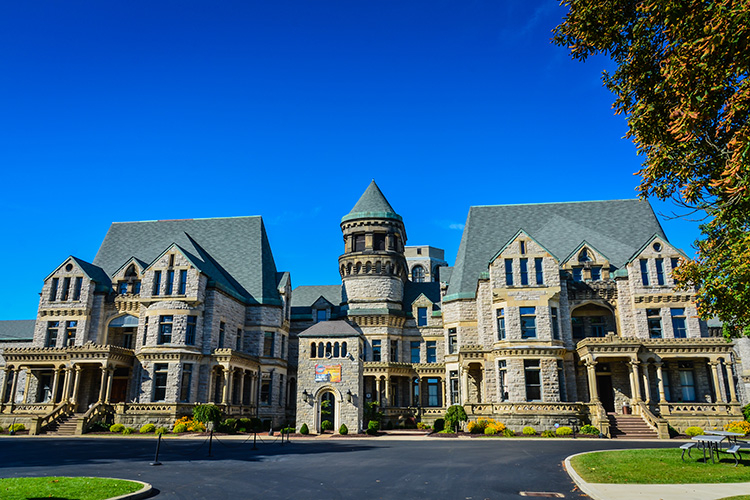
Ohio State Reformatory
Rising from the edge of Mansfield, Ohio, the Ohio State Reformatory looks exactly like what most people picture when they think of a haunted prison—a towering limestone fortress with Gothic turrets, arched windows, and a scale that seems impossible for a building that was never meant to be a maximum-security facility at all. But the Reformatory's origins weren't built on punishment. They were built on the belief that young men could be saved. The land itself carries history before the first stone was laid. The field where the Reformatory stands once served as Camp Mordecai Bartley, a Civil War training ground for Ohio soldiers. In 1867, Mansfield was selected as the site for a new state prison intended to fill the gap between juvenile corrections and the full Ohio State Penitentiary in Columbus. The city raised $10,000 to purchase the land. Construction began in 1886 under Cleveland architect Levi T. Scofield, who blended Victorian Gothic, Richardsonian Romanesque, and Queen Anne styles into a structure specifically designed to inspire moral renewal—its grandeur meant to encourage inmates toward repentance rather than despair. The first 150 prisoners arrived by train in 1896, and construction wouldn't be completed until 1910. Unlike locations shaped by a single catastrophe, the Reformatory's weight comes from a century of drift. The original mission was genuinely rehabilitative—inmates received religion, education, and a trade, with 18-month sentences that could end early for good behavior. By most accounts, the model worked. But as Ohio's criminal population grew and the facility became overcrowded, the state began sending more serious offenders to Mansfield. By the mid-twentieth century, rooms designed for one inmate held two or three. Violence became routine. Guards were killed. Inmates were murdered, drove themselves to suicide, or died from disease. Over 154,000 men passed through the gates before the building was ordered closed in 1990 following a federal class-action suit over inhumane conditions. Just outside the walls, 215 numbered graves mark the ones who never left. The building itself demands attention. The six-tier East Cell Block is widely cited as the largest freestanding steel cell block in the world—a canyon of iron that rises through the interior like something industrial and medieval at once. The warden's quarters, the chapel, the solitary confinement wing, and the basement all carry their own atmosphere. The Hole—a row of pitch-black isolation cells in the basement—is described by visitors as one of the most oppressive physical spaces they have ever entered. Natural light barely reaches the lower levels. The upper tiers stretch upward in iron rows until they disappear into shadow. Paranormal claims at the Reformatory are among the most extensively reported of any site in the Midwest. Visitors and investigators describe shadow figures moving across the upper tiers, unexplained voices in the cellblocks, and the sensation of being followed through otherwise empty corridors. EVP sessions regularly produce what investigators describe as direct, responsive communication. Some guests report being physically touched, grabbed, or scratched with no one nearby. Specific areas generate consistent accounts across unrelated visitors. The Hole produces reports of sudden nausea, cold air, and the feeling of being crowded in a space barely large enough to stand in. The basement is associated with two distinct presences—one described as a young boy, light and flickering, the other heavier and threatening. The warden's quarters carry stories of Helen Glattke, wife of longtime superintendent Arthur Glattke, who died in 1950 from an accidental gunshot wound inside the residence. Investigators report the scent of roses—her signature perfume—in rooms where no one has been. The chapel brings reports of whispered voices and phantom organ tones. Skeptics note that a century-old limestone structure of this scale naturally generates sounds, temperature swings, and optical oddities. The documented history of violence, suffering, and death embedded in this place is powerful enough to shape what any visitor expects to find before they step inside. That suggestion cannot be discounted. Still, the consistency of independent reports across decades, and across visitors with no prior knowledge of specific locations, gives even skeptical investigators reason to pause. Today the Reformatory is operated by the Mansfield Reformatory Preservation Society, which purchased the building from the state of Ohio for one dollar in the mid-1990s and has worked to restore it ever since. It is listed on the National Register of Historic Places, welcomes over 120,000 visitors annually, and is recognized worldwide as the primary filming location for The Shawshank Redemption. But the movie connection is only part of what draws people here. Some come for the architecture. Some come for the film history. Many come for the chance to spend a night in the East Cell Block, lights off, listening. Almost all of them leave with something they didn't have when they arrived—a story they struggle to explain, and a quiet conviction that the Ohio State Reformatory is far from empty.
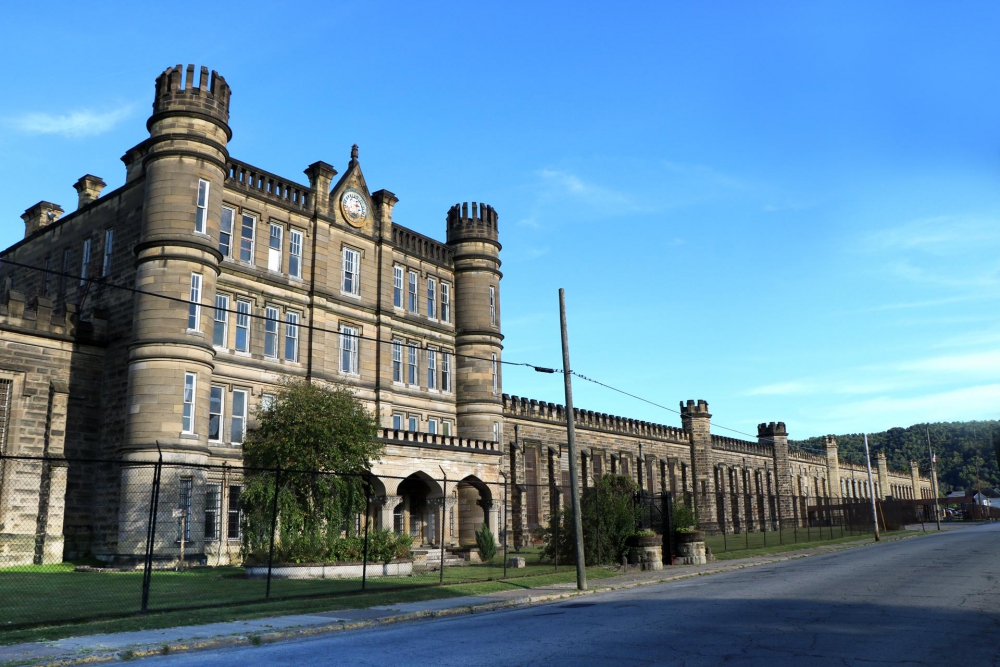
West Virginia State Penitentiary
Rising from a flat stretch along Jefferson Avenue in Moundsville, West Virginia, the West Virginia State Penitentiary looks exactly like what most people picture when they think of a haunted prison—massive sandstone walls adorned with battlements and turrets, a fortress silhouette that feels pulled from a darker century. But the Penitentiary's origins weren't born from cruelty by design. When West Virginia became a state in 1863, it had no state prison at all. Prisoners were held in county jails, an arrangement that quickly proved inadequate for a young state trying to establish its own institutions. Governor Boreman lobbied the legislature for funds to construct a state penitentiary, and in 1866 the legislature appropriated $50,000 to acquire land in Moundsville for construction. The prison at Joliet, Illinois provided the architectural prototype—an imposing stone structure fashioned in the castellated Gothic style, complete with turrets and battlements, though West Virginia's version would be approximately half the size. The Gothic structure officially opened in 1876 and would remain in continuous operation for nearly 130 years. Unlike locations defined by a single dramatic event, the Penitentiary's weight comes from accumulation. It witnessed riots, fires, and the execution of nearly 100 prisoners through either hanging or electrocution over its lifetime. Deadly riots in 1973 and 1979 prompted judicial oversight, and despite efforts to improve conditions, another riot on New Year's Day 1986 led the state Supreme Court to order the facility's eventual closing. A 1986 ruling determined that confinement to the 5-by-7-foot cells constituted cruel and unusual punishment, and the last prisoners were transferred out in 1995. The building itself amplifies everything. The sandstone facade rises with attached buttresses, circular turrets, and lancet windows—one of the finest examples of high Gothic Revival architecture in West Virginia. Long cellblock corridors stretch in either direction from the central administrative tower. The former North Hall, the shower room, and the solitary confinement area known as the Sugar Shack each carry their own particular atmosphere. Natural light barely penetrates the deeper interior. The original hardware, bars, and cell fixtures remain largely intact throughout. Paranormal claims at the Penitentiary are among the most documented in the country. Reports of supernatural phenomena include sightings of phantom inmates by former guards and legends of a shadowy figure that wanders the premises. Visitors frequently report cold spots and unexplained noises, including voices. EVP sessions in the cellblocks often yield results that investigators describe as direct responses rather than ambient noise. Some guests report being touched or physically pushed in areas where no one else is standing. Visitors have reported seeing the "Shadow Man," a static silhouette that roams the grounds. The former execution chamber draws particular attention, as does the Sugar Shack, where inmates were reportedly subjected to extreme punishment. Shadow figures, equipment malfunctions, and sudden drops in temperature are consistently reported across multiple independent investigations. Some claim to hear screaming from empty cellblocks, while others report doors moving on their own in the upper tiers. Skeptics note that any century-old stone structure will settle, creak, and breathe in ways that feel unexplainable. Large facilities amplify sound unpredictably. The history of violence and suffering embedded in this place—by design, by circumstance, and by record—gives visitors a psychological framework that can color every sound and shadow. Still, seasoned investigators routinely describe the Penitentiary as producing some of the most compelling evidence they've encountered anywhere. Today the site is maintained as a tourist attraction, museum, training facility, and filming location, operated by the Moundsville Economic Development Council. It sits directly across from the Grave Creek Mound, the largest prehistoric burial mound in eastern North America, a detail that adds another layer of historical unease to an already loaded site. There are no costumed actors on the standard tours. Just iron bars, cold stone floors, and the long institutional silence of a building that processed more than a century of human suffering. Whether visitors arrive as history buffs or paranormal investigators, most leave with the same feeling: that the West Virginia State Penitentiary has not finished telling its story.

Historic York Prison
Historic York Prison stands as a formidable institution whose physical structure encapsulates centuries of incarceration, criminal history, and the accumulated trauma of countless inmates whose lives intersected within its walls in experiences ranging from minor infractions to major criminal histories. The facility operated as an active penitentiary for an extended period, warehousing individuals convicted of crimes ranging from petty offenses to serious felonies within its secure cells and corridors, creating an institutional environment characterized by conflict, suffering, and the concentration of humanity's darker impulses. The architecture of Historic York Prison reflects pragmatic design principles oriented toward containment and control, with thick stone walls, barred windows, and multiple security layers that characterize institutional detention facilities of its era, creating an environment intentionally designed to minimize escape and suppress human agency. The paranormal activity documented at the prison appears directly connected to the violent histories of its former residents and the concentrated suffering endured within the structure over decades of operation, suggesting that trauma imprints itself upon physical space in ways that persist long after the source of suffering has ended. Among the most commonly reported entities are the spirits of former prisoners who persist in their unquiet existence within the prison's corridors and cells, their manifestations including full-bodied apparitions materializing in historically significant locations and the sensation of being followed by unseen presences through accessible spaces with deliberate purpose. Witnesses describe encounters with spectral criminals who appear to have retained their aggressive demeanor and criminal inclinations even in death, manifesting as threatening presences that follow visitors through the facility with hostile intent and territorial aggression. A particularly poignant paranormal phenomenon involves the apparition of a ghostly child believed to have perished within the prison under circumstances now lost to time, the young spirit remaining bound to the location in a tragic echo of innocence lost to institutional violence or disease during institutional care. Additional paranormal activity includes reports of phantom cigarette lighting, wherein visitors experience the sensation of cigarettes being mysteriously ignited in their immediate vicinity despite no ignition source being present and no observers nearby to create the phenomenon. Apparitions of smoking spirits have been documented in multiple areas of the prison, their translucent forms engaging in the mundane act of smoking as though perpetually reenacting habits from their living days, their routines continuing unchanged across the barrier separating life from death in eternal repetition. The area directly beneath and to the right of the prison's no trespassing sign has emerged as a particular focal point for paranormal activity, suggesting concentrated spiritual energy or a significant location of historical trauma where multiple spirits converge and interact. Paranormal investigators have documented electromagnetic anomalies, temperature variations, and responsive phenomena concentrated in areas associated with violent incidents or prolonged imprisonment, suggesting that the location represents a nexus of spiritual disturbance. Historic York Prison continues to attract paranormal investigators and curiosity seekers interested in experiencing the intersection of criminal history and supernatural manifestation within its haunted corridors and cells, making it a destination for those researching paranormal phenomena in institutional settings.
Westwood Town Hall
The Westwood Town Hall, located in Westwood, Ohio, represents a typical American municipal administrative building that has become associated with substantial paranormal phenomena and a documented history of tragedy that distinguishes the location from many other allegedly haunted civic structures throughout the greater Cincinnati metropolitan region. The building itself, serving as the central administrative headquarters for the municipality of Westwood, was constructed according to architectural conventions and civic building standards characteristic of twentieth-century Ohio municipal architecture, incorporating features typical of town administrative centers including meeting rooms, offices, and various service areas. The building's architecture incorporates multiple interior levels connected by staircases, with particular significance attached to the bell tower structure that extends above the main building mass, and attic spaces that provide additional volume and complexity to the building's interior configuration. The paranormal phenomena associated with Westwood Town Hall are fundamentally grounded in a tragic historical event involving a security guard identified only as Wesley, who allegedly hanged himself within the building during a period of his employment with the town administrative offices. The specific circumstances surrounding Wesley's death remain historically ambiguous, with varying accounts emphasizing different emotional, psychological, and situational factors that culminated in his self-inflicted death within the municipal building where he worked. The traumatic nature of Wesley's suicide, the violent manner of his death, and his apparent emotional desperation have allegedly created a spiritual anchor binding his presence to the location despite the passage of decades. Paranormal researchers have attributed the intensity and persistence of paranormal phenomena at the town hall directly to the circumstances of Wesley's death and his emotional state at the moment of his passing. Paranormal phenomena documented at Westwood Town Hall have concentrated in specific areas of the building, particularly in the bell tower, attic spaces, and the building's interior staircase systems. Doors throughout the building have been repeatedly observed opening and closing of their own volition, with particular frequency in the bell tower area and attic spaces, suggesting intelligent awareness of the building's current occupants. Objects within the building have been reported as moving from their established positions without apparent physical cause. Most dramatically, an apparition identified as Wesley himself has been reported by multiple witnesses as becoming visible within the building and then disappearing before their eyes, with the manifestations typically occurring in staircase areas and in the bell tower region. Sightings concentrated specifically in the bell tower have established that space as the most intensively paranormally active area of the facility. The emotional tone consistently attributed to the building and paranormal phenomena has been described as heavy, melancholic, and sad, reflecting the emotional state of the entity allegedly inhabiting the space. Westwood Town Hall continues to function as a municipal administrative center, with the building remaining in active operational use despite its persistent paranormal reputation. Paranormal investigation teams have conducted formal documented investigations within the facility, establishing the location within regional paranormal investigation communities and databases of Ohio haunted locations. Video documentation has been created of alleged paranormal phenomena, contributing to broader paranormal investigation networks and television presentation contexts that have enhanced public awareness. The documented accounts of supernatural phenomena, the specific history of tragic death within the building, and the consistent reports of paranormal activity have established Westwood Town Hall as one of southwestern Ohio's recognized paranormal locations.
Old Jail
St. Augustine's Old Jail stands as a historic structure within the ancient city of St. Augustine, Florida, America's oldest continuously occupied European settlement, steeped in centuries of history and the accumulated experiences of countless individuals. The jail building represents a significant chapter within American criminal justice history, housing individuals facing the most severe legal consequences. The structure dates from an earlier period when incarceration practices and treatment of prisoners reflected substantially different attitudes than contemporary standards. Its architecture features secure cells, holding areas, administrative spaces, and security measures designed to prevent escape and maintain control over confined populations. Within St. Augustine's broader history as a colonial Spanish settlement, British possession, and eventually American city, the jail represents a component of the legal infrastructure that evolved as the city changed. Throughout its operational history as a functioning correctional facility, the jail housed individuals accused and convicted of crimes ranging from minor offenses to serious felonies. During particular periods, the jail served as the location where formal execution of condemned prisoners took place. Eight documented hangings occurred within the facility, representing formal judicial executions carried out as punishment. Beyond the documented executions, the jail witnessed numerous deaths from violence, disease, inadequate conditions, and brutality. Prisoners died from prison violence, disease transmission in crowded conditions, suicide resulting from despair, and brutality inflicted by guards. The cumulative toll of suffering and death created a psychologically and spiritually charged environment saturated with trauma, fear, and anguish. Many individuals who died within the jail facility have been lost to historical obscurity, though records document some names and execution dates. Guards, administrators, and correctional officers whose lives became intertwined with the jail's dark history constitute another category. The accumulated trauma and emotional energy generated by centuries of incarceration, violence, and death created spiritual conditions conducive to paranormal manifestations and attachment of multiple spiritual entities. The variety and intensity of reported phenomena suggest numerous spirits, connected to different traumatic circumstances and historical periods, remain bound to the facility. Following its closure as an active facility, the old jail was preserved and transformed into a historical museum and paranormal investigation site. The structure now houses museum exhibits documenting the jail's history, criminal justice systems, and prisoner experiences. However, transformation did not eliminate the paranormal phenomena characterizing the location. Rather, paranormal activity became increasingly documented as investigation teams gained access. The jail is renowned among paranormal researchers as one of America's most actively haunted correctional facilities. Contemporary accounts describe visiting St. Augustine's Old Jail as profoundly unsettling and frequently involving direct encounters with paranormal manifestations. Multiple spirits manifest throughout the facility as apparitions, disembodied voices, shadow figures, and intense emotional presences overwhelming individuals with despair or malevolence. Paranormal teams have recorded electromagnetic anomalies in specific cells, captured audio of unexplained voices and violent sounds, and documented visual phenomena of shadow figures and apparitions. Specialized paranormal investigation tours now operate at the facility, allowing visitors to explore notoriously haunted areas and potentially encounter the resident spirits.
Pensacola Cultural Center
The Pensacola Cultural Center stands as a significant institutional presence within Pensacola, Florida, serving diverse cultural, educational, and community purposes while simultaneously maintaining documentation of paranormal phenomena sufficient to establish its reputation as a recognized haunted location within regional paranormal literature and tourism networks. The facility occupies cultural importance within the city, functioning as a repository and showcase for artistic and historical materials reflecting the region's distinctive heritage and cultural development. The building itself likely reflects architectural styles consistent with modern institutional construction, though its specific historical origins and previous uses remain relevant to understanding the paranormal phenomena currently manifest at the location. The accumulated human activity occurring within the building's walls, including performances, exhibitions, educational programming, and community gatherings, has likely contributed emotional and psychological energy supporting paranormal manifestations. The integration of the Cultural Center into organized paranormal tours of Pensacola indicates recognition of its paranormal significance by professional tour operators and paranormal investigators. The paranormal activity at Pensacola Cultural Center appears distributed across various areas of the facility rather than concentrated in specific zones, suggesting either a pervasive entity inhabiting the entire structure or multiple separate spiritual presences occupying different regions. The specific phenomena associated with various areas remain partially undocumented in accessible paranormal literature, reflecting the site's relative underexploration compared to other major haunted locations. This gap in documentation presents opportunities for dedicated paranormal researchers to conduct comprehensive investigations establishing baseline phenomena and developing detailed understanding of the manifestations occurring. Professional paranormal tour services operating in Pensacola have incorporated the Cultural Center into their offerings, suggesting sufficient consistency of paranormal phenomena to support commercial paranormal tourism activities. Pensacola itself has established itself as one of Florida's premier paranormal tourism destinations, with multiple recognized haunted locations distributed throughout the city generating sustained commercial and investigative interest. The concentration of paranormal locations within Pensacola suggests either particular historical circumstances generating widespread trauma and death or specific environmental or geographical factors conducive to paranormal manifestation. The city's history as a Spanish colonial possession, subsequent American settlement, and role in regional military and commercial development has generated complex historical narratives potentially supporting multiple simultaneous paranormal phenomena. The Pensacola Cultural Center occupies a position within this broader paranormal geography, representing one node within a network of haunted locations accessible to paranormal tourists. The specific paranormal phenomena occurring within the Pensacola Cultural Center require additional documentation and systematic investigation to establish comprehensive understanding of the manifestations. Unlike some major haunted locations generating consistent, well-documented accounts of specific apparitions or phenomena, the Cultural Center's paranormal activity appears characterized by general presence and atmospheric anomalies that resist narrow categorization or specific description. This ambiguity creates opportunities for paranormal researchers to conduct investigations establishing baseline data regarding what phenomena occur at the location and under what environmental conditions manifestations prove most likely to occur. The atmospheric qualities of the Cultural Center, reflecting its institutional purposes and cultural functions, may contribute to the paranormal phenomena occurring. Pensacola Cultural Center remains accessible to the public for its intended cultural and community functions, while simultaneously serving paranormal research and tourism purposes through organized investigations and commercial tour offerings. The location represents an instance of paranormal activity integrated into modern institutional infrastructure, demonstrating that haunted phenomena persist within contemporary buildings serving current social and cultural purposes.
Old Ulster County Jail
The Old Ulster County Jail stands as a historical structure whose original purpose of confining convicted prisoners has been supplanted by its contemporary identity as a location of acknowledged paranormal significance within the Hudson Valley region of New York. Constructed during the nineteenth century to serve the judicial and correctional needs of Ulster County, the facility was designed with the heavy masonry and restrictive architecture characteristic of period incarceration facilities. The jail's solid stone construction and austere interior created an environment intended to be impervious to escape, yet this architectural solidity would ultimately preserve within its walls the spiritual echoes of violent deaths and desperate final moments experienced by prisoners who died within the facility. The building operated as a functional jail for decades, processing hundreds of inmates, though the violence perpetrated within extended beyond official sanctions. The documented paranormal phenomena at the Old Ulster County Jail center upon the spirits of inmates who met violent deaths within the facility under circumstances that remain partially obscured in historical records. Multiple accounts indicate that certain inmates were murdered by other prisoners within the jail, their deaths representing crimes within the punishment institution itself. The identities and specific circumstances remain fragmentary in historical documentation, yet the spiritual imprints of these deaths have manifested consistently enough to establish the jail as a location of documented supernatural activity. The apparition frequently described displays hollowed-out eye sockets and long, unkempt hair, suggesting a death accompanied by disfigurement or decomposition. This apparition, believed to be one of the murdered inmates, appears throughout the jail building, seemingly unaware of the passage of time or change in facility function. The paranormal experiences reported by visitors, investigators, and staff encompass a range of supernatural phenomena consistent with a location harboring multiple restless spirits. Disembodied footsteps echo through jail cells and corridors at all hours, with the sound of walking heard distinctly despite absence of visible entities. Disembodied voices emanate from empty cells, some words intelligible and others producing only inarticulate cries and groans. Metal jail cell doors, which function properly when operated mechanically, nonetheless open and close by themselves, with witnesses observing them swinging inward without human contact. Paranormal investigators have documented instances of spectral activity appearing to respond to questions posed to the environment, with disembodied voices providing responses that seemed to engage with investigative inquiries. Objects have been observed moving across surfaces without visible cause, and visitors have reported invisible presences in proximity accompanied by distinct cold spots. The spiritual residents of the jail appear to demonstrate awareness of living visitors, with phenomena suggesting intentional interaction rather than mechanical repetition of past events. Visitors and guards have reported experiencing what they describe as deliberate poking or prodding from invisible entities, subtle physical contact suggesting attempts to attract attention or communicate. Some encounters have been interpreted as attempts by imprisoned spirits to assert their continued existence or make known their presence to the living world. Paranormal investigation teams have documented electromagnetic fluctuations consistent with alleged spirit activity, temperature anomalies localized to specific cells, and audio recordings capturing disembodied voices and sounds not readily explained by conventional environmental sources. The consistency of reports across decades has established the Old Ulster County Jail as one of the Hudson Valley's most verified haunted locations. The Old Ulster County Jail has been preserved as a historical site and paranormal investigation location, its transition from active correctional facility to museum reflecting changing perspectives on the building's significance. The jail continues as a destination for paranormal investigators and ghost enthusiasts seeking to document ongoing spiritual activity. The apparent permanence of paranormal manifestations suggests violent deaths have left indelible marks upon the location, creating an environment where the boundary between living and spiritual realms remains distinctly permeable. The spirits of murdered inmates appear bound to the physical location of their violent ends, their continuing presence serving as a persistent reminder of violence embedded within institutional history.
Bastille
The Bastille in Hanford, California, represents an unusual intersection of French revolutionary history, American frontier heritage, and alleged paranormal activity, creating a unique cultural artifact that carries both historical significance and supernatural associations. This structure, which takes its name from the famous Parisian fortress that served as a symbol of royal tyranny before its destruction during the French Revolution, was constructed in Hanford as a historical recreation or tribute to that iconic European institution. The building itself functions as a historical and cultural venue within Hanford's downtown area, serving variously as a restaurant, gathering space, and historical attraction that draws visitors interested in the building's distinctive architectural character and its connection to both European and American historical narratives. The structure's design incorporates elements reminiscent of European fortress architecture adapted to the California context. The paranormal associations of the Bastille in Hanford center on a tragic historical narrative involving a woman named Mary, whose death by her own hand allegedly occurred within the building during a period when it functioned as or contained jail facilities. According to historical accounts and paranormal documentation, Mary hanged herself within the building's interior spaces, with the specific circumstances and emotional contexts surrounding her suicide remaining somewhat disputed among historical sources. The traumatic nature of her death, combined with the apparent desperation and emotional turmoil that motivated her final act, has allegedly created a spiritual attachment to the building that persists despite the passage of considerable time and changes in the building's function. Her suicide represents the type of traumatic, violent, and emotionally intense circumstance that paranormal folklore often associates with spiritual manifestations, suggesting that her spirit may have become bound to the physical location. Paranormal phenomena reported at the Bastille have concentrated in specific areas of the building, particularly near the windows, in kitchen areas, and throughout the interior spaces. The ghost of Mary is reported most frequently in association with the building's windows, where she allegedly appears staring outward with expressions described as melancholic and tragic, suggesting a spiritual condition characterized by isolation and despair. The interior spaces, particularly the kitchen area, have been sites of significant poltergeist activity, with pots and pans reported moving of their own volition without visible physical agent. Witnesses and staff have consistently reported powerful feelings of being watched or observed by an unseen presence, sensations that intensify in particular areas and at specific times. These feelings of being watched are frequently interpreted as evidence of Mary's lingering presence within the building. The Bastille in Hanford has evolved significantly from its original architectural and cultural context, transitioning through multiple functional periods and ownership structures. Despite these changes, the paranormal reputation has persisted, with new workers and visitors encountering reports of supernatural phenomena consistent with documented accounts extending back decades. Paranormal investigation teams have conducted formal investigations, documenting phenomena consistent with other locations associated with traumatic deaths. The dual character of the Bastille as both a historical architectural landmark and an allegedly haunted location creates a complex public perception that integrates historical interest with paranormal fascination, attracting visitors interested in either or both aspects of the building's significance.
Wright Square – The Hanging of Alice Riley
Wright Square in Savannah, Georgia stands as one of the city's most historically significant public spaces, bearing witness to more than two centuries of civic life, commemoration, and collective memory. The square was established during the founding era of Savannah's grid-based urban plan, designed as an open gathering space that would serve as the physical and symbolic heart of civic activity and social congregation. The square's architecture and landscape have been repeatedly reimagined across successive historical periods as monuments were erected, vegetation was cultivated, and commemorative structures were constructed to honor various historical figures and events. The square has functioned as the site of public celebrations, political gatherings, civic ceremonies, and the staging of historically significant events that defined Savannah's development. The square's public character—its openness to all residents and visitors, its accessibility as a space of collective memory and shared civic consciousness—has established it as one of the most important locations in Savannah's urban geography. Within this historically dense space dwells the spirit of Alice Riley, whose tragic death and continuing paranormal presence have made her the most documented and significant haunting associated with any Savannah location. Alice Riley entered historical significance and subsequently paranormal notoriety as the first woman to be executed by the state of Georgia, a distinction that marks her as a figure of extraordinary and tragic importance in the state's legal and criminal history. Riley's execution, carried out through hanging within the space of Wright Square during the late eighteenth century, represented the formal state apparatus acting upon her body and consciousness in a way that left an indelible mark on both the location and the trajectory of Georgia's criminal justice system. The circumstances that led to her conviction and execution remain subjects of historical interpretation and moral questioning, with scholars and historians continuing to debate the precise nature of the crime for which she was condemned and the fairness of the legal proceedings that resulted in her execution. Riley's story exemplifies the tragic intersection of criminal law, gender, social position, and the state's exercise of ultimate power over human life. The execution itself, conducted as a public spectacle in the manner typical of the era, drew crowds of spectators who gathered to witness the formal infliction of state-sanctioned death upon a female body—an event that appears to have traumatically impressed itself upon the spiritual geography of Wright Square. Following her death by hanging, Alice Riley's spirit appears to have become anchored to the location where her body was suspended and her life was forcibly terminated through legal execution. The paranormal manifestations associated with her presence have been documented across more than two centuries of historical record and contemporary paranormal investigation, demonstrating a remarkable persistence and consistency that distinguishes her haunting from more ephemeral or questionable paranormal accounts. Riley's apparition has been observed by numerous witnesses—both credible contemporary individuals and historical accounts preserved in written form—across the centuries since her death. The visual manifestations of her presence, characterized by the appearance of a female figure identifiable through period-appropriate clothing and recognizable features, have been reported in consistent and corroborating accounts that span from the late nineteenth century through the contemporary era. Riley's apparition appears to move through Wright Square according to patterns or purposes that remain unclear, sometimes appearing to interact with or acknowledge the presence of living observers. The most distinctive and historically significant paranormal manifestation associated with Alice Riley involves her apparent focus upon and attraction to pregnant women and mothers who enter Wright Square. Documented accounts and contemporary paranormal investigations suggest that Riley's spirit demonstrates particular awareness of and interest in women carrying children or accompanied by young children. This distinctive manifestation pattern may reflect Riley's own experiences with maternity and motherhood, suggesting that the execution of a woman who bore children had particular significance both for Riley herself and for the continuing trajectory of her paranormal presence. The interaction between Riley's spirit and living pregnant women has been characterized by various observers as ranging from neutral presence to distinct recognition to what some have interpreted as a curse or malevolent attention directed toward expectant mothers. Some accounts describe feelings of menace or threatening presence when pregnant women enter the square, while other accounts suggest a form of spiritual kinship or communication between Riley and women in the particular vulnerability of pregnancy. The interpretive uncertainty regarding Riley's intentions toward pregnant women—whether her attention reflects maternal solicitude, vengeful attention directed toward pregnant women as representatives of the normal social roles denied to her, or some other form of spiritual communication—remains unresolved. Wright Square thus exists as a location where a documented historical execution, the paranormal manifestation of the executed woman, and the continuing mysterious interaction between her spirit and pregnant women have transformed the public square into a site of profound paranormal significance and historical trauma. Alice Riley's presence has made her the most celebrated ghost of Savannah's multiple haunted locations, a haunting that combines documented historical fact with paranormal manifestation and a distinctive pattern of spiritual behavior that suggests an entity retaining consciousness, memory, and particular purposes beyond death. The square remains a significant civic space, open to pedestrians and visitors, while simultaneously housing the persistent spirit of a woman whose execution more than two centuries ago left an indelible mark on both Georgia's history and the spiritual geography of Savannah. Her continuing presence, most notably through her attention to pregnant women and mothers, suggests that death did not sever her connection to the human experiences of childbearing and motherhood, but rather intensified her awareness of and interest in these profoundly significant human processes.
Old Cooper County Jail and Hanging Barn
The Old Cooper County Jail stands as a grim reminder of frontier justice and incarceration practices in nineteenth-century Missouri. Built to serve the growing Boonville community and surrounding Cooper County region, the facility operated for decades as both a place of confinement and execution. The stone structure, characteristic of mid-nineteenth-century jail architecture, was designed to house prisoners awaiting trial, serving sentences, or facing their final hours. Adjacent to the main jail building stands the Hanging Barn, a separate structure that served the darker purpose of conducting capital executions. This stark juxtaposition of confinement and death defined the facility's role within the county's criminal justice system, and the physical remnants of both structures have survived into the modern era, preserving the architectural record of a bygone era of punishment. Throughout its operational years, the jail cycled through countless prisoners, from petty offenders to those convicted of serious crimes. The cells, constructed with heavy iron and stone, held individuals in varying states of despair and resignation. Among these prisoners, some faced the certainty of execution, a prospect that weighed heavily upon them as they awaited their final fate within the jail's confines. The daily operations of the facility involved a routine of guards, meals, and the constant undercurrent of desperation that permeated the cells. Records indicate that multiple prisoners ended their own lives while incarcerated, unable to face the grim realities of their situations. These suicides added another layer of tragedy to the location's history, creating an atmosphere thick with despair and loss. The suicide cell, a location within the jail specifically tied to at least one documented self-inflicted death, has become a focal point of paranormal investigation and visitor interest. This cell and the hanging barn are considered the most actively haunted areas of the site. Documented paranormal phenomena center around the manifestation of a former prisoner whose spirit appears to remain restless and agitated. Investigators and visitors have reported the distinct and chilling experience of witnessing what appears to be the apparition of a prisoner materializing within the confines of the jail cells, accompanied by the sound of fists pounding forcefully against the cell doors and bars. These knockings are reported to occur spontaneously and with intensity that seems impossible to attribute to natural causes such as wind or settling of the old structure. Additionally, visitors have reported encounters with dark shadow figures that move through the corridors and cells, creating an atmosphere of menace and unease. The entity appears to express its continued anguish through these manifestations. In the hanging barn itself, the presence of death and execution seems to have left an indelible mark on the location's spiritual landscape. Paranormal investigators have documented unusual cold spots, unexplained sounds of distress, and apparitions that appear to enact the final moments of those executed within the structure. The combination of suicide and execution creates a particularly troubled spiritual environment. Various paranormal investigation teams have recorded evidence suggesting intelligent haunting activity, with the spirits seemingly aware of visitors and responsive to questioning and interaction. These investigations have added scientific credibility to the long-standing reports from individuals who have experienced the haunting firsthand. Today, the Old Cooper County Jail and Hanging Barn remains accessible to researchers, paranormal enthusiasts, and historians seeking to understand both the criminal justice history and the reported supernatural phenomena of Missouri. The site has become a notable destination on paranormal tourism circuits, with guided tours and investigations regularly conducted by established paranormal research groups. While the structure has been preserved as a historical landmark rather than a functioning jail, its dark legacy continues to attract attention from those fascinated by the intersection of history and the paranormal. The location stands as both a sobering reminder of nineteenth-century justice practices and as evidence of the enduring presence of troubled spirits bound to the place of their greatest suffering.
Griffith Park
Griffith Park sprawls across more than four thousand acres of open space, chaparral-covered hills, hiking trails, and developed recreation areas in the northeastern portion of Los Angeles, establishing itself as one of the largest urban parks in North America and a significant destination for both casual recreation and paranormal investigation. The park itself encompasses diverse landscapes including dense woodland areas, open grasslands, canyon formations, and historical structures representing various eras of development and use spanning from the late nineteenth century through the contemporary period. The historical narrative of Griffith Park encompasses indigenous occupation, Spanish colonial period land grants, American frontier era settlement, commercial development, public acquisition, and transformation into a major metropolitan recreation area, a complex historical trajectory that accumulated significant events, tragedies, and human experiences within a single geographic location. The diverse environments and multiple trail systems provide extensive areas for visitors to explore, creating extensive surfaces for paranormal manifestation and investigation, with certain locations achieving particular notoriety for concentrated paranormal phenomena. The extensive acreage and multiple documented haunting locations establish Griffith Park as one of Los Angeles's most paranormally active locations, with sufficient documented phenomena to warrant multiple ghost tour operations and paranormal investigation expeditions. The paranormal manifestations documented throughout Griffith Park involve multiple distinct entities, each associated with specific circumstances of death or tragedy occurring within the park boundaries across its history. Among the most documented and extensively investigated phenomena involves the manifestation of the Lady in White, an apparition appearing throughout the park's trails and open areas, materializing with particular frequency in locations associated with historical tragic events. The manifestation identified as the Lady in White has achieved sufficient documentation through multiple independent witness accounts to establish the entity as among the most reliably reproducible paranormal phenomena within the park environment. Peg Entwistle, a historical figure associated with early twentieth-century theatrical history and Hollywood entertainment industry development, manifests as an apparition appearing in 1930s-era clothing consistent with the period of her documented historical life. The manifestation of Peg Entwistle has been interpreted by researchers as potentially connected to the circumstances of her death, with the distinctive temporal markers of her apparition's appearance suggesting either spiritual manifestation influenced by memories of life or consciousness maintenance of specific temporal period associations. The entity known colloquially as Dona Petronilla is associated with a curse placed upon the land in 1863, a supernatural entity whose manifestations appear connected to a specific invocation or curse laid upon the landscape decades before the park's formal establishment and public designation. Picnic Table 29 has achieved particular notoriety as a concentrated location of paranormal phenomena within Griffith Park, the specific site where a tree branch fell and killed a young couple, identified as Rand Garrett and Nancy Jeanson, during 1976. The deaths occurred during a moment of romantic intimacy at the picnic area, with the couple seated at the table when an unexpectedly large tree branch separated from an overhead tree and fell with sufficient force to cause fatal injuries. The tragic nature of the deaths, occurring during a moment of interpersonal connection and emotional bonding, combined with the apparent randomness and unexpected nature of the tree branch failure, created conditions for significant emotional and spiritual trauma to bind the consciousness of the deceased individuals to the specific location. Manifestations at Picnic Table 29 have increased in frequency and intensity since the initial tragedy, with paranormal reports clustering with particular concentration at that specific geographic location. The apparitions appearing throughout Griffith Park and concentrated at various specific locations have achieved sufficient documentation to establish the park as a location of major paranormal significance within the Los Angeles metropolitan area and throughout California paranormal research communities. The Old Zoo area, representing a historical recreation facility that ceased operations decades ago leaving behind physical structures and ruins scattered throughout a defined area of the park, has yielded reports of spectral phenomena consistent with manifestations of individuals associated with that historical facility and the surrounding environment. Visitors to the trail systems and open areas throughout Griffith Park continue to encounter paranormal phenomena with sufficient regularity that the park has achieved recognition as one of North America's most extensively haunted locations and a destination specifically sought by paranormal researchers and ghost tour operators. The concentration of multiple distinct entities, the variety of manifestation types spanning apparitions to auditory phenomena, and the consistent documentation of phenomena across multiple independent witness accounts and research organizations establish Griffith Park as an exceptionally complex paranormal environment where the accumulated trauma, tragedy, and historical events across centuries have created conditions for multiple consciousness patterns to remain bound to specific locations within the park boundaries. The park continues to function as a major recreation area serving the Los Angeles metropolitan community while simultaneously maintaining its established role as a significant paranormal investigation destination and a location of documented spectral phenomena.
Maine State Prison
The Maine State Prison facility located in Warren, Maine represents a substantial institutional complex constructed to contain and manage individuals convicted of serious crimes within the state's criminal justice system, serving functions essential to maintaining public order and implementing court-imposed sentences of imprisonment. The prison established operations in 1824, during the early period of American institutional development when systematic incarceration emerged as the primary punishment mechanism for serious criminal offenses, gradually replacing corporal punishment and execution as the dominant response to serious crime. The nineteenth-century construction and operational period of the Maine State Prison encompassed development of institutional practices, architectural innovations for confinement management, and accumulation of historical experience with long-term incarceration of large populations. The physical facility underwent multiple phases of construction, modification, and expansion across the nineteenth and twentieth centuries as the imprisoned population fluctuated and institutional requirements evolved in response to changing criminal justice philosophies. The Thomaston facility that preceded the Warren location operated for substantial historical period before eventual transfer of operations and equipment to the Warren site, creating a complex institutional history spanning multiple geographic locations. The Warren facility represented a substantial capital investment in architectural and structural infrastructure designed specifically to accommodate imprisoned populations through construction of secure cells, administrative facilities, industrial production areas, and dining and recreation spaces necessary for managing hundreds of inmates simultaneously. The physical design incorporated security features including cell block construction, surveillance infrastructure, and barrier systems engineered to prevent escape while providing necessary life support facilities and management spaces. The industrial operations of the prison included manufacturing and production activities employing imprisoned labor, with the Industries Building representing a particularly significant functional space within the complex. The architectural footprint of the Warren facility reflected sophisticated understanding of nineteenth and twentieth-century institutional design principles, with spaces arranged to facilitate surveillance, movement control, and operational management of incarcerated populations. The paranormal reputation of Maine State Prison developed through accumulation of reports from correctional personnel, security staff, and facility visitors describing encounters with spirit entities manifesting presence within the prison structure and grounds. The reported spirits are characterized as representing former prisoners and correctional guards whose deaths occurred during the facility's operational history, with their continued presence suggesting spiritual attachment to the location of their imprisonment, employment, or traumatic death experiences. The paranormal documentation indicates that multiple spirit entities occupy various locations throughout the facility rather than concentrating exclusively in specific architectural spaces. Paranormal phenomena at Maine State Prison manifest in multiple distinctive categories of reported activity documented through witness accounts from staff members and systematic investigation efforts. Sightings of former prisoners have been consistently reported occurring during nighttime hours, with observers describing visible manifestations of individuals apparently dressed in prison garb or period-appropriate clothing consistent with historical incarceration practices. Disembodied voices and whispers of unknown origin have been reported throughout the facility, with descriptions suggesting attempted communication and expressions of emotional distress. Phantom sounds resembling the metallic slamming of heavy doors and security locks have been documented occurring in locations where such sounds would be consistent with prison operation procedures. The Industries Building has emerged as a particular focus for paranormal concentration. Sensations of physical contact including unexplained touching and apparent attempts at physical interaction have been reported by visitors and staff members. Overwhelming sensations of being watched and monitored by unseen presences have been reported by multiple independent observers.
Old Idaho State Penitentiary
The Old Idaho State Penitentiary, colloquially known as the Old Pen, opened during the 1870s as Idaho Territory constructed a secure facility to confine dangerous criminal elements and maintain social order. Over 101 years of operation, the facility housed over thirteen thousand inmates, including approximately two hundred fifteen women whose presence reflected changing attitudes toward female criminality throughout the twentieth century. The architectural design reflected Victorian-era thinking about prison security with imposing stone walls, guard towers, and cell blocks designed to prevent escape and maintain rigid discipline. The facility became increasingly antiquated as the twentieth century progressed, and in 1973, after operating continuously for over a century, the Old Pen was officially closed and abandoned, with its inmate population transferred to modern facilities. The history of the Old Pen is inseparable from death in its various forms and manifestations. Approximately 129 recorded deaths occurred during its 101 years of operation, encompassing multiple distinct categories of fatal circumstances. Ten inmates were executed by hanging, a judicial penalty then-legal for serious capital crimes including premeditated murder. Beyond executions, numerous inmates died from disease outbreaks including tuberculosis, influenza, and dysentery that swept through poorly ventilated cells and communal spaces with devastating consequences. Suicide claimed additional lives as inmates driven to psychological desperation took their own lives, murders committed by inmates against fellow prisoners added substantially to the death toll, and escape attempts resulted in fatalities when prisoners were shot by guards. The cumulative effect of these various forms of death created a location saturated with trauma, violence, and desperate human suffering. The emotional and psychic imprint left by such concentrated mortality appears to have permanently marked the location. Following closure in 1973, the Old Pen transformed into a paranormal investigation destination of significant reputation. The facility has been featured prominently on paranormal investigation television programs including Ghost Adventures, The Lowe Files, Haunted Towns, and Destination Fear. Paranormal investigators consistently documented full-bodied apparitions materializing in various sections, with spectral forms resembling both guards and inmates in period-appropriate clothing consistent with different eras of operation. Disembodied voices echoed through cell blocks and unexplained sounds reverberated from empty corridors and abandoned administrative areas. Cold spots appeared spontaneously throughout the structure, and visitors reported overwhelming feelings of heaviness, dread, and anxiety particularly in the Siberia block where solitary confinement cells were located. Investigators reported the sensation of invisible presences and the distinct feeling of being watched throughout the structure. Some visitors experienced physical contact from unseen forces. The Old Idaho State Penitentiary represents how concentrated human suffering and violent death imprint paranormal manifestations upon specific locations permanently. The spirits of executed inmates, disease victims, suicide victims, and murder victims appear unable or unwilling to transition from the location where they met their deaths. The paranormal manifestations documented at the Old Pen are among the most consistent and reproducible recorded in paranormal investigation.
Missouri State Penitentiary
The Missouri State Penitentiary in Jefferson City operated as one of America's most significant and historically important correctional institutions, serving the state of Missouri for 168 consecutive years from its opening until its closure in 2004, making it one of the longest continuously operated penitentiaries in the United States. The institution was constructed during the nineteenth century when American approaches to criminal punishment were undergoing transformation from public spectacle executions to institutional containment within purpose-built facilities designed to house, control, and theoretically rehabilitate incarcerated populations. The penitentiary's architecture reflected changing philosophies regarding imprisonment and incarceration, with design elements incorporating both security measures intended to prevent escapes and physical layouts that responded to evolving understanding of how spaces could be organized to manage large numbers of confined individuals. Over its 168-year operational history, the Missouri State Penitentiary witnessed profound changes in American criminal justice, incarceration practices, and societal attitudes toward punishment, rehabilitation, and the purposes served by institutional imprisonment. The paranormal reputation of the Missouri State Penitentiary is deeply rooted in the violence, suffering, and human tragedy that characterized incarceration within its walls throughout its 168-year operational history. Thousands of individuals were confined within the penitentiary during this period, including condemned prisoners awaiting execution, violent criminals, habitual offenders, and individuals incarcerated for crimes ranging from murder to theft and economic desperation. The institutional environment fostered violence between prisoners, brutal treatment by guards and administrators, and psychological trauma resulting from indefinite confinement within concrete cells and metal bars. Multiple deaths occurred within the facility through violence, suicide, execution, and disease, creating an accumulation of human suffering and loss that appears to have created profound paranormal impressions. The prison riot of 1954 represented a particularly traumatic episode in the institution's history, with violence between rioting prisoners and responding guards resulting in deaths, injuries, and psychological trauma that reverberated throughout the institution's final decades of operation. The entity most prominently associated with the Missouri State Penitentiary is an individual designated as Fast Jack, though the complete historical identity and circumstances of death remain subjects of investigation and folklore. Witnesses report encountering the apparition of a man appearing in prison clothing consistent with the penitentiary's operational era, typically observed in Hall A and the areas surrounding the catwalks that provided access and observation points throughout the facility's interior. The apparition of Fast Jack has been reported moving through areas of the facility with purposeful patterns, suggesting reenactment of movements and routines from the entity's incarceration period. The dungeon, a series of underground cells without windows or external light, has generated the most intense and consistent reports of paranormal phenomena, suggesting that this particularly brutal section of the facility harbored experiences and emotional trauma sufficient to create lasting paranormal manifestations. Witnesses report encountering apparitional figures within the dungeon area and experiencing immediate emotional reactions including fear, dread, and psychological distress. Professional paranormal investigation conducted within the Missouri State Penitentiary has employed sophisticated equipment and methodology to document phenomena occurring within the facility's various sections. Electromagnetic field measurements have detected anomalies concentrated in specific areas, particularly Hall A, the dungeon section, and the catwalks where security personnel conducted surveillance and oversight of the imprisoned population. Audio recording equipment has captured disembodied voices speaking clearly in the facility's interior spaces, with recorded vocalizations ranging from isolated words and phrases to extended conversations and apparent reenactment of confrontations between prisoners. Temperature anomalies have been documented in the dungeon cells and other areas of the facility, with thermal cameras revealing cold spots that persist regardless of the facility's mechanical systems and appear unrelated to environmental factors. Witnesses report physical sensations including touching by unseen forces, pressure applied to body parts, and the sensation of unseen presences in close proximity, experiences occurring across multiple investigation sessions and described with consistency suggesting genuine paranormal phenomena rather than imagination or suggestion. Visitors and investigators repeatedly report encountering visual apparitions within the facility, with sightings concentrated in Hall A and the dungeon area. Footsteps have been tracked moving through corridors, ascending and descending staircases, and passing through occupied areas despite the absence of visible figures producing the sounds. Cell doors have been reported slamming with force and precision, echoing through the facility in patterns that suggest intelligent coordination or emotional expression rather than mechanical malfunction or environmental movement. Cigarette smoke smells have manifested in areas of the facility where such odors would be unexpected given the building's sealed condition and absence of living occupants, olfactory phenomena suggesting the presence of individuals carrying cigarettes or smoking materials. The phenomena appear to intensify in areas where documented violence occurred or where particularly traumatic events during the facility's operational history are recorded, suggesting a correlation between intensity of historical suffering and strength of paranormal manifestation. The Missouri State Penitentiary has been converted to a historic site and paranormal tourism destination, with the facility remaining closed to standard incarceration use while opening its spaces to researchers, tourists, and paranormal investigation groups seeking to experience and document the location's paranormal phenomena. Time Magazine's designation of the site as the "bloodiest 47 acres in America" has contributed to the facility's paranormal reputation and attracted significant interest from paranormal research organizations and documentary productions. Official paranormal investigation bookings and ghost tour offerings enable controlled access to the facility's most paranormally active areas, with professional guides providing historical context and facilitating encounters with the entities inhabiting the location. The penitentiary stands as a testimony to the ways that institutional violence, human suffering, and concentrated trauma create environments where paranormal phenomena flourish, with the spirits of Fast Jack and countless others continuing to manifest within the facility that served as the site of their imprisonment, suffering, and death.
Tennessee State Prison
Tennessee State Prison operated as a maximum-security penitentiary in Nashville from 1898 until its closure in 1992, serving as a place of confinement, punishment, and execution for thousands of individuals convicted of serious crimes. The facility was constructed during an era when American penology was undergoing significant transformation, with new concepts of institutional design attempting to balance security and punishment. The imposing stone and steel structure reflected contemporary theories about architecture necessary to contain dangerous individuals and prevent escape. Nashville location made it the state's primary facility for housing the most dangerous prisoners, concentrating a population of desperate, violent, and mentally fractured individuals. Over its operational lifetime, the prison housed murderers, armed robbers, violent offenders, and individuals convicted of virtually every crime. The facility operated during periods of extreme overcrowding, inadequate medical care, and systemic violence. State executions were conducted on its grounds using electrocution, a practice that continued until legal and public sentiment changed. The deaths within Tennessee State Prison numbered in the thousands across its ninety-four-year operational period, resulting from execution, murder, suicide, violence, disease, and accident. Prisoners died from beatings inflicted by guards and inmates, from infections and diseases spread by poor sanitary conditions, from inadequate medical care, and from deliberate violence. The electric chair claimed dozens of lives, each execution representing deliberate killing by the state apparatus. Violence within the prison walls included constant inmate-on-inmate violence as powerful prisoners established dominance hierarchies through brutality and intimidation. Escapes occasionally occurred, with some prisoners breaking free while others died in attempts. The cumulative psychological trauma embedded within the structure through nearly a century of confinement, violence, and death created an environment of profound suffering that appears to have left permanent imprints upon the location. The paranormal activity documented at Tennessee State Prison represents some of the most consistently reported phenomena associated with American correctional facilities. Visitors reported hearing blood-curdling screams emanating from empty cellblocks, vocalizations so intense that multiple independent observers described similar experiences. Shadowy shapes have been observed moving along outer walls and interior spaces, sometimes appearing as humanoid figures. Apparitions of deceased prisoners have been reported, with some descriptions suggesting figures in period prison clothing. The spirits of executed individuals appear to maintain especially strong presence, with encounters localized to execution areas. Disembodied voices echo through empty passages, sometimes screaming in anguish, other times speaking conversationally. Footsteps sound regularly throughout despite absence of occupants. Doors along cell galleries open and close with unnerving regularity. Temperature anomalies manifest with localized cold zones appearing in specific areas previously documented as violence sites. Tennessee State Prison is not open to the general public due to unsafe structural conditions, though paranormal investigation teams have conducted extensive investigations. The closure in 1992 did not diminish the paranormal activity continuing within the structure. The prison stands as testimony to American incarceration history and human costs of the penal system, with paranormal manifestations serving as evidence of the profound impact of institutional violence and execution. The location represents one of the most thoroughly documented examples of paranormal activity concentrated in a single location.
Old Clay County Jail
The Old Clay County Jail in Green Cove Springs, Florida, stands as one of the oldest continuously standing jail structures in the state, representing evolution of American criminal justice facilities from late nineteenth century forward. Built in 1894, the jail ranks as Florida\'s second oldest standing county jail, underscoring both structural longevity and historical significance of preserving institutional buildings. Construction coincided with professionalization of American law enforcement and development of standardized criminal detention approaches at county level. The late nineteenth-century design reflected contemporary understanding of security requirements, prisoner management, and necessary administrative structures for institutional operations. The jail\'s architecture reflects utilitarian institutional construction approach, with efficiency balanced against security needs. The facility\'s sixteen-cell capacity provided adequate detention space for moderate-sized county, designed to allow minimal staff to maintain security and order. Throughout operational history spanning more than a century, the jail served as the county\'s primary detention facility. Prisoners awaited trial for various criminal charges, from minor offenses to serious felonies. Population fluctuated with crime rates and law enforcement activity. The building operated under evolving prisoner care standards and institutional management practices as state and federal regulations were established and modified. By late twentieth and early twenty-first centuries, the facility became historical structure rather than primary detention location, with newer facilities serving contemporary functions while the older jail became primarily significant as historical artifact. The most profound tragic aspect involves death sentences carried out within jail confines during late nineteenth and early twentieth centuries. Seven executions by hanging occurred between 1894 and 1916, with condemned prisoners led to erected scaffolds. Additionally, at least one prisoner engaged in self-harm while confined, inflicting fatal wounds using a butter knife fashioned from limited available materials. These deaths created repository of human tragedy and trauma embedded within the physical structure of the jail building. Beginning in late twentieth century, the jail became paranormal investigation focus, with numerous researchers documenting supernatural activity within the facility. Investigators have recorded extensive unexplained auditory phenomena including disembodied voices through electronic voice phenomenon recording, mysterious sounds with no apparent source, and distinctive footsteps when no living person was present. Multiple investigators documented sounds of jail cell doors opening and closing without human operation. Disembodied voices appear to communicate messages, with some recordings containing messages instructing investigators to leave, creating antagonistic paranormal environment. Paranormal investigation gained significant public attention when SyFy\'s paranormal program filmed an episode, documenting encounters through professional recording equipment. Staff and visitors reported encountering apparitions and transparent figures in various jail locations. The accumulation of investigation reports, electronic voice phenomenon recordings, and eyewitness accounts has established the Old Clay County Jail as one of Florida\'s most actively haunted locations and significant paranormal research destination. Present-day operations have transitioned from incarceration to historical interpretation and paranormal investigation, with facility operating as tourist destination and research site. The jail regularly offers ghost tours and paranormal investigation programs allowing visitors to explore while engaging with its reputation. The Clay County Archives maintains offices at the historic location, creating unusual configuration where historical research and paranormal investigation activities occur simultaneously, with paranormal reputation enhancing rather than detracting from the site\'s appeal.
Alcatraz
Alcatraz Island in San Francisco Bay holds a distinguished position in American penal history as the location of one of the most notorious federal prison facilities in the nation, a maximum-security institution designed to house the most dangerous and problematic incarcerated individuals within the federal prison system. The facility originated in the late nineteenth century as a military fortification, with the island's geographic isolation and natural barriers providing exceptional security advantages for the confinement of prisoners deemed too dangerous or disruptive for conventional penitentiaries. The federal government established a penitentiary facility on the island, developing infrastructure specifically designed to prevent escape, control inmate populations, and enforce strict security protocols exceeding the standards of conventional prison facilities. The prison operated from approximately 1934 until 1963, during which period the facility housed some of the most infamous and dangerous prisoners in American criminal history. The facility's operational design reflected the most restrictive and controlling approaches to incarceration available during the mid-twentieth century, with solitary confinement, restricted prisoner movement, and constant surveillance characterizing daily operations. Indigenous Native American perspectives regarding Alcatraz Island predated European and American establishment of the penal facility, with tribal traditions incorporating the island within cosmological and spiritual frameworks emphasizing danger, malevolent spiritual forces, and supernatural threat. Native American spiritual traditions identified the island as inhabited by evil spirits, with the island's isolation, rocky terrain, and treacherous waters creating a sacred geography associated with spiritual danger and supernatural threat. These traditional perspectives established the island within a framework of supernatural significance predating the facility's penal usage by centuries. Within the prison facility, Cell 14D acquired particular paranormal notoriety as a location of unusual phenomena concentrated in a relatively small physical space. The cell maintained temperature approximately twenty degrees Fahrenheit colder than surrounding areas, an anomaly persisting without explanation and despite the absence of environmental factors that could account for the sustained cooling. Cell 14D served as a solitary confinement facility, housing incarcerated individuals subjected to extreme isolation, sensory deprivation, and severe restrictions on human contact. Cellblock D represented the largest cellblock within the facility, containing approximately forty-two individual cells and housing disproportionate concentrations of the prison's most dangerous prisoners. Guards and staff reported consistent experience of the disembodied smell of cigar smoke manifesting spontaneously within the cellblock, appearing without identifiable source and disappearing mysteriously. The phantom smoke smell persisted despite the absence of any incarcerated individuals or staff members smoking within the enclosed space. The recurrent nature of the phenomenon suggested the residual manifestation of deceased prisoner Al Capone, the gangster legendary for his cigar smoking habits. Disembodied vocalizations manifested throughout the facility, with witnesses reporting the distinct sound of human screaming emerging from empty spaces. The acoustic characteristics suggested expressions of profound anguish, suffering, and psychological distress. Additional acoustic phenomena included the sound of dragging chains and unexplained noises suggesting movement within spaces confirmed to be empty. Cold spots emerged spontaneously throughout the facility, creating localized temperature anomalies suggesting concentrated presence of paranormal entities. The facility's historical closure and transformation into a museum allowed the paranormal phenomena to persist within a controlled environment accessible to researchers and paranormal investigators documenting continued spiritual presence.
Lincoln Heights Jail – Bilingual Foundation of the Arts
Lincoln Heights Jail stands as a grim repository of violent police history and systematic brutality in twentieth-century Los Angeles, its origins rooted in the city's development of a modern criminal justice infrastructure in the post-World War II era. The facility was constructed to serve as a holding facility for arrested individuals awaiting processing and booking into the broader jail system, housing inmates temporarily before their transfer to longer-term incarceration facilities. The jail occupied a significant position within Los Angeles's East Side neighborhood, serving the law enforcement needs of a rapidly growing metropolitan area. The building remained in active use as a detention facility for several decades, during which it accumulated a reputation for inadequate conditions and harsh treatment of inmates. The facility eventually became obsolete as newer and more expansive jail facilities were constructed elsewhere in the city, and the building was closed and abandoned, leaving behind a vacant structure that would eventually be adapted for cultural purposes. The catastrophic event that transformed Lincoln Heights Jail from a routine institutional building into a symbol of police brutality occurred in December 1951, during the incident that came to be known as Bloody Christmas. On Christmas Eve of 1951, Los Angeles Police Department officers Julius Trojanowski and Nelson Brownson responded to a call reporting what they believed would be juveniles drinking illegally. Upon arrival, they discovered seven adult men engaged in underage drinking, a situation that initiated a violent altercation between the men and the police officers. The conflict escalated dramatically when approximately fifty additional LAPD officers arrived at the scene, far exceeding any reasonable number necessary to subdue seven individuals. Over a period of approximately ninety-five minutes, the arrested men were subjected to sustained and coordinated brutality, resulting in catastrophic injuries including broken bones, ruptured organs, and severe facial trauma. Five of the seven men were Hispanic, while two were young Caucasian individuals, reflecting the discriminatory policing that characterized Los Angeles law enforcement during this era. The Bloody Christmas incident became a watershed moment in the history of American police accountability and the exercise of state power against incarcerated individuals. The brutality inflicted upon the seven prisoners resulted in the first-ever grand jury indictments of serving Los Angeles police officers, marking the first successful prosecution of officers for excessive force in LAPD history. The incident exposed the inadequacy of existing mechanisms for police accountability and the systemic failures that had enabled massive police violence to occur without consequence. The trauma inflicted upon the seven prisoners, the sustained nature of the violence, and the institutional response that finally held officers accountable created a profound spiritual and emotional residue within the jail facility itself. Lincoln Heights Jail has become one of the most thoroughly documented paranormally active locations in Los Angeles, with hundreds of hours of electronic voice phenomenon recordings and extensive video documentation of ghostly manifestations. Paranormal investigators working within the facility have consistently captured evidence of disembodied voices, including phantom whispers, distant screams, and the articulate cries of tormented individuals calling for help. Shadow figures have been photographed and documented by multiple investigative groups, appearing particularly frequently in the basement areas of the building where the most intensive violence occurred. Visitors report sudden and profound drops in ambient temperature, followed by the appearance of translucent or shadowy figures that vanish suddenly without apparent movement. The paranormal phenomena are not distributed randomly throughout the building but concentrate intensely in areas associated with the beating and detention of the victims. The spirits of Lincoln Heights Jail appear to remain bound to the location by the trauma and violence they experienced, unable or unwilling to accept the finality of death and move beyond the consciousness of their suffering. The seven inmates beaten so brutally during Bloody Christmas appear to persist as spiritual entities within the facility, their presence detected through the electronic voice phenomenon recordings that capture their anguished vocalizations and desperate appeals for help that remain unanswered after more than seven decades. The paranormal activity at Lincoln Heights Jail serves as a persistent testimony to the injustice visited upon these seven men, a spectral reminder that human suffering of sufficient intensity can leave marks that transcend the physical realm. Lincoln Heights Jail has been adapted for use by the Bilingual Foundation of the Arts, transforming the site from an active detention facility into a venue for cultural expression and educational programming. Yet the paranormal activity persists, with both staff and visitors to the cultural facility continuing to report encounters with the spiritual entities that remain bound to the location. Lincoln Heights Jail stands as one of the most definitively haunted locations in Los Angeles, a place where the boundary between the living and the dead has become permeable due to historical trauma and institutional violence of extraordinary magnitude.
Old Gilchrist County Jail
The Old Gilchrist County Jail occupies a distinctive place in the criminal justice and social history of Trenton, Florida, and the broader Gilchrist County region. The facility was constructed to serve as the primary detention center for individuals arrested on criminal charges within the county jurisdiction, functioning as a place where accused persons awaited trial and convicted criminals served their sentences. The structure itself reflects the architectural conventions of its era, with secure cells, holding areas, and administrative spaces designed to contain and manage incarcerated individuals. The jail operated for decades as a functional part of the regional criminal justice system, processing countless individuals through its intake procedures, housing them in confinement, and releasing them back into society. The building's physical design incorporated the security features necessary to prevent escape attempts while maintaining basic conditions for human habitation, however austere those conditions may have been. The facility became a location deeply embedded in the legal and social fabric of Gilchrist County, a place where legal processes were enacted and where the punishment and detention functions of society were physically realized. Throughout its operational history, the jail housed individuals arrested for offenses ranging from minor infractions to serious violent crimes, creating a population characterized by desperation, anger, fear, and the complex emotions associated with criminal justice incarceration. Many inmates experienced suffering within the jail's confines, some enduring lengthy stays in uncomfortable conditions while awaiting trial. The facility witnessed confrontations between guards and inmates, instances of violence and injury, and the general atmosphere of tension and potential danger that characterizes secure detention facilities. Some of those incarcerated within the jail died while under its roof—whether from natural causes, accidents, suicide, or violence remains a matter documented in the historical record. The accumulated experiences of fear, desperation, and tragedy left psychic impressions upon the physical structure, creating an environment saturated with the emotional residue of human suffering and institutional confinement. The jail became, for many in the community, a symbol of law enforcement authority and criminal justice, a place associated with punishment and the darker aspects of human behavior. The paranormal phenomena documented at the Old Gilchrist County Jail have been characterized by researchers and investigators as substantial, persistent, and well-validated through multiple independent investigations and eyewitness accounts. The jail cells specifically have become focal points for paranormal activity, with numerous accounts of disembodied voices emanating from empty cells, manifesting as vocalizations that lack visible speakers and that appear to originate from locations where no one is physically present. These voices are often described as distressed, angry, or pleading in character, consistent with the emotional states that would have characterized incarcerated individuals experiencing confinement and desperation. Intelligent haunting phenomena have been documented through instances of responsive vocalization, with entities appearing to react to questions posed by investigators and to demonstrate awareness of their surroundings and the presence of the living. Shadow figures have been observed in various areas of the jail, appearing as dark silhouettes that move independently through spaces and that possess characteristics inconsistent with reflections or optical illusions. Temperature fluctuations have been extensively documented throughout the facility, with localized areas experiencing sudden drops in temperature without apparent environmental cause or mechanical explanation. Unexplained sounds have been recorded throughout the structure, including footsteps, slamming doors, rattling chains, and other audio phenomena consistent with the sounds that would have characterized the jail during its operational years. Paranormal investigators have identified specific entities allegedly responsible for much of the activity, including individuals named Robert, Frank, and Sam—names consistent with historical records of inmates who died or experienced significant trauma while incarcerated within the facility. The specificity of these identifications, combined with consistent accounts across different investigative teams and time periods, suggests that the phenomena may represent the persistence of specific individuals whose emotional attachment or traumatic experience bound their consciousness to the location. The jail's transition from an active detention facility to a historical location and paranormal investigation site appears not to have diminished the phenomena; if anything, accounts suggest that activity may have intensified as the cessation of normal human activity removed background noise and distraction that might have previously obscured the manifestations. The Old Gilchrist County Jail stands today as a preserved historical structure that has been repurposed as a location for paranormal investigation and historical tourism. The facility attracts visitors interested in both local history and paranormal phenomena, with organized ghost tours and paranormal investigation events drawing enthusiasts from across the region and beyond. The building's documented haunting activity and its historical significance as a criminal justice facility have established it as one of Florida's most recognized paranormal locations. The jail's reputation among paranormal research communities has grown substantially as investigations have documented and validated the phenomena, contributing to an expanding archive of evidence suggesting the persistence of human consciousness or emotional imprints within the location. The structure continues to embody the criminal justice history of Gilchrist County while simultaneously serving as a focal point for paranormal research and investigation, existing as a location where the documented past and the alleged supernatural present intersect within the same physical space.
Kingwood Public Library
The Kingwood Public Library in Kingwood, West Virginia, stands as a community institution devoted to preservation and dissemination of knowledge, serving generations with access to books, information resources, and spaces for intellectual and cultural engagement. The building housing the library occupies a location of considerable historical significance, as the current structure was constructed upon the site of a brick jail operating during the nineteenth century. The original jail, completed in 1871, served as the primary institution for detention of individuals accused or convicted of crimes within the region. The jail was built with thick brick walls, barred windows, and design intended to prevent escape and maintain order among detained individuals. The transformation of the jail site into a public library represents symbolic transition from institutional punishment and control to communal education and enlightenment, yet the history of the previous structure and experiences of those incarcerated appear to have left lasting impressions. The brick jail occupying the Kingwood site served as holding facility for individuals awaiting trial, those serving sentences for minor offenses, and individuals serving extended sentences for serious crimes. Prison conditions during the nineteenth century were notoriously harsh, characterized by overcrowding, poor sanitation, inadequate nutrition, and frequent violence among inmates. The detention of human beings in confined spaces under conditions of stress and deprivation created an environment of profound psychological strain and emotional suffering. Multiple individuals passed through the jail over its decades, experiencing degradation and restriction of incarceration, harboring deep anger, frustration, and despair. The accumulated emotional and psychological weight of generations of imprisoned individuals appears to have imprinted itself upon the physical location, creating a spiritual scar that persisted through demolition of the original structure and construction of the public library. The paranormal phenomena at Kingwood Public Library appear directly connected to the presence of the former jail and spirits of inmates incarcerated within it. The most frequent manifestations occur on the basement stairs, a location corresponding geographically with areas of the original jail structure. Witnesses, including library staff and visitors, have reported hearing footsteps on basement stairs without visible source, suggesting passage of invisible entities. Objects within the library have been observed moving inexplicably, with books displaced from positions or found in locations where no one placed them. Doors open and close without human intervention, and in some cases doors have locked behind individuals, suggesting intelligent intentionality rather than mechanical malfunction. Most dramatically, books have been observed jumping off shelves with considerable force, suggesting poltergeist activity distinguished by apparent strength and aggressive expression. The nature of paranormal activity appears to reflect emotional states and circumstances of prisoners incarcerated in the former jail. The footsteps on basement stairs may represent echoes of prisoners being moved between cells and interrogation areas, residual imprints of movements made countless times during decades of jail operation. Objects moving inexplicably and books flying from shelves may represent poltergeist activity often associated with intense emotions, particularly anger and rage in confined spaces. The spirits of imprisoned individuals, denied freedom and subjected to harsh conditions, appear to maintain form of active presence and expression within the location of their suffering. Rather than resigned or melancholic manifestations, paranormal activity expresses itself with force and apparent aggression, as if imprisoned spirits express rage and frustration characterizing their confinement. The transformation of location into public library appears to have intensified rather than diminished paranormal activity. In the contemporary era, Kingwood Public Library continues operating as valuable community resource, providing access to information and educational opportunities for residents. The library has become recognized within paranormal research circles as particularly active location, with poltergeist phenomena documented through investigation and reported consistently by staff and visitors. The library has been featured in paranormal research documentation and on paranormal walking tours of West Virginia, attracting individuals interested in both the location's history and ongoing paranormal activity. Staff members have adapted to working within a haunted environment, and many appear to maintain respectful and sympathetic attitude toward spirits of former inmates. Kingwood Public Library stands as striking example of how paranormal phenomena can persist even after physical structures housing original trauma have been demolished and replaced.