
Haunted Parks in the U.S.
63 haunted locations
Thompson Park Vortex
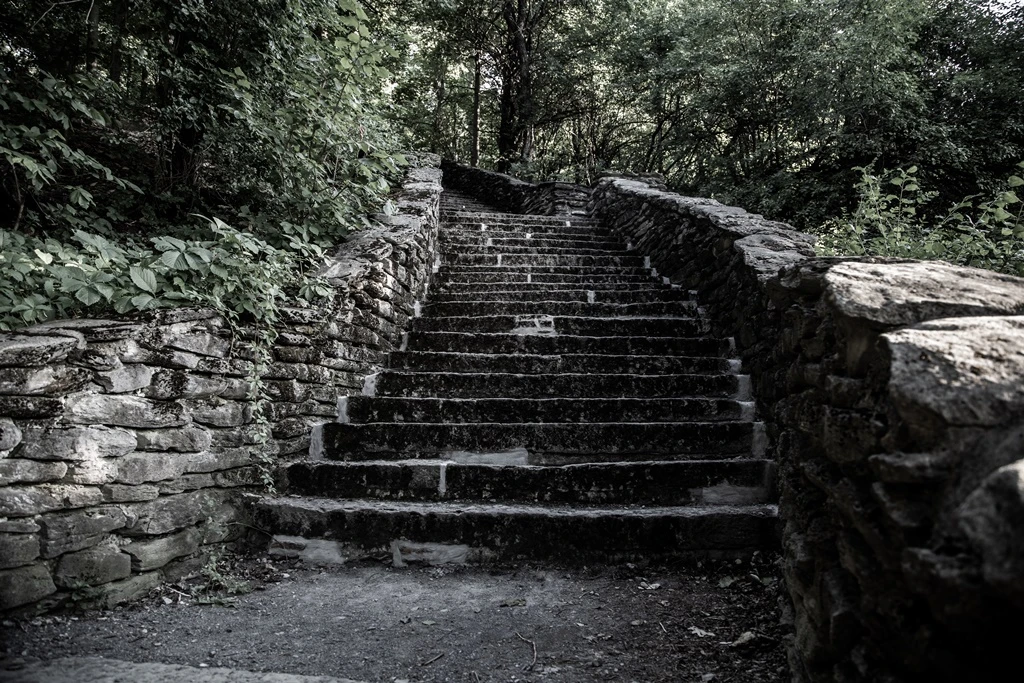
Thompson Park sprawls across 355 acres of rocky, wooded hillside on the northwest edge of Watertown, New York, in Jefferson County—a landscape of rolling meadows, steep overlooks, stone pavilions, and curving roads that climb toward a summit known as the Pinnacle, from which you can see clear across the city to Lake Ontario. It is a place designed for picnics, golf, sledding, and afternoon walks. It also has a zoo. None of this sounds like the setting for one of the stranger paranormal claims in the northeastern United States. But for well over a century, people have been reporting something in Thompson Park that does not fit comfortably into any familiar category—not ghosts, not hauntings, but something closer to a glitch in the landscape itself. The park was the vision of John C. Thompson, president of the New York Air Brake Company, who in 1899 anonymously contacted the Olmsted Brothers firm about designing a public green space for Watertown. John Charles Olmsted—nephew and adopted son of Frederick Law Olmsted, the father of American landscape architecture and designer of Central Park—took the lead. He produced a general plan by 1901, and over the next two decades supervised construction on the challenging terrain, designing walls, shelters, overlooks, and stairways into the steep hillside. Thompson secretly acquired the land and donated it to the city around 1916, though his identity as benefactor remained hidden until his death in 1924, when the park was renamed in his honor. A zoo was added in 1920. A golf course followed. The park became a centerpiece of civic life in Watertown, and it has remained one ever since. The claims associated with Thompson Park are not about apparitions or disembodied voices. They are about disorientation—spatial and temporal. Since at least the early 1900s, visitors have reported sudden episodes in which they appear to lose their bearings entirely, finding themselves transported to a different part of the park with no memory of walking there. These episodes are described as brief—roughly four minutes by the clock—but subjectively feel much longer. Witnesses report mist-like visual disturbances, nausea, confusion, and odd sensory effects. Some accounts claim that people have disappeared momentarily and then reappeared, disoriented and insisting they had briefly visited another time. A few darker versions of the legend suggest that not everyone comes back. The phenomenon has been loosely dubbed a "vortex," and witnesses have noted over the years that its apparent location shifts within the park's boundaries. In 2007, a paranormal investigation team called the Shadow Chasers was invited by a local Fox News affiliate to examine the park with electromagnetic field equipment. What they found was unusual: parallel bands of EMF running through the park in a grid-like pattern, intersecting at regular intervals. They could not identify a source. Sustained exposure to elevated EMF is known to produce nausea, headaches, the sensation of being watched, and in some cases visual and auditory hallucinations—symptoms that align closely with what visitors to the park have described. The investigators offered a tentative hypothesis: the so-called vortex may not be a portal at all, but a physiological response to an unexplained electromagnetic environment. They also acknowledged they had never encountered anything like the pattern before or since. The city of Watertown has leaned into the legend rather than away from it. In 2014, during a partial lunar eclipse viewing that drew roughly 250 people to the park's eastern tree line, city officials installed a sign dubbing the site "Watertown's Area 51"—a nod to the coincidence that the CIA's actual code name for Nevada's Area 51 was "Watertown," chosen by former director Allen Dulles, who was born in the city. The vortex is now listed on the Haunted History Trail of New York State, one of fifty paranormal destinations promoted across the state by a coalition of tourism agencies. Today Thompson Park remains open and free to the public. The sign is near the zoo entrance. The vortex, wherever it is at the moment, is somewhere in the trees.

Founder’s Memorial Park – Dead Man’s Park
Founders Memorial Park, commonly known as Dead Man's Park, occupies an unusual geographical and historical position as a contemporary recreational space built upon the site of an earlier cemetery. The park provides green space, walking paths, and facilities for public recreation and community gathering, serving the contemporary function of an urban or suburban park designed to provide environmental amenities and spaces for leisure activities. The landscape itself, with its varied topography and vegetation, maintains visual and spatial elements that preserve some character of its former use as burial grounds. The park spans a substantial geographical area, encompassing multiple zones and sections that collectively create the contemporary recreational space. Throughout the property, memorial elements and markers acknowledge the historical cemetery function, with some references to the burial grounds remaining visible to observant visitors. The paranormal phenomena documented at Founders Memorial Park reflect the unusual historical trajectory of the space, with manifestations concentrated in areas corresponding to former cemetery sections. Visitors and paranormal investigators have reported encountering ghostly fog that materializes in specific zones throughout the park, mist that exhibits properties inconsistent with ordinary meteorological phenomena. The fog appears at times and locations where atmospheric conditions would not naturally produce such effects, and witnesses describe passing through the supernatural mist as distinctly unnatural and disturbing. Shadowy figures have been observed throughout the park grounds, human-form silhouettes lacking substantial visual definition but clearly resembling the outline of people. These shadows move through the landscape with apparent purpose and awareness, suggesting entities rather than random optical phenomena. Cold spots have been documented in multiple locations throughout the park, zones where temperature drops dramatically below ambient conditions and persist despite lack of environmental explanation. Disembodied voices have been heard emanating from apparently empty areas throughout the park, voices that speak fragmentary phrases or communicate through means that escape clear comprehension by witnesses. These vocalizations have been captured by paranormal investigators equipped with electronic recording devices, with researchers documenting voice phenomena that could not be explained through ordinary sources. The voices appear concentrated in areas corresponding to cemetery sections, suggesting the spirits' communication attempts maintain connection to their burial locations. One particularly distinctive manifestation involves reports of a woman dressed entirely in white, a spectral figure appearing throughout the park grounds with sufficient consistency to suggest a specific entity. The distinctive apparitions include a ghostly groundskeeper entity appearing to maintain surveillance and protective behaviors toward the park space. The groundskeeper spirit exhibits behaviors consistent with someone engaged in maintaining or overseeing the grounds, suggesting attachment to the parcel of land itself. The legend of a buried man has persisted within the paranormal history, with stories suggesting unusual burial circumstances or an individual whose remains were interred under particular conditions. Contemporary operations of the park continue as a public recreational space while accommodating increasing awareness of documented paranormal phenomena. Visitors frequently report experiences, and paranormal investigation groups have documented substantial evidence of continued supernatural activity. The park stands as a unique location where the ordinary function of public recreation overlays the historical memory of cemetery use, with spirits of the departed apparently maintaining presence throughout the converted grounds.
River Legacy Park
River Legacy Park encompasses extensive grounds in Arlington, Texas, providing recreational space for residents and visitors throughout the region, yet it simultaneously harbors a dark and tragic history that has infused portions of the park with documented paranormal activity. The park's natural setting masks the fact that the land was the site of significant historical tragedy, particularly involving deaths under violent or mysterious circumstances. The Trinity River watershed has historically served as both a source of life and a site of death, its waters claiming numerous lives throughout recorded history. The park's recreational attractions, including the scenic Screaming Bridge, represent contemporary efforts to provide accessible outdoor space, yet these locations are inextricably linked to paranormal legends. The convergence of natural beauty and historical trauma creates a unique environment where the ordinary and supernatural appear to coexist. Paranormal entities documented within River Legacy Park include the spirits of Union soldiers who may have perished during the American Civil War, their deaths occurring far from their native homes. Historical research indicates that the Trinity River area was the site of military movements, skirmishes, and strategic positioning during the Civil War period. Additionally, the manifestations documented at the park include entities associated with a hobo individual whose circumstances of death remain unclear but whose continued presence has been reported by numerous witnesses. The identities of these spirits remain partially obscured by historical distance, yet the paranormal phenomena attributed to them continue with sufficient consistency to suggest genuine spiritual manifestation rather than mere folklore. The trauma of violent death appears to have created sufficient emotional intensity to anchor spirits to the physical location. Specific areas of River Legacy Park have acquired particular notoriety within paranormal investigation circles. The Screaming Bridge has become the most extensively researched paranormal location within the park complex, its name derived from reports of unexplained screams emanating from the structure and surrounding area. The bridge's structural design and isolation create an environment conducive to paranormal manifestation. Hell's Gate represents another designated paranormal hotspot, a location whose ominous name reflects the legendary severity of paranormal phenomena reported there. The geographical isolation of these areas, combined with their historical significance and accumulated reports of paranormal activity, has established them as locations of particular interest. Paranormal experiences reported at River Legacy Park consistently include the manifestation of disembodied voices, sounds of human vocalization emanating from apparently empty spaces without visible human presence. Multiple witnesses have reported the distinct sensation of being watched, an awareness of unseen observation creating the characteristic feeling of paranormal attention. Unusual cold spots manifest within the park grounds without apparent environmental explanation, creating dramatic temperature variations suggesting localized spiritual manifestation. Perhaps most compellingly, witnesses have reported the sighting of a red-headed man dressed in Confederate uniform, an apparition sufficiently vivid to identify specific characteristics of both his physical appearance and period-appropriate military attire. The consistent reporting of this apparition across multiple investigations suggests a stable manifestation with defined characteristics. The park's continued operation as a recreational facility reflects contemporary acceptance of haunted locations functioning as ordinary public spaces where living and spiritual presences coexist. Families, joggers, and casual visitors frequent River Legacy Park without awareness of paranormal phenomena manifesting within its boundaries. Paranormal investigators have conducted systematic investigations at the Screaming Bridge and Hell's Gate locations, producing documentation through audio recordings, photographic evidence, and accumulated witness testimony. The legends associated with River Legacy Park have become increasingly integrated into Texas paranormal folklore, with the location attracting researchers and enthusiasts seeking to document spirits persisting within the park's landscape. The red-headed Confederate soldier, disembodied voices, and inexplicable cold spots continue to manifest, suggesting Civil War era trauma has created paranormal consequences persisting across centuries.
Molly’s Rock Picnic Area
Molly's Rock Picnic Area occupies a designated recreational space within Sumter National Forest in Newberry County, South Carolina, established to provide public access to forest environment and outdoor recreation opportunities in this region of South Carolina's natural landscape. The picnic area development involved modification of natural forest terrain to accommodate visitor facilities including parking areas, picnic tables, sheltered gathering spaces, and interpretive signage. The site was developed on the location of a historic homestead structure that once existed on the property, reflecting the pattern of agricultural settlement and human occupation within forest regions across the American South. The picnic area's name derives from a distinctive natural landmark, a massive granite boulder known locally as Molly's Rock, which provides geographic focal point and symbolic center for the recreational space. The origins of the Molly designation remain unclear in available historical documentation, though local tradition suggests connection to a historical figure or family associated with the site. The history of the property preceding its development as a picnic area includes occupation by agricultural settlers and the establishment of community structures serving the residential and economic needs of the population. The old homestead structure visible in historical references suggests sustained occupation by a family or families who developed agricultural operations on the property and established permanent residential structures. The homestead period would have extended across multiple generations, creating family histories, local relationships, and personal attachments to the land and structures developed on the property. The property's development as a recreational picnic area involved alteration of the landscape and likely removal or deterioration of the historical homestead structure, representing a significant transformation of the site's historical significance. Local stories referenced in paranormal accounts mention the existence of a cemetery located on a nearby hilltop, reportedly containing graves of victims of suicide, possibly from a boarding school that burned down in historical times. Paranormal phenomena documented at Molly's Rock Picnic Area suggest intense spiritual disturbance and supernatural presence concentrated at this specific location within the forest. Visitors have reported witnessing bright lights appearing at night without identifiable source, creating illumination visible across the forest terrain and suggesting either paranormal orbs, phantom lights associated with spirits, or other unexplained luminescent phenomena. Eerie feelings and overwhelming sensations of dread have been reported by multiple visitors, particularly in evening and nighttime hours when forest darkness increases psychological vulnerability and susceptibility to paranormal perception. Unexplained sounds including voices, screams, and mechanical noises have been documented by witnesses exploring the picnic area during hours of low visibility and reduced visitor activity. Vehicle malfunctions represent a particularly significant category of paranormal phenomena at the site, with numerous accounts describing sudden engine failures and electrical system disruptions. The concentration of paranormal phenomena at Molly's Rock Picnic Area suggests multiple sources of spiritual disturbance, likely related to the historical boarding school disaster and the cemetery containing victims of suicide located on the nearby hilltop. The trauma experienced by individuals who died in the boarding school fire, along with the psychological devastation of subsequent suicides occurring among survivors and family members, created profound emotional imprints on the forest landscape. The spirits of these individuals appear to remain trapped or emotionally bound to the location of their deaths and grieving, manifesting through multiple forms of paranormal activity. The site remains one of South Carolina's most intensely haunted natural outdoor locations, with phenomena suggesting unresolved trauma persisting across many decades.
Donner Memorial State Park
Donner Memorial State Park in Truckee, California, marks the tragic location where one of the most infamous disasters in American frontier history unfolded, claiming the lives of multiple members of the Donner Party and leaving paranormal traces that persist in contemporary times. The park encompasses the site of the Donner encampment, where members of the ill-fated wagon train became trapped in the Sierra Nevada mountains during the winter of 1846. The Emigrant Trail Museum located within the park provides historical documentation and interpretation of the disaster, while the natural landscape serves as the physical setting where the catastrophic events transpired more than one hundred seventy years ago. The park grounds preserve the location where desperate pioneers endured extraordinary suffering, starvation, and ultimately unspeakable acts of survival, creating a landscape saturated with historical trauma and human anguish. The Donner Party, originally consisting of approximately eighty-seven individuals from multiple families, departed from Independence, Missouri, in 1846 with the intention of reaching California's valleys before winter snow closed the mountain passes. The group encountered multiple delays during their journey, including a fatal decision to attempt a shortcut through the Great Basin that consumed precious weeks of travel time. As fall progressed, the party became increasingly aware that they would not clear the mountains before winter weather arrived. When heavy snowfall struck in late October and November, the group found itself trapped in the Sierra Nevada at an elevation where survival became increasingly desperate. The party established encampments at two locations: one at Donner Lake, now adjacent to the memorial park, and another several miles away at what became known as the Alder Creek Camp. As winter deepened and food supplies dwindled, the situation within the Donner encampments became increasingly dire. The group attempted to send rescue parties over the mountains, with small groups departing on foot to seek help. Those who remained in the camps faced starvation as livestock perished and edible vegetation became inaccessible beneath heavy snow. The historical documentation of the Donner Party is remarkable for its careful preservation of the specific circumstances that led to the group resorting to cannibalism as a survival strategy. Detailed accounts, including journals and survivor testimonies, document the emotional and psychological impact of consuming the flesh of deceased party members, including relatives and companions. The act of cannibalism, undertaken as a desperate measure to survive, weighed heavily upon survivors throughout their subsequent lives, with multiple accounts suggesting profound psychological trauma from the experience. The ghost of Tamsen Donner, wife of party patriarch Jacob Donner, has become the most recognized paranormal manifestation at Donner Memorial State Park. Witnesses describe seeing a yellowish glowing female figure hovering above the ground and moving across the park landscape during nighttime hours. The apparition has been observed in areas that correspond to where the Donner family established their encampment and endured the most severe suffering. Other phenomena at the park include full-body apparitions of additional Donner Party members, with visitors reporting encounters with ghostly figures appearing at locations throughout the memorial grounds. A documented account describes a skier who became disoriented at nearby Sugar Bowl ski resort and was led to a campsite by a strange woman who appeared and then vanished without explanation. Another visitor, Elizabeth, reported overwhelming feelings of being watched at the site where the Donner family had established their tent one hundred fifty-two years prior to her visit, suggesting that the emotional weight of the family's suffering remains perceptible at the location. Experiencers at Donner Memorial State Park report additional paranormal phenomena including visions of encampment activities and the visual manifestation of historical events occurring at specific locations within the park. Cold spots emerge in areas of significant historical trauma within the park grounds, suggesting concentrated paranormal energy at locations where the most severe suffering occurred. Visitors report disorientation and confusion at various locations within the park, with individuals becoming lost in areas they previously understood, suggesting that the paranormal presence may extend to the manipulation of perception and spatial awareness. The Emigrant Trail Museum contains artifacts and historical displays related to the Donner Party tragedy, with some visitors reporting unexplained phenomena while viewing the exhibits. Donner Memorial State Park continues to function as a public historical site and State Park facility, with the paranormal reputation of the location becoming increasingly integrated into its historical interpretation. Paranormal investigation groups have conducted documented investigations at the park, attempting to record evidence of spectral manifestation and establish communication with the spirits of the deceased party members. The combination of documented historical tragedy, multiple witness accounts of paranormal activity, and preserved physical evidence of the encampments has established Donner Memorial as a significant location in the study of how sites of extreme human suffering may retain paranormal signatures. The park stands as a solemn reminder of the human cost of frontier expansion and the psychological and spiritual consequences of trauma sufficiently extreme to persist in non-corporeal form across more than a century of elapsed time.
DeForest Park
DeForest Park in Long Beach, California, comprises a fifteen-acre urban greenbelt and wetlands restoration area situated within the dense urban landscape of Long Beach. The park serves dual purposes as both a recreational space for the surrounding community and as a recognized location of paranormal interest and supernatural phenomena. The wetlands restoration project transformed the area into a unique ecological environment within the city, creating habitat for aquatic and terrestrial species while establishing green space in an otherwise developed urban zone. The park's design includes pathways and open areas that allow public access while maintaining designated sections dedicated to ecological restoration and species preservation. The location's unusual history, combining environmental restoration with reports of intense paranormal activity, has made it a distinctive destination for paranormal researchers investigating the relationship between natural spaces and supernatural manifestation. Visitors and paranormal investigators at DeForest Park have consistently reported sightings of unusual apparitions and shadow figures moving through the park grounds, particularly during evening hours and nighttime visits. Descriptions of paranormal entities include references to a crab-like ghost or zombie figure that has been observed moving through the wetlands areas, as well as reports of a female apparition that allegedly chases visitors through the park. These entities do not conform to typical human appearance, suggesting either demonic manifestations or spectral forms dramatically altered from their original appearance. Strange shadows move independently of any visible light sources, and unexplained noises emerge from various locations throughout the park, creating an environment of constant sensory disturbance. Visitors report overwhelming feelings of being followed or watched, with the pervasive sense that unseen presences track their movements through the park. Disembodied voices have been documented at DeForest Park, with paranormal investigators recording audio that captured unexplained vocalizations occurring in areas verified as unoccupied at the time of recording. The voices manifest as whispers, calls, or indistinguishable speech fragments that do not correspond to any human activity at the location. Sudden cold spots emerge randomly throughout the park, with temperature drops of twenty to thirty degrees occurring in localized areas despite ambient conditions remaining stable. These cold spots often precede apparition sightings or voice phenomena, suggesting they may be indicators of paranormal manifestation. An oppressive feeling permeates portions of the park, described by visitors as a heavy, suffocating sensation that generates intense anxiety and distress in affected individuals. Local legend surrounding DeForest Park includes accounts of the "Witch of DeForest Park," a woman said to have originated in New Orleans who possessed a gift for remedies and held a reputation for strange practices and esoteric knowledge. The legend suggests this individual engaged in unusual spiritual or occult activities at the location, possibly creating spiritual disturbances that persist in contemporary times. Some paranormal researchers theorize that the intensity of paranormal activity at DeForest Park may be connected to such historical spiritual practices or the presence of an individual with unusual psychic or supernatural abilities. The combination of environmental transformation, spiritual history, and accumulated reports of paranormal activity has established the park as a focal point for paranormal research in Southern California. The Anubis Paranormal Research Organization conducted investigation at DeForest Park and concluded that the location may harbor paranormal activity that manifests with particular intensity to individuals possessing heightened psychic sensitivity. The organization's findings suggest that the phenomena at the park may not be accessible to all visitors with equal clarity, but rather appears concentrated in specific areas and responsive to particular environmental or temporal conditions. The nature of the entities reported at DeForest Park, combined with the physical environmental conditions and historical associations with spiritual practices, has established the location as one of Long Beach's most actively investigated paranormal sites. The park continues to attract paranormal researchers and ghost hunters despite the documented intensity of reported phenomena, maintaining its status as a recognized location of supernatural interest within the broader context of California haunted places.
Kent Robertson Park
Reported haunted park in Huntsville, AL.
Prospect Park
Prospect Park spans 11.4 acres of landscaped grounds in Redlands, California, presenting itself as a peaceful recreational space where families gather for outdoor activities, children play in developed areas, and nature enthusiasts explore native vegetation. However, beneath this pleasant surface lies a dark history of violent crime and death that began long before the park's formal establishment. The location has served as a dumping ground for human remains since at least the late nineteenth century, when the dense foliage and remote sections provided convenient concealment for bodies that perpetrators sought to hide from discovery. The park's theatrical stage, built in a central cleared area, became notorious during the late 1960s when construction workers uncovered skeletal remains beneath its foundation, initiating a criminal investigation that would expose one of the region's most shocking murders. In 1968, eleven-year-old Lee Anne disappeared near a nearby elementary school, prompting an intensive search that ended tragically when her small body was discovered hidden beneath the Prospect Park theater stage. The circumstances of her death suggested she had been abducted, sexually assaulted, and murdered by an unknown attacker who deliberately concealed her remains in a location frequented by park visitors and children. The discovery sent shockwaves through the Redlands community and transformed Prospect Park from a simple recreational space into a place associated with predatory violence against children. Lee Anne's murder was never officially solved, and her killer remained unidentified, leaving her parents and the community with profound unsolved grief and unanswered questions. Her small body's resting place beneath the park stage became the most significant of multiple crime scenes within the park's boundaries. Beyond Lee Anne's documented murder, Prospect Park accumulated additional violent deaths throughout the twentieth century, including homeless individuals found deceased in remote bamboo groves and other sections of the park. The dense vegetation and isolated areas made the park attractive to transient populations seeking shelter, but these vulnerable individuals frequently died from exposure, malnutrition, or injuries sustained in dangerous conditions. Additionally, rumors and documented reports indicate that during the late 1970s and 1980s, satanist groups conducted nocturnal gatherings in remote sections of the park, building fires, chanting ceremonially, and conducting rituals that local residents found deeply disturbing. These gatherings added layers of psychological trauma to the park's reputation, associating it not only with conventional crime but also with deliberate spiritual transgression and intentional desecration of a public space. The paranormal phenomena reported at Prospect Park reflect the accumulation of violent deaths and spiritual disturbance across multiple incidents and generations. Visitors and investigators report the sound of running footsteps racing across the theater stage despite no visible runners, accompanied by the mechanical sound of theater seats folding and unfolding by unseen hands. The theater area exhibits lights that flicker and strobe without electrical explanation, creating a disorienting atmosphere that many visitors find deeply unsettling. Shadow figures appear throughout the grounds, particularly in the bamboo groves and dense vegetation areas, manifesting as dark silhouettes that move independently and vanish when directly observed. Apparitions of distressed individuals have been photographed in various locations, with some appearing transparent or semi-solid. The entire park exhibits pervasive cold spots, areas of sudden temperature depression that shift location unpredictably, accompanied by feelings of profound dread and a sensation of malevolent presence. Today, Prospect Park remains a public recreational facility, though its paranormal reputation has become increasingly well-known through paranormal investigation television programs and online paranormal databases. The park authorities neither discourage nor officially acknowledge paranormal investigation, leaving the facility accessible to ghost hunters and curious visitors drawn by the dark history. The juxtaposition of the park's intended purpose as a community gathering space with its reality as a location of accumulated tragedy creates a persistent cognitive dissonance for regular visitors. Children still play in designated recreational areas yards away from the sites of serious crimes, while shadow figures reportedly move through the same landscape.
Canyon De Chelly
Canyon De Chelly stands as one of the most significant natural monuments in the American Southwest, an impressive geological formation carved over millions of years by water erosion through layers of sandstone and shale to create a dramatic canyon system rising over eight hundred feet above the canyon floor. The canyon's distinctive red and orange rock formations, visible for vast distances across the surrounding landscape, mark Canyon De Chelly as a visually spectacular and culturally profound location within the territory of the Navajo Nation in northeastern Arizona, near the community of Chinle. The canyon has served as a home and refuge for indigenous peoples for over five thousand years, with archaeological evidence documenting continuous human habitation and cultural development within the canyon system. The distinctive geology of Canyon De Chelly provided natural shelter, accessible water sources, arable land suitable for agriculture, and defensive advantages against invasion or aggression, making it an ideal location for sustained settlement and cultural development. The Navajo people developed a sophisticated civilization within Canyon De Chelly and surrounding territories over centuries, constructing dwellings, developing agricultural practices suited to the arid Southwest environment, and creating a rich cultural and spiritual tradition intimately connected to the canyon landscape. The Navajo maintained cultural practices including textile weaving, silverworking, and herding of livestock that utilized the canyon's resources and created a sustainable adaptation to the harsh Southwest environment. The spiritual traditions of the Navajo people held particular locations within Canyon De Chelly as sacred spaces, locations imbued with spiritual power and cultural significance that transcended mundane physical reality. This spiritual significance increased the emotional and psychological weight of the canyon, infusing the landscape with meaning and creating conditions potentially conducive to sustained paranormal phenomena and spiritual manifestation. This intimate historical and spiritual relationship between the Navajo people and Canyon De Chelly was violently disrupted in 1805, when a military expedition led by Spanish soldiers attempted to suppress perceived rebellious resistance and capture Navajo people for forced labor and sale. Following aggressive pursuit and conflict, large numbers of Navajo people, seeking refuge and protection, retreated to a specific cave location within the canyon system, known to history as Massacre Cave. The Spanish military force, unwilling to permit the escape of their targets, launched an assault on the cave, trapping the Navajo population within the geological formation and opening fire with devastating effect on the trapped inhabitants. The violence and death that occurred within Massacre Cave exceeded one hundred fifteen lives, with men, women, and children suffering violent deaths in a location that should have provided safety and refuge. Paranormal phenomena at Canyon De Chelly concentrate near Massacre Cave extending throughout the canyon system, manifesting with particular intensity during darkness when modern activity ceases. Visitors and paranormal investigators report hearing disembodied voices crying out in distress, anguished utterances echoing across centuries from violent death moments. Screams and moans emanate from various locations without apparent source, creating atmosphere of profound suffering. Sounds of horses and gunfire replay within the canyon environment as if traumatic moments are eternally preserved in geological acoustic properties. Visitors report overwhelming dread, oppression, and psychological heaviness dissipating upon leaving, suggesting emotional and psychological massacre residue permeates the canyon's spiritual environment. According to Navajo spiritual traditions, Chindi spirits remain present within Canyon De Chelly at locations associated with traumatic death. Navajo beliefs propose Chindi spirits communicate with living people and potentially cause illness or harm through disrespect. This understanding aligns closely with contemporary paranormal investigation conclusions about Canyon De Chelly's hauntings. The continued presence of massacre victims' spirits suggests inability or unwillingness departing violent death locations, consciousness remaining bound to the canyon through trauma intensity and location significance within spiritual and cultural worldview.
Lewis and Clark Park
Lewis and Clark Park, located in Council Bluffs, Iowa, occupies a historically significant location along the Missouri River valley in the region where westward expansion and frontier exploration began during the nineteenth century. The park was established to commemorate the historical expedition of Lewis and Clark, the legendary explorers whose 1804-1806 journey across the North American continent represented a defining moment in American geographical expansion and continental exploration. The park contains a distinctive monument dedicated to these explorers, creating a physical focal point for historical memory and commemoration. The landscape of the park reflects the natural features of the river valley, with varied terrain, vegetation, and open spaces characteristic of the region's topography. Council Bluffs itself occupies terrain with significant elevation changes and proximity to river systems that have shaped both the geological history and the human settlement patterns of the area throughout recorded history. Paranormal phenomena reported at Lewis and Clark Park remain enigmatic and difficult to categorize within conventional frameworks of haunting interpretation. The phenomena appear to be concentrated in proximity to the Lewis and Clark monument, suggesting a possible connection between historical commemoration and paranormal manifestation. Park visitors report experiences of sudden onset illness, physical nausea, and profound disorientation occurring in specific locations without apparent medical cause. The symptoms appear to be geographically concentrated and transient, disappearing rapidly once the affected individual departs the location. The nausea and disorientation reported by visitors cannot be attributed to food illness, air quality, or obvious environmental factors. Some visitors have reported emotional disturbances characterized by unusual feelings of sadness, melancholy, or anxiety with no apparent triggering cause. These emotional phenomena suggest the presence of residual emotional impressions or spiritual entities expressing psychological states through sympathetic transmission to living persons. Additional paranormal phenomena documented at Lewis and Clark Park include disembodied voices and unusual sounds described as chanting or rhythmic vocalization. The nature of these sounds and their apparent origin from uninhabited areas of the park suggest either paranormal voice phenomena or unidentified sound sources. Some visitors have reported experiences of temporal distortion, specifically sensation of lost time where periods of minutes appear to compress or expand beyond their actual duration. The collection of phenomena appears to lack obvious connection to a single tragic event or historical tragedy, distinguishing Lewis and Clark Park from locations haunted by specific documented deaths or catastrophes. The phenomena remain largely unverifiable through objective scientific measurement, posing challenges for paranormal research communities seeking to document and understand the experiences reported by visitors. The paranormal phenomena at Lewis and Clark Park have received limited documentation through formal paranormal investigation, partly due to the difficulty in verifying subjective experiences such as nausea, disorientation, and emotional disturbance. The phenomena do not manifest through clear apparitional sightings or documented recordings amenable to objective verification. Nevertheless, the consistency of reported experiences across multiple independent visitors and the geographical concentration of phenomena in proximity to the historical monument suggest that genuine paranormal phenomena may be occurring at this location. The phenomena may relate to residual impressions of Native American occupation of the region prior to European settlement, or potentially to the psychological weight of historical significance associated with the Lewis and Clark expedition. Lewis and Clark Park remains a location of limited paranormal documentation but continued anecdotal reporting, suggesting that the phenomena, while real to those who experience them, remain scientifically elusive and difficult to definitively explain through paranormal investigation frameworks.
Jenners Park
Jenners Park in Loup City, Nebraska, represents a significant historical landmark within this small community located in Sherman County in the central part of the state. The park was developed during a historical period when small agricultural communities in Nebraska were establishing public gathering spaces and attractions designed to serve both local residents and visitors from surrounding regions. The park's development reflected the entrepreneurial spirit and community investment characteristic of rural Nebraska during the late nineteenth and early twentieth centuries. A notable feature of Jenners Park was its establishment as a zoological facility, housing various animal species in cages and enclosures designed to provide educational and recreational opportunities for community members and visiting families. In addition to the zoo functions, the park contained a distinctive structure known as the Mummy House, which housed an Egyptian mummy and associated artifacts presented as a curiosity attraction. This combination of a functioning zoo with exotic animal exhibits and a museum-like structure created a unique entertainment and educational destination that drew visitors from across the region. The paranormal phenomena documented at Jenners Park present a distinctive character compared to many other haunted American locations. Rather than apparitions or physical manifestations, the primary paranormal activity reported at the site consists of disembodied childlike laughter heard emanating from the park grounds during nighttime hours. Multiple witnesses over many decades have described hearing unmistakable sounds of children laughing, playing, and vocalizing in ways that suggest the presence of youthful spirits. The laughter is described as joyful and playful in character, lacking the menacing or threatening qualities associated with some paranormal phenomena. The sounds appear to originate from various locations throughout the park grounds rather than from a single point, suggesting multiple spirit entities associated with the location. Paranormal investigators conducting audio recordings in the park have captured phenomena consistent with these accounts. The historical context for understanding the paranormal activity at Jenners Park appears connected to the zoo's function and the animals housed there, as well as the presence of children who visited the facility for entertainment and education. Some paranormal researchers have theorized that children who died under tragic circumstances at the park may have left spiritual imprints manifesting as the documented childlike laughter. Others have suggested that the repetition of joyful play and laughter from countless children visiting the zoo over many years may have created residual energy patterns. The Mummy House component of the park, with its presence of preserved human remains, has also been considered by some paranormal researchers as potentially contributing to the spiritual activity. Jenners Park remains a public park and community gathering space in Loup City, though the original zoo facilities and Mummy House have been removed or relocated as historical periods changed. The park grounds continue to be frequented by residents and visitors, and reports of the distinctive childlike laughter have persisted across multiple decades. Paranormal investigators have conducted formal investigations at the location, documenting the phenomena through audio recording equipment and observational research. The park has been catalogued within Nebraska's paranormal database as an authenticated haunted location with documented phenomena.
Point Lookout State Park
Point Lookout State Park occupies a strategically significant peninsula extending into the Potomac River in southern Maryland, and the location possesses a profoundly tragic history as the site of Camp Lincoln, a massive Confederate prisoner-of-war camp established during the American Civil War. The camp's origins trace to 1862 when Union military authorities recognized the site's geographical advantages for prisoner containment and established a detention facility designed to incarcerate captured Confederate soldiers and detainees. At the height of its operation, Camp Lincoln functioned as one of the most crowded and demanding military installations of its type, housing more than fifty-two thousand Confederate prisoners within confines that could scarcely accommodate such numbers. The prisoner population fluctuated dramatically throughout the war, with waves of captures and exchanges creating conditions of extreme overcrowding, inadequate sanitation, insufficient food supplies, and rampant disease. The peninsula's isolated location, though strategically advantageous for containment purposes, proved geographically problematic for prisoner welfare, as the lack of adequate medical facilities and the prevalence of waterborne illness created mortality rates exceeding those documented at many other Civil War prison camps. The physical and psychological trauma inflicted upon the tens of thousands of soldiers confined at Camp Lincoln during the Civil War left an indelible mark upon the location that apparently transcends the ordinary passage of time and death. Historical records document that thousands of prisoners perished at the site from disease, malnutrition, exposure, and the various afflictions associated with catastrophic overcrowding and inadequate care. Mass graves containing the remains of deceased prisoners dotted the peninsula, though many were subsequently relocated following the war as survivors sought to reclaim and properly memorialize their fallen comrades. The concentration of human suffering, death, and trauma associated with the prison camp apparently created conditions particularly conducive to paranormal manifestation, with the location becoming recognized as one of the United States' most actively haunted sites. The Point Lookout Lighthouse, constructed to mark the peninsula's position and guide maritime traffic, stands as the most visibly haunted structure on the property and has remained uninhabited since the 1980s despite its architectural integrity and historical significance. The paranormal phenomena documented at Point Lookout State Park demonstrate a consistency and intensity that has established the location's reputation as extraordinarily active with supernatural manifestation. The lighthouse interior, despite its current vacancy, reportedly exhibits continuous paranormal activity including the appearance of ghostly figures visible to visitors and investigators, disembodied voices emanating from empty chambers, and a pervasive smell of decomposition and rot that witnesses describe as overwhelming and nauseating despite the building's current absence of physical sources for such odors. Civil War soldiers, identifiable in some cases through their military uniforms captured in photographs, appear throughout the park with particular concentration near the lighthouse structure. One documented apparition depicts a uniformed soldier leaning against the lighthouse door frame, his translucent form seemingly guarding or maintaining watch over the structure even in death. Additionally, the apparition of an unidentified woman searches the grounds apparently seeking the location of her grave, having reportedly approached visitors to request assistance in locating her burial site among the numerous graves scattered across the peninsula. The intensity and multiplicity of paranormal phenomena at Point Lookout reflects the sheer concentration of trauma, death, and unresolved spiritual distress apparently concentrated within this historically significant location, making it a focal point for paranormal investigation and documentation of supernatural manifestation.
Gay City State Park
Gay City State Park, located in Hebron, Connecticut, encompasses an area of profound historical significance, comprising the remnants of what was once a thriving eighteenth-century community that has since been entirely abandoned and reclaimed by forest. The park preserves not only natural woodland habitat but also archaeological evidence and ghost town infrastructure from a settlement that represented the aspirations and labor of families who sought to build prosperous lives in the Connecticut countryside. The original community, known as Gay City, was established during the colonial and early federal periods when New England settlement expansion was opening previously unsettled territories to agricultural and commercial development. The town supported various industries and crafts, including the blacksmith trade, which provided essential services to surrounding agricultural communities. A charcoal pit, still visible within the park, testifies to the industrial activity that sustained the community's economy. Gay City thrived for several generations, with families building homes, establishing farms, and embedding themselves deeply within the landscape through labor, investment, and emotional commitment. The settlement developed the social structures and commercial networks necessary for community survival and stability. The blacksmith provided essential services that made frontier life more sustainable. Children grew up within the community, learning trades and developing attachments to the landscape and fellow community members. However, the forces of history that transformed American society during the nineteenth century rendered small rural settlements increasingly vulnerable to economic displacement and population migration. The decline of Gay City paralleled the transformation of New England's economy from agricultural self-sufficiency to urban industrial concentration. Young people migrated to cities and industrial centers seeking economic opportunity. Agricultural productivity declined as western lands opened up. The charcoal industry, central to Gay City's economic viability, became obsolete. One by one, families departed, seeking better economic prospects elsewhere, until finally the community was entirely abandoned and consumed by advancing forest. However, the abandonment of Gay City was marked by profound human tragedy that appears to have left indelible paranormal impressions upon the landscape. A murdered peddler met violent death within the community, his life extinguished through criminal action. A blacksmith's apprentice also died under circumstances that remain historically ambiguous, but evidence suggests his death may have been similarly violent or traumatic. These deaths, combined with the broader human tragedy of community dissolution, imprinted the landscape with sorrowful psychic energy. Paranormal investigation teams and visitors to Gay City State Park have documented extensive supernatural phenomena concentrated in the forest areas and trails that once connected the abandoned settlement. The apparition of a young man, believed to be the blacksmith's apprentice, has been repeatedly sighted throughout the wooded areas, with witnesses describing a ghostly figure who appears to be searching desperately for something or trying to communicate urgent information. This apparition is frequently described as appearing troubled and distressed, sometimes witnessed with his head in his hands in a gesture of despair. Disembodied voices emanate from the forest, including murmurs and fragmentary speech that seem to carry emotional weight. Shadow figures move through the trees with apparent purpose, their forms humanoid but lacking substantiality. Paranormal investigation teams have captured images of spirit mists and anomalous orbs. Gay City State Park stands today as a haunted monument to the cycles of history, the ephemerality of human settlement, and the possibility that violent and tragic deaths may imprint themselves upon landscape in ways that persist long after physical evidence has been consumed by nature. The park exemplifies the haunted landscape phenomenon, where the convergence of human tragedy, violent death, and intensely felt emotional experiences may create paranormal manifestations that persist across centuries, ensuring that forgotten communities and departed individuals are not entirely erased from human consciousness.
Ammon Park
Ammon Park, situated in Pocatello, Idaho, represents a public recreational space designed to serve the community's leisure and entertainment needs through the provision of playground equipment, open lawn areas, and landscaped features. The park's location within the urban residential landscape of Pocatello positioned it as an accessible destination for families, children, and community members seeking outdoor activity and social interaction during daylight hours. The facilities at Ammon Park include traditional playground equipment including swing sets, seating areas, and related recreational infrastructure designed to accommodate children of various ages and their supervising adults. The park's function as a community amenity reflects American urban planning practices emphasizing accessible public space and the availability of recreational opportunities within established neighborhoods. However, the park's current reputation within paranormal research communities and among local residents has transcended its conventional function as a recreational facility, becoming known instead as a location of significant paranormal activity. The specific historical circumstances that precipitated the death of a young girl within or near the park remain somewhat ambiguous within available documentation, though paranormal researchers and local residents consistently report the presence of a child's spirit associated with the location. The girl, described by witnesses as appearing to be approximately school-age, is reported to have worn a distinctive blue dress during her paranormal manifestations, a garment detail that has remained consistent across multiple independent witness accounts spanning decades. The circumstances of the child's death—whether through accident, illness, or foul play—have not been definitively established through conventional historical documentation, though paranormal researchers have theorized that the child may have been a victim of violence or unexpected fatal injury occurring at the park. Paranormal phenomena at Ammon Park have been extensively documented by paranormal investigation teams, local residents, and casual witnesses, providing substantial corroborating evidence for the presence of a child's spirit. The most prominent paranormal manifestation involves sightings of the ghostly apparition of a young girl, consistently described as wearing a blue dress and engaging in the activity of swinging on the park's swing set. Multiple witnesses have reported observing the girl swinging on the equipment during evening and late-night hours, moving with apparent joy and vitality, only to have the apparition vanish upon closer approach or upon the witness's sustained attention. Additional paranormal phenomena include the documented observation of empty swing sets moving with apparent autonomous motion, suggesting that invisible forces cause the equipment to oscillate and swing despite the absence of any visible child. Paranormal investigation teams conducting systematic studies at Ammon Park have documented additional paranormal phenomena including unexplained footsteps, disembodied sounds of children's laughter and play, physical sensations experienced by sensitive individuals, and electromagnetic field anomalies recorded in the vicinity of the swing set. Investigators have documented instances wherein the park's utility shed door closed and locked without human intervention, suggesting paranormal agency over physical structures. Magnetic anomalies measured at the swing set location indicate the presence of unusual energetic phenomena concentrated at the location. The consistency of reported phenomena across multiple seasons, years, and investigations provides compelling evidence for the authentic presence of a child's spirit manifesting at Ammon Park.
Holy Land USA
Holy Land USA emerged as an ambitious recreational and spiritual theme park offering visitors comprehensive representation of biblical landscapes and historical religious sites, constructed in Waterbury, Connecticut and opened in 1955. The park represented a distinctive American approach to religious tourism and recreation, creating a commercialized environment merging secular leisure activities with religious education and spiritual contemplation. The concept reflected broader mid-twentieth-century American interests combining popular entertainment with religious content, appealing to families seeking both amusement and spiritual enrichment. Holy Land USA accumulated attractions, landscapes, and architectural reconstructions, attempting to reproduce the religious sites and biblical landscapes of the Middle East in miniature and theatrical form. The park's commercial development and continuous operation through the 1960s and 1970s established it as a significant regional attraction within Connecticut's leisure economy. Holy Land USA's trajectory shifted dramatically in 1984, when the park closed permanently, ending decades of operation and leaving the facility to deterioration and abandonment. The closure resulted in physical transformation from an active entertainment venue into an increasingly decrepit and neglected landscape, where constructed attractions began their slow decay under weather exposure. The transition from active commercial operation to abandonment created conditions conducive to paranormal manifestation, as unused and neglected spaces are frequently associated with supernatural phenomena. The shutdown transformed a place designed explicitly for spiritual engagement into a spiritually liminal space no longer serving its intended purpose. Paranormal reports emerged coincidentally with or shortly after the park's 1984 closure, suggesting a temporal connection between abandonment and paranormal manifestation. The first documented haunting account emerged in 1984 when passersby encountered a woman appearing near the gate of the abandoned property. This apparition was distinctive in its apparent mobility and association with an anomalous vehicle: witnesses reported the woman, appearing as a full-body apparition in period clothing, would vanish when observed entering a phantom car that subsequently disappeared from view. This account represents a distinctive paranormal phenomenon category in which the supernatural figure operates within frameworks familiar from normal human activity but with paranormal modifications suggesting altered reality or supernatural intervention. Paranormal investigation teams visiting abandoned Holy Land USA reported experiences documenting phenomena beyond the traditional lady in the phantom car narrative. One ghost hunting team reported experiencing sensations of peacefulness upon entering the overgrown property, contrasting sharply with its aesthetically deteriorated and physically dangerous condition. More significantly, this team experienced substantial and unexplainable battery drain on recording equipment, a phenomenon frequently associated with paranormal activity and attributed to energy expenditure by supernatural entities. The technological malfunction provides tangible evidence of alleged supernatural interference, though skeptics attribute such phenomena to conventional technical failures or environmental electromagnetic conditions. Holy Land USA's paranormal status intensified following a significant tragedy on July 15, 2010, when a murder occurred within the abandoned park. This violent death added layers of contemporary tragedy to the dark historical narrative, potentially creating new focal points for paranormal activity and spiritual disturbance. The murder substantially contributed to the park's reputation for danger and paranormal manifestation, lending contemporary human tragedy to previous concerns about historical spiritual violation. Following this incident, access was increasingly restricted, with the property placed under substantial monitoring and marked with no-trespassing signage. Despite legal boundaries, the paranormal reputation continued attracting occasional investigators willing to risk legal violation pursuing encounters with documented phenomena. Holy Land USA stands as a complex location where religious commercialization, spiritual aspirations, gradual physical decay, and contemporary tragedy converge within an increasingly inaccessible property.
Barnard Park
Barnard Park in Fremont, Nebraska, occupies land with a complex, tragic, and spiritually troubled history that has attracted professional paranormal investigators and created significant controversy regarding the proper treatment of human remains and respectful interaction with ancestral burial grounds. The park's geographic location precisely marks the site of a former cemetery where community residents and pioneer settlers were interred according to the burial practices and cultural traditions characteristic of the period. The area's transformation and development into a modern recreational park involved the relocation of the cemetery, a process that created significant disruption to burial sites and raised serious historical questions about whether all remains were properly relocated and whether appropriate spiritual protocols were observed during the transition process. The park's boundaries border the historic Mormon Trail, a significant overland pathway extensively used by members of the Latter-day Saint movement during their massive westward migration during the nineteenth century, infusing the location with deep religious and cultural significance extending beyond typical recreational park functions. The documented historical record indicates the presence of at least seven distinct and separate spiritual entities inhabiting the park grounds, a number suggesting multiple tragic or violent deaths rather than isolated singular incidents. Among the multiple entities documented through paranormal investigation is a grieving mother whose daughter was lost or died on the Mormon Trail under tragic circumstances, the woman's spiritual manifestation suggesting she remains eternally bound to the location by maternal grief and the profound trauma of losing her child under circumstances completely beyond her control. Young girls have been reported among the documented spiritual presences, raising deeply disturbing questions about childhood deaths and the specific circumstances under which these tragedies occurred in history. A woman's apparition has been repeatedly observed near the bathroom building that serves the park's contemporary recreational functions, with witnesses describing her manifestation as confused, disoriented, or distressed, possibly completely unaware that her burial ground has been fundamentally transformed into a recreational facility for the living. Men's voices have been captured during paranormal investigations, though their specific identities and historical contexts remain unclear from available historical documentation and research conducted. Paranormal investigators have documented distinct apparitions walking through the park grounds, particularly near the bathroom building where encounters occur most frequently among visitors and researchers conducting investigations and documentation. Disembodied voices captured during paranormal investigations contain fragments suggesting communication attempts or expressions of distress and confusion regarding their circumstances and location change. EVP recordings have captured what researchers interpret as affirmations and responses to questions posed during investigations suggesting conscious response and awareness. Footsteps echo across the park during night hours when few visitors are present, their cadence suggesting purposeful movement through familiar territory. The tragedy of the cemetery's disruption and relocation continues to haunt the location spiritually with profound effect.
Los Angeles National Forest – Gravity Hill
Gravity Hill in the Sylmar area of Los Angeles National Forest represents a paranormal location distinguished by a single unusual physical phenomenon that has generated decades of investigation, speculation, and debate regarding both the nature of the effect and its potential causes. The site is located in the foothills north of Los Angeles, accessible via Kagel Canyon Road, within terrain that includes both national forest land and private property. The specific location consists of a roadway with a notable downward slope that, when measured by careful instruments and tested by multiple independent observers, appears to defy conventional gravitational principles. The surrounding terrain includes a nearby cemetery known as Shalom Cemetery, which adds to the location's paranormal mystique and may represent an additional source of spiritual activity. The combination of the gravitational anomaly with the presence of burial grounds and the historical indigenous populations of the region has created a location with multiple layers of paranormal and historical significance. The primary phenomenon associated with Gravity Hill involves the apparent defiance of gravitational physics, wherein vehicles placed in neutral gear on the downward slope appear to roll uphill rather than downward. Hundreds of visitors and paranormal researchers have tested this effect, with the majority reporting that vehicles positioned in neutral will indeed roll backward up the slope, moving against the expected direction of gravitational attraction. This phenomenon has generated extended scientific debate and investigation, with some researchers and physicists attributing the effect to optical illusion created by the slope's relationship to surrounding terrain and the horizon line. Others have suggested that magnetic anomalies or local gravitational variations could account for the phenomenon, while paranormal researchers interpret the effect as evidence of spiritual or supernatural intervention. The lack of definitive scientific explanation has allowed the location to maintain its paranormal significance despite the plausible alternative explanations that exist. Paranormal accounts associated with Gravity Hill include the legend that children's spirits are responsible for the gravitational anomaly, having died in a bus accident on or near the location decades ago. According to the local narrative, a school bus lost control on Kagel Canyon Road, resulting in a catastrophic accident that killed multiple children. The spirits of these deceased children are interpreted as actively intervening in the physical environment to prevent additional tragedies by pushing vehicles uphill, thereby protecting contemporary drivers from the same fate that claimed their lives. This interpretation creates a narrative in which the paranormal phenomenon serves a protective purpose rather than representing a malevolent or purely inexplicable force. The emotional power of this narrative, combined with the documented physical effect, has made Gravity Hill a location of significant interest to paranormal investigators seeking to understand how spiritual forces might interact with physical reality. Additional paranormal phenomena reported at Gravity Hill and the surrounding Sylmar area include sightings of children's spirits, disembodied voices, and a generalized chilling presence that visitors describe experiencing while in the location. Multiple witnesses have reported seeing apparitions of children playing or appearing distressed near the roadway and in the surrounding terrain. Disembodied voices calling out, laughing, or speaking indistinct words have been documented by paranormal investigators using audio recording equipment. The presence of nearby Shalom Cemetery adds another layer of spiritual activity, with some researchers suggesting that the location's concentrated paranormal phenomena may result from the intersection of multiple spiritual sources including both the child spirits associated with the bus accident and spirits connected to the cemetery. Paranormal investigations conducted at the site have utilized electromagnetic field detection, thermal imaging, and audio recording, with some results interpreted as supporting the existence of child entities. Gravity Hill remains accessible to paranormal investigators and curious visitors, though public access may be restricted in certain areas due to private property limitations and national forest regulations. The site has become a destination for paranormal tourism, attracting investigators from across the region who conduct their own tests and investigations of the gravitational anomaly.
Indiana Dunes State Park
Indiana Dunes State Park, situated along the southern shore of Lake Michigan near Gary, encompasses a landscape of towering sand formations and pristine beaches that have captivated visitors for generations. The dunes began forming thousands of years ago through glaciation and wind patterns, creating an ever-shifting environment of remarkable natural beauty. By the early twentieth century, the area had become increasingly recognized as ecologically significant, drawing nature enthusiasts and those seeking refuge from industrialized urban centers. The site is most notable as the final residence of Alice Mabel Gray, known throughout the region as Diana of the Dunes, a former University of Chicago scholar and member of Phi Beta Kappa who renounced conventional society in 1915 to pursue a solitary existence in communion with nature. Gray lived among the dunes for approximately a decade, embracing a lifestyle that scandalized polite society even as it fascinated those who learned of her deliberate choice to abandon civilization. Alice Mabel Gray's transition from academic to wilderness dweller represents one of the most striking personal narratives in the region's history. Born in 1881 with exceptional intellectual promise, Gray pursued higher education when few women did, achieving recognition as a scholar at one of the nation's premier universities. Yet by her early thirties, she had deliberately severed ties with academic life and social expectations, choosing instead to establish a subsistence existence within the dunes. She lived in primitive shelters, sustained herself through foraging and fishing, and spent her days in solitary contemplation of the natural world. Her lifestyle became legendary among local fishermen and curious visitors who would occasionally glimpse her navigating the beaches and dunes with intimate knowledge of the landscape. Gray's unconventional choice represented both freedom and isolation, a deliberate rejection of the constraints she perceived in mainstream society. The circumstances of Alice Mabel Gray's death in 1925, after a decade of solitary existence in the dunes, remain somewhat shrouded in historical ambiguity. Her demise, occurring at approximately forty-four years of age, sparked considerable local discussion about the toll that such a remote lifestyle had exacted upon her body and spirit. The narrative of her life—a brilliant young woman choosing wilderness solitude over societal participation—resonated throughout Indiana and beyond, cementing her place in regional folklore. In the decades following her death, Gray's legend grew in the popular imagination, transforming her from a historical figure into a mythic symbol of resistance against conformity. Paranormal witnesses have reported seeing the ghostly form of Diana of the Dunes for decades, particularly along the stretches of beach where she is believed to have spent much of her time. Fishermen working the shoreline at dawn and dusk have claimed encounters with an ethereal female figure, sometimes described as nude or in tattered clothing, running across the sand with remarkable speed and grace. Multiple accounts describe the apparition approaching the lake waters as if to bathe or swim, before dissolving into mist or vanishing entirely when approached by witnesses. The paranormal manifestations align closely with the documented behaviors of the living Alice Gray, suggesting that her spirit remains bound to the landscape she chose above all else. Mount Tom and the open beach stretches have become focal points for reported sightings. The consistency of these reports across multiple decades and among witnesses with no apparent connections to one another lends credibility to the notion that Diana of the Dunes remains spiritually present in her chosen sanctuary.
Hangman’s Elm – Washington Square Park
Hangman's Elm occupies the northwest corner of Washington Square Park in New York City, a location of profound historical and cultural significance within the urban landscape of Manhattan. The elm tree itself, among the oldest living organisms in the city, has reached an age approaching three hundred and ten years, making it a living connection to the colonial and early American periods of New York's history. The tree's growth and survival through multiple centuries of urban development, environmental change, and the transformation of the surrounding landscape represents an extraordinary testament to botanical resilience. The sheer age of Hangman's Elm, extending backward through periods of American history encompassing colonial governance, the Revolutionary War, early independence, and the subsequent development of the United States, gives the tree unique historical significance. Local historical accounts, difficult to verify with absolute certainty due to the passage of time and limitations in historical documentation, reference execution by hanging as a punishment inflicted under authority of colonial and early American legal systems at the location of the elm tree. These accounts, perpetuated through generations of New Yorkers and integrated into the city's folklore and paranormal tradition, suggest that condemned individuals were executed at or near the tree, their bodies suspended from its branches until death occurred. One particular narrative focuses on Rose Butler, an enslaved woman who was accused of committing arson and whose execution was allegedly conducted at the location of Hangman's Elm in 1820. Historical scholarship questioning the details of the Rose Butler narrative has introduced uncertainty regarding the specific facts of her case and the exact circumstances of her execution, though the broader tradition of executions at the elm tree location persists within New York's folklore. The tree's location in Washington Square Park, one of the most culturally significant public spaces in New York City, has made it accessible to countless visitors and observers across the centuries of its existence. The park, formally established as a public space in the early nineteenth century, has served as a gathering location for residents, artists, activists, and tourists seeking respite in the urban environment. The elm tree, predating the formal establishment of the park, has remained rooted in the same location throughout these transformations, providing a continuity of presence across changing contexts and purposes. Paranormal phenomena associated with Hangman's Elm center particularly on visual manifestations suggesting the persistence of those who were executed at the location. Multiple witnesses have reported observing shapes or figures suspended from the tree's branches, apparitions appearing to hang and sway without any wind or environmental cause that would produce such movement. Witnesses describe these manifestations as translucent or semi-visible entities, distinctly appearing to be human forms suspended in the posture of execution. Physical sensations of sudden coldness, chilling sensations that overcome observers without environmental explanation, have been reported by numerous visitors and paranormal investigators. The concentration of these reports, combined with the tree's well-documented historical association with execution, has established Hangman's Elm as a location of significant paranormal activity. The tree has become a standard stop on paranormal ghost tours of New York City, with professional tour operators regularly presenting the location to visitors interested in the city's hidden history and supernatural elements.
Ghost Dog of Lake Eola
Lake Eola, situated in the heart of downtown Orlando, Florida, has been a focal point of local recreational activity and urban leisure for generations of residents and visitors. The lake occupies a prominent position within the city's geography and urban planning, with pedestrian pathways and parkland surrounding its perimeter, making it an accessible destination for walking, exercise, and casual observation. The eastern shore of the lake has emerged as a particular geographic focus for paranormal activity and sustained supernatural reporting, with witnesses consistently identifying this specific sector as the primary location of documented paranormal phenomena. The landscape of Lake Eola reflects Florida's subtropical character, with native vegetation, shallow water margins, and open green spaces typical of central Florida's recreational environments. The lake's history extends back to the nineteenth century, with the body of water becoming established as an important community resource and gathering place as Orlando developed from a small settlement into a significant urban center. A distinctly unusual haunting manifests at Lake Eola in the form of a small brown terrier, identified as a ghost dog whose paranormal presence has been documented across multiple decades of consistent reporting. The spectral canine reportedly dates to the early 1900s, identified as a beloved pet from a family that occupied the lakeside area during that period. Unlike the typical human-centered hauntings that dominate paranormal investigation, this manifestation focuses on an animal companion whose attachment to place apparently transcended death itself. The brown terrier possesses distinctive characteristics that make it identifiable across encounters, with its small stature and coloring serving as consistent identifying features in witness accounts. The ghost dog's behavioral patterns suggest retained affection for the location and environmental features of its living context, with the canine spirit remaining bound to the area where meaningful life experiences occurred. Witnesses have reported consistent and replicated encounters with the ghost dog across decades of documented activity, establishing one of the most reliable paranormal phenomena in the Orlando region. The apparition manifests as a full or partial body appearance, visible enough that observers recognize it as a dog and can discern its coloring and size. The spectral terrier has been observed engaging in playful behavior on the eastern shore, actions consistent with the recreational instincts and personality that defined its living existence. Most remarkably, witnesses report that the ghost dog disappears in front of their direct observation, transitioning from visible manifestation to imperceptible presence in a manner consistent with paranormal apparition behavior. The phenomena leave observers with a sense of warmth and nostalgia, emotional reactions that transcend the initial surprise of paranormal encounter and suggest intentional emotional communication from the canine spirit. The ghost dog of Lake Eola has become one of the most beloved and recognized paranormal presences in central Florida's paranormal landscape, distinguished by the unusual nature of its animal manifestation and its apparently benevolent character. The emotional impact of encounters extends beyond typical paranormal investigation interest, touching into human attachments to companion animals and the bonds that appear capable of persisting beyond death itself. Visitors to Lake Eola's eastern shore continue to report sightings of the spectral terrier, maintaining the legend and documentation of this unique haunting that challenges conventional understanding of paranormal phenomena. The ghost dog remains unclaimed by any scientific explanation yet thoroughly embedded in local folklore and paranormal tradition, representing one of Florida's most unusual and enduring supernatural mysteries where human affection for an animal companion appears to have created a permanent spectral presence.