
Demonic Hauntings in America
20 haunted locations
Malvern Manor
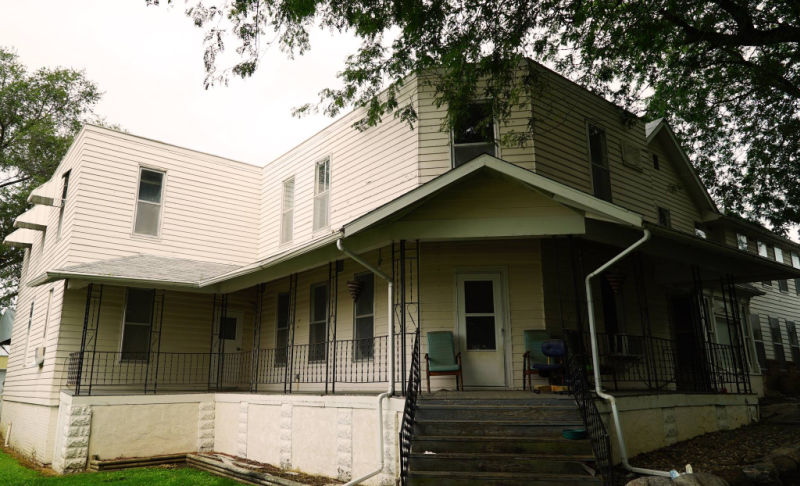
Tucked into the quiet town of Malvern, Iowa—population barely over 1,000—stands a red-brick building that looks more institutional than residential. Malvern Manor isn’t a centuries-old mansion or a crumbling castle. It’s a former care facility turned private residence turned paranormal destination. And despite its modest exterior, it has earned a reputation as one of Iowa’s most intensely investigated locations. The structure was built in 1867 and originally served as the Mills County Poor Farm. In the 19th and early 20th centuries, poor farms were county-run facilities that housed individuals who could not financially support themselves—the elderly, disabled, mentally ill, widowed, orphaned, or otherwise destitute. Life in these institutions was often harsh. Residents worked the land if they were able. Those who couldn’t were simply housed and managed with limited resources. Over time, Malvern Manor evolved. It later functioned as a private care facility for individuals with mental health conditions and developmental disabilities. Records indicate that patients were housed on site well into the mid-20th century. Like many institutions of that era, treatment standards reflected the time—structured, clinical, and sometimes controversial by modern understanding. While there are no confirmed records of extreme abuses often dramatized in asylum lore, the reality remains that the building housed vulnerable populations for decades. Eventually, the facility closed and the building passed into private ownership. In the early 2000s, new owners began restoring the property and living in it as a home. It was during this period that reports of unusual activity began surfacing publicly. The claims at Malvern Manor are wide-ranging. Visitors and investigators report shadow figures moving down hallways, disembodied voices, doors opening and closing on their own, and footsteps when no one else is present. Some claim to hear conversations in empty rooms. Others describe sudden cold spots or the sensation of being touched. One of the most frequently mentioned phenomena is children’s laughter or small voices, often attributed to the building’s time housing families and younger residents. Electronic voice phenomena (EVP) sessions conducted inside the Manor have allegedly captured responses to direct questions. Some investigators claim intelligent interaction—knocks in response to prompts, objects shifting, and REM pods activating without visible cause. A particular room often referred to as the “Shadow Room” has gained notoriety for reports of a darker presence, with some guests describing feelings of oppression or sudden anxiety while inside. Unlike many historic haunts built on a single violent event, Malvern Manor’s reputation stems from accumulation. There is no infamous mass murder tied to the building. Instead, its atmosphere seems connected to decades of human struggle—poverty, illness, abandonment, and isolation. For some paranormal researchers, that prolonged emotional weight creates what they believe to be residual energy rather than a single traumatic imprint. Skeptics argue that the building’s age, layout, and acoustics contribute heavily to reported experiences. Old plumbing knocks. Wooden floors shift. Temperature changes move through brick and plaster differently than modern drywall. Add darkness, expectation, and group dynamics, and experiences can escalate quickly. Yet even experienced investigators often admit the Manor feels unusually active compared to similarly aged structures. Today, Malvern Manor operates as a paranormal investigation venue, offering public events and private overnight stays. It has been featured in regional investigations, independent documentaries, and numerous YouTube explorations. Unlike heavily commercialized haunted attractions, the Manor maintains a more stripped-down, investigation-focused identity—bare halls, original rooms, minimal theatrics. For a small Iowa town, Malvern carries a surprisingly heavy story inside its brick walls. It represents a different kind of haunting—less about a single night of horror and more about the quiet accumulation of forgotten lives. Whether you believe spirits linger or not, the building forces visitors to confront a chapter of American history that isn’t often romanticized: the era of poor farms and institutional care. Malvern Manor stands as both historical landmark and paranormal lightning rod. It’s a place where history is documented, but interpretation varies. Some walk away convinced something unseen shares the halls. Others leave with logical explanations. Either way, few leave without feeling something.
Devil’s Bridge
On the south side of San Antonio, where the city thins out into scrubby ranchland and the San Antonio River bends through old mission territory, a small bridge on East Ashley Road crosses a ravine deep enough that locals say if you drop a rock from the railing, you'll never hear it land. The bridge sits near 2454 East Ashley Road, not far from Mission San Juan Capistrano—one of the chain of eighteenth-century Spanish missions that line the river and now form a UNESCO World Heritage Site. The area has been continuously inhabited for thousands of years. Native Americans camped along this stretch of river long before the Spanish arrived. The missions themselves, established in the 1730s, were built with Indigenous labor and sustained by an elaborate acequia system that still carries water through the surrounding farmland today. The ground here is layered with centuries of human presence, conflict, disease, conversion, and death. It is old land, even by Texas standards. Devil's Bridge is not an ancient structure. It is a modest roadway bridge, unremarkable in engineering, crossing a steep ravine in an area that goes very dark after sundown. The name belongs to a global tradition—there are dozens of Devil's Bridges across Europe, most of them medieval, each carrying its own legend about a pact with Satan in exchange for construction. San Antonio's version doesn't have a clear origin story for the name itself. Some say it refers to supernatural happenings at the site. Others suggest it simply describes the danger of crossing the ravine at night on an unlit road, in an era before guardrails and headlights made such crossings routine. The bridge did claim at least one documented life: on March 7, 1965, shortly after midnight, a forty-one-year-old woman named Victoria Ann Broussard was fatally injured when the car her husband was driving struck the bridge's guardrail head-on. He told the responding patrolman he hadn't seen the bridge. She was pronounced dead at Baptist Memorial Hospital and buried at San Fernando Cemetery No. 2. The paranormal claims at Devil's Bridge draw from multiple threads, none of them cleanly verifiable but all of them persistent. One account ties the haunting to the Spanish colonial period, claiming a priest whose parishioners were killed during the Inquisition hanged himself from a tree near the bridge. Visitors have reported hearing the sound of a creaking rope in the surrounding trees—rhythmic, deliberate, like a body swinging from a noose. A priest at the nearby San Juan Church reportedly warned a young man in the early 1970s to be careful exploring the riverbank near the bridge, telling him he had personally seen spirits walking the grounds where Native Americans once camped. The young man had found pottery shards and square nails in the area, artifacts consistent with centuries of habitation along the river. A paranormal investigator named Joe recorded EVP sessions at the bridge and claimed to capture a voice responding to the question "Who are you?" with the name "Melvin," along with a separate recording of a voice saying "I'm here." No historical records have been found for anyone named Melvin connected to the site. Visitors have also reported the apparition of a headless woman who approaches from behind, white smoke-like figures, and the smell of sulfur—rotten eggs—hanging in the air around the bridge at night. The claim about the impenetrable darkness is among the most frequently repeated: that after sundown, the area around the ravine becomes so dark that headlights and flashlights seem to penetrate only a few feet, as if the light itself is being absorbed. The most unsettling recurring detail involves the ravine itself. Multiple accounts describe throwing rocks off the bridge and never hearing them hit water or ground—as though something catches them, or the ravine simply has no bottom. One version of the legend attributes this to the spirit of a little girl. The depth of the ravine is real and measurable, but the acoustic effect in a steep, vegetation-choked gully at night, combined with ambient insect noise and the psychology of expectation, could plausibly account for the phenomenon. Or it couldn't. The people who've stood on that bridge in the dark tend to find the explanation less comforting than the mystery. Today Devil's Bridge remains a functioning road bridge on East Ashley Road, accessible by car, with no signage or formal acknowledgment of its reputation. Mission San Juan sits nearby, its stone walls and flowing acequias drawing tourists and pilgrims. The San Antonio Food Bank farms the old mission fields just down the road. It is a landscape where the sacred, the agricultural, and the spectral exist in close proximity—where a UNESCO site and a haunted bridge share the same stretch of river, and where the oldest water rights in Texas still flow through ditches dug by hands that have been gone for three hundred years.

Litchfield Villa
Litchfield Villa occupies a commanding and architecturally distinguished position within the landscape of Prospect Park in Brooklyn, New York, representing one of the most prominent and historically significant structures within the park system and standing as a testament to mid-nineteenth-century institutional architecture and landscape design. The villa was constructed during the 1860s as a residence for officials affiliated with the Prospect Park administration and serves as a focal point within the park's visual geography and spatial organization, visible from multiple vantage points and drawing attention through its distinctive architectural character and elevated positioning overlooking the park's central landscape features. The building exhibits architectural elements characteristic of the Victorian era's aesthetic preferences, incorporating elements of classical design tradition while expressing the particular grandiosity and ornamentation favored by wealthy and institutional patrons of the mid-nineteenth century. The structure occupies a threshold position between the park's natural landscape and the urban environment of Brooklyn, creating a liminal space that may have particular significance to paranormal phenomena and spiritual manifestation. The paranormal reputation of Litchfield Villa derives substantially from an incident documented as occurring in 1864, when a seance conducted within the building allegedly opened channels of communication with the spirit world, resulting in paranormal manifestations that contemporary accounts interpreted as evidence of demonic presence and influence within the structure's walls. The practice of spiritualism and seance-conducted spirit communication achieved significant popularity among educated and elite social circles during the mid-nineteenth century, with numerous accounts documenting supposed contact with deceased individuals and communication with entities from the spiritual realm, creating an institutional framework through which unusual psychological or environmental phenomena could be interpreted as evidence of supernatural agency and intelligence. The specific claims associated with the 1864 seance at Litchfield Villa maintain that entities contacted during the seance possessed fundamentally malevolent character and demonstrable power to influence physical reality and manifest apparent supernatural phenomena, establishing the location's paranormal reputation as connected specifically to demonic rather than benevolent or neutral spiritual presence. The contemporary paranormal phenomena reported at Litchfield Villa center upon the manifestation of entities described as distinctly demonic in character, with witnesses employing language and metaphor suggesting entities of grotesque or supernatural appearance, often likened to gargoyle figures or other iconography of evil and demonic representation within Western cultural tradition. The most visually distinctive paranormal phenomena at the location consist of apparitions of demonic figures accompanied by manifestations of red flowing lights visible in the upper windows and top floors of the building, phenomena that have achieved considerable prominence within Brooklyn paranormal folklore and attracted the attention of paranormal research organizations investigating the location's supernatural phenomena. The combination of demonic apparitions and the distinctive red luminous phenomena creates a particularly striking and memorable paranormal experience for observers, likely contributing to the location's continuing prominence within New York paranormal documentation and research communities. The visual distinctiveness of the red light phenomena, unusual in comparison to other documented ghost light manifestations that typically appear as white or multihued luminescence, suggests particular characteristics of the spiritual forces or energy manifestations occurring at the location. The contemporary status of Litchfield Villa remains under the administrative control of Prospect Park management, with the building maintained as a historically and architecturally significant structure within the park system that is preserved for its cultural heritage value and potential future adaptive use accommodating contemporary community needs while respecting its historical character and significance. The paranormal reputation of the location has not prevented its continued preservation and maintenance, with park management and local preservation advocates balancing acknowledgment of the building's supernatural history with the importance of documenting and preserving structures of architectural and historical significance regardless of paranormal associations. Litchfield Villa thus stands as a location where architectural preservation, historical significance, and documented paranormal phenomena converge, creating a complex site within Brooklyn's cultural landscape that attracts paranormal researchers, architectural historians, and cultural enthusiasts seeking to understand the intersection between physical structures, historical events, and apparent supernatural manifestation that transcends conventional boundaries of rational explanation.
Maltby Cemetery
Maltby Cemetery in Bothell, Washington, represents a burial ground established during the late nineteenth century as a final resting place for community members and serves as a significant repository of regional history and genealogical information. The cemetery's physical layout and spatial organization reflect Victorian-era aesthetic preferences regarding landscape design, with careful attention paid to pathways, plantings, and monuments that create a contemplative atmosphere intended to facilitate respectful remembrance of the deceased. The geographic location within the broader Bothell region positions the cemetery in proximity to natural water features and forested areas that create distinctive environmental conditions and atmospheric qualities throughout the seasons. The cemetery's age, spanning more than a century of continuous use as a burial ground, has resulted in the accumulation of considerable historical significance and the interment of multiple generations of community members. The paranormal phenomena documented at Maltby Cemetery have achieved substantial recognition within Pacific Northwest paranormal research circles, generating extensive documentation through both formal paranormal investigation efforts and the accumulated testimony of visitors, cemetery staff, and local residents who have experienced unusual phenomena within its boundaries. The consistency and intensity of reported paranormal activity at this particular location have elevated it to prominence within regional paranormal databases and established it as a destination for paranormal researchers seeking to examine concentrated zones of supernatural phenomena. The cemetery's reputation extends beyond mere historical significance to encompass recognition as one of the most actively haunted locations within the greater Seattle metropolitan region, with phenomena documented across diverse areas of the cemetery grounds. The primary paranormal manifestations documented at Maltby Cemetery involve the apparitions of ghostly women and children dressed in Victorian-era clothing, suggesting spiritual presences dating to the cemetery's earliest operational period or to individuals who had strong personal or familial connections to specific burial locations. Multiple independent witnesses have reported encounters with these apparitions throughout various sections of the cemetery, with descriptions demonstrating consistency regarding appearance, clothing, and apparent emotional state. The manifestations of children's spirits suggest either accidental deaths affecting younger community members during the cemetery's operational history or the possibility that children accompanied deceased adults through spiritually significant bonds transcending death. Among the most distinctive paranormal phenomena associated with Maltby Cemetery is the legendary "13 Steps to Hell," a folklore element that has achieved substantial prominence within regional paranormal culture and represents a specific geographic location within the cemetery grounds associated with particularly intense supernatural phenomena. The legend centers upon a specific stairway location comprising thirteen steps that, according to paranormal folklore, leads to a gateway or threshold connecting the material world with demonic or infernal dimensions. Documentation of paranormal experiences at this specific location describes encounters with entities far more malevolent and disturbing than the ghostly apparitions of women and children reported elsewhere. Investigators and visitors who have approached or descended the legendary thirteen steps have reported sensations of dread and encounters with entities described as demonic. Maltby Cemetery continues to function as an active burial ground within contemporary Bothell, serving ongoing funeral and interment functions for the surrounding community while maintaining its status as a documented paranormal hotspot. The cemetery has achieved substantial prominence within paranormal tourism and research communities, attracting investigators and enthusiasts interested in examining concentrated zones of supernatural activity. Visitors and paranormal research groups continue to document experiences consistent with historical accounts, suggesting that the apparitions and entities inhabiting the cemetery grounds remain actively present and capable of manifesting to contemporary observers. The combination of benevolent apparitions and malevolent entities within Maltby Cemetery creates a complex paranormal environment reflecting the full spectrum of spiritual phenomena documented at intensely haunted locations.
Jackson Square Apartments
Jackson Square Apartments represented a multi-story residential complex located in Amarillo, Texas, a city that developed as a commercial and cultural center on the Texas Panhandle. The apartment building was constructed during the mid-twentieth century when multi-unit residential developments emerged as increasingly common approaches to urban housing, reflecting national trends toward denser residential configurations in American cities. The structure's architectural style and scale reflected the construction methods and aesthetic preferences of that period, with multiple floors housing individual apartment units designed to accommodate diverse residential populations. The building's location within Amarillo's urban landscape positioned it as a residential option for workers, families, and others seeking affordable urban housing. The complex's operation as a multi-family residence meant that it housed a constantly changing population of residents, each bringing their own stories, struggles, and personal circumstances to the shared environment. Jackson Square Apartments' history encompasses decades of residential use during which numerous individuals and families occupied its units. The building witnessed ordinary residential life alongside more dramatic human experiences including interpersonal conflicts, economic hardship, and personal crises characteristic of urban apartment living. The concentration of multiple residents within a relatively confined space created an environment where human emotions were intensified and interpersonal tensions could escalate toward violence. The building's operation during a period marked by significant social change and urban challenges positioned it at the intersection of broader societal forces affecting residential communities. The accumulation of human experience within its walls created a dense accumulation of emotional energy and significant historical events that would ultimately manifest as extraordinary paranormal phenomena. The violent history of Jackson Square Apartments manifests in reported paranormal phenomena characterized by the apparitions of murder victims and other individuals who experienced traumatic deaths within the building. The second floor is associated with red lights and bloodstains, suggesting locations of violent incidents and bloodshed. A menacing apparition identified as a stabbing victim manifests with apparent anger and hostility, indicating traumatic violent death and lingering emotional disturbance. A pregnant woman apparition is reported to fall from upper floors, suggesting a death occurring from falling or suicide at the location. A male figure appears hanging from a noose, indicating a death by self-inflicted hanging occurring somewhere within the building. These distinct apparitions suggest multiple separate violent incidents, including at least one murder, at least one suicide, and deaths resulting from other causes. The concentration of violent deaths within the relatively confined space of an apartment complex indicates either a historical event encompassing multiple deaths or an accumulation of separate violent incidents occurring at different times within the building's history. The paranormal phenomena at Jackson Square Apartments intensified following the building's demolition, with reports of invisible hands and demonic entities manifesting even after the physical structure's removal. The persistence of paranormal activity after demolition suggests that the spiritual imprints and consciousness entities associated with the violent deaths remain attached to the location itself rather than specifically to the building's physical structure. The manifestation of supposedly demonic entities following demolition may reflect the accumulation and concentration of negative spiritual energy generated by multiple violent deaths, or may indicate an escalation in paranormal activity resulting from the destruction of the physical space that previously contained the phenomena. The ongoing reports of paranormal activity at the site following demolition have maintained Jackson Square Apartments' prominence within Amarillo's paranormal landscape as a location where human violence left permanent spiritual consequences extending beyond the physical existence of the building itself. The building's eventual removal did not resolve the paranormal activity or bring peace to the spirits whose violent deaths occurred within its walls, indicating that the location itself carries an enduring spiritual burden that transcends the materiality of architectural structures.
Trenton Psychiatric Hospital
Trenton Psychiatric Hospital stands as one of New Jersey's most significant contributions to American psychiatric history, representing both progressive humanitarian impulses and the capacity of medical institutions to perpetrate systematic cruelty against vulnerable populations. Founded on May 15, 1848, by Dorothea Lynde Dix, a pioneering mental health reformer who dedicated her life to improving conditions for the mentally ill, Trenton Psychiatric Hospital was designed as New Jersey's first public mental hospital operating under progressive principles of humane treatment and therapeutic care. The facility was constructed according to the Kirkbride Plan, an influential architectural design theory that specified building configurations, ward layouts, and environmental features intended to support therapeutic recovery. The Kirkbride design incorporated elements such as natural light, access to fresh air, separation of different patient populations, and architectural arrangements that theoretically promoted healing. The hospital's founding represented an attempt to replace the abusive conditions of poorhouses and private asylums with a state-supported institution dedicated to scientific treatment of mental illness. However, the hospital's humanitarian promise was profoundly betrayed during the early twentieth century when Dr. Henry Cotton assumed the position of medical director and implemented treatment protocols that violated basic medical ethics and caused immeasurable suffering to thousands of patients. Dr. Cotton, who served as medical director from 1907 to 1930, became the primary architect of the hospital's descent into systematic brutality, imposing a theory of mental illness that attributed psychiatric conditions to infections throughout the body. According to Cotton's theory, removing the sources of infection would cure mental illness, leading him to authorize and perform extensive surgical procedures including the extraction of teeth, removal of the appendix, hysterectomies, and other major surgeries conducted without adequate anesthesia or antiseptic precautions. Cotton famously claimed that he would render patients "surgically clean" by removing infected organs, an approach that resulted in permanent disability, death, and psychological devastation for thousands of patients subjected to his experimental procedures. The hospital's architecture, originally designed to promote healing, became a framework within which institutional abuse could flourish with minimal external oversight or accountability. The Kirkbride design's extensive wings and sophisticated ward separations created areas of the facility largely invisible to outside observers, where patients could be subjected to brutal treatments without public awareness or intervention. The building's isolation from surrounding communities, intended as a therapeutic feature, instead became a factor enabling abuse by reducing visibility and limiting the ability of outside authorities to monitor institutional practices. Thousands of patients died during Cotton's tenure, with causes of death frequently listed as complications of surgical procedures, infections resulting from mutilating surgeries, or the direct effects of the treatments themselves. The official records documenting Cotton's surgical procedures provide a grim accounting of the scale of medical abuse, with surgical totals exceeding those performed in comparable facilities across the nation. Paranormal phenomena at Trenton Psychiatric Hospital have become legendary within paranormal investigation circles and local folklore, with the facility recognized as one of New Jersey's most actively haunted locations. Apparitions of Dr. Cotton have been reported throughout the facility, appearing in surgical theaters and administrative areas, with descriptions suggesting the spirit of a man seemingly unaware or unconcerned by the trauma inflicted during his lifetime. More disturbing are reports of apparitions of patients with missing limbs, severed extremities, and grotesquely mutilated bodies, appearing to wander the hospital seeking the lost body parts or expressing confusion about their condition. Disembodied voices echo through abandoned wards, with recordings capturing sounds consistent with screams, pleas for help, and sounds of psychological distress. Orbs appear frequently in photographs taken throughout the facility, with paranormal investigators cataloging extensive photographic evidence of spherical light anomalies concentrated in areas of greatest medical abuse.
Black Ranch Road
Black Ranch Road winds through the forested terrain near Burney, California, a rural roadway in the northeastern portion of the state where dense forest, mountain slopes, and isolated communities characterize the landscape. Burney, located in Modoc County, occupies the relatively sparsely populated northeastern region of California, an area that retains significant wildland character despite encroaching development patterns. The road itself represents the kind of rural highway that connects small communities across mountainous terrain, a route where travelers might encounter few other vehicles for extended periods, where darkness at night is profound due to distance from urban light pollution, and where the landscape predominates over human infrastructure. Rural roads throughout America carry their own folklore and paranormal traditions, stories passed from driver to driver about dangerous curves, haunted locations, and inexplicable phenomena. Black Ranch Road, in particular, has become notorious within paranormal communities as a location where a specific paranormal entity manifests primarily to intoxicated drivers, creating a targeting dynamic that raises questions about motivation and judgment on the part of the haunting force. According to persistent local legend, Black Ranch Road is haunted by the spirit of a young girl, described consistently across multiple reports as appearing to be approximately seven to ten years of age. The apparition manifests in a distinctive form that makes identification immediate and memorable: the child appears dressed entirely in white clothing, a stark contrast to the dark forest environment that surrounds the roadway. Most horrifyingly, the child's hair appears matted with blood, suggesting either death by trauma to the head or brutalization of the corpse following death. The appearance of the ghost carries intentional elements of horror and disturbance, visual features designed to evoke maximum fear and shock in those who encounter her. According to local accounts, this apparition appears exclusively or primarily to drivers who are intoxicated, manifesting on the roadway in ways that create genuine danger. The ghost does not simply appear passively but actively engages with drivers, stepping into the roadway, causing drivers to swerve, creating collision hazards. The targeting of intoxicated drivers raises questions about whether the ghost operates with intention to punish those who drive under the influence or whether she is drawn to the lowered cognitive capacity of intoxicated individuals, making them more susceptible to paranormal interaction and more likely to respond recklessly to her presence. Interpretations of the child ghost of Black Ranch Road vary significantly across the paranormal community and among local residents. One narrative proposes that the child died in a drunk driving accident, possibly as a victim of an intoxicated driver who struck and killed her on the roadway. In this interpretation, the ghost has become a form of karmic justice or paranormal punishment, manifesting to intoxicated drivers as a consequence of the behavior that resulted in her death. She appears specifically to those who engage in the same reckless behavior that killed her, creating a paranormal reenactment of the circumstances of her death. This interpretation assigns moral dimensions to the haunting, positioning the ghost as an instrument of cosmic justice against drunk driving. An alternative interpretation proposes that the apparition is demonic in nature rather than the ghost of a human child. In this framework, the figure uses the appearance of a child as a disguise or lure, attracting driver attention and sympathy through the image of a vulnerable child while actually representing something far darker and more malevolent. The white clothing, the bloody hair, and the deliberate creation of traffic danger could represent not punishment but predation, the hunting of intoxicated drivers by a demonic entity wearing the mask of innocence. Black Ranch Road continues as a functioning roadway, its paranormal reputation known among locals and within paranormal communities despite its reputation remaining relatively unknown to casual travelers. The apparition of the child in white continues to manifest, or at least continues to be reported, by intoxicated drivers who encounter her on the roadway and survive the experience. The legend of the ghost has likely acquired some elements of embellishment or invention through repeated retelling, yet the persistence of reports across many years and independent witnesses suggests an underlying paranormal phenomenon of genuine character. The motivation of the ghost or entity, the circumstances of the child's death or origin, and the ultimate purpose of the haunting remain mysteries that resist clear resolution. Whether the apparition represents a victim's restless spirit or a demonic predator wearing human form, Black Ranch Road remains a location where paranormal activity intersects with the dangerous behavior of intoxicated driving, creating a nexus of danger, judgment, and possible supernatural consequence that reflects broader cultural anxieties about transportation safety and paranormal punishment.
Grand Hotel
The Grand Hotel of Mackinac Island stands as one of America's most architecturally significant and legendarily haunted resort establishments, rising majestically above the Straits of Mackinac with a footprint encompassing more than 225,000 square feet of guest accommodations, dining facilities, and public spaces. The hotel's construction occurred during the height of the American Gilded Age, when Mackinac Island had established itself as one of the nation's premier vacation destinations for the wealthy and socially prominent. The strategic location placed it directly upon ground that held profound historical significance, as Mackinac Island itself had served as an important military fort during periods of American conflict and occupation. The island's strategic position in the Great Lakes made it militarily significant, and various fortifications were erected and occupied throughout the eighteenth and nineteenth centuries, resulting in numerous casualties from combat, disease, and accident among military personnel stationed at this remote outpost. Moreover, the geological and archaeological record reveals that Mackinac Island held sacred significance for the indigenous peoples who inhabited the Great Lakes region long before European settlement, and the elevated plateau where the Grand Hotel now stands contained burial grounds where the remains of Native peoples rested for centuries. During construction in the nineteenth century, workers encountered human skeletal remains with such frequency that construction managers made the pragmatic decision to continue building without removing the discovered remains, effectively entombing numerous bodies within and beneath the resort's foundation and superstructure. This layering of indigenous sacred ground with a monument to Gilded Age excess created a palimpsest of conflicting spiritual and cultural claims that may account for the intensity and diversity of paranormal phenomena documented throughout the property. Paranormal researchers and guests have consistently reported encounters with entities that defy conventional explanation, including apparitions of figures dressed in Victorian-era clothing who materialize and vanish within the hotel's corridors and public spaces, phantom footsteps echoing through hallways during hours when all guests remain elsewhere, shadow figures that move independently of any light source or physical obstruction, and encounters with a malevolent dark entity characterized by multiple witnesses as possessing luminescent red eyes. EVP recordings have captured voices speaking in Native American languages alongside English phrases, suggesting that the spirits inhabiting the space may represent both indigenous peoples displaced from their burial ground and military personnel who perished far from home. The Grand Hotel continues to operate as a functioning luxury resort, serving thousands of guests annually who range from paranormal enthusiasts deliberately seeking spectral encounters to conventional tourists unaware of the property's metaphysical reputation. Staff members have become accustomed to discussing phenomena with guests, though management maintains a diplomatic stance regarding the supernatural character of the property. The building's scale and complexity, combined with its role as a living institution, means paranormal investigation remains ongoing and organic rather than formalized. The Grand Hotel's haunting appears multifaceted and persistent, showing no signs of diminishment despite more than a century of occupancy and modernization.
Weary Road
Weary Road, a narrow paved track approximately one mile south of Evansville in Sauk County, Wisconsin, extends through rural landscape characteristic of Midwestern agricultural and forested terrain. The road passes through sparsely populated agricultural and grazing land where human habitation is dispersed across substantial distances and the landscape maintains much historical character from European settlement and development periods. The area reflects gradual settlement and economic development of the Wisconsin frontier, with ranching and agriculture forming the primary local economic activity. The road represents typical rural infrastructure connecting dispersed communities and serving local population and occasional travelers. The paranormal reputation of Weary Road has emerged as a notable location feature, drawing paranormal enthusiasts and investigation teams. The location has been recognized as one of Wisconsin\'s documented paranormal hotspots, with intensity and consistency suggesting activity distinguishing the road from ordinary rural locations. Paranormal legends surrounding Weary Road center on the tragic fate of Lewis Weary, known locally as Old Man Weary, a farmer who died by burning under controversial circumstances. According to accounts, suspicious parents in the area came to view Old Man Weary with distrust, allegedly conspiring to burn him alive in his house, a murder disguised as accidental fire or suicide. The motivation involved children who had been visiting Weary\'s property, with parents allegedly fearing threats or inappropriate relationships. Whether parental fears had legitimate basis or represented paranoid misinterpretation remains unresolved, but the result was Weary\'s violent death in the fire. Some accounts suggest other children were present or died in the conflagration, adding multiple child victims to the paranormal attribution. The tragic and violent nature of deaths combined with apparent injustice created particularly intense paranormal manifestations. Paranormal phenomena documented at Weary Road encompass remarkable diverse experiences among Wisconsin\'s most intense documented paranormal activity. Visitors driving on the road report vehicles suddenly refusing to restart when parked on or near the bridge despite functioning normally before parking and resuming normal operation when leaving. Phantom vehicles materialize including phantom cars, motorcycles, and trains appearing without logical origin, sometimes moving against traffic or violating normal patterns. Witnesses report phantom sounds including music, strange inhuman vocalizations, and screams without identifiable source emanating from woods or bridge structures. Screams are frequently characterized as anguished or agonized, possibly representing Lewis Weary or children\'s final moments. Visitors report small imp-like creatures materializing near the road, described as humanoid but distinctly unnatural and malevolent. Dark figures appear along the roadside or bridge, observed with distinctiveness suggesting deliberate communication attempts. Most dramatically, witnesses report glowing green orbs of light materializing and moving through areas with apparent intelligence and purpose. Most disturbingly, some accounts describe visitors receiving scratches and physical injuries from invisible forces, suggesting entities capable of or willing to inflict physical harm. Weary Road has become widely recognized as one of Wisconsin\'s most definitively haunted locations, drawing paranormal enthusiasts and investigation teams. The location has been featured in paranormal television programs and documentation, elevating its profile within the broader community. Despite the frightening paranormal phenomena intensity, visitors continue seeking experiences on the road, creating a kind of dark pilgrimage to what many consider one of America\'s most actively haunted rural locations. The road remains a functional public thoroughfare with ordinary residents continuing use, though many aware of paranormal reputation and Weary\'s disturbing history. Weary Road represents a location where historical tragedy, violent death, and alleged injustice have created paranormal consequences of uncommon intensity and diversity.
Vale End Cemetery
Vale End Cemetery in Wilton, New Hampshire stands as one of the town's oldest burial grounds, a quiet repository of local history that dates back centuries. The cemetery's landscape of weathered headstones and established grave markers chronicles the lives and deaths of generations of Wilton residents, from the early colonial period through the modern era. Among these graves rests Mary Ritter Spaulding, who died in 1808 at age thirty-five under circumstances that remain shrouded in mystery and local folklore. The circumstances of her death have become the subject of considerable speculation over the intervening two centuries, with historical records offering limited clarity regarding the precise cause or nature of her passing. What is known is that her death occurred at an age when most residents would have expected decades more of life, suggesting a sudden or unexpected demise that impressed itself upon the community consciousness. The reputation of Vale End Cemetery has evolved considerably over time, particularly throughout the twentieth and twenty-first centuries as paranormal investigation and documentation have become increasingly accessible pursuits. The cemetery's atmosphere has attracted the attention of paranormal researchers and local enthusiasts who have reported experiences suggesting continued activity at the site. The historical record preserves accounts of inexplicable phenomena, including sightings of unusual luminescence above particular gravesites, particularly above the grave of Mary Ritter Spaulding, who has become popularly known as the Blue Lady of Vale End. Witnesses have described observing a distinctive column of blue light manifesting above her final resting place, appearing most frequently during evening and night hours. On less common occasions, investigators report encountering what they describe as a full apparition, a figure dressed in old-fashioned attire consistent with early nineteenth-century clothing, believed to represent the earthbound presence of Mary Ritter Spaulding herself. Paranormal activity at Vale End extends beyond the manifestations associated with the Blue Lady, with investigators reporting a broad spectrum of unexplained phenomena throughout the cemetery grounds. Equipment typically employed in paranormal investigations, such as electromagnetic field meters and thermal imaging devices, reportedly exhibit anomalous behavior and unexpected triggers at the site. Battery drain affecting investigative equipment occurs with regularity, suggesting the presence of forces or energies capable of depleting electrical power sources rapidly and without apparent explanation. Beyond the technological indicators, direct sensory experiences have been documented by visitors and investigators, including observations of orbs of light moving independently through the cemetery and sightings of shadowy figures traversing the grounds, particularly during hours of darkness. Cold spots of marked intensity have been reported at specific locations throughout the burial ground, with temperature differentials suggesting localized environmental anomalies inconsistent with normal meteorological conditions. The paranormal experiences documented at Vale End Cemetery have broadened in scope and complexity beyond the initial manifestations attributed to Mary Ritter Spaulding. Investigators and visitors have reported encounters with entities that suggest a more diverse and potentially menacing population of spirits inhabiting the grounds. References to pukwudgies, a creature from Native American folklore described as small, hairy, and distinctly humanoid in appearance, have emerged in recent accounts, with witnesses describing three-foot-tall entities displaying reddish coloration and animal-like features. Alongside these indigenous cryptid references come reports of demonic presences and malevolent spirits that suggest forces far darker and more unsettling than the melancholic manifestations of Mary Ritter Spaulding. Additional accounts describe shadowy figures of indeterminate origin wandering the cemetery grounds, as well as reports of individuals searching desperately among the graves, seemingly seeking a particular burial site. These encounters have contributed to Vale End's evolution from a simple historical cemetery into a location associated with supernatural forces of considerable complexity and apparent danger. The transformation of Vale End Cemetery's reputation from a peaceful burial ground to one of New England's more actively haunted cemeteries reflects both the documented experiences of paranormal investigators and the evolution of local folklore and community awareness. Wilton remains a beautiful New England town with considerable historical charm, yet Vale End has acquired an increasingly ominous reputation within paranormal and cryptozoological circles. The cemetery's history as a burial place for the town's earliest settlers continues to anchor its identity, while the mounting contemporary accounts of supernatural activity have positioned it as a significant location of paranormal interest in southern New Hampshire. The dichotomy between the peaceful historical function of the cemetery and its current reputation for intense paranormal manifestations underscores the complex relationship between past and present at Vale End, suggesting that the boundary between the living and the dead at this location remains remarkably permeable and active.
Hollydale Insane Asylum
The Hollydale Insane Asylum represents a significant institutional structure within the history of mental health treatment in California, constructed during the era when large-scale public institutions were believed to offer the most effective and humane approaches to treating mental illness. The facility was designed according to architectural and philosophical principles prevalent in the nineteenth and early twentieth centuries, featuring multiple buildings arranged to segregate patient populations by condition, severity, and gender according to the medical understanding of the period. The asylum occupied substantial grounds in a semi-rural location selected for the presumed therapeutic benefits of isolation from urban stressors and exposure to natural surroundings. The physical structure was intended to embody institutional order and control, with locked wards, secure facilities, and architectural elements designed to contain and manage populations diagnosed with severe mental illnesses. Over the decades of its operation, the asylum housed hundreds of patients at various points, many of whom remained institutionalized for the entirety of their remaining lives. The institution accumulated a complex history of both therapeutic intent and institutional trauma, with individual stories of suffering, treatment, recovery, and death embedded within its physical structures. The treatment of mental illness during the institutional period was characterized by approaches that contemporary understanding would recognize as frequently inhumane, counterproductive, and based upon medical theories subsequently proven incorrect or actively harmful. Patients confined to such institutions experienced restrictions on personal liberty, exposure to experimental treatments, inadequate nutrition and hygiene, and social isolation from broader communities. Within this context of institutional violence and medical malpractice, a particularly disturbing incident unfolded when a patient diagnosed with severe mental illness attacked a Catholic priest who was performing spiritual services within the facility. During this violent altercation, the patient slashed the priest's throat with a weapon, resulting in severe injury or death. This single act of violence, occurring within an institution ostensibly dedicated to healing and care, encapsulates the profound vulnerabilities of both staff and patients within such confined environments. The incident represents a moment when institutional control failed catastrophically, unleashing violence that violated the spatial boundaries that were intended to contain danger and protect the innocent. Paranormal phenomena reported at Hollydale Insane Asylum encompass a spectrum of manifestations suggesting the presence of multiple entities and possibly concentrated paranormal energy throughout the facility. Investigators exploring abandoned sections of the building have reported observing unexplained lights appearing in windows of buildings that had been secured and confirmed to be electrically inactive, with illumination visible from external vantage points despite the absence of any apparent power source or human occupancy. Paranormal activity within the facility has been characterized by researchers as unusually intense and disturbing, with reports describing demonic entities and dark spiritual presences distinct from the typical residual hauntings associated with institutional deaths. Lights within the facility have been observed turning on and off independent of any electrical switches or human intervention, with patterns sometimes appearing deliberate or communicative in character. The emotional tenor of the manifestations has been consistently described as dark and oppressive, with investigators reporting overwhelming sensations of sadness, despair, and malevolent presence. Hollydale Insane Asylum has emerged as one of California's most intensely haunted institutional locations, attracting paranormal investigators, ghost hunters, and researchers specializing in the intersection of institutional history and supernatural phenomena. The abandoned sections of the facility present particular hazards for investigators, as the combination of structural deterioration, institutional labyrinth architecture, and concentrated paranormal activity creates an environment of significant risk. Multiple paranormal investigation programs have documented phenomena at the location, with findings suggesting genuine supernatural manifestation rather than conventional explanations. The cumulative suffering, trauma, violence, and death that characterized the asylum's institutional history appear to have created conditions conducive to powerful and persistent paranormal manifestation.
Anne Lytle School – The Devil’s School
Anne Lytle School in Jacksonville, Florida, known colloquially as the Devil's School, represents a complex and instructive case study in how urban legends, cultural panic, and folklore generate narratives that fundamentally alter public perception of ordinary historical structures and institutions throughout communities. The elementary school building itself dates to a period of standardized public education expansion throughout America, its architecture reflecting mid-twentieth-century institutional design principles meant to serve a residential neighborhood and educate successive generations of children in foundational academic skills and civic virtues and knowledge. The physical space was built with ordinary construction materials and conventional safety features, following the building codes and educational standards of its era without any distinguishing characteristics that would suggest paranormal significance or supernatural manifestation. For decades, the school functioned as an ordinary educational institution, its halls filled with children's voices, classrooms hosting lessons on mathematics and history, and the rhythms of institutional routine that characterize American public schools throughout the nation in standardized fashion. The transformation of Anne Lytle School from ordinary public building to legendary haunted site occurred dramatically during the 1980s and 1990s, a cultural period characterized by widespread public anxiety regarding satanic ritual abuse, devil worship, and hidden violence supposedly perpetrated in American institutions and communities. This era, now recognized by historians and sociologists as the satanic panic, generated elaborate urban legends and folklore attributing sinister motivations and practices to ordinary people and institutional settings across the nation. Anne Lytle School became subject to rumors and tales reflecting this broader cultural anxiety and collective fear of hidden evil and demonic activity within seemingly normal locations. Legends circulated claiming that schoolchildren had been murdered in a boiler explosion or killed by a psychotic janitor whose violent actions were supposedly covered up by authorities and hidden from public knowledge for protection of reputation. Other accounts alleged that a cannibalistic principal had committed acts of violence and consumption within the school building in satanic rituals. The most extreme versions of the legend claimed that Anne Lytle School had been used as a site for satanic rituals, devil worship, and supernatural evil activities and ceremonies. However, the Annie Lytle Preservation Group has explicitly documented that these stories are categorically false—that no such incidents occurred, that no murders took place, that no satanic activities were performed at the location. The legends appear to represent cultural projection and collective anxiety rather than documented historical fact verified by evidence. Despite the debunking of specific claims, the school became an abandoned structure that drew curious visitors, urban explorers, and paranormal investigators seeking manifestations and evidence of paranormal activity. Reported phenomena include apparitions that visitors interpret through the lens of demonic legends, shadow figures, disembodied voices in corridors, and unexplained sounds throughout the building. The phenomena themselves may reflect genuine paranormal activity that occurs at abandoned buildings, or may represent the power of legend and suggestion to generate experiences that confirm preexisting beliefs and expectations about the location's supernatural nature.
Holt Cemetery
Holt Cemetery in New Orleans, Louisiana stands as one of the city's oldest and most historically significant burial grounds, established in 1879 as the primary in-ground burial cemetery serving the metropolitan area. The cemetery's founding during the late nineteenth century reflected New Orleans' need for expanded burial facilities as the city's population continued to expand. Prior to the establishment of Holt Cemetery, New Orleans' burial practices had centered on the city's famous above-ground cemeteries, the so-called "Cities of the Dead" with their distinctive architectural tombs and vaults. Holt Cemetery represented a different burial methodology, utilizing traditional in-ground graves rather than the above-ground vault systems that had characterized earlier New Orleans burial customs. The cemetery's location near City Park placed it in proximity to significant green spaces and natural areas that characterized that section of the metropolitan landscape. Holt Cemetery emerged as a Potter's field cemetery, a designation indicating that it served as the primary burial location for the city's indigent populations, unclaimed deceased, and those without family resources to arrange private cemetery plots. The Potter's field designation placed Holt Cemetery within a tradition stretching back centuries, where public burial grounds provided final resting places for society's most marginalized and forgotten populations. The cemetery consequently became the final repository for thousands of individuals whose names, stories, and identities often remained unrecorded in official documentation. Many graves lack substantial markers or identifying information, creating a landscape of countless unknown burials and unmarked graves. Despite the lack of individual identification, Holt Cemetery accumulated profound historical significance as a repository of the city's forgotten poor, enslaved individuals, free people of color, and others whom society had marginalized in life and continued to marginalize in death. The paranormal reputation of Holt Cemetery has grown significantly in recent decades as paranormal investigators and ghost hunters have conducted numerous investigations within its boundaries. The cemetery has become a destination for organized ghost hunting expeditions and paranormal tourism, attracting investigators seeking to document supernatural phenomena. Witnesses exploring the cemetery grounds, particularly during evening and night hours, have reported observing shadowy figures moving between the graves and monuments, figures that appear partially transparent or semi-corporeal. Disembodied voices emanate from empty areas of the cemetery, voices speaking in tones of distress or calling out in the darkness without identifiable speakers. Unexplained sounds including footsteps, rustling, and other noises of movement echo through the cemetery independent of any visible activity or presence. Some investigators have reported hearing screaming sounds, particularly during full moon periods when lunar cycles were traditionally believed to heighten spiritual and paranormal activity. The phenomena have been documented through audio recordings, investigator accounts, and visual documentation during multiple investigation sessions. The intensity and variety of paranormal phenomena reported at Holt Cemetery have contributed to its reputation as one of New Orleans' most actively haunted locations. The cemetery's status as a repository for thousands of unidentified graves, many of them representing tragic deaths or circumstances, may account for the concentration of paranormal activity. Multiple spirits may be manifesting simultaneously, their collective presence creating an intensely haunted environment. The cemetery's association with death, poverty, and forgotten lives has accumulated substantial negative emotional energy across generations. Current cemetery management and historical preservation efforts have acknowledged the location's cultural significance while maintaining it as an active burial ground and increasingly as a paranormal tourism destination. The spirits of Holt Cemetery's forgotten residents appear to remain active and vocal within the grounds, their presence documented through continuing reports of paranormal phenomena and the experiences of investigators and visitors exploring the cemetery's haunted landscape.
Bethel Cumberland Presbyterian – Bethel Assembly of God
Bethel Cumberland Presbyterian Church, established in the mid-nineteenth century during a period of significant religious expansion and denomination-building in rural Tennessee, stands adjacent to a cemetery that holds equal historical and spiritual significance. The church and its surrounding burial ground represent the religious and social infrastructure of a frontier community where the church served not merely as a place of worship but as the central gathering place for social cohesion, mutual support, and spiritual guidance. The Cumberland Presbyterian denomination itself was born in Tennessee during the revivals of the early nineteenth century, making Bethel Church part of a broader movement that shaped American religious identity. The church building and its cemetery occupy land that had been sacred to the community for generations, with burial practices and religious observances creating layers of spiritual significance that accumulated over more than a century and a half. The paranormal phenomena reported at Bethel Cumberland Presbyterian Church and its adjacent cemetery manifest in distinctly disturbing and unusual forms that distinguish this location from many other reportedly haunted religious sites. Visitors and investigators have documented ghostly voices emanating from the church and cemetery areas, including whispers and full conversations that appear to originate from no identifiable human source. Most disturbingly, reports consistently describe shadow people—dark, humanoid forms that move through the forest surrounding the property with apparent independence and agency. These shadow figures lack clear definition and resist photographic documentation with conventional cameras, though some researchers using infrared or specialized detection methods have claimed to capture images suggesting their presence. The forest immediately surrounding the cemetery has become a particular focal point for reports of supernatural activity, with visitors describing an overwhelming sense of oppressive atmosphere and malevolent presence. Local legend, persistent and deeply rooted in the community memory, describes a creature of remarkable and disturbing appearance that allegedly inhabits the forest surrounding the cemetery, a being that combines anatomically incompatible features in a manner that violates natural law and suggests forces operating outside conventional biological reality. According to witness accounts and local tradition, this creature possesses the body of a lion—a large, muscular, quadrupedal form built for predatory violence—combined with the head of a dog, creating a chimeric amalgamation of carnivorous predators. Most distinctively and disturbingly, the creature allegedly possesses eyes that glow an intense red color, particularly visible in darkness and suggesting either supernatural phosphorescence or pupils reflecting light sources in an abnormal manner. Whether such a creature represents an actual physical entity, a psychological projection of community fears, or a purely supernatural manifestation remains undetermined. The paranormal activity at Bethel Cumberland Presbyterian Church includes reports of disembodied voices, shadow figures, oppressive atmospheric conditions, and various unexplained sounds emanating from the forest and cemetery areas. Some researchers and sensitive individuals have reported what they describe as demonic activity or malevolent paranormal presences, distinct from the residual hauntings associated with particular deceased individuals. Unusual lights have been documented in the forest surrounding the property, and visitors consistently report profound feelings of unease, dread, and danger when visiting the site, particularly during evening and nighttime hours. The reputation of Bethel Church and its cemetery as a location of intense and potentially malevolent paranormal activity has made it a focus of paranormal investigation and local folklore, attracting researchers seeking to document and understand the forces allegedly active at this site.
Howard Johnson Inn – Econolodge
The former Howard Johnson Inn in San Angelo, Texas, represents a mid-twentieth-century accommodation establishment that operated as a commercial hospitality property throughout several decades before eventual transformation into an Econolodge management structure and corporate affiliation change. The building is located at 415 West Beauregard, an address that became increasingly significant and notorious within paranormal investigation circles as substantial reports of authentic and deeply disturbing supernatural activity accumulated over years of documentation. Hotel and motel environments typically generate complex emotional and psychological atmospheres due to the fundamental nature of human activity within such transient living spaces and temporary dwellings. Transient populations continuously pass through hotels and motels, bringing with them substantial emotional burdens, personal crises, relationship tensions, financial stress, and the accumulated psychological stress of travel and separation from home. Hotel rooms and motel spaces witness intimate human moments ranging from romantic celebrations to desperate sorrows, from expressions of joy to manifestations of despair and loss, and the full spectrum of emotional experience compressed into temporary dwelling spaces. Yet the distinctive phenomena documented at this particular location suggest that something far more sinister and actively hostile than ordinary emotional resonance inhabits the abandoned property. Guests at the former Howard Johnson Inn began systematically documenting paranormal experiences that substantially exceed the ordinary manifestations of residual haunting or mere emotional imprinting from past occupants. The second floor of the building became the primary locus and focal point of paranormal activity concentration, with one particular room positioned at the extreme end of the floor demonstrating paranormal phenomena of exceptional intensity and genuinely disturbing character that alarmed investigators. Visitors and guests who ventured into or occupied this specific room reported experiences suggesting the definite presence of a conscious, actively hostile entity capable of generating genuine fear and producing documented physical effects on living people. The most notable and distinctive manifestation involved the unexplained appearance of red eyes, luminous ocular phenomena that manifested in the complete darkness of the unoccupied room and created terror in observers. Paranormal researchers and investigators interpret the appearance of such red eyes as potentially indicative of demonic activity or other malevolent entities that substantially exceed conventional ghost manifestations in their apparent hostile intention and demonstrable supernatural capability. Guests and overnight visitors to the hotel documented physical phenomena suggesting direct paranormal contact and interaction with living human bodies occurring across the barrier between material and spiritual realms. Some visitors reported waking from sleep to find unexplained scratches or mysterious marks on their skin and bodies that had not been present before sleep began. These physical marks appeared entirely consistent with intentional contact or aggressive touching, suggesting that the paranormal entity possessed genuine capacity to physically affect and injure living people despite existing in a non-material state. Some guests reported deeply disturbing experiences of being trapped or confined within spaces, including being locked in bathrooms despite no physical mechanism explaining the sudden confinement and lock engagement. Visitors described attempting to exit bathrooms and discovering that doors would not open despite being unlocked, then suddenly releasing and opening freely once terror and panic had been sufficiently induced in the trapped occupant. The phenomena documented at this location present a particularly disturbing category of paranormal activity characterized by aggressive hostile intent and apparent malevolent intelligence.
Little Oak Road
Little Oak Road extends through rural landscape near Little Eagle in Perkins County, South Dakota, characterized by wide-open plains terrain typical of northwestern South Dakota. The road passes through sparsely populated agricultural and grazing land where human habitation disperses across substantial distances and the landscape maintains much historical character from European settlement and development. The area reflects gradual frontier settlement and economic development with ranching and agriculture forming the primary local activity basis. The road represents typical rural South Dakota infrastructure connecting dispersed communities and serving local population and occasional travelers. The paranormal reputation of Little Oak Road has emerged as a notable location feature, drawing paranormal enthusiasts and investigation teams. The location has been recognized within paranormal research communities as one of South Dakota\'s documented paranormal hotspots, suggesting phenomena intensity and consistency distinguishing it from ordinary rural roads. The paranormal phenomena associated with Little Oak Road center on a distinctive spooky figure consistently reported and described by multiple witnesses over extended periods. This apparition is characterized as approximately six feet tall in stature, appearing distinctly humanoid but exhibiting behavioral patterns and physical characteristics suggesting something other than standard human ghost or apparition. The figure is described as engaging in dancing and jumping movements in the roadway despite obvious dangers such behavior would represent in traffic. The apparition appears and disappears, vanishing in ways suggesting supernatural rather than conventional movement patterns. Most distinctively and disturbingly, the figure is described as possessing red glowing eyes or red-colored eyes apparently emitting light, a characteristic inconsistent with normal human eye coloration. The figure\'s apparent stare toward passersby is described as particularly disturbing, creating sensations of malevolence or predatory attention. The combination of tall stature, unnatural movements, glowing red eyes, and apparent aggressive demeanor has led researchers to characterize the entity as potentially representing non-human paranormal phenomena rather than standard human ghosts. While the distinctive tall figure with red eyes dominates accounts, broader research has documented additional supernatural manifestations suggesting more complex paranormal environment. Witnesses report shadow figures materializing and moving through roadside areas, consistent with phenomena documented at numerous paranormal locations but suggesting multiple entities. Unexplained sounds emanate from surrounding areas including vocalizations not corresponding to identified animals or mechanical sources. Strange lights appear in the area, sometimes described as glowing or illuminating landscape without identifiable sources. The multi-faceted phenomena suggest either a particularly active location attracting multiple paranormal entities or a complex single entity manifesting in various forms. The phenomena have been consistently reported over extended periods, suggesting persistence rather than isolated or chance occurrences. Little Oak Road remains a functional rural road serving local traffic and community transportation needs, with residents continuing use despite paranormal reputation. The road has maintained standing as a recognized paranormal hotspot within South Dakota paranormal traditions, with enthusiasts and investigation teams continuing to visit seeking experiences or documentation. The specific historical or traumatic paranormal origins remain unclear and undocumented, offering paranormal investigators opportunities to research area history and potential causes for the distinctive phenomena. The tall figure with red glowing eyes remains the most memorable element distinguishing the location within broader American paranormal documentation as featuring potentially non-human or demonic entities. The location continues drawing paranormal researcher attention interested in unusual manifestations and paranormal entities that may not conform to standard ghost or human spirit categorizations.
Bigelow-Helms Mansion
The Bigelow-Helms Mansion stands as a striking example of early twentieth-century Tampa architecture, a substantial Bayshore residence built in 1908 that commands attention through its substantial construction and prominent placement overlooking the water. The mansion represented the apex of architectural aspiration for the era, reflecting the wealth and status of Tampa's prominent families during a period of explosive growth fueled by the cigar industry, phosphate mining, and maritime commerce. The elegantly appointed residence served as a family home for years, hosting social gatherings and establishing itself as a landmark within Tampa's most prestigious neighborhoods. However, in 1919, the trajectory of the mansion changed dramatically when it was converted into Bayside Hospital, transforming the elegant private residence into a medical facility intended to serve the city's healthcare needs during an era of significant infectious disease and medical crisis. The conversion to Bayside Hospital altered the mansion's purpose but could not erase its architectural integrity or the weight of its physical presence on the Bayshore. During the hospital's operational years, the facility treated patients suffering from various ailments, including tuberculosis, influenza, and other communicable diseases that claimed numerous lives during the early twentieth century. Many patients admitted to the facility did not survive, dying within its walls from conditions for which medicine had not yet developed effective treatments. The emotional imprint of suffering, loss, and the terror of patients facing fatal diseases seeped into the physical structure of the building, creating what paranormal investigators describe as a location saturated with residual emotional trauma. In the post-hospital era, the mansion housed various other uses, and it is during this period that paranormal activity became increasingly documented and discussed among those with knowledge of the location. Among the entities reported to haunt the Bigelow-Helms Mansion is Jack Wilson, an artist who utilized the property as his studio and lived within its walls until his death in 1965. Wilson's artistic practice and reclusive personality gave him a deep attachment to the mansion, and witnesses and paranormal investigators believe that his spirit has remained within the space where he spent the final years of his life, continuing to inhabit the rooms where he created his work. Beyond Wilson, the spirits of deceased hospital patients are reported to linger, manifesting through paranormal phenomena that suggest they remain tormented and distressed by their deaths and the circumstances of their final days. Some investigators have documented evidence suggesting satanic cult activity or demonic presence within the mansion, leading to theories that malevolent forces have used the location as a point of manifestation or that demonic entities prey upon the vulnerable spirits already bound to the location. Paranormal activity within the mansion manifests across multiple categories of phenomena, ranging from auditory phenomena to visual apparitions and physical disturbances. Anguished cries of infants have been heard emanating from rooms throughout the mansion, a particularly disturbing phenomenon that suggests either pediatric patients from the hospital era or other tragic losses involving children. Painful screams and sounds of human suffering arise without apparent source, echoing through corridors and chambers as though the agony of dying patients continues to resonate beyond death. Visitors and investigators have reported full-bodied apparitions of individuals in hospital garments moving through the mansion's corridors, sometimes appearing confused or distressed, occasionally interacting with the living through glances or gestures that suggest an awareness of the living world intersecting with their spiritual existence. The physical sensation of being touched or grabbed by unseen hands has been reported by multiple visitors, along with spontaneous temperature fluctuations and the materialization of unexplained cold spots. The paranormal activity at Bigelow-Helms suggests a location trapped between worlds, where the suffering of the past continues to echo into the present, and where multiple entities, both human and potentially demonic, struggle for dominion over the space.
Devil’s Hole State Park – Cave of the Evil Spirit
Devil's Hole State Park occupies a dramatic geological and cultural landscape in the region immediately downstream from Niagara Falls, New York, where the Niagara River has carved a spectacular gorge through the bedrock over countless millennia. The park's primary feature is a natural cave formation known as the Cave of the Evil Spirits, a geological anomaly that measures approximately four feet in height and extends some thirty feet in depth into the surrounding rock, accessible only through a narrow opening. The formation itself remains a curiosity of Niagaran geology, distinguished not only by its physical dimensions but by the mysterious conditions within its recesses, including the hibernation of venomous snakes during winter months. The gorge itself presents a landscape of dramatic natural beauty, with sheer cliff faces, cascading waterways, and dense vegetation creating an environment of primordial character. The particular location of this cave within the broader landscape of the Devil's Hole State Park area has made it a focal point of human attention and interpretation for centuries, beginning long before European colonization of North America. The Seneca people, who inhabited the region surrounding Devil's Hole for generations before the arrival of European settlers, held profound spiritual and cultural beliefs regarding the cave formation and its supernatural associations. The Seneca designated this location as "the place of the evil spirit," a designation rooted in deep cosmological and religious convictions about spiritual forces inhabiting the natural world. According to Seneca tradition, a powerful malevolent being was believed to be trapped within the cave itself, imprisoned in the rock chamber and exerting supernatural influence on the surrounding region. The specific nature of this evil spirit and the circumstances of its imprisonment remain embedded in oral traditions rather than written historical records, reflecting the spiritual worldview of the Seneca people. This Indigenous spiritual interpretation of the landscape persisted as a powerful organizing principle for understanding the gorge and its dangers. Historical records document a significant military engagement on September 14, 1763, when a British convoy of wagons traveling through the gorge was ambushed by hundreds of Seneca warriors in what became known as the Devil's Hole Massacre. The ambush resulted in substantial British casualties and became a significant episode in the broader context of the French and Indian War and the subsequent Indigenous resistance to British colonization in North America. The violence and bloodshed of this historical event, occurring in proximity to the cave and the evil spirit's purported location, reinforced the association between the landscape and malevolent supernatural forces. The paranormal reputation of the Cave of the Evil Spirits has persisted through to the present day, with contemporary accounts describing manifestations of supernatural activity consistent with the Seneca spiritual beliefs regarding the location. Visitors have reported experiencing unexplained sounds emanating from within the cave, including disembodied voices and mysterious noises that lack obvious environmental explanations. Shadow figures have been observed near the cave opening and throughout the surrounding gorge area, appearing and vanishing suddenly in ways that suggest paranormal rather than mundane origins. Apparitions of shadowy humanoid forms have been documented by multiple independent observers over extended periods, suggesting consistent residual hauntings associated with the location. The legend maintains that the cave retains its capacity to bring misfortune to those who enter its depths, a supernatural curse rooted in the imprisoned evil spirit's malevolent intent. Contemporary visitors report experiences of dread, panic, and uneasiness upon approaching the cave, emotional responses that may reflect either genuine supernatural influence or the power of cultural narrative and expectation. The convergence of Seneca spiritual beliefs, historical violence, geological peculiarity, and contemporary paranormal accounts has established Devil's Hole State Park as a landscape where supernatural and historical forces appear to intersect. The park today operates as both a natural preserve and a site of paranormal and cultural interest, preserving both the geological wonders and the spiritual legacy of the Seneca people whose beliefs continue to shape interpretations of this dramatic landscape.
Carolina Street Demon House
The Carolina Street Demon House at 3860 Carolina Street in Gary, Indiana, emerged into paranormal prominence in November 2011 when the Ammons family moved into the residence and subsequently reported experiencing a supernatural crisis of extraordinary intensity and alleged demonic dimensions that would generate international attention and scholarly investigation. The ordeal that unfolded within the structure represented one of the most thoroughly documented cases of alleged demonic possession and poltergeist activity in contemporary paranormal history, generating extensive testimony from multiple family members, investigative documentation by clergy and paranormal researchers, and substantial media attention from regional and national outlets. The family reported that immediately upon relocating to the residence, they began experiencing an escalating series of paranormal phenomena that they attributed to demonic infestation or possession of household members and the physical space itself. The manifestations included full-body apparitions appearing throughout the house with increasing frequency and clarity, disembodied voices communicating through various members of the household and expressing messages of malevolence or distress, and claimed instances of demonic possession affecting multiple family members including children and adults. The phenomena reportedly intensified dramatically over a period of weeks, with witnesses describing incidents of levitation involving the family's twelve-year-old daughter, who allegedly rose above her bed in defiance of gravitational forces, her body hovering above the mattress in full view and in the presence of multiple witnesses including family members and investigating clergy. The house reportedly became a site of intense poltergeist activity characterized by violence and apparent malevolence, with objects moving without apparent cause through the air, violent physical contact upon family members leaving marks and injuries, and what the family and their religious advisors interpreted as demonic assault and attempted possession of household members. The severity of the alleged phenomena prompted the family to seek spiritual and religious intervention, resulting in the direct involvement of Reverend Michael Maginot, a Catholic priest trained in exorcism theology and practice, who responded to the family's crisis with religious rituals and spiritual authority. The reverend reportedly conducted three separate exorcism rituals at the residence over a period of time, attempting to spiritually cleanse the space and remove the demonic presences that the family believed had infested the structure with the intention of harming household members. The documented nature of the case, including multiple witness accounts, religious intervention, subsequent media coverage, and investigation by paranormal researchers, established it as a significant event within contemporary paranormal research circles and generated substantial academic and religious interest. The house became the subject of substantial paranormal investigation and analysis, with researchers and paranormal enthusiasts viewing it as either a genuine case of demonic activity and possession representing a rare and compelling manifestation of supernatural evil, or as a complex psychological and sociological phenomenon worthy of serious investigation without commitment to paranormal interpretation. The residence's notoriety expanded further when paranormal television personality Zak Bagans, known for his intensive investigations of allegedly haunted locations, purchased the property and subsequently filmed a documentary exploring the case, the house's history, and the phenomena that had allegedly manifested during the family's residence. Following Bagans' acquisition and investigation of the property, the house underwent demolition in January 2016, eliminating the physical structure where the disturbances had occurred but not eliminating the historical record or the paranormal significance attributed to what many considered one of North America's most intensely haunted residences.
Nesbits Campground
Nesbits Campground, located in Mesa, Arizona, stands as one of the American Southwest's most troubling paranormal locations, distinguished by dark and sinister supernatural phenomena that differs fundamentally from more benign or tragically motivated hauntings characterizing many paranormal hotspots. The campground occupies landscape witnessing acts and intentions of extraordinary malevolence, with physical terrain bearing evidence of ritualistic activity and deliberate supernatural corruption that has fundamentally altered the location's spiritual character. The infrastructure, including roads, camping areas, and especially the prominent concrete pentagram dominating the landscape, presents stark testimony to the intentional creation of what paranormal researchers identify as a demonic or satanically corrupted location. Unlike haunted locations resulting from tragic accidents or violent deaths, Nesbits Campground appears deliberately constructed to serve as a site for supernatural corruption and demonic invocation, creating a qualitatively different class of paranormal phenomenon. The paranormal origins remain obscured by deliberate concealment of records and protective silence regarding individuals involved in ritualistic activities. Paranormal researchers have documented evidence suggesting the campground served as a gathering place for satanic groups devoted to deliberate invocation of demonic entities through ritualistic practices. The massive concrete pentagram, a ritual symbol of considerable significance in occult and demonic traditions, represents physical manifestation of deliberate magical intention, a permanent marking intended to establish connection between the physical world and darker spiritual realms. The placement within a recreational campground ostensibly designed for public use creates a discordant juxtaposition suggesting appropriation of an innocent location for nefarious purposes or maintenance of hidden rituals beneath ordinary recreational activity appearance. The paranormal manifestations are characterized by phenomena distinct from standard haunting activity and more consistent with demonological theory and paranormal consequences of intentional satanic ritual practice. The entire site emanates overwhelming sense of malevolent presence, with visitors and investigators reporting pervasive feeling of evil infusing the very atmosphere and ground. The pentagram serves as an epicenter of paranormal activity, with concentrated manifestations occurring in its vicinity and extending across surrounding terrain. Demonic structures, constructed deliberately to serve specific ritualistic functions, remain evident throughout the property suggesting ongoing or periodically renewed activities. Persistent reports of satanic rituals at the location describe groups utilizing the pentagram and structures conducting ceremonies intended to invoke demonic entities, establish covenants with darker spiritual forces, or accomplish other nefarious magical goals. Paranormal documentation of Nesbits Campground distinguishes it from most other haunted locations in several significant respects. Rather than representing tragic aftermath of accidental death or human violence, the location embodies consequences of deliberate, organized, and ritualistic engagement with darker spiritual forces. Entities or energies present are characterized not as confused spirits unable to depart, but rather as deliberately invoked, cultivated, and potentially controlled demonic presences continuing to exert influence through maintained structures and ritualistic sites. Paranormal investigators attempting research frequently report experiencing intense fear, physical sensations of threat or attack, and pervasive sense that their presence is actively resented by supernatural forces. Such accounts contrast starkly with more typically curious or passive behavior of spirits associated with conventional haunted locations. Nesbits Campground today remains a location of profound paranormal darkness and malevolent spiritual presence attracting paranormal investigators seeking evidence of demonic activity and occult practitioners potentially engaged in continuation of rituals originally establishing the location's supernatural character. The recreational function continues nominally, but overwhelming paranormal reputation and widely known presence of the pentagram and demonic structures create atmosphere of underlying threat pervading the entire property. For paranormal researchers and demonological specialists, Nesbits Campground represents unique opportunity to study long-term paranormal consequences of deliberate ritual magic and creation of permanent conduits between physical and darker spiritual realms.