
Animal Reactions to Hauntings
43 haunted locations
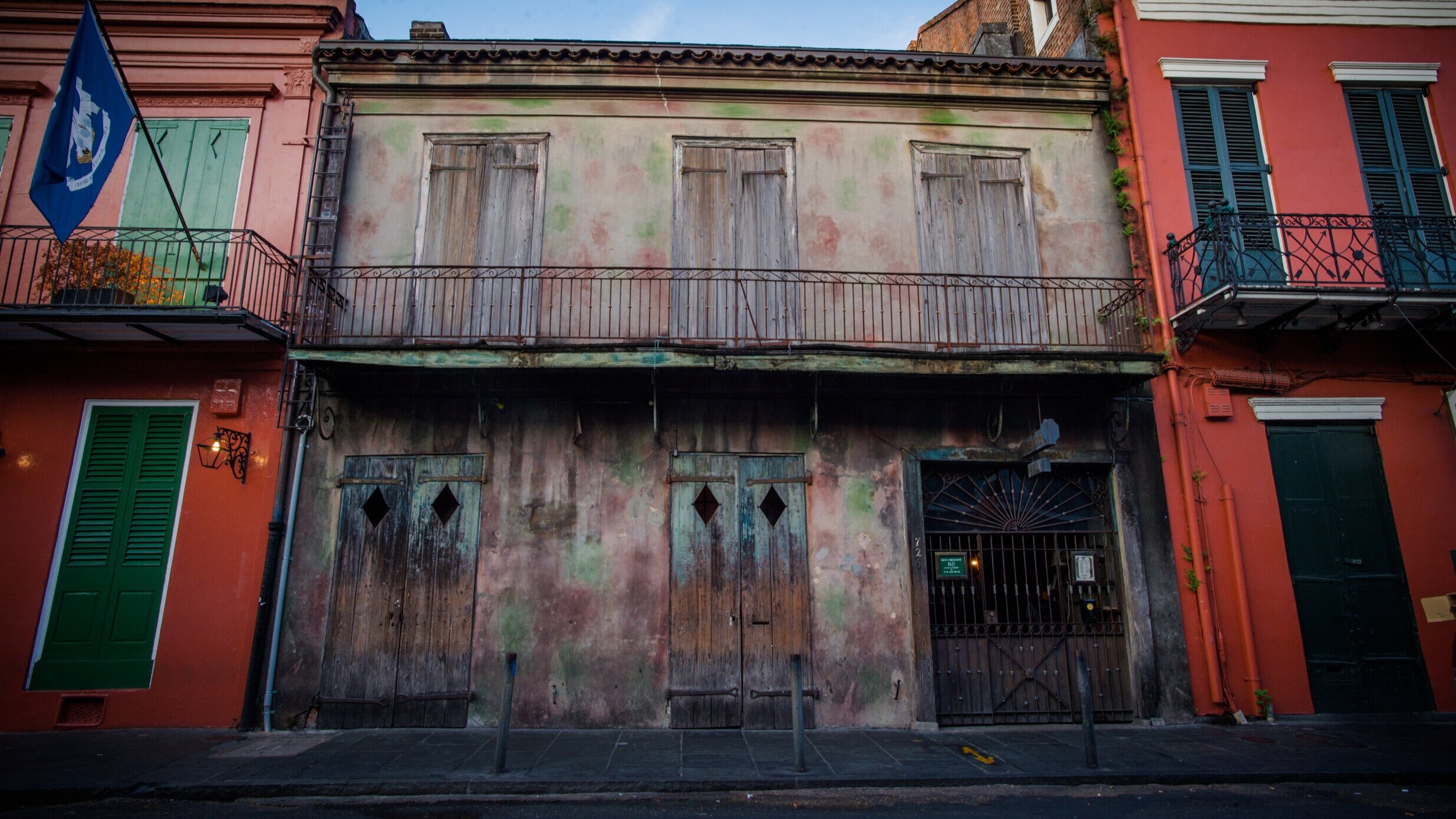
Preservation Hall
Preservation Hall in New Orleans stands as one of the most culturally significant music venues within the United States, established during the twentieth century as a dedicated space for the performance and preservation of traditional New Orleans jazz music. The venue's founding reflected a deliberate commitment to maintaining and celebrating the distinctive musical heritage that had developed within New Orleans communities and that had achieved widespread cultural influence extending far beyond the city's geographic boundaries. The building itself, constructed during an earlier historical period before its conversion to musical performance use, possesses architectural characteristics reflecting its historical context and geographic setting within the French Quarter district of New Orleans. The venue's relatively intimate spatial configuration, limited capacity, and distinctive acoustic properties create performance conditions that emphasize musical authenticity and direct artist-audience interaction. Preservation Hall's operational history spanning multiple decades has positioned it at the center of New Orleans's musical culture and its role as a premier destination for jazz musicians, music enthusiasts, and cultural tourists seeking authentic experiences of the city's distinctive musical traditions. The venue has hosted performances by legendary jazz musicians and successive generations of performers dedicated to perpetuating the traditional New Orleans jazz aesthetic and performance practices. The accumulation of musical performances, artist collaborations, and audience experiences within the venue's spaces has created an environment saturated with artistic expression, emotional intensity, and the profound human significance associated with cultural traditions serving as repositories of community identity and historical memory. The paranormal phenomena documented at Preservation Hall center upon the continued manifestation of spirits identified as former jazz musicians and performers whose lives and artistic legacies became intimately connected with the venue and its mission of musical preservation. Multiple witnesses, including contemporary performers, venue staff members, and audience members attending performances, have reported encountering apparitions or sensing the presence of deceased musicians whose careers and artistic accomplishments contributed substantially to Preservation Hall's historical significance. The manifestations suggest that the spirits of deceased performers remain engaged with the venue, maintaining active presence within the spaces where they conducted their artistic work during their lifetimes. Particular attention within documentation of Preservation Hall's paranormal phenomena has focused upon the reports of phantom trumpet sounds echoing through the venue's interior spaces during times when no living musicians are present to produce the musical sounds. Multiple independent witnesses have described hearing trumpet music emanating from within the hall or from specific interior spaces where musical performances typically occur, with the sounds demonstrating musical coherence and artistic quality that suggests purposeful musical expression. The trumpet sounds are frequently described as reproducing musical passages associated with specific performances or styles characteristic of traditional New Orleans jazz music, suggesting that deceased jazz musicians continue to engage in artistic expression and musical performance. Preservation Hall continues to operate as a premier jazz venue within contemporary New Orleans, maintaining its commitment to traditional music performance and cultural preservation while simultaneously functioning as a location of documented paranormal significance. The venue has achieved recognition within paranormal research communities interested in examining how locations deeply associated with artistic expression, cultural significance, and human creative endeavor develop persistent paranormal phenomena. Visitors to Preservation Hall continue to report experiences suggesting the presence of deceased musicians and artistic spirits, with some observers describing sensations of overwhelming emotion or heightened aesthetic appreciation during performances. The phantom trumpet sounds stand as compelling testimonies to the enduring power of artistic passion and creative dedication.

Labadie Mansion
The Labadie Mansion stands as an architectural reminder of a dark chapter in Oklahoma history, a grand structure now in deteriorating condition that holds within its walls the tragic and violent secrets of its past. Originally constructed during a period when Oklahoma's frontier was transitioning to settled community, the mansion represented the aspirations of ambitious individuals who sought to establish themselves as prominent members of developing towns. The building itself demonstrates sophisticated architectural ambition, suggesting that its original owner or owners possessed significant wealth and resources to fund construction of such an imposing structure. The mansion's exterior displays decorative elements and scale that would have distinguished it as a marker of status and achievement within its contemporary community. Multiple families occupied the property across different periods, each leaving their imprint upon the structure's history, yet one particularly tragic episode has so dominated the location's spiritual energy that other residents have become overshadowed by that singular catastrophe. The Labadie Mansion's notoriety stems from multiple traumatic events and personalities that converged within its walls and grounds. Frank Labadie, the original or prominent property owner, became forever associated with the location through his actions and the consequences those actions spawned. Enos Parsons, another figure central to the mansion's tragic history, brought additional darkness to the property through his own involvement in events that ultimately produced death and spiritual unrest. The most haunting aspect of the Labadie Mansion's history involves an innocent victim, a baby who was violently thrown into a creek, an act of brutality that created immediate and lasting supernatural consequences. The child's mother, Samantha, endured the incomprehensible trauma of losing her baby through such violence, and her grief, rage, and sorrow appear to have created a powerful spiritual presence. The confluence of multiple violent deaths and acts of cruelty transformed the mansion into a location of concentrated paranormal energy. The phenomena within the Labadie Mansion manifest with particular intensity at the structure's fireplace, a location that seems to anchor much of the supernatural activity. Smoke issues from the fireplace without any visible fire, a phenomenon that occurs repeatedly and defies natural explanation. Within that smoke, shadow figures appear and dissolve, humanoid shapes formed from darkness itself that suggest the presence of malevolent entities interacting with the physical environment. Electronic equipment throughout the mansion experiences repeated and dramatic failures, with devices ceasing function without mechanical malfunction, as if an external force deliberately disrupts electrical systems. Disembodied voices speak and call out from various locations, some producing intelligible words while others communicate only through tone and emotional intensity. Strange animals appear and vanish within the grounds, creatures that seem unnatural in their appearance or behavior, possibly manifesting as spiritual representations of tortured souls. Unexplained smells permeate certain areas, odors that possess emotional and psychological weight beyond their physical properties, creating visceral reactions in visitors and investigators. The abandoned mansion's paranormal activity remains documented despite the building's structural deterioration, attracting paranormal investigators and researchers who consider it one of Oklahoma's most intense and disturbing hauntings.
Hummel Park
Hummel Park in Omaha, Nebraska, occupies a unique position in American paranormal folklore as a location where documented historical trauma intersects with speculative claims regarding spiritual phenomena and alleged supernatural activity. The park's landscape consists of wooded areas, steep hillsides, and ravines that create an environment quite different from Omaha's surrounding urban landscape, offering visitors a sense of wilderness and isolation despite the park's proximity to the city. The geological features of the park, particularly the area known as Devils Den with its distinctive staircase formation, have become iconic elements in the paranormal lore surrounding the location. Throughout the park's recorded history, various tragic events have been documented, including deaths from accidents, suicides, and alleged criminal activity, creating a background of genuine human tragedy that provides context for paranormal claims. The wooded areas, particularly those along Ponca Road and near the south entrance, have been sites of reported paranormal phenomena and unusual occurrences that have attracted paranormal investigators, journalists, and curious visitors seeking to understand the nature of the alleged hauntings. The park's history as a gathering place for various groups and the documented presence of satanic or occult-related markings in certain areas has led some researchers to speculate about ritualistic activity at the location, though definitive evidence for such claims remains lacking. The paranormal phenomena allegedly associated with Hummel Park present a unique challenge for paranormal investigators and historians, as claims regarding spiritual activity intersect with accounts of criminal behavior, social misconduct, and psychological disturbance. Visitors and residents of Omaha have reported hearing screams and cries emanating from the trees, sounds that are often unexplained and sometimes attributed to paranormal sources. Shadowy figures have been reported moving through the wooded areas, particularly during evening and nighttime hours, with some accounts suggesting these figures exhibit behavior inconsistent with normal human activity. The Devils Den formation's distinctive stairs are reported to undergo morphing or transformation when observed by visitors, with accounts suggesting that the staircase appears to change in configuration, creating confusion and disorientation in those attempting to navigate it. Some researchers and visitors have suggested that these physical changes might be explained by optical illusions created by the landscape's topography, shadows, and vegetation, but others maintain that genuinely anomalous phenomena occur at this location. The discovery of dead animal carcasses in various locations throughout the park has led to speculation regarding animal sacrifice or ritualistic activity, though investigations have suggested these deaths result from natural predation and disease rather than human intervention. The satanic or occult-related markings documented at Hummel Park have become significant elements in the location's paranormal narrative, with some researchers suggesting that ceremonial or ritualistic activity has taken place at the site. These markings, found on rocks and trees in various locations within the park, have been attributed to various sources including actual occult practitioners, teenagers engaged in pranks and imitation of occult symbolism, or long-standing artistic marks with entirely mundane explanations. Despite these alternative explanations, the presence of such markings has contributed to the park's reputation as a location where paranormal and supernatural activity may occur. Historians and local researchers have emphasized the importance of distinguishing between documented historical tragedy, confirmed paranormal phenomena, and speculative claims that lack evidentiary support. The park remains open to public visitation, though authorities have implemented various safety measures and monitoring practices to prevent criminal activity and protect visitors. The persistence of paranormal claims regarding Hummel Park suggests that the location holds powerful psychological significance for those who visit, whether this is attributable to actual supernatural phenomena, the documented history of human tragedy at the site, the psychological impact of the wooded and isolated landscape, or some combination of these factors. The park continues to attract paranormal researchers, journalists, and curious visitors seeking to document and understand the nature of phenomena reported at this location.
Van Cortlandt Park
Van Cortlandt Park occupies a prominent position within the urban landscape of the Bronx, New York City, representing one of the largest parks in the city's park system and encompassing extensive natural areas, historical structures, and landscapes that have accumulated layers of historical significance and documented paranormal phenomena across multiple centuries of occupation. Originally developed from indigenous Lenape territories, the area witnessed the establishment of European settlements, including the construction of the Van Cortlandt House, a historic structure dating to the colonial period preserving architectural artifacts from the seventeenth and eighteenth centuries. The park encompasses wooded areas, open meadows, bodies of water, hiking trails, and the Vault Hill area, a location of particular paranormal significance where stone structures and archaeological remains preserve evidence of earlier occupation. The park's transformation into a public park system occurred during the nineteenth century, reflecting changing attitudes toward urban green space and natural area preservation. Throughout its complex history, Van Cortlandt Park has served multiple functions as recreational space, historical preservation site, and location of sustained paranormal manifestations reflecting the area's long history of human occupation and violence. The paranormal phenomena documented within Van Cortlandt Park are associated with multiple historical traumas and spiritual entities whose presences have created sustained paranormal activity throughout the park's natural and built environments. One of the most significant documented entities is associated with Captain Rau, identified as a Hessian soldier who participated in military conflicts during the American Revolutionary War period, whose death may have occurred within the park's geographical area. The manifestations associated with Captain Rau include strange whispers without discernible source, auditory phenomena suggesting vocal utterances of unclear meaning or communicative intent. A second major category of paranormal phenomena is associated with victims of the Stockbridge massacre, a historical incident resulting in multiple deaths, whose spiritual aftermath appears to persist within the park. These spirits manifest through sensations of spirits walking through solid walls, violating physical boundaries suggesting non-material nature of spiritual entities. Dolls and other objects have been documented moving of their own accord, a telekinetic phenomenon suggesting active spiritual agency. Doors repeatedly close of their own volition, creating repeated cycles of the same seemingly purposeful action without human agency. Additional paranormal phenomena include sensations of people feeling physically touched by invisible presences. Whispering voices traverse the wooded areas and near the Van Cortlandt House, creating auditory manifestations suggesting multiple communicating entities. Most distinctively, paranormal investigators have documented repetitive melodic chants in unknown language or intelligible utterances, vocalizations suggesting ritualistic or linguistic communication from entities whose origins may predate contemporary New York City, possibly deriving from indigenous populations whose presence and displacement preceded European settlement. The combination of Revolutionary War-era military spirits, trauma victims from historical violence, and possibly pre-contact indigenous spiritual presences creates a palimpsest of spiritual density throughout Van Cortlandt Park. The Van Cortlandt House and Vault Hill serve as particular loci of paranormal concentration. Contemporary visitors to the park, particularly those venturing into wooded areas and around historical structures, frequently report experiences of paranormal phenomena that collectively establish the park as one of the most significantly haunted locations within New York City.
Kelly Road
Kelly Road in Ohioville, Pennsylvania, has acquired a reputation as one of America's most consistently paranormally active and explicitly dangerous locations, a one-mile stretch of roadway that has become known within paranormal research communities as the "Mystery Mile" due to the concentration and intensity of phenomena documented along this particular section of road. Unlike conventional haunted locations defined by specific structures, Kelly Road represents a paranormal zone extending along a linear geography, a phenomenon whose intensity and manifestations appear distributed across the length of the roadway rather than concentrated in a particular building. The road itself appears mundane and unexceptional, lacking obvious architectural landmarks or distinctive features that would normally attract paranormal investigation or supernatural legend. Yet the consistent and repeated reports from individuals traveling along Kelly Road, the behavioral changes in animals, vehicle malfunctions, and more dramatically, reports of behavior changes in human individuals exposed to the location's influence, have established Kelly Road as a location of genuine paranormal concern. The entities most prominently associated with Kelly Road are believed to be the spirits of children, either from the colonial or pioneer period of the region's history, whose deaths or traumas may have created such profound spiritual attachment that their presence continues to manifest in intensely disturbing and potentially dangerous ways. The theory that Kelly Road harbors the spirit of a murder victim, an individual whose death was never solved or properly avenged, adds another dimension to the alleged paranormal phenomena, suggesting that not all of the spirits present are necessarily children. The temporal removal of these alleged entities from the contemporary world—whether from the colonial, pioneer, or more recent historical period—creates a distance between the spiritual presence and the contemporary context, suggesting that the phenomena manifesting along Kelly Road may represent extremely residual hauntings, spiritual manifestations of events and traumas from centuries past. The paranormal phenomena documented along Kelly Road include behavioral changes in animals that appear to be triggered by proximity to the location, with dogs and other animals exhibiting signs of extreme distress, fear, or unprovoked aggression when traveling the roadway. These animal behavior changes have been documented by multiple witnesses and appear to occur with sufficient consistency to suggest something genuinely anomalous about the location's influence on animal psychology or behavior. More dramatically, visitors and travelers along Kelly Road have reported observing apparitions of angry children in colonial or pioneer-period clothing, ghostly figures appearing with hostile demeanor and apparent intent to chase or harm the living individuals encountering them. These apparitions are described as glowing or luminous, suggesting a distinctive manifestation of paranormal phenomena distinct from conventional ghostly appearances. Multiple witnesses have reported sudden behavioral changes in themselves or in companions while traveling along the roadway, shifts in emotional state toward violence or aggression in individuals with no prior history of such behavior, creating genuine danger for those traveling the location. Paranormal research teams and paranormal investigation organizations have conducted formal investigations along Kelly Road, establishing baseline environmental data and attempting to identify the specific geographic locations where paranormal phenomena are most intensely concentrated. The investigations have documented electromagnetic field anomalies, electromagnetic fluctuations suggesting the presence of spiritual entities, and have captured audio and visual evidence of phenomena that support the accounts provided by casual travelers and previous investigators. Kelly Road today remains a working roadway and transportation route, used daily by residents and travelers unaware of or unconcerned with its paranormal reputation. However, among paranormal researchers and ghost hunting communities, Kelly Road has become recognized as a location requiring particular caution and respect, a place where the boundary between the living world and the spiritual dimensions appears to have become so thin that genuine danger may result from encountering the paranormal phenomena present. The Mystery Mile thus continues to draw paranormal researchers seeking to understand the historical origins and paranormal mechanisms underlying one of America's most dangerous and intensely active paranormal zones.
Crossett Railroad Tracks
The Crossett Railroad Tracks in Ashley County, Arkansas represent a location where the boundary between the physical and paranormal worlds appears unusually permeable, a place where documented paranormal phenomena have persisted for over a century with such consistency and widespread corroboration that the phenomenon has earned scientific attention and historical documentation. The railroad tracks follow a route established during the nineteenth-century expansion of rail transportation through Arkansas, connecting communities and facilitating commerce in a region previously accessible only by water or primitive roads. The specific stretch of track near Crossett gained prominence in local folklore and paranormal databases not through a single documented event but through the recurring manifestation of an unexplained luminous phenomenon that appears with sufficient regularity to be reliably observed and photographed. The Crossett Light, as the phenomenon became known, represents one of many similar spooklight phenomena documented across North America, including comparable phenomena in Joplin, Missouri; Senath, Missouri; and Gurdon, Arkansas, suggesting either a shared natural explanation or a widespread pattern of residual hauntings associated with railroad-related deaths. Historical accounts attribute the origin of the Crossett Light phenomenon to a tragic railroad accident during the early twentieth century involving a railroad brakeman whose identity has been lost to history but whose fate created a legendary ghost. According to accounts passed down through generations of local residents and railroad workers, the brakeman was decapitated by a moving train, his severed head separated from his body and presumably lost or buried in an unmarked location adjacent to the tracks. The traumatic nature of his death, combined with the incompleteness of his physical remains, appears to have created spiritual circumstances conducive to paranormal manifestation. Local tradition holds that the ghostly light represents the brakeman's eternal search for his severed head, wandering the tracks and surrounding landscape in perpetual confusion and distress. This explanation, while impossible to verify through historical records, reflects the folklore interpretation of a death so violent and disorienting that even death itself could not provide finality or resolution. The Crossett Light appears consistently as an inexplicable luminous phenomenon that manifests approximately two to three feet above the ground, displaying colors ranging from pale yellow and orange to blue and green, with the precise color varying between sightings and possibly indicating variations in atmospheric conditions or observer perception. The light exhibits properties that contradict conventional understanding of electrical phenomena or natural bioluminescence, moving with apparent intentionality, responding to observer presence by receding when approached, yet maintaining a consistent distance that prevents close examination. When witnesses advance toward the light, it moves away at comparable speed, maintaining the separation and preventing the investigation that would reveal its nature. When approaching is abandoned, the light reappears in the same general location, suggesting either intelligent response or a mechanism that detects observer intention. The light has been photographed extensively, documented in paranormal databases, and investigated by paranormal researchers who have theorized explanations ranging from residual haunting energy to plasma phenomena to interpretations involving genuine intelligent interaction with living observers. Despite extensive investigation and documentation by paranormal researchers, the true nature of the Crossett Light remains unresolved, existing in the ambiguous territory between explained natural phenomenon and confirmed paranormal manifestation. Scientific investigators have proposed explanations including ball lightning, reflected vehicle headlights, bioluminescent organisms, and electromagnetic phenomena generated by the train tracks themselves, yet none of these explanations satisfactorily account for all observed characteristics of the phenomenon. Paranormal researchers have documented hundreds of sightings spanning generations, with consistent descriptions suggesting a phenomenon that cannot be easily dismissed as misidentification or psychological projection. The persistence of the phenomenon, its apparent responsiveness to observer behavior, and the historical tradition associating it with a decapitated railroad worker create a compelling case for paranormal origin, though absolute proof remains elusive.
Old Porter Road
Old Porter Road stretches as a solitary rural strip between Portage and Burns Harbor in northwestern Indiana, running parallel to railroad tracks serving commerce and transportation for generations. The road occupies a liminal space between communities characterized by undeveloped land, sparse residences, and industrial railroad infrastructure. Local residents have inhabited the area for over a century despite persistent dangers from proximity to active rail operations. Throughout its history, the combination of road and railroad created tragic conditions with numerous documented incidents involving deaths and serious injuries accumulating over decades of operation and community residence. The dark history of Old Porter Road is intrinsically tied to transportation infrastructure surrounding it, with fatalities related to train collisions, pedestrian accidents, and vehicles struck at railroad crossings creating pattern of tragedy. Local folklore records multiple deaths impressed deeply into community consciousness and memory across generations. Winter months proved particularly dangerous, with increased accidents during inclement weather reducing visibility and making road conditions treacherous. The combination of darkness, isolation, and unpredictable rail traffic made the road dangerous and required residents to develop specific safety practices and warnings transmitted through family knowledge across time. Paranormal activity along Old Porter Road has been documented by residents and researchers for decades, with consistent reports occurring during late night hours and winter months. Shadow-like figures reported by drivers appear suddenly in darkness before vanishing when approached or illuminated by headlights. Mysterious canine entities exhibit unusual behavior inconsistent with natural wildlife, appearing without warning and disappearing impossibly. Pet reactions provide testimony to paranormal presence, with animals exhibiting extreme distress and heightened alertness in specific road locations. Unexplained sounds including disembodied voices and vocalizations unrelated to vehicle or railroad traffic have been consistently reported across decades. Paranormal manifestations appear connected to the road's tragic history, with apparitions potentially representing residual psychic impressions of past traumas imprinted upon location. Shadow figures might represent accident victims eternally present at fatal encounter sites, while mysterious canine entities could represent spiritual guardians or animal victims. Winter month concentration correlates with historical accident patterns, suggesting weather conditions amplify paranormal activity or witness sensitivity. Paranormal researchers have documented unexplained electromagnetic fluctuations, temperature anomalies, and photographic evidence during investigations. The rural setting, isolation, and darkness provide ideal paranormal investigation conditions. Old Porter Road remains functioning rural thoroughfare serving Portage and Burns Harbor communities, though many locals exercise caution during late night hours due to haunted reputation. Paranormal researchers continue visiting for investigation purposes seeking evidence of reported phenomena. Modern suburban encroachment has begun changing area character, though the essential nature of Old Porter Road as dark isolated corridor persists. The site stands as testimony to historical tragedy's enduring location influence and how communities process collective trauma through paranormal narrative and folklore.
Carousel Gardens
The Carousel Gardens restaurant operated from within the historic Wooster Estate, an impressive residential structure built across the period from 1879 to 1894 in Seymour, Connecticut, representing the architectural aspirations and economic achievement of the estate's founder. William H. Wooster, whose name became synonymous with Seymour's founding and economic development, built the estate during a period of significant expansion in industrial Connecticut. Wooster served as both a founding figure in Seymour's development and as a banker and industrialist whose financial ventures generated the wealth necessary to construct and maintain an estate of substantial architectural and social significance. The Wooster family was among the social elite of the Seymour community, and the estate functioned both as a private residence and as an implicit symbol of the family's prominence within the community's social hierarchy. The estate's subsequent repurposing as a restaurant venue created a transition from domestic space to commercial hospitality enterprise, a functional transformation that altered the building's use patterns while preserving its architectural integrity and historical character. For decades, the Carousel Gardens operated as an upscale dining establishment, attracting patrons from throughout the region who came to experience fine dining within the distinctive ambiance of a historic estate structure. The paranormal reputation of the Carousel Gardens became increasingly documented throughout its operational period as a restaurant, with multiple categories of phenomena consistently reported by staff members, patrons, and paranormal investigators. The location became particularly associated with unexplained breaking glass sounds that occurred without apparent cause, manifesting at times when no obvious mechanism could account for the acoustic phenomena. The apparition of a phantom cat with distinctive glowing eyes was reported by multiple independent witnesses, suggesting a residual haunting of an animal entity whose appearance possessed unusual paranormal characteristics inconsistent with normal feline physiology. The most prominent paranormal presence was identified with the estate's historical ownership, specifically William H. Wooster and his daughter Ruth, whose spirits appeared to retain strong attachment to the property despite the transitions in ownership and use that had occurred across the generations since their deaths. The Warrens and other investigators documented multiple categories of paranormal activity including cold spots of unusual intensity, unexplained movement of objects within the restaurant spaces, physical contact experiences where patrons reported being touched by invisible presences, and disembodied voices communicating across the dining areas. Paranormal phenomena at the Carousel Gardens manifested with particular intensity during the location's operational period as a restaurant, suggesting that the presence of human occupants, emotional engagement, and the sensory stimulation associated with active hospitality operations may have activated or intensified existing paranormal presences. Staff members operating in the kitchen facilities reported unusual difficulties with equipment, mysterious relocations of tools and ingredients, and the sensation of invisible presences monitoring their activities. Diners reported sudden temperature fluctuations at their tables and the sensation of being observed by unseen entities. The phantom cat, appearing as a luminescent apparition with glowing eyes distinctly visible in darkness, suggested a particularly vivid paranormal phenomenon potentially connected to beloved animal companions the family may have maintained during their residence at the estate. The manifestation of William H. Wooster and Ruth appeared connected to the estate setting specifically, with their apparitional activity concentrated in areas most directly associated with their historical residence and daily life.
Winterwood Gift Shop
The Winterwood Gift Shop, located in Rio Grande, New Jersey, represents a contemporary retail commercial establishment whose primary function as a seasonal and year-round gift merchandise retailer has become substantially integrated with documentation of persistent and distinctive paranormal phenomena centered on the apparition and poltergeistic activities of a specific identified entity known as Hestor, an elderly female spirit whose historical death in 1949 and subsequent spiritual attachment to the property have resulted in more than seven decades of documented paranormal manifestations within the commercial retail spaces. This gift shop operates within the commercial district of Rio Grande and serves the broader Cape May County community with holiday decorations and specialty retail items. The retail environment, characterized by extensive merchandise displays and shelf arrangements housing numerous items, has become the setting where contemporary commercial activities occur in ongoing proximity to persistent manifestation of Hestor. The primary spectral entity is identified as Hestor, described as an elderly spinster who died during 1949 and whose apparent attachment has persisted across more than seventy years of subsequent operational activity and changing proprietorship. Hestor's historical circumstances, including her unmarried status and the specific year of death, suggest possible deep personal connection to the property prior to her death, such as ownership, extended employment, or emotional significance related to personal relationships or life events within the retail space. The persistence of Hestor's paranormal manifestation across decades of changing commercial operations suggests either extraordinarily durable spiritual attachment or possible continuing engagement with the retail environment that characterized her life experience. The identification of multiple child presences within the gift shop, distinct from Hestor's primary manifestation, suggests additional spiritual entities share the commercial space with the dominant entity. The paranormal phenomena manifesting within Winterwood Gift Shop display exceptional specificity and apparent directedness distinguishing this location from many paranormal sites. Flickering lights throughout the retail space represent an initial category, with electrical lighting systems apparently responding to the presence or emotional state of resident spirits through intermittent operation patterns suggesting conscious or semi-conscious manipulation of electrical systems. Auditory phenomena including footsteps heard throughout the retail space, with walking sounds consistent with human movement despite visual confirmation of absence of living persons responsible, suggest apparitional movement through merchandise-filled spaces with apparent familiarity. Objects have been repeatedly observed moving from original positions without visible causation, suggesting poltergeistic manipulation of merchandise inventory, though selective nature of these movements indicates possible directed activity. Particularly distinctive among documented phenomena are incidents involving specific merchandise items receiving apparent particular attention from resident spirits, suggesting possible emotional or personal connection. A bride doll has been repeatedly discovered lying face-down despite previous upright positioning, suggesting either accidental displacement or deliberate manipulation. A large birch reindeer has been documented as toppled from its display position despite apparent stability and absence of mechanical factors accounting for displacement, suggesting poltergeistic activity. Stuffed animals have been repeatedly arranged in circular formations on floor spaces, suggesting deliberate organization requiring complex poltergeistic activity or direct physical manipulation. Female voices of indeterminate identity have been documented in the retail space, suggesting vocalization attempts by spirits. Cherry pipe smoke smell manifests within the gift shop interior, suggesting possible olfactory manifestation related to historical smoking practices. Presences, characterized as subjective sensation of being watched by unseen entities, have been reported by staff and investigators. Winterwood Gift Shop continues operation as a functioning retail establishment despite persistent and distinctive paranormal phenomena.
Spring Grove Cemetery
Spring Grove Cemetery in Cincinnati, Ohio, represents one of the finest and most historically significant cemeteries in the United States, a landscape of exceptional beauty and cultural importance recognized through its designation as a National Historic Landmark. Chartered in 1845, the cemetery encompasses 733 acres of carefully landscaped grounds designed with both aesthetic sophistication and reverence toward the dead interred there. Spring Grove was established according to the principles of the "garden cemetery" movement that revolutionized American approaches to burial grounds during the nineteenth century. Rather than the overcrowded, poorly maintained graveyards often found in urban areas, the garden cemetery movement advocated for spacious, beautifully landscaped grounds that served simultaneously as memorials to the dead and as recreational spaces where the living could contemplate mortality and find solace in nature's beauty. Spring Grove represented this movement's ideals at their finest: comprehensive landscaping with mature trees and shrubs, monuments and mausoleums crafted with artistic ambition, and a layout designed to create a sense of peaceful order and aesthetic harmony. The cemetery contains the graves of numerous historically significant individuals, famous artifacts, and architectural works of distinction. An arboretum integrated within the cemetery grounds provides additional botanical interest and recreational value. The combination of historical importance, architectural merit, and horticultural achievement has made Spring Grove one of the most visited and studied cemeteries in America, attracting genealogists, historians, architectural enthusiasts, and the general public seeking to understand death, memory, and American cultural values. Yet beneath this landscape of ordered beauty and historical significance, paranormal phenomena have been reported with sufficient consistency to draw the attention of ghost hunters and paranormal researchers. The most famous of these phenomena centers on the bust of C.C. Breuer, a statue crafted with eyes rendered in glass rather than stone. Numerous visitors and staff have reported that the glass eyes of the Breuer bust appear to follow them as they move through the cemetery, a classic phenomenon associated with certain paintings and statues throughout history. The eyes seem to maintain contact with observers regardless of their position, creating an uncanny sense of being watched by the deceased individual memorialized in stone. Whether this phenomenon represents genuine paranormal activity or results from optical effects inherent in the representation itself—a well-known characteristic of certain artistic works that create the illusion of following eyes through the mechanics of perspective—remains debated among paranormal researchers and skeptics. Additional paranormal phenomena reported at Spring Grove include accounts of ghostly white dogs observed in various parts of the cemetery, particularly in the vicinity of the Dexter crypt and other sections. These spectral canines are described as glowing with an otherworldly luminescence, their eyes displaying an eerie blue fire that glows in the darkness. Multiple independent witnesses have reported seeing these apparitional dogs, sometimes accompanied by descriptions of an unseen groundskeeper or other human presences manifesting in the cemetery at night. Animals themselves have displayed unusual behavioral reactions to certain areas of the cemetery, suggesting perception of presences invisible to human observers. The combination of apparitional sightings, luminous phenomena, and animal reactivity has established Spring Grove as a location of paranormal significance within the paranormal research community. Spring Grove Cemetery's official administration and ownership have maintained a position of skepticism regarding paranormal claims, neither endorsing nor promoting the supernatural reputation of the location. Despite this official stance, the cemetery's status as a National Historic Landmark and major tourist attraction ensures that both the paranormal accounts and the historical significance of the location remain prominently featured in cultural discussions of Cincinnati and nineteenth-century American cemetery practices. The coexistence of Spring Grove's undeniable historical importance and architectural merit with paranormal reports suggests a location where the ordinary and the extraordinary intersect, where the documented facts of history meet speculative accounts of paranormal phenomena. For visitors to the cemetery, whether motivated by genealogical research, historical interest, or paranormal curiosity, Spring Grove offers a landscape rich with meaning, memory, and mystery.
Cincinnati Zoo
The Cincinnati Zoo stands as one of America's oldest and most prestigious zoological institutions, with a history extending back to the nineteenth century and encompassing decades of dedicated work in animal care, scientific advancement, and public education. The facility's extensive grounds contain enclosures, habitats, and infrastructure designed to house and display diverse animal species while providing educational experiences for millions of visitors across generations. Within this respected scientific and cultural institution exists a paranormal dimension that intersects with the zoo's animal-focused mission, creating a unique category of haunting that combines elements of zoological history with supernatural manifestation. The zoo grounds, with their combination of natural landscape features, constructed habitats, and the concentrated presence of both living animals and the spirits of deceased creatures, have become recognized as a paranormal hotspot within Cincinnati's documented haunted locations. The most distinctive paranormal manifestation at Cincinnati Zoo centers on the apparitional appearance of a ghost lion, a spectral feline entity whose presence has been repeatedly documented and discussed within paranormal investigation communities. The lion enclosure, designated as the primary location of the ghostly manifestation, has generated reports describing visual sightings of a large feline form appearing and disappearing with characteristics inconsistent with ordinary animal behavior. Witnesses describe the ghost lion as a distinct and recognizable entity rather than vague shadow or ambiguous shape, suggesting a manifestation of considerable clarity and specificity. The spectral nature of the lion appears to derive from the death of an actual lioness resident in the zoo, whose passing marked a significant event in the institution's history and whose exceptional nature apparently created conditions for persistent paranormal attachment to the location. The paranormal activity surrounding the ghost lion encompasses not merely visual apparitional sightings but extends to physical sensations and measurable responses from living animals present in nearby enclosures. Zoo visitors and staff members have reported experiencing unexplained cold spots within the lion enclosure area, a classic indicator of paranormal presence that paranormal investigators associate with the manifestation of spectral entities. Perhaps most significantly, living animals housed in neighboring enclosures have demonstrated behavioral reactions suggesting sensitivity to paranormal presence, exhibiting signs of agitation, alarm, or unusual attention directed toward the lion enclosure despite the absence of any visible threat. These animal reactions have proven particularly compelling to paranormal researchers, as they represent documentation of response to phenomena that living creatures perceive but humans may not consciously register through conventional sensory means. The Cincinnati Zoo's status as a paranormal hotspot has grown within the broader landscape of regional paranormal documentation, with the facility appearing consistently in comprehensive guides to haunted locations throughout the Queen City. Paranormal investigation groups have conducted systematic research within the zoo grounds, documenting electromagnetic anomalies and environmental variations consistent with spectral activity within the lion enclosure area. The intersection of the zoo's conventional mission as a scientific institution with its parallel reputation as a paranormal location creates a distinctive category of haunting centered on animal consciousness, loss, and the possible persistence of animal spirits within locations of attachment and significance. The ghost lion of Cincinnati Zoo represents a compelling case study in how paranormal manifestation extends beyond the exclusively human realm into the animal dimensions of death, loss, and the potential persistence of consciousness beyond biological termination.
Jewell Park
Jewell Park, located in the suburban municipality of Bellevue, Nebraska, adjacent to a public cemetery, occupies a parcel of land that historically served as a venue for equestrian exhibitions and entertainment events. The site contained a modest arena structure designed to accommodate horse shows, rodeo competitions, and related events that drew spectators from throughout the surrounding region during the middle decades of the twentieth century. Rodeos, as cultural institutions and entertainment spectacles, carry considerable significance in the American West and Great Plains regions, representing traditions of horsemanship, ranching culture, and public celebration of agricultural heritage. The Jewell Park arena, though modest in scale compared to major metropolitan rodeo venues, nonetheless functioned as a community gathering place and a venue where the skills and daring of riders and the athleticism of animals were displayed before assembled crowds. The precise historical origins of Jewell Park and the circumstances surrounding its development as an entertainment venue remain somewhat obscured by the passage of time and the limited documentary evidence available in publicly accessible archives. However, the location's proximity to the Bellevue cemetery and the reports of unusual phenomena have led some researchers to investigate whether events of tragic or violent nature occurred at the site, potentially explaining the residual paranormal activity documented there in subsequent decades. Local folklore and oral tradition include references to cult gatherings and unresolved deaths within the general area, though the specific connections between these rumors and the documented paranormal phenomena at Jewell Park itself remain unclear and contested among researchers. Visitors and investigators at Jewell Park have documented a consistent pattern of paranormal manifestations characterized by residual sounds associated with rodeo activity, sounds that persist despite the absence of any contemporary equestrian events or human activity at the site. These phantom sounds include the characteristic noises of rodeo competition: neighing and whinneying of horses, the rhythmic pounding of hoofbeats upon arena ground, shouting of riders and spectators, and the general cacophony of an active rodeo event. Witnesses describe the experience of hearing these sounds with absolute clarity during visits to the park, particularly on clear nights when atmospheric conditions might ordinarily produce silence. The auditory phenomena appear to constitute a form of residual haunting, a recording or imprint of past events that manifests repeatedly without apparent awareness or agency on the part of the spiritual forces involved. Beyond the phantom rodeo sounds, visitors have reported additional paranormal phenomena including visual apparitions of people and animals that appear suddenly and then dissipate into nothingness. Unexplained mist has been observed materializing upon clear, dry evenings with no meteorological explanation for its sudden appearance. Footprints have been documented in the dirt and soft ground of the arena and surrounding areas, additional prints appearing alongside investigators despite their solitary presence at the location, suggesting an invisible companion walking in proximity. The phenomena include feelings of being chased by an unseen entity, with investigators experiencing the sensation of rapid approach and flight response despite the absence of any visible pursuer. Animal reactions to unknown stimuli have been documented, with dogs becoming agitated, nervous, or refusing to enter certain areas of the park. Cold spots have been identified within discrete locations, areas where ambient temperature drops suddenly and inexplicably. Witnesses report both hearing and being touched by disembodied voices and invisible presences. The convergence of multiple distinct forms of paranormal phenomena at Jewell Park suggests the presence of complex spiritual activity rather than simple residual haunting. The intelligent responses documented by researchers, including the apparent pursuit behavior and the interactive nature of certain phenomena, imply consciousness and agency on the part of the entities involved. The park continues to attract paranormal investigators, ghost hunters, and curiosity seekers interested in experiencing the documented phenomena firsthand. The relationship between the rodeo history of the location and the nature of the paranormal manifestations suggests that the events and energies associated with past entertainment activities may be imprinted upon the landscape in ways that contemporary science has not yet adequately explained.
Alamuchee-Bellamy Covered Bridge
The Alamuchee-Bellamy Covered Bridge stands as one of Alabama's most historically significant bridges and most notably haunted structures, a testament to the engineering and craftsmanship of the nineteenth century. The bridge was constructed in 1861, during the tumultuous period of the American Civil War, reflecting the continued infrastructure development that persisted despite the national conflict. The bridge spans the Alamuchee Creek using a Town's lattice truss construction, an engineering design patented by Ithiel Town that proved economical and effective for spanning water obstacles in nineteenth-century America. The structure measures eighty-eight feet in length and retains its distinctive covered bridge architecture, with a wooden tunnel-like structure that provides both shelter and distinctive visual character. The bridge is located on what is now the campus of the University of West Alabama, positioning this historical structure within an active educational environment where it continues to serve as a symbol of the region's heritage. The bridge represents a significant achievement in American engineering history and continues to attract the attention of historians, engineers, and heritage preservation advocates. The bridge's historical context is deeply connected to the Civil War era and the turbulent aftermath of the conflict. The bridge was constructed at a moment of profound national division, when the Southern states were seceding from the Union and the institution of slavery was being contested on battlefields throughout the region. Though the bridge itself served primarily practical transportation functions, its construction and continued use during the war period placed it within the broader context of Civil War history. The area surrounding the bridge witnessed military activity and the passage of troops during the conflict, exposing the location to the violence and trauma characteristic of the Civil War period. The bridge's survival through the war and subsequent decades represents the resilience of engineering structures and the region's capacity to rebuild and maintain infrastructure despite the destructive forces of conflict. The most historically significant paranormal connection at the Alamuchee-Bellamy Covered Bridge involves the legend of Stephen S. Renfroe, known as Alabama's Outlaw Sheriff. Renfroe was a controversial and notorious figure in Alabama history, a lawman whose methods and career were marked by violence, moral ambiguity, and conflict with official authority. Renfroe was executed by hanging in 1886, a death penalty imposed by legal authority but accompanied by significant controversy regarding the justice of his conviction and punishment. Renfroe's death, whether just or unjust, represented a moment of trauma and violence at the end of a controversial life. The legend associates Renfroe's spirit with the Alamuchee-Bellamy Covered Bridge, suggesting a connection between his violent death and ongoing paranormal phenomena at the location. The exact nature of this connection remains historically unclear, though the convergence of Renfroe's execution and the bridge's prominent position in regional history has created a powerful association between the two. Paranormal phenomena documented at the Alamuchee-Bellamy Covered Bridge include visual apparitions, shadow figures, unexplained sounds, and cold spots concentrated within the bridge's interior spaces and spanning structure. Witnesses have reported observing a dark shadow pacing the length of the bridge, moving with deliberate steps as if engaged in repetitive patrol or search activity. Apparitions of a figure on horseback have been reported, described as appearing and disappearing within or near the bridge structure, as if the rider is perpetually crossing or attempting to cross the span. A ghostly face has been observed visible through the windows of the covered bridge, appearing in specific locations and vanishing when approached or photographed. Unexplained sounds including footsteps, the sounds of movement, and auditory phenomena suggestive of activity within the bridge occur on both clear nights and during periods of poor visibility. Cold spots of unusual intensity appear in specific locations within the bridge's interior, creating areas of dramatic temperature variation without apparent explanation. The phenomena are reported most frequently during evening and nighttime hours, with activity appearing to vary with season and atmospheric conditions. Paranormal investigators have documented animal reactions to the location, including the inexplicable behavior of a black-and-white cat that reportedly vanished while traversing the bridge, disappearing from its owner's view despite the enclosure and apparent absence of escape routes. These phenomena suggest the presence of powerful spiritual or paranormal energies capable of affecting not only human perception and experience but also animal consciousness and behavior. The Alamuchee-Bellamy Covered Bridge represents one of Alabama's oldest structures and one of its most reliably haunted locations. The bridge continues to serve as a historical landmark and paranormal investigation site, attracting researchers and visitors interested in both the engineering history of American bridges and the supernatural phenomena associated with the structure. The legend of Stephen S. Renfroe, whether or not directly connected to the specific phenomena reported at the bridge, provides historical and narrative context for understanding the complex spiritual energies that appear to inhabit this significant structure.
Mile High Grill and Inn – Clinkscale Building
The Clinkscale Building, historically known as the Mile High Grill and Inn, represents a significant structural monument to Jerome, Arizona's complex and sometimes turbulent history as a frontier mining town that rose to prominence and later faced economic challenges. The building itself, originally constructed in 1899 during the height of Arizona's territorial period, embodies the architectural styles and construction techniques characteristic of late nineteenth-century commercial establishments in remote mining regions. This three-story brick structure was designed to serve practical functions within Jerome's bustling commercial district, positioned to serve the wealthy miners and merchants who inhabited the area during its economic golden age. The building's solid construction and prominent location made it ideal for commercial use, though its purposes would dramatically transform across the subsequent decades. The property's transition to Madam Jennie Banter's renowned bordello establishment marked a significant shift in the building's operational identity and cultural significance within Jerome's community. Madam Jennie, a notable figure in Arizona territorial history, established her operation within the Clinkscale Building during a period when such establishments operated with relative legal tolerance in remote mining towns. The bordello became a substantial operation, attracting considerable foot traffic and generating significant revenue during Jerome's most prosperous years when mining operations supplied steady employment and income to the region's population. Madam Jennie's reputation extended beyond Jerome, making her establishment one of the more famous such operations in the Arizona Territory. The building subsequently experienced decades of abandonment and deterioration following the economic collapse of Jerome's mining operations in the early twentieth century. As ore reserves depleted and mining companies relocated operations, Jerome transformed from a booming frontier town into a slowly depopulating settlement. The Clinkscale Building, like many structures in Jerome, fell into disrepair as resources and residents fled the region. For decades, the structure stood largely unused, its windows darkened, its interior spaces subject to the destructive forces of weather, time, and neglect. This extended period of abandonment and decay has been theorized by paranormal researchers to intensify spiritual phenomena, as if the emotional weight of the building's history becomes concentrated within increasingly deteriorated physical spaces. The paranormal activity documented at the Clinkscale Building centers primarily on Madam Jennie Banter, whose spirit appears to maintain a strong presence within the property she once operated. Staff members and guests have reported witnessing Madam Jennie engaged in her characteristic activity of rearranging furniture throughout the building's guest rooms, moving objects with apparent intention and purpose. In the kitchen areas, items have been thrown or displaced by unseen forces, a phenomenon interpreted by investigators as Madam Jennie continuing her domestic management activities across the boundary between life and death. Alongside Madam Jennie's relatively benign manifestations, the building is also home to her companion spirit—a cat—whose apparition has been sighted in various rooms. Additionally, unknown dark spirits have been encountered in the building, presenting a more menacing presence that contrasts sharply with Madam Jennie's apparently playful interactions with the physical environment. The 2020 full restoration of the Clinkscale Building marked a dramatic architectural and structural transformation, converting the historic structure into the modern Mile High Grill and Inn. The restoration involved comprehensive reconstruction of interior spaces, modern amenities installation, and careful historical preservation work designed to maintain the building's nineteenth-century character while providing contemporary guest accommodations. This restoration process, rather than diminishing paranormal activity as some theorists might predict, appears instead to have intensified the spiritual manifestations within the property. Paranormal investigation teams have documented increased activity levels following the restoration, suggesting that renovation and restoration work may stimulate or awaken spiritual presences within historic structures. The paranormal experiences documented at the Clinkscale Building include the full range of phenomena associated with residual and intelligent haunting: apparitions of Madam Jennie and her cat, shadow figures appearing in hallways and guest rooms, disembodied voices, the movement of objects, and sudden temperature variations. Guests have reported encountering furniture rearrangement during nights when no staff members were present, and multiple witnesses have documented the same phenomena independently, lending credibility to the reports. The contrast between Madam Jennie's playful furniture manipulation and the darker presence of unknown spirits suggests a complex paranormal environment where multiple entities with different intentions coexist within the same structure. The Mile High Grill and Inn currently operates as a functioning hospitality business while simultaneously embracing its reputation as a actively haunted location. The property's owners have adopted a pragmatic stance toward the paranormal phenomena, acknowledging the hauntings openly in marketing materials and inviting paranormal investigators to conduct overnight investigations within guest areas. This combination of active commercial hospitality and paranormal investigation venue has positioned the Clinkscale Building as a unique destination in Arizona paranormal culture, attracting visitors interested in both historical preservation and supernatural investigation. The building stands as evidence that paranormal activity need not diminish the commercial viability or appeal of a historic property, but may instead enhance its cultural significance and tourist interest.
Elizabeth Lake
Elizabeth Lake stretches across the landscape near Santa Clarita, California, a body of water situated within a geographic region that has accumulated a paranormal reputation extending back to the Spanish colonial period. The lake's relatively ordinary appearance—a reservoir within semi-arid Southern California landscape—provides no visual indication of the legendary entity that local accounts associate with its waters and shores. Yet the location has achieved notoriety within paranormal and cryptozoological circles as the site of encounters with an entity known as El Monstruo, or The Monster, a creature that allegedly inhabits or haunts the lake and its surrounding property. The lake's Spanish name reflects the region's cultural history and colonial heritage, while the creature's legendary status extends back through generations of accounts suggesting consistent phenomena over extended historical periods. The lakeshore and surrounding property are understood as territory controlled or inhabited by the entity, with approach to certain areas generating reported paranormal or cryptozoological encounters. Historical documentation of creature sightings at Elizabeth Lake extends back to the Spanish colonial period, creating a paranormal tradition spanning centuries rather than decades. Spanish settler accounts describe encounters with a mysterious and formidable creature inhabiting the lake, establishing a folkloric record that precedes Anglo-American settlement in the region. These early colonial accounts suggest that indigenous peoples or early Spanish occupants perceived unusual phenomena or creatures associated with the location that impressed them sufficiently to document and transmit through oral tradition. The continuity of creature-related accounts across Spanish colonial, Anglo-American frontier, and contemporary periods suggests either actual biological phenomena of unknown classification or powerful paranormal or cryptozoological presence that has persisted across centuries of human history. The longevity of the legendary tradition lends credibility to accounts that might otherwise be dismissed as frontier exaggeration or folkloric embellishment. Ranchers and settlers occupying territory near Elizabeth Lake have generated accounts of encounters with a creature or entity that demonstrated formidable and potentially dangerous characteristics. The rancher accounts contribute a layer of frontier documentation to the scholarly records of colonial encounters, representing practical observers living in proximity to the lake and making observations based on direct contact or repeated exposure to the location. The ranchers' descriptions suggest a creature or entity substantially differentiated from ordinary wildlife, with characteristics that prompted serious concern and that demonstrated apparent agency and intentionality in interaction with human presence. The ranchers' willingness to document their observations suggests confidence in the authenticity of their experiences despite the difficulty of credibility that such accounts might generate in broader contexts. The consistency of rancher accounts across different time periods and different observers creates a pattern suggesting phenomena more substantial than mere folklore. The creature known as El Monstruo or The Monster is described through various accounts as a substantial and formidable entity demonstrating characteristics that exceed ordinary animal behavior. Descriptions suggest a demonic or supernatural creature, described through terminology such as "The Monster" and references suggesting infernal association. The designation of El Monstruo as the entity's name reflects Spanish colonial framing of the creature as something fundamentally alien and threatening to human presence. The creature is understood as potentially dangerous, with accounts suggesting threat and harm as possible results of encounter. The creature's habitation of or association with the lake suggests its presence in water environments, though accounts also suggest movement through surrounding terrestrial areas. The creature's apparent territorial character and resistance to human presence create a pattern similar to paranormal entities documented at other locations, though with additional cryptozoological dimensions suggesting biological rather than purely supernatural classification. The legendary creature has been described through various terms suggesting both paranormal and cryptozoological interpretation. Designations including "demonic creature" and "devil's pet" reflect understandings of the entity as fundamentally evil or infernal in nature. These descriptive terms suggest religious or supernatural frameworks for understanding the creature rather than conventional zoological classification. The creature's apparent agency, intentionality, and resistance to human presence align with paranormal understanding more closely than with standard animal behavior patterns. Yet the consistency of physical descriptions and the apparent substantiality of the creature create tension between paranormal and cryptozoological interpretation, suggesting possible entity occupying liminal space between categories. The creature's longevity and persistence across centuries suggests either extremely long-lived biological being or supernatural presence maintaining consistent manifestation across extended historical periods. Sightings of the creature at Elizabeth Lake have generated contemporary paranormal and cryptozoological investigation, with researchers attempting to document and analyze the entity through systematic observation and investigation methodology. Documentation and analysis of the creature legend and sightings have been conducted through both paranormal investigation approaches and cryptozoological research methodologies, reflecting the entity's placement at the boundary between these investigative disciplines. Audio documentation has captured accounts and potentially paranormal sounds associated with the location, adding auditory evidence to visual and physical accounts. Investigation findings have been disseminated through paranormal and cryptozoological communities, contributing to recognition of Elizabeth Lake as a significant site of paranormal or cryptozoological interest. Local Santa Clarita documentation of the legendary creature and historical accounts has preserved records of the creature within regional historical and paranormal archives. Paranormal phenomena associated with Elizabeth Lake and its surrounding property include apparition sightings of the legendary creature or other paranormal entities. Strong presence has been reported in proximity to the lake, with individuals describing overwhelming awareness of paranormal attention and consciousness inhabiting the location. Unexplained odors have been documented in association with the lake and surrounding areas, representing olfactory paranormal phenomena that suggest physical manifestation or biological presence. Physical contact phenomena have been reported by visitors and investigators, with accounts describing direct interaction between the paranormal entity and living humans. Animal attacks on humans or livestock have been attributed to the entity, suggesting either direct predatory behavior or paranormal manipulation of living animals for purposes of attack or harassment. Mysterious fires have been reported in association with the location, potentially representing paranormal phenomena or resulting from the creature's presence and activity. The creature at Elizabeth Lake demonstrates characteristics distinguishing it from entities documented at other paranormal locations. The longevity of accounts across centuries, the combination of paranormal and cryptozoological characteristics, and the apparent substantiality and physical agency of the entity create a distinctive paranormal profile. The entity's territorial character and apparent resistance to human presence create patterns similar to paranormal entities documented at other locations, yet the creature's apparent biological or semi-biological nature creates distinctions from purely spectral or energy-based paranormal phenomena. The creature's habitation of a natural water environment, its apparent age and continuity across centuries, and its association with territorial control create an entity profile unique within paranormal investigation. Whether understood as genuine biological cryptid, supernatural entity, or some hybrid classification remains uncertain within available accounts. Elizabeth Lake represents a distinctive paranormal location where documented historical accounts spanning centuries intersect with contemporary paranormal and cryptozoological investigation. The location's paranormal reputation is not based on documented violent death or dramatic historical trauma, but rather on persistent encounters with an entity whose origins remain obscure and whose true classification remains uncertain. The creature has become embedded in the paranormal and cultural identity of the Santa Clarita region, representing a legendary presence that has survived the region's transition from Spanish colonial territory through Anglo-American frontier period to contemporary suburban development. The persistence of creature-related accounts despite urbanization and environmental changes around the lake suggests either genuine paranormal phenomenon or powerful psychological and cultural investment in the legend. The location stands as an example of paranormal phenomena where the boundary between cryptozoological and paranormal explanation remains deliberately unresolved, accommodating both interpretive frameworks and suggesting reality that exceeds conventional categorical boundaries.
Hotel Maison De Ville
Hotel Maison de Ville represents a historic lodging establishment located in New Orleans, Louisiana, reflecting the distinctive architectural and cultural traditions characterizing the French Quarter. The hotel consists of a main structure and individual cottages scattered throughout the property, providing guest accommodations ranging from traditional hotel rooms to detached residential-style units. The architectural design incorporates elements of French Colonial and Creole influence, with construction standards and aesthetic features reflecting New Orleans' unique cultural heritage and historical development as a major port city. The property has maintained operation as a tourist accommodation throughout multiple historical periods, serving visitors from diverse geographic origins drawn to New Orleans' cultural attractions, musical heritage, and culinary traditions. The hotel's location within the French Quarter places it in proximity to some of the most historically significant and culturally vibrant neighborhoods in American urban geography. The establishment has developed a reputation for hospitality and distinctive character that appeals to visitors seeking authentic New Orleans experiences and accommodations with historical ambiance. The historical circumstances underlying Hotel Maison de Ville's paranormal phenomena extend into the mid-twentieth century, with accounts referencing a military serviceman who died or experienced significant trauma within the property during the 1940s era. The soldier's spiritual association with the hotel suggests circumstances of death, emotional attachment to the location, or unresolved psychological trauma maintaining his continued presence within the physical structure. The 1940s period represented a transformative moment in American history, with World War II military mobilization affecting millions of servicemen. New Orleans, as a major port city and military staging area, hosted thousands of servicemen during wartime periods, with local accommodations including hotels serving transient military populations. The soldier's occupation of or death within Hotel Maison de Ville during this period created biographical connections to the physical location that allegedly persist in paranormal form. Paranormal phenomena attributed to the soldier spirit at Hotel Maison de Ville manifest through multiple categories of activity, with Cottage 4 emerging as a particular focal point for documented experiences. Witnesses report encountering a soldier ghost dressed in 1940s military uniform engaging in activities suggesting leisure and homesickness related to military service separation. The soldier spirit has been reported playing country music from a radio, suggesting psychological preoccupation with music as emotional comfort. A raspy, disembodied voice has been reported expressing the phrase "I need to leave," suggesting the spirit maintains desire to depart or expressing distress at continued entrapment. Knocking sounds emerge from doors and walls without identifiable physical sources. Disembodied voices have been documented speaking in human language without visible speakers. Sheets and bedding have been pulled off sleeping guests. Feet have been subjected to gentle tugging sensations. Wet footprints appear on carpeted surfaces. The paranormal activity at Hotel Maison de Ville presents a comprehensive haunting pattern consistent with documented cases of traumatized military personnel whose spirits remain attached to wartime locations. The 1940s military uniform suggests the soldier died or experienced significant trauma during active military service. The desire expressed through the "I need to leave" phrase suggests the spirit may feel trapped or unable to depart from the physical location. The interactive nature of the phenomena, including pulling of sheets and tugging of feet, suggests the spirit maintains interest in and awareness of living occupants. The country music and leisure activities suggest the soldier spirit attempts to recreate comfort from peacetime experiences. Hotel Maison de Ville's reputation as one of New Orleans' most actively haunted hotels reflects the comprehensive nature of documented paranormal phenomena. The property continues to operate as a hotel and tourist destination, with contemporary guests maintaining awareness of paranormal reputation.
Wawona Hotel and Restaurant
The Wawona Hotel and Restaurant stands as a landmark in California's Sierra Nevada mountain region, near the southern entrance to Yosemite National Park. Constructed in 1876 during the era when the American West was being developed for tourism, the Wawona Hotel represents one of the earliest examples of commercial hospitality infrastructure designed to serve visitors to the Sierra Nevada. The building showcases architectural styles and construction methods characteristic of late-nineteenth-century California, adapted to the mountain environment. Wawona's location on the historic stagecoach route connecting San Francisco to Yosemite Valley made it a natural stopping point for travelers, and the inn became embedded in the regional economy and social networks. The property has continuously operated for generations, creating a palimpsest of visitor experiences spanning nearly 150 years. The history of the Wawona area includes dramatic and sometimes tragic circumstances accompanying American settlement in the Sierra Nevada. The proximity to Yosemite Valley made the area a hub of early tourism. However, the remote mountain location created conditions for accidents, medical emergencies, and unexpected deaths among travelers and residents. The documented history of aviation accidents in the region provides particular context for paranormal phenomena at the Wawona Hotel, as the Sierra Nevada mountains have been the site of numerous aircraft crashes throughout the twentieth century, involving both small private planes and commercial aviation incidents. The intersection of mountain terrain, unpredictable weather conditions, and historical aviation activity created a context in which unexpected deaths became part of the environmental history. The paranormal phenomena at the Wawona Hotel center on a ghostly airman, described as a man dressed in the leather jacket and pilot cap characteristic of early-to-mid-twentieth-century aviation wear. The figure manifests most frequently in the dining room and second-floor areas, appearing with sufficient clarity to establish a clear pattern of apparitional phenomena. The apparition appears to be the spectral remains of an aviator, possibly connected to a historical aircraft accident, whose death has resulted in haunting the hotel property. Beyond this primary apparition, witnesses have reported three additional ghosts at the location, though these secondary spirits have been documented with less specificity. The poltergeist phenomena reported include physical manifestations distinct from simple apparitional sightings, such as the slamming of windows without visible causation, moving of bedsheets in guest rooms, spontaneous activation and deactivation of electric lamps, and the unusual phenomenon of carpet sections floating through the air. These various phenomena suggest either multiple entities with different manifestation modes or a single entity capable of producing diverse paranormal effects. The combination of apparitional sightings and poltergeist-like phenomena makes the Wawona Hotel one of the more complex haunting cases documented in the Sierra Nevada. The Wawona Hotel and Restaurant continues to operate as a historic hospitality establishment while maintaining its reputation as one of the haunted locations of the Sierra Nevada. The property has become of interest to paranormal researchers studying aviation-related hauntings and investigating the hypothesis that sudden and traumatic deaths may create conditions for residual haunting phenomena. The documented history as a site of guest experiences and staff employment, combined with the apparent presence of spectral aviators and additional unnamed entities, makes the Wawona Hotel a unique location within California's landscape of haunted places and a destination for both tourists seeking scenic beauty and paranormal enthusiasts investigating ghostly manifestations.
Nordhoff Cemetery
Nordhoff Cemetery stands as a historic burial ground located at the corner of Del Norte and Cuyama Roads in Ojai, California, serving as the final resting place for generations of Ojai-area residents across more than one hundred fifty years of continuous operation. The cemetery was founded in 1870 during Ojai's early period of European settlement and development, reflecting the community's need for a formal burial facility to accommodate the growing population of ranchers, merchants, and families establishing permanent residence in the Ojai Valley. The location was deliberately chosen at an intersection of main roads providing reasonable accessibility from the surrounding communities and agricultural areas, while maintaining sufficient distance from residential areas according to nineteenth-century burial ground conventions. The cemetery's physical layout follows traditional American burial ground design principles, with grave plots arranged in orderly rows and family burial areas identified by durable stone markers and monuments. During the early 1960s, the administration and maintenance of Nordhoff Cemetery transferred from private management to the City of Ojai, reflecting broader trends toward municipal cemetery administration and standardized maintenance practices. The transition to city management in 1963 represented a significant shift in operational structure but did not interrupt the cemetery's basic function as a community burial ground and site of remembrance. Under municipal administration, the cemetery has been maintained according to established standards, with regular grounds maintenance, grave marker preservation, and pathways kept accessible for visitors and mourners. The transfer to city management also created opportunities for archival documentation of burial records and historical research into the cemetery's earliest burials. The most distinctive paranormal phenomenon associated with Nordhoff Cemetery is the apparition of a ghostly dog spirit, reported consistently across decades by visitors and paranormal investigators. The phantom canine is described as running silently between headstones and grave markers throughout the cemetery grounds, moving with visible corporeal form yet without producing audible footfalls or other sounds typically associated with a living animal in motion. The apparition is accompanied by audible growls and other vocalizations that appear to originate from the phantom creature despite its silent movement. Visitors and paranormal investigators report that the ghost dog demonstrates apparent awareness of human presence and sometimes appears to acknowledge or respond to observers, though no direct hostile contact has been documented. Beyond the documented ghost dog apparition, Nordhoff Cemetery has generated additional paranormal reports consistent with haunted cemetery phenomena documented across North America. Visitors have reported hearing disembodied voices calling names with no identifiable human source. Many visitors and investigators report an intense persistent feeling of being watched while present in the cemetery, a sensation that persists regardless of visible presence of other people. Paranormal researchers have conducted investigations at Nordhoff Cemetery, documenting electromagnetic anomalies and collecting witness testimony. The combination of the distinctive ghost dog apparition and supporting phenomena have established Nordhoff Cemetery as one of Ventura County's notable paranormal locations.
David Ryan House
The David Ryan House stands as a significant architectural landmark in Newton, Iowa, a residence that has captured the attention of paranormal researchers and local historians alike due to its rich connection to American Civil War history and its reputation as one of the most thoroughly documented haunted properties in the upper Midwest. Built during the nineteenth century, the house served as the residence of Colonel David Ryan, a prominent military figure whose service in the Civil War and subsequent influence in Iowa's post-war political and economic development shaped both his family's destiny and the trajectory of his community. The structure itself reflects the craftsmanship and materials typical of substantial homes built for wealthy and prominent citizens during the post-Civil War era, with solid construction meant to endure the rigorous climate of central Iowa and serve as a lasting testament to family prominence. Colonel David Ryan returned from his Civil War service as a decorated officer whose experiences had marked him deeply, both in terms of military honor and the psychological wounds that plagued many survivors of that devastating conflict. After the war, he established himself as a respected figure in Newton's commercial and civic spheres, building wealth and social standing through business ventures and community involvement. The house became a center for the family's domestic life, where Colonel Ryan spent his final years, his presence commanding the rooms and hallways with the authority and memory of a man who had witnessed the nation's greatest trial. The residence held deep personal significance for the Ryan family as a space where peacetime life was rebuilt after the trauma and displacement of wartime separation. The David Ryan House has become notable as a location where reported paranormal activity centers entirely upon the presence or residual energy of Colonel Ryan himself, suggesting that his powerful personality and life force may have become bound to the structure he called home. The documented phenomena at the residence reveal a pattern consistent with what investigators describe as intelligent haunting, where the entity responds to questions and demonstrates awareness of living visitors. Witnesses have reported hearing the distinctive cadence of heavy footsteps moving deliberately through the house, the unmistakable sound of a man's voice calling out or speaking in tones that suggest command and authority, and even the startling phenomenon of trumpet music emanating from empty rooms, which may reference Colonel Ryan's possible interest in music or military martial traditions. Investigators using electronic voice phenomenon recording equipment have documented numerous vocal instances captured in audio that researchers interpret as speech or communication from the colonel himself. Shadow figures have been observed by multiple independent witnesses moving through bedrooms and main living areas, often described as tall and commanding in bearing. The audible phenomena are among the most significant, with unexplainable thumps, substantial footsteps that produce vibrations and sounds consistent with a substantial male figure traversing the wooden floors, and disembodied voices recorded on both analog and digital recording equipment. The consistency of these reports across decades and multiple independent investigative teams has established the David Ryan House as a well-documented case study in paranormal research archives. The house continues to operate as a private residence while also serving as a location of interest for paranormal researchers and paranormal tour groups that regularly include it in their offerings to visitors interested in Iowa's haunted history. The current residents have become accustomed to the unusual phenomena and have developed a working relationship with what many investigators believe is the residual or conscious presence of Colonel Ryan. The house remains largely unchanged in its physical structure, and many believe this continuity has helped preserve the conditions that allow whatever force animates the reported paranormal activity to persist and be perceived by sensitive investigators and visitors.
Cape Hatteras Lighthouse
Cape Hatteras Lighthouse stands as the world's tallest brick lighthouse, a monumental structure that has guided maritime traffic along the treacherous North Carolina coastline for generations. The lighthouse is immediately recognizable by its distinctive black and white horizontal stripes, a painting pattern that serves both aesthetic and practical purposes, allowing mariners to identify the beacon during daylight hours when the light itself is not visible. The structure rises from Cape Hatteras, a geographic feature formed by a series of barrier islands and shoals known as Diamond Shoals, some of the most dangerous waters along the American Atlantic coast. The lighthouse has served as a critical navigational aid for shipping traffic, fishing vessels, and military ships navigating the waters off North Carolina's Outer Banks. The engineering achievement of constructing and maintaining such a significant structure in this challenging environment demonstrates the determination of nineteenth and twentieth-century lighthouse keepers and maritime authorities to establish navigational safety in an otherwise perilous maritime region. The paranormal reputation of Cape Hatteras Lighthouse encompasses multiple distinct spirits and phenomena, each contributing to the location's status as one of the most actively haunted lighthouses in American paranormal lore. Among the documented apparitions is the Ghost Cat, a spectral feline form that has been observed sauntering near the lighthouse for well over one hundred years. This phantom animal exhibits behavior typical of living cats, brushing against the legs of visitors before vanishing without trace. The phenomenon has been reported with sufficient frequency and consistency that it has become a recognized aspect of the location's paranormal character. The Grey Man represents another significant spectral presence, documented in reports dating to the early 1900s. This apparition appears near the shoreline and has been interpreted by many witnesses as a warning entity, appearing before severe storms to alert those in the vicinity of impending dangerous weather. The manifestations of the Grey Man suggest a protective consciousness, perhaps a former lighthouse keeper or maritime worker whose sense of responsibility transcended death itself. A particularly tragic connection to Cape Hatteras Lighthouse involves the crew members of the Carroll A. Deering, a cargo ship that met a mysterious fate in 1921. The vessel became disabled and struck the Diamond Shoals, with the entire crew disappearing under circumstances that remain officially unexplained. Paranormal investigators and local witnesses have reported phenomena consistent with the presence of these departed souls lingering in the waters surrounding the shoals. The combination of the Ghost Cat, the protective Grey Man, and the spirits of the lost crew members creates a complex paranormal landscape at Cape Hatteras, each manifestation contributing to the overall reputation of the location as a nexus of supernatural activity. Visitors report apparitions, full body manifestations, animal disturbances, unexplained sounds, and mysterious lights dancing across the waters during both daylight and darkness. In modern times, Cape Hatteras Lighthouse continues to function as an active navigational aid while simultaneously maintaining its reputation as a significant paranormal location. The historic lighthouse complex has been preserved and maintained by the National Park Service as part of Cape Hatteras National Seashore, ensuring that future generations can visit the site and appreciate its maritime significance. Paranormal enthusiasts and historians regularly visit the lighthouse, drawn by its dual significance as both a critical piece of American maritime infrastructure and a location where the boundary between the living and deceased appears particularly thin. The documented phenomena at the lighthouse have been investigated by paranormal research groups and reported in numerous publications, establishing Cape Hatteras as a destination for those seeking to experience genuine American paranormal history embedded within a landscape of genuine geographic and maritime significance.